Attributes
- •Competition
- •Conflict
- •Defeat
Five of Swords Tarot Card Meaning
Five of Swords Keywords
| Upright | Reversed |
|---|---|
| conflict, defeat, tension, winning at all costs | reconciliation, moving on, forgiveness |
The Five of Swords confronts us with uncomfortable truths about conflict and its lasting impact. This card doesn't celebrate victory over others but instead cautions against the emptiness that comes from winning at any cost. This guide explores the card's imagery, its essential meanings, and how its wisdom applies to our everyday interactions and relationships.
Symbolism and Imagery
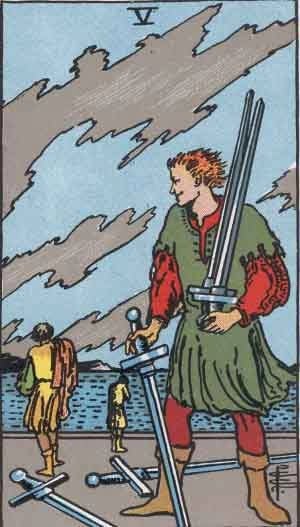
The Five of Swords typically portrays a lone figure standing apart from others, holding several swords while additional weapons lie scattered nearby. In most depictions, this central character appears smug yet isolated, while other figures walk away with downcast expressions. The gathered and scattered swords represent not just the conflict but also what remains after the battle ends. The visual story is clear: sometimes what we gain through fighting leaves us victorious yet utterly alone.
The card's landscape often appears bleak and empty. This sparse setting reinforces the feeling of isolation that follows destructive conflict. Every element in the image conveys that winning can sometimes be losing in disguise. The triumphant stance of the central figure might seem impressive initially, but the dejected postures of those departing hint at the emotional and social price paid for such victory.
Meanings and Interpretations
In readings, the Five of Swords is a warning about unchecked self-interest and conflict's destructive nature. When upright, it suggests you might be involved in a situation where achieving your aims comes at the expense of relationships and personal integrity. It prompts reflection: are your actions driven by a genuine need to resolve issues, or by a desire to dominate regardless of consequences?
This card challenges the notion that life operates as a zero-sum game. While victory brings momentary satisfaction, it often costs us trust and harmony with others. The Five of Swords asks whether winning is worth the isolation that follows. It reminds us that success isn't measured merely by outcomes but by the integrity maintained throughout our struggles.
The card also carries an undercurrent of regret. The hollow victory it depicts warns that when personal gain blinds us to others' needs, we may find ourselves standing alone when the conflict ends. It invites honest self-examination about our methods and the potential long-term effects of aggressive approaches.
The Five of Swords in Daily Life
In everyday situations, the Five of Swords appears when we become entangled in workplace disputes or relationship conflicts. Perhaps you've just won an argument where being right felt important, yet afterward, you sense lingering tension. The card urges considering whether momentary satisfaction was worth the distance it created between you and others.
Consider a situation where you insist on having the final word during a team meeting, leaving colleagues feeling dismissed or unheard. The Five of Swords warns that such behavior might secure a short-term win but undermines collaboration and goodwill over time. It reminds us that compromise and understanding often yield more constructive outcomes than fierce competition.
On a personal level, if you're locked in ongoing conflict with a friend or partner, this card suggests reassessing your priorities. Proving your point might feel satisfying momentarily, but can leave lasting wounds. The Five of Swords advises that peace and mutual respect hold greater value than the empty triumph of dominating a disagreement.
The Five of Swords and Relationships
In relationships, the Five of Swords signals that ongoing conflicts may be causing irreparable harm. Whether in romantic partnerships, family dynamics, or friendships, the card highlights the danger of allowing pride and self-interest to override compassion. It encourages examining whether your need to be right is damaging connections that truly matter.
If you find yourself caught in power struggles, this card challenges you to pause and consider your actions' long-term impact. The satisfaction of "winning" against a loved one quickly fades as trust erodes and emotional distance grows. The Five of Swords reminds us that healthy relationships thrive on understanding and respect rather than competitive victory.
Recognizing when conflicts have escalated beyond productive limits becomes essential. The card prompts asking whether healing the rift by setting aside personal pride and engaging in honest conversation might be possible. Often, the work required to restore harmony far outweighs any fleeting satisfaction gained from winning the fight.
Practical Applications of the Five of Swords Card
Applying the Five of Swords' lessons means reconsidering how we approach conflict and competition. In professional environments, the card indicates that aggressive tactics and cutthroat behavior, while potentially leading to short-term gains, ultimately undermine teamwork and lasting success. It calls for strategies encouraging cooperation and sustainable growth rather than victory at any price.
Try stepping back when conversations become heated. Instead of pushing for immediate resolution on your terms, work to understand underlying concerns and address them constructively. This might mean acknowledging others' perspectives and developing solutions benefiting everyone involved. The Five of Swords reminds us that integrity and collaborative spirit create more value than temporary dominance.
For personal growth, the card suggests examining how your conflict behaviors affect your self-worth. Consider whether your need to assert your position truly serves your long-term interests or if it's causing unintended relationship damage. Look for resolution approaches that don't leave you feeling isolated or regretful afterward.
Reversed Meaning: When the Battle Becomes Lost
When the Five of Swords appears reversed, its message shifts notably. In this position, the card suggests you're beginning to recognize the negative consequences of aggressive approaches. Instead of hollow victory, you might now feel remorse or desire to repair damaged relationships. The reversal indicates it's time to reassess your methods and consider more cooperative ways to resolve differences.
A reversed Five of Swords also cautions against using defeat as reason to withdraw completely from challenges. While avoiding further conflict after bitter encounters makes sense, complete avoidance leads to unresolved issues festering beneath the surface. The card advocates finding balance between standing your ground and knowing when to let go.
This reversal challenges you to face the aftermath of past conflicts and learn from them. It calls for rebuilding bridges and restoring connections damaged through pursuit of personal advantage. Through this process, you begin reconstructing a foundation of trust and mutual respect that serves you better long-term than isolated victories ever could.
Embracing the Lessons of the Five of Swords
The Five of Swords offers a reminder about conflict's true costs. It teaches that genuine strength lies not in overpowering others but in wisely choosing when to engage and when to yield. Reflect on times when winning seemed paramount, and consider whether the price paid justified the temporary satisfaction gained.
Take this card's lessons to heart by seeking resolutions honoring both your needs and others' wellbeing. Understand that victories achieved through selfishness or hostility often leave us with empty rewards. Instead, aim for outcomes that build connections rather than destroy them.
Let the Five of Swords guide you toward a more balanced approach to conflict. By acknowledging the harm aggressive tactics can cause, you create space for healing and growth. The card invites turning away from the allure of shallow triumphs toward a path valuing integrity, cooperation, and lasting peace.
The Five of Swords offers not just warning but opportunity for transformation. Every conflict contains potential lessons, and choices made during heated moments can define your relationships' quality and your self-perception. Let this card remind you that sometimes the bravest choice isn't to fight but to find a more compassionate and constructive way forward.
Related in this topic
More from Tarot Meanings & Reading — Start Here.
Page of Cups Tarot Card Meaning
Page of Cups: intuitive messages and creative beginnings. Guides you toward emotional openness.
Queen of Cups Tarot Card Meaning
Queen of Cups: emotional wisdom and intuitive depth. Embrace compassion and inner knowing.
The Moon Tarot Card Meaning
The Moon: illusion and subconscious depths. Reveals hidden fears and intuitive messages.
The High Priestess Tarot Card Meaning
High Priestess: intuition and subconscious wisdom. Reveals hidden knowledge and inner guidance.