Attributes
- •Burden
- •Overwhelm
- •Responsibility
- •Burnout
- •Delegation
- •Work-life balance
Ten of Wands Tarot Card Meaning
Ten of Wands Keywords
| Upright | Reversed |
|---|---|
| burden, responsibility, stress, obligation | release, delegation, letting go |
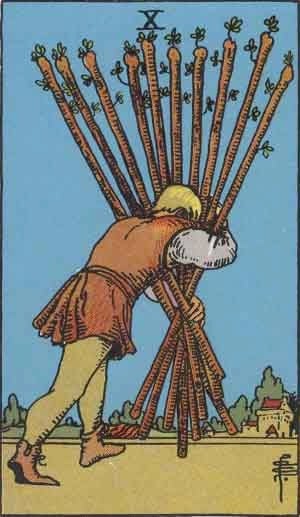
Spine bent beneath an unwieldy bundle of staffs, a solitary figure trudges toward distant shelter, his body nearly horizontal with effort and his face obscured by the very achievements he carries. The Ten of Wands portrays that ironic moment when success becomes its own punishment, the final evolution of fire's journey from the pure potential of the Ace to this crushing accumulation of completed projects and assumed responsibilities. Most tellingly, nothing about their awkward arrangement suggests these burdens must be carried all at once or by one person alone; the figure's solitary struggle reflects not necessity but habit, the unconscious martyrdom of those who conflate worth with workload.
Symbolism and Imagery
The Ten of Wands typically depicts a figure struggling forward under the excessive weight of ten heavy wands bundled awkwardly in their arms. What makes this image immediately compelling is the subject's posture, bent, strained, and clearly overburdened. Unlike earlier cards in the suit where wands represent opportunity and creative potential, here they have transformed into weighty obligations that obscure the carrier's vision and impede their progress.
The figure's face is often hidden or strained, emphasizing how overwhelming responsibilities can obscure your identity and joy. Their awkward carrying method, attempting to transport all ten wands at once rather than making multiple trips or seeking assistance, symbolizes the inefficient approaches you often take when overwhelmed, making your burdens even heavier through poor management strategies. In the distance, a village or home is visible, suggesting that relief exists but requires the person to persist through current difficulties to reach it.
The landscape usually features a clear path forward, indicating that the problem isn't lack of direction but rather the excessive load being carried. The solitary nature of the figure emphasizes how you often shoulder burdens alone when help might be available if requested.
Meanings and Interpretations
When the Ten of Wands appears upright in your reading, it often signals a period where you've taken on too many responsibilities and are feeling the physical, emotional, or mental strain of overcommitment. This card acknowledges that your current overwhelm likely developed gradually, perhaps through a tendency to say "yes" to every request, taking pride in being the reliable one who handles everything, or accumulating projects without releasing completed ones. Rather than suggesting you abandon all responsibilities, the Ten of Wands indicates that a redistribution of your load is necessary for sustainable forward movement.
Beyond simple burnout, this card speaks to the patterns of thought and behavior that lead to chronic overload. It suggests examining whether perfectionism prevents you from delegating tasks to others, if misplaced guilt leads you to assume burdens that aren't yours to carry, or if you've confused being busy with being valuable. The Ten of Wands indicates that genuine productivity isn't about the quantity of tasks you manage but about the quality of attention you can give to what truly matters.
The card also carries important messages about work-life balance and sustainable achievement. It reminds you that continuously operating at maximum capacity leaves no room for rest, creativity, or response to unexpected developments. The Ten of Wands suggests that effective leadership involves not just bearing burdens but knowing how to distribute them appropriately and creating systems that prevent excessive accumulation of responsibilities.
The Ten of Wands in Daily Life
In everyday situations, the Ten of Wands energy appears when you find yourself constantly exhausted, perpetually behind on obligations, or lacking time for rest and activities that bring joy. Perhaps your calendar has no white space, you're working evenings and weekends just to keep up, or you've been abandoning self-care to meet others' expectations. These moments reflect the card's essence, the gradual accumulation of responsibilities beyond sustainable capacity, creating chronic stress that diminishes both effectiveness and quality of life.
Consider how this card's energy might manifest in your approach to work and personal commitments. You might find yourself habitually saying "I'll just handle this myself" rather than delegating, feeling guilty about saying no to requests regardless of their importance, or wearing busyness as a badge of honor that validates your worth. The Ten of Wands suggests that these patterns represent unsustainable approaches rather than admirable dedication.
For recognizing overcommitment before burnout occurs, this card appears as the capacity to notice early warning signs of excessive burden. The Ten of Wands suggests implementing regular assessment of your current commitments, being willing to renegotiate deadlines or responsibilities when your capacity is stretched, and practicing saying "no" to requests that don't match your core priorities. It encourages creating buffer time in your schedule rather than booking every moment with obligations.
In approaching existing obligations when already overwhelmed, this card's energy appears as the ability to reassess and redistribute your load rather than continuing to push forward in the same unsustainable manner. The Ten of Wands suggests conducting a responsibility audit, reviewing all current commitments to identify which must be handled personally, which could be delegated, which might be delayed, and which should be eliminated entirely.
The Ten of Wands and Relationships
In relationships, the Ten of Wands highlights the challenges that emerge when responsibility distribution becomes severely imbalanced. It often appears when examining patterns where one person consistently carries the majority of practical, emotional, or mental labor while others contribute disproportionately less. This card reminds you that while relationships inherently involve sharing burdens, sustainable partnerships require relatively equitable division of responsibilities rather than one person consistently sacrificing their wellbeing to compensate for another's minimal contribution.
For those in established relationships, this card appears as an invitation to examine whether workload and responsibility have become unbalanced over time. The Ten of Wands suggests that relationships sometimes develop patterns where one partner gradually assumes more obligations, perhaps beginning with small accommodations that eventually become expected norms. It encourages honest conversation about how household management, emotional labor, financial oversight, and social coordination are distributed.
When considering new relationships, this card emphasizes the importance of observing how potential partners manage their own responsibilities and contribute to shared ones. The Ten of Wands suggests that early relationship patterns often predict future dynamics, making it worthwhile to notice whether someone demonstrates willingness to carry their fair share or shows signs of expecting others to manage their obligations.
The card also speaks to boundaries within helping relationships, friendships, family connections, or professional relationships. The Ten of Wands suggests that genuine support differs from unhealthy rescuing or enabling patterns. It encourages distinguishing between temporarily assisting someone through crisis and chronically compensating for their unwillingness to handle appropriate responsibilities.
Practical Applications of the Ten of Wands Card
The Ten of Wands offers useful guidance for managing workload and preventing burnout in practical ways. If you're feeling overwhelmed by accumulated responsibilities, this card encourages conducting a thorough commitment inventory, listing everything currently on your plate and categorizing each item as "essential and must be done by me personally," "important but could be delegated," "can be delayed," or "can be eliminated." It suggests implementing systems that prevent future overload, such as creating decision criteria for new commitments or scheduling regular reviews of ongoing responsibilities.
For developing delegation skills when you struggle to release control, this card provides insight into the psychological barriers that keep you overloaded. The Ten of Wands suggests examining whether perfectionism, mistrust, or identity attachment to "being the one who handles everything" prevents you from sharing responsibilities appropriately. It encourages starting with small, low-risk delegation opportunities to build comfort with releasing control, gradually expanding what you're willing to entrust to others.
In navigating high-demand periods that temporarily require extra effort, this card highlights the importance of sustainability planning. The Ten of Wands suggests that even during necessary crunch times, building in recovery periods and minimum self-care non-negotiables helps prevent complete breakdown. It encourages communicating clearly with stakeholders about capacity limitations and expected timelines rather than promising unrealistic deliverables.
For creating better work-life boundaries, this card emphasizes the necessity of clear limits that protect your wellbeing. The Ten of Wands suggests implementing concrete practices that separate work from personal time, such as establishing "do not disturb" hours, turning off notifications during family activities, or creating physical transition rituals between professional and personal spaces.
Reversed Meaning: When Burdens Begin to Shift
When the Ten of Wands appears reversed, it often signals the beginning of positive change in your relationship with responsibilities and burdens. This position suggests examining whether you're finding ways to delegate more effectively, release unnecessary obligations, or implement systems that prevent recurring overwhelm. The reversed card doesn't necessarily indicate complete resolution but highlights movement in a healthier direction, the willingness to address patterns of overcommitment rather than continuing to struggle under an unsustainable load.
Sometimes this reversal indicates the completion of a particularly demanding phase or project. You might be experiencing the relief that comes when a major deadline passes, an intense work period concludes, or a situation requiring extraordinary effort finally resolves. The reversed Ten of Wands encourages consciously recognizing and celebrating these completions rather than immediately filling the space with new obligations.
The reversed card sometimes points to new approaches to responsibility management. Perhaps you're implementing better delegation systems, becoming more discerning about which requests receive your "yes," or creating clearer boundaries around your time and energy. The reversed Ten of Wands invites continuing to develop these healthier patterns rather than slipping back into familiar overcommitment tendencies.
In relationship contexts, the reversal might indicate movement toward more balanced responsibility sharing. You might be having productive conversations about workload distribution with partners, family members, or colleagues, or noticing greater willingness from others to assume appropriate responsibilities. The reversed Ten of Wands encourages reinforcing these positive shifts through appreciation and clear communication.
Embracing the Lessons of the Ten of Wands
At its heart, the Ten of Wands teaches valuable lessons about the difference between healthy ambition and self-defeating overcommitment. It reminds you that taking on responsibilities beyond your reasonable capacity doesn't demonstrate greater dedication or worth but ultimately diminishes your effectiveness and joy.
This card encourages developing a more nuanced relationship with responsibility and success, recognizing that meaningful accomplishment involves quality of contribution rather than mere quantity of tasks managed. The Ten of Wands suggests that genuine productivity requires strategic focus on high-impact activities rather than attempting to do everything yourself.
Perhaps most importantly, the Ten of Wands reminds you that sustainable achievement requires periodic release of accumulated burdens. The card invites regular assessment of what you're carrying, honest evaluation of whether each responsibility still serves your core priorities, and courage to release what no longer belongs in your life despite external expectations or your own habit patterns.
Related in this topic
More from Tarot Meanings & Reading — Start Here.
Page of Cups Tarot Card Meaning
Page of Cups: intuitive messages and creative beginnings. Guides you toward emotional openness.
Queen of Cups Tarot Card Meaning
Queen of Cups: emotional wisdom and intuitive depth. Embrace compassion and inner knowing.
The Moon Tarot Card Meaning
The Moon: illusion and subconscious depths. Reveals hidden fears and intuitive messages.
The High Priestess Tarot Card Meaning
High Priestess: intuition and subconscious wisdom. Reveals hidden knowledge and inner guidance.