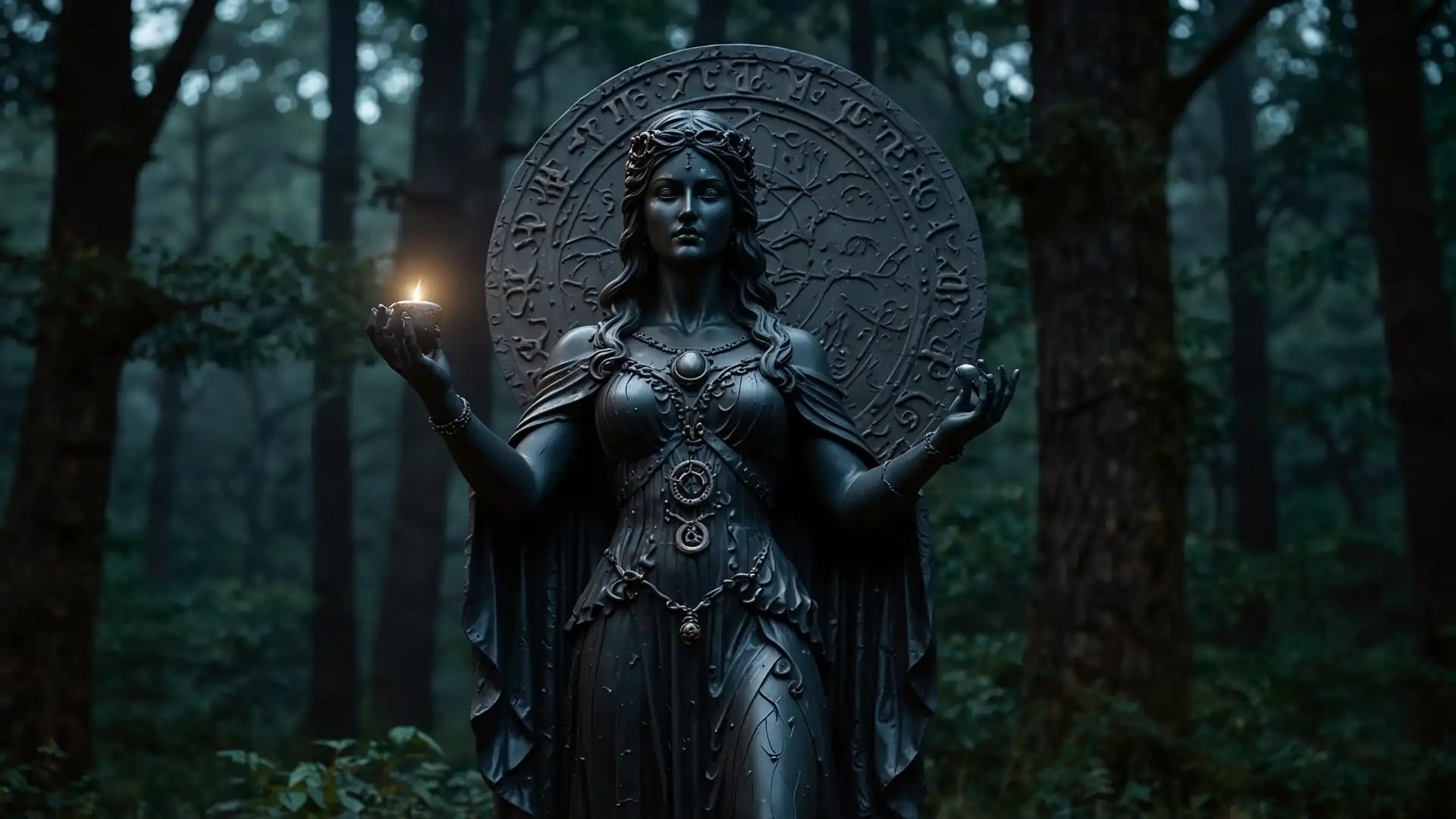
Hekate in the House: Building Your Modern Goddess Altar
Hekate doesn't care if your altar is Instagram-worthy. As a goddess who has been worshipped for thousands of years across vastly different cultures, she's seen it all, from elaborate marble temples to makeshift shrines hidden in closets. What matters most to this ancient deity is your sincere devotion and consistency, not whether your setup would get a spread in "Witchy Home & Garden."
This guide will walk you through creating a Hekate altar that honors traditional associations while adapting to contemporary living situations. Whether you have an entire room to dedicate to your practice or just a corner of your shared apartment, there are ways to create sacred space that won't have your roommates side-eyeing you or your landlord threatening to keep your security deposit.
Understanding Hekate's Associations
Before gathering altar items, understand the goddess you're honoring. Hekate is complex and multifaceted, with associations that have evolved over millennia. Different traditions emphasize different aspects, but these core associations appear consistently throughout history.
Hekate is the goddess of crossroads, both literal and metaphorical. She presides over liminal spaces and times, those in-between moments and places where boundaries blur and transformation becomes possible. Before GPS, she was the guide for travelers, particularly those journeying through unfamiliar or dangerous territory.
As a torch-bearer, she illuminates the darkness and reveals hidden truths, making her a natural patron of witches and those who work with mystery traditions. She holds keys to different realms of existence, serving as a gatekeeper between the mundane world and spiritual dimensions. While often associated with the underworld in later traditions, she originally had dominion over earth, sea, and sky, demonstrating her far-reaching influence.
Her animal companions include dogs (especially black ones), snakes, and sometimes owls. Her sacred plants and herbs include garlic, lavender, dandelion, mugwort, and cypress. Her preferred offerings traditionally included honey, eggs, garlic, and sometimes wine or bread.
In terms of timing, Hekate is strongly associated with the dark moon phase and with twilight hours, particularly that liminal time when day transitions to night. Her sacred colors included black and red, though some traditions also incorporated silver, gold, and purple.
These associations provide a starting point for selecting items with authentic connections to Hekate's energy. She's been worshipped across countless cultures and time periods, each adding their own interpretations. There's room for your personal understanding of her as well.
Essential Elements for a Hekate Altar
While altars can certainly be elaborate affairs, a functional Hekate altar can be distilled down to a few key elements that represent her essential qualities. These core components create a foundation you can build upon as your relationship with her deepens.
Three is Hekate's sacred number, so incorporating triplicities throughout your altar strengthens the connection. Consider using three candles, three levels, or grouping offerings in sets of three. This reflects her triple-form nature, often depicted as three women standing back to back.
A crossroads symbol formed the heart of many Hekate altars. This can be as simple as drawing or painting a Y-shaped path, or creating one with string, small stones, or even tape if you needed a temporary solution. Some practitioners placed this symbol beneath all other altar items as a foundation.
Keys were perhaps Hekate's most recognizable symbol. Vintage keys suit her ancient nature; any key can represent her ability to open pathways between worlds. Some practitioners dedicated specific keys to different purposes, like one for shadow work, one for protection, and one for guidance.
Representations of her animal associations added another dimension. This might include statues or images of dogs (particularly black dogs), snakes, or owls. If you're uncomfortable with animal imagery, paw prints or feathers could serve as more abstract representations.
A cauldron or fire-safe container provided a place for burning offerings or petition papers. Even a small cauldron created a focal point for transformative workings under Hekate's guidance.
Black and red candles were traditional choices, though purple and silver also appeared in some traditions. These could be placed in a triangular arrangement to represent her triple-form nature. If open flames weren't an option in your living situation, flameless LED candles could serve as modern alternatives.
A statue or image of Hekate was optional but helped focus your devotional energy. These ranged from historical reproductions to modern artistic interpretations. If a three-dimensional representation wasn't available or affordable, printed images worked perfectly well.
What matters most is creating a space that feels connected to her energy as you understand it. The materials don't need to be expensive or elaborate, and many altars are assembled from found objects, natural elements, and simple hand-crafted items.

A simple but effective modern Hekate altar with some symbolic elements
Altar Location and Timing Considerations
Where you placed your altar and when you worked with it significantly impacted your practice. Hekate's associations with specific locations and times could guide these decisions, even in contemporary settings.
A corner of a room works beautifully, representing the meeting of walls – a subtle crossroads in itself. Windowsills offer another perfect spot, serving as natural thresholds between inside and outside worlds. The area near your front door (though perhaps not directly in the entryway) honors her role as guardian of entrances. A dedicated shelf on a bookcase, particularly one containing books on magic or spirituality, creates a natural integration with your existing sacred knowledge. For those requiring more discretion, a dedicated drawer or cabinet that can be opened during rituals and closed when not in use offers perfect compromise.
If space was extremely limited, a portable altar stored in a special box and set up only during working times could be just as effective. This solution worked particularly well for those who shared living space with others who might not share their spiritual interests.
The dark moon phase (the days when the moon wasn't visible, just before the new moon) was traditionally considered Hekate's special time. This monthly opportunity for deeper connection could help establish a consistent practice. Twilight hours, particularly at sunset, held special significance for Hekate workings. If possible, try to tend your altar during these liminal times when the veil between worlds grew thin.
Consider also seasonal connections, particularly Samhain/Halloween, when many traditions believed Hekate led the Wild Hunt or guided spirits. The winter solstice, with its themes of darkness and rebirth, also aligns with her energy.
Consistency matters more than strict adherence to traditional timing. A regular practice that fits your real life creates a stronger connection than sporadic elaborate rituals you can't sustain. Hekate has watched human society evolve from agricultural to digital, she understands that your Zoom meeting might run late sometimes.
Modern Offerings for Hekate
Offerings create tangible connections between practitioner and deity. Traditional offerings to Hekate included items that might not be practical or appealing to modern practitioners. Here are both traditional options and contemporary alternatives that maintain the spirit of devotion while adapting to current sensibilities.
Traditional offerings with straightforward modern applications remain numerous and accessible. Honey is perhaps the most enduring offering, symbolizing sweetness and fertility just as it did in ancient times. Paired with garlic, which maintains its protective associations and connects to Hekate's chthonic aspects, these two simple items form a powerful devotional base. Eggs serve as profound symbols of potential and transformation, particularly powerful during the dark moon phase. Bread, especially dark varieties, creates a tangible connection to earth and sustenance, while wine poured as a libation (where appropriate) honors ancient traditions of sharing drink with deities.
For those seeking contemporary alternatives, modern practitioners have discovered meaningful substitutions. Dark chocolate is a popular modern offering; many devotees report strong acceptance when sharing this bittersweet treat. Black tea (especially with honey added) offers another accessible alternative that combines warmth and intention. Perhaps the simplest yet most profound offering is fresh spring water – pure, essential, and always appropriate when nothing else is available.
Non-consumable offerings can be especially practical in modern settings. Consider dedicating time to volunteer work at animal shelters, particularly those helping dogs, creating a living offering that honors Hekate's animal associations. Your own creative works – poetry, artwork, or music dedicated to her – form deeply personal gifts that last beyond a single ritual. In our distracted age, perhaps the most precious offering is your full time and attention, moments of complete presence and focus dedicated solely to connecting with her energy.
When making offerings, the intention behind them matters more than their material value. A mindfully selected wild flower can carry more spiritual significance than an expensive but hastily purchased item.
For disposal, consumable offerings should ideally be left at a crossroads, consistent with ancient practice. However, in urban environments, this might not be practical or legal. Instead, consider burying biodegradable offerings in a garden or park (discreetly and respectfully), placing small food offerings for wildlife in appropriate outdoor locations, composting offerings that would break down naturally, or for liquid offerings, pouring them onto earth rather than down drains.
Whatever approach you choose, handle offerings with respect, both in presentation and disposal. The care you show reflects the sincerity of your devotion.
Personalizing Your Hekate Altar
While traditional symbolism provides a foundation, your personal connection with Hekate should inform the final form of your altar. This is where contemporary practice truly shines, allowing for innovation while maintaining spiritual integrity.
Personal symbols that represent your specific work with Hekate create powerful connections to your unique journey. Consider incorporating items that symbolize personal transformations you've undergone, acknowledging her role as guide through major changes. Objects representing paths not taken or difficult decisions you've made honor her crossroads aspect in a deeply personal way. The tools of your particular magical practice, especially those used for divination or shadow work, naturally align with her domains. Don't overlook the significance of found objects that spontaneously connected you to her energy – that key discovered on your path may be more than coincidence. Even photographs of personal crossroads, both literal and metaphorical, can powerfully represent your relationship with this liminal goddess.
Modern magical tools with connections to Hekate's domains bridge ancient practice with contemporary life. Tarot cards—The Moon, The High Priestess, and The World—connect strongly with her energy. Black mirrors serve dual purposes for scrying and shadow work, both activities under her guidance. Pendulums hanging at the crossroads of possibilities provide direct methods of divination aligned with her wisdom. Journals dedicated to recording dreams and magical insights create living documents of your journey with her, while maps or road signs – modern symbols of journeys and pathways – offer contemporary representations of her traveler aspect.
Seasonal adaptations keep your altar fresh and aligned with the turning wheel of the year. Spring brings opportunities to add flowers or seeds representing new beginnings under Hekate's guidance. Summer herbs and fruits acknowledge the abundance she helps manifest in your life. Autumn leaves and pomegranates honor transitions and her underworld connections as the year wanes. Winter evergreens paired with candles symbolize her role as the light-bearer in darkness, particularly powerful during the longest nights.
The most powerful altars evolved organically over time, becoming a visual representation of your relationship with Hekate. Start with the essential elements and allow intuition and experience to guide additions and changes. An altar that reflected both ancient tradition and your living practice created the strongest conduit for connection.
Fruits can be used as offerings
Practical Altar Care and Maintenance
The practical aspects of altar maintenance were rarely discussed in magical texts but were essential for a sustainable practice. Here's how to keep your Hekate altar energetically charged and physically appropriate for your living situation.
Regular cleansing maintained energetic clarity. At minimum, consider cleansing your altar during each dark moon phase. This might involve sound cleansing using bells or singing bowls, which vibrates away stagnant energies while being apartment-friendly. For those with good ventilation, smoke cleansing with appropriate herbs creates powerful purification (though always be mindful of smoke detectors). Liquid cleansers like Florida water or witch's vinegar offer excellent alternatives for physical cleaning, while moonlight or simple visualization served perfectly well when other methods weren't practical.
Physical maintenance keeps your altar from becoming another dusty shelf in your home. Regular dusting and cleaning of altar items prevents energetic stagnation while showing respect for the sacred tools. Replace burned candles and dead plants promptly – these items carried symbolic meaning, and letting them linger in deteriorated states can affect the altar's energy. Similarly, dispose of offerings before they became unpleasant, which can happen surprisingly quickly with certain foods. For water offerings, refresh them regularly before stagnation set in, as stagnant water carried symbolism you likely didn't want on your altar.
Balancing visibility and privacy became important for many modern practitioners who shared living spaces or received visitors. Consider using symbols that appeared merely decorative to others but held magical significance for you – the key to subtlety lay in plain sight. Storing particularly obvious magical items in attractive decorative boxes maintained both aesthetics and discretion. Some practitioners created altars that could be covered with a decorative cloth when not in use, instantly transforming from sacred space to ordinary furniture. If questions arose, explaining your altar as an "ancestral shrine" or "meditation space" often satisfied curiosity without requiring detailed explanations of your practice.
Managing shared spaces required creativity and respect for all involved. Clearly communicate boundaries with roommates or family members about your sacred space. Establish ground rules about touching or moving altar items to prevent well-meaning disturbances. If shared space was particularly challenging, consider maintaining a private altar in your bedroom in addition to (or instead of) shared space altars. For maximum flexibility, a portable altar stored in an attractive box offered a solution that adapted to changing household dynamics.
Digital alternatives could supplement physical altars for those with severe space limitations. Creating a digital shrine with images and text dedications provided a modern approach to devotion. Some practitioners used deity-dedicated playlists for audio offerings, while others maintained private social media accounts for devotional content. Meditation apps with customizable sacred spaces offered another contemporary approach to creating virtual temples when physical space was limited.
Remember that Hekate had been worshipped in countless circumstances throughout history, from grand temples to secret household shrines. She understood the constraints of modern living and valued adaptability in her devotees.
Working With Your Hekate Altar
An altar wasn't just a display, it was a working magical tool. Here were practical ways to incorporate your Hekate altar into a living spiritual practice, adapted for contemporary circumstances.
Daily acknowledgments established consistency without requiring elaborate rituals. These might be as simple as:
- Lighting a candle for a few minutes while focusing on her presence
- Touching a dedicated key while setting intentions for the day
- Leaving a small offering of fresh water or a flower
- Speaking a brief prayer or personal statement of connection
Dark moon rituals created monthly opportunities for deeper work. During this traditional time sacred to Hekate, consider:
- Refreshing all altar items and giving the space a thorough cleansing
- Performing divination related to paths and choices
- Evaluating what needed to be released or transformed in your life
- Making special offerings appropriate to your current work with her
Guidance workings tapped into Hekate's role as the guide of crossroads:
- Place representations of different options on your altar
- Meditated on the potential paths while focusing on her guidance
- Used pendulum or divination cards dedicated to her for insight
- Journaled about insights received during these sessions
Shadow work connected to Hekate's torchbearer aspect:
- Used your altar as a safe space for confronting personal shadows
- Placed written descriptions of shadow aspects to be illuminated
- Created rituals of acknowledgment and integration
- Worked with black mirrors or dark bowls of water for reflection
Protection workings drew on her guardian aspects:
- Charged keys, garlic, or other protective symbols at your altar
- Created protective sachets or oils in her presence
- Visualized her torches illuminating the boundaries of your space
- "Locked" unwanted energies away using her key symbolism
Adaptive timing acknowledged modern constraints while honoring traditional associations:
- If you couldn't perform rituals at twilight, used candles to create twilight ambiance
- If you missed the exact dark moon timing, recognized that the energy extended beyond the precise astronomical moment
- Created "time out of time" through ritual design when your schedule didn't align with traditional timing
The most effective magical practice integrated naturally into your actual life rather than existing as a separate activity you struggled to maintain. Look for natural points of connection between your daily routines and your devotional practice.
Hekate Altar Etiquette for Beginners
Approaching deity work respectfully created a foundation for meaningful connection. Here were some considerations specifically for those new to working with Hekate.
Start simply rather than attempting elaborate setups or rituals. A candle, a key, and a sincere heart provided everything needed to begin. Complexity could develop organically as your relationship deepened.
Research broadly but practice specifically. While studying diverse traditions enriched your understanding, your actual practice should develop coherence rather than mixing potentially conflicting approaches.
Consistency mattered more than perfection. Regular simple acknowledgments created stronger connections than occasional elaborate rituals. Hekate had been witnessing human devotion for millennia, she recognized sincerity in any form.
When making promises or commitments, be extremely careful to fulfill them. Hekate took agreements seriously, and her crossroads represented choices with consequences. Don't promise daily offerings if weekly was more realistic.
Approach with respect but not fear. While Hekate had associations with the underworld and mysteries, she wasn't seeking to frighten or harm sincere practitioners. The intimidating aspects of her iconography represented her power, not malevolence.
Expect the unexpected in how she communicated. Signs of her presence might include:
- Encounters with dogs, especially black ones
- Finding keys in unexpected places
- Dream symbols involving crossroads, torches, or the moon
- Sudden intuitive insights, particularly about life transitions
- Synchronicities involving the number three
Journaled your experiences to track patterns in her communications and your developing relationship. What began as coincidence often revealed itself as pattern over time.
Respect boundaries between your practice and others. Not everyone would understand or appreciate deity work, and not everyone needed to. Discretion sometimes served spiritual work better than explanation.
Remember that everyone's experience with a deity was unique, influenced by personal background, cultural context, and individual resonance. Your relationship with Hekate would develop its own character over time, distinct from others' experiences you might read about.
Conclusion
Creating an altar for Hekate starts a relationship, not a project. It will change as you do—items cycle with the seasons, practices deepen. Whether elaborate or simple, visible or hidden, your altar is a crossroads between worlds.
Related in this topic
More from Witchcraft Practice — Start Here.
Embracing Shadow Work with Lilith
Shadow integration guided by Lilith, the primal feminine rebel. Practical rituals for modern practitioners.