Introduction to the Ars Goetia
The Ars Goetia is one of the most influential grimoires in Western occultism. It describes 72 spirits (often called demons) and how to work with them. This lesson covers its history, structure, and the ethical considerations that modern practitioners should keep in mind before engaging with this system.
What Is the Ars Goetia?
The Ars Goetia (from Greek goēteia, "sorcery") is the first section of The Lesser Key of Solomon, a 17th-century grimoire compiled from earlier sources. It lists 72 spirits with their ranks, abilities, seals (sigils), and instructions for evocation. Later sections of the Lesser Key include the Ars Theurgia Goetia, Ars Paulina, Ars Almadel, and Ars Notoria, each covering different classes of spirits and methods.
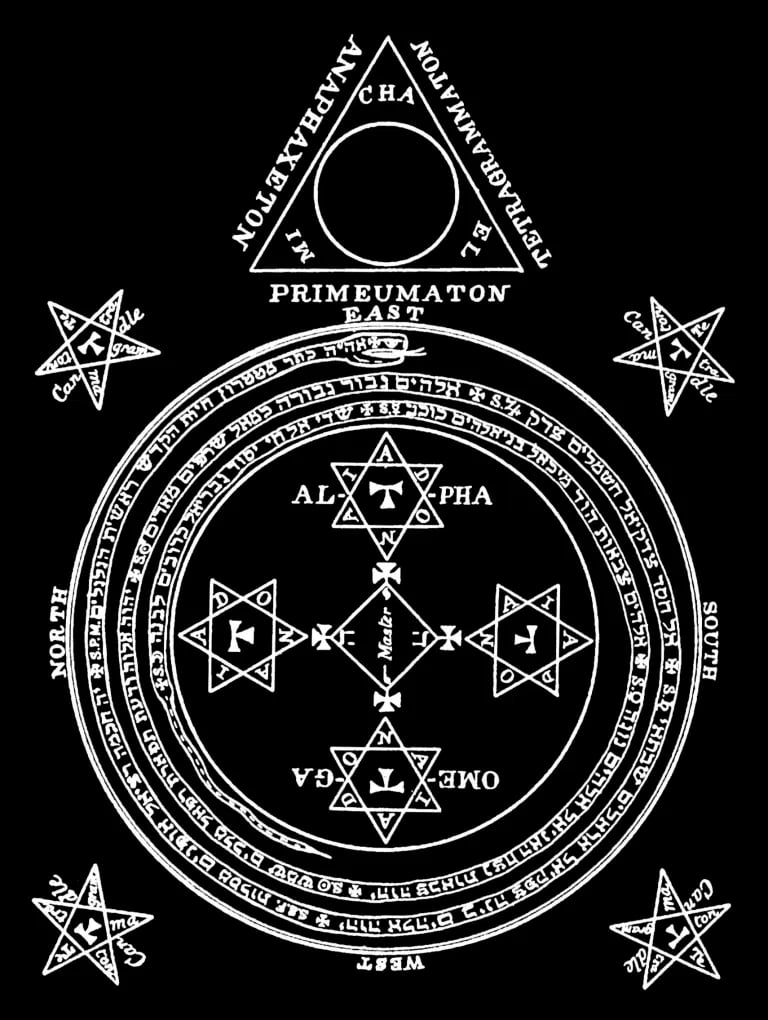
The spirits are organized by rank: Kings, Dukes, Princes, Marquises, Earls, Knights, and Presidents. Each has described powers and domains (love, knowledge, invisibility, wealth, and so on). The text includes instructions for creating protective circles, spirit sigils, and other tools for ritual work. The original method is Solomonic: the practitioner commands spirits from within a circle, directing them into a triangle outside it.
Historical Context
The Ars Goetia draws on earlier sources, including Johann Weyer's Pseudomonarchia Daemonum (1563). Weyer was a physician and critic of witch hunts; he compiled spirit lists partly to argue that such entities were delusions or natural phenomena, not beings to be feared. The grimoire tradition, however, treated them as real and workable. Manuscripts circulated among occultists; the printed edition of the Lesser Key emerged in the 19th century.
In the late 19th and early 20th centuries, the Hermetic Order of the Golden Dawn and Aleister Crowley integrated the Goetia into ceremonial magic. Crowley's 1904 edition (The Goetia: The Lesser Key of Solomon the King) included commentary framing evocation as psychological and symbolic work (spirits as aspects of the magician's subconscious) alongside more traditional interpretations (spirits as independent entities). This dual perspective helped bring the Ars Goetia into modern occult practice and made it accessible to practitioners with varied beliefs.
The 72 Spirits
The Goetia describes 72 spirits with distinct attributes. Examples include:
- Bael (or Baal): First spirit, a King; often depicted with multiple heads; associated with invisibility and love.
- Paimon: A King; associated with arts, sciences, and knowledge. Often described as requiring a specific orientation or homage.
- Asmodeus: Associated with lust and desire; often depicted with multiple animal heads. Linked to building and material success in some readings.
- Belial: A powerful spirit associated with offices, preferments, and favor from others.
Each spirit has a seal (or sigil) used in ritual, a rank, and a list of legions or powers. Modern practitioners often consult the full text and individual spirit entries before working with a particular spirit. The Esoteric Library's goetic demons reference provides detailed entries for all 72.
Approaches in Modern Practice
Contemporary work with the Goetia varies:
Ceremonial evocation: Following or adapting the original ritual structure (circles, incenses, conjurations) to call the spirits into a triangle or similar space. The practitioner typically commands or petitions the spirit from within a protective circle.
Demonolatry: Honoring the spirits as deities or allies rather than commanding them. Practices may include offerings, meditation, enn chanting, and devotional work. The relationship is collaborative rather than hierarchical.
Psychological and symbolic: Treating the spirits as archetypes or facets of the unconscious, used for introspection and self-development. Evocation becomes a structured way to engage with inner dynamics.
Eclectic: Combining elements from different traditions (Goetia, demonolatry, chaos magic) according to personal belief and experience.
There is no single "correct" approach. What matters is that your method matches your beliefs and that you proceed with care and preparation. The following lessons cover mental preparation, protection, and practical workflow in detail.
Ethics and Responsibility
Before working with the Goetia, consider:
Informed consent: If others are involved in ritual space or outcomes, ensure they understand and consent.
Mental and emotional readiness: Evocation and spirit work can be intense. Assess your stability and support systems before beginning. The lesson on Mental Preparation and Ethics expands on this.
Intent and harm: Many practitioners avoid using the spirits to harm, manipulate, or control others. Clarify your own ethical boundaries before you begin.
Protection and boundaries: Traditional practices include circles, banishing, and protective measures. Modern adaptations maintain the idea of clear boundaries between practitioner and spirit. The lesson on Protection and Practical Safety covers this in depth.
Reversibility: Know how to close a rite, dismiss a spirit, and return to ordinary consciousness. Have a clear end to each working. Never leave a ritual "open."
The Ars Goetia is a powerful and historically rich system. Approaching it with respect, study, and ethical reflection will serve you well. Read the following lessons on mental preparation and protection before any spirit work.
Further Reading
Explore More
Continue learning with related content from The Esoteric Witch: