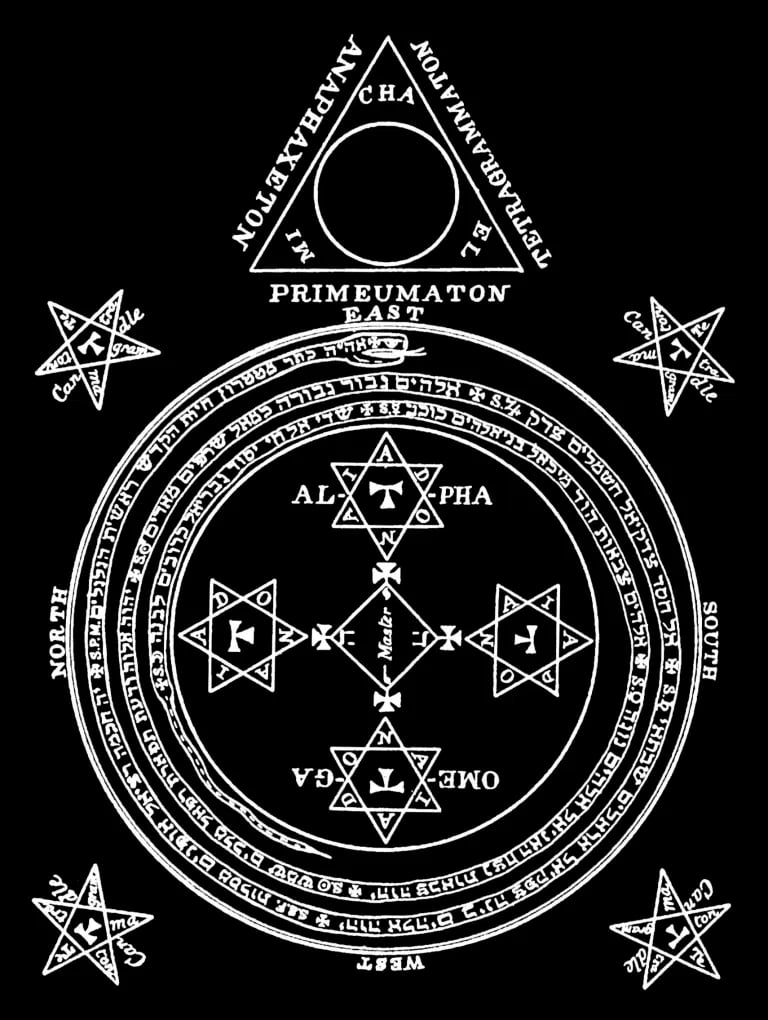
The 72 Spirits: Structure and Ranks
The Ars Goetia organizes the 72 spirits into a hierarchical system of ranks. Understanding this structure helps practitioners choose appropriate spirits for specific goals and approach them with appropriate protocol. This lesson explains the ranks and their significance.
The Hierarchical Ranks
The Goetia uses seven ranks, from highest to lowest in terms of attributed power and scope:
Kings and Princes: The highest ranks. Kings rule over large legions and broad domains. Bael, Paimon, Belial, and Asmodeus are among the Kings. Princes have similar scope, commanding substantial forces and wide-ranging abilities. These spirits are often approached for major undertakings or when seeking substantial change. Traditional protocol may require more formality and preparation when working with Kings.
Dukes and Marquises: Mid-tier spirits with significant but more specialized powers. They may govern specific areas (love, knowledge, material success, healing) and typically command smaller legions than Kings. Dukes and Marquises are frequently chosen for focused goals: attracting a partner, gaining skill in an art, or securing employment. Many practitioners find them approachable for intermediate work.
Earls, Knights, and Presidents: Lower ranks with more focused abilities. They are often suitable for beginners or for targeted, specific goals. Earls may govern 20–60 legions; Knights and Presidents typically command fewer. The grimoire describes each spirit's appearance, powers, and the number of legions under their command. Some Presidents are attributed with teaching languages or finding stolen goods; these narrower domains can be useful for precise intentions.
What Rank Means Practically
Rank in the Goetia reflects attributed power and scope rather than a literal chain of command that all practitioners must follow. Some practitioners treat higher-ranked spirits with more formality: elaborate circles, longer preparations, and specific protocols. Others approach all spirits with equal respect, believing that rank reflects traditional categorization rather than inherent superiority.
Demonolators often work with spirits of any rank according to personal rapport rather than hierarchy. A spirit you connect with strongly may become a primary ally regardless of their rank. The important point is to understand the traditional framework before adapting it to your practice.
Choosing a Spirit
Match the spirit to your goal. The Ars Goetia and later commentaries describe each spirit's domains. Examples: Bael for invisibility and love; Paimon for arts and sciences; Amon for reconciliation and love; Vassago for finding lost things; Buer for philosophy and healing. Research before evoking. A spirit whose traditional attributions match your intention is more likely to yield coherent results.
The Esoteric Library's goetic demons reference offers detailed entries for all 72, including seals, correspondences, and modern interpretations. Use it to find spirits that match your intentions and to understand their traditional roles.
For beginners: Consider starting with a spirit of lower rank (Earl, Knight, or President) whose domain matches a clear, manageable goal. Some practitioners also find that certain spirits are described as more "friendly" or easier to work with; research individual entries for such notes. Vassago (finding lost things), Buer (healing, philosophy), and Botis (reconciliation, prophecy) are often cited as accessible. That said, rapport is personal; a spirit you feel drawn to may work well regardless of conventional advice.
Rank and Protocol
If you follow traditional Solomonic protocol, you may adapt your approach by rank: more elaborate circles and incenses for Kings, simpler setups for lower ranks. If you use a devotional or demonolatry approach, protocol may depend on your relationship with the spirit rather than rank alone. There is no single rule; the structure is a guide, not a straitjacket. Let your practice and beliefs determine how you apply it.
Multiple spirits: Some practitioners work with several spirits in sequence (e.g., for different goals) or occasionally invoke more than one in a single ritual. If you do the latter, ensure your space and focus can accommodate it. Beginners are usually advised to work with one spirit per session until they are comfortable with the process. Multiple spirits in one rite can dilute focus and complicate dismissal.
Further Reading
Explore More
Continue learning with related content from The Esoteric Witch: