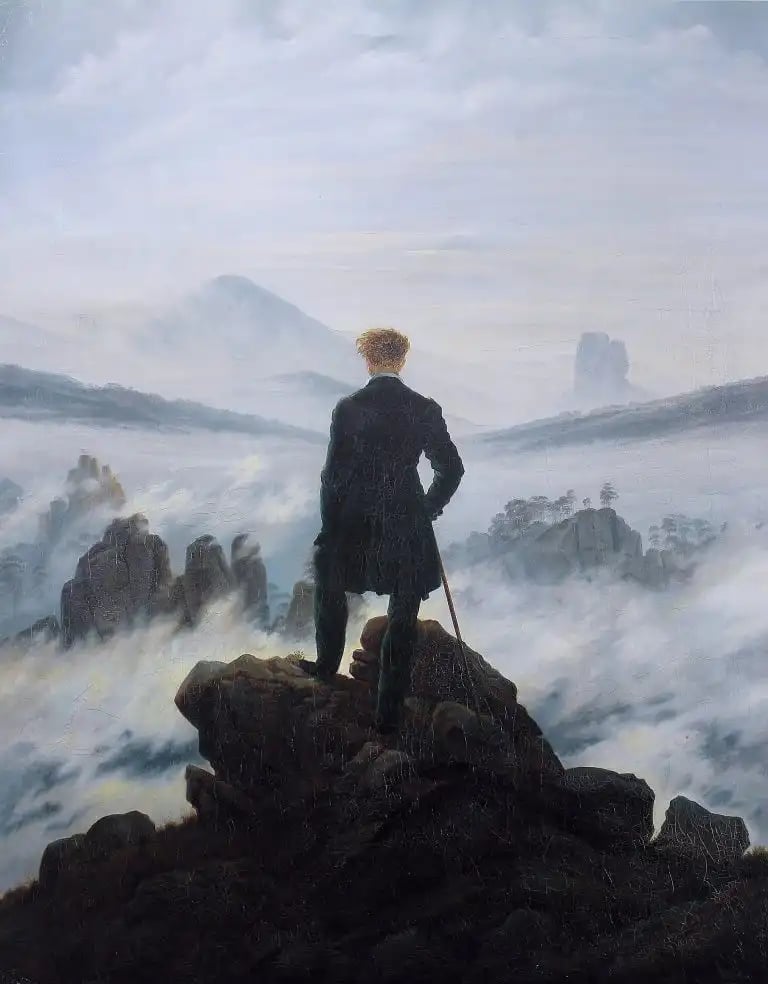
Baroque to Romanticism
The Baroque, Rococo, and Romantic periods each developed distinct approaches to emotion, nature, and the transcendent. All three left lasting marks on Western art and influenced how subsequent generations would depict spiritual and mystical experience.
Baroque: Drama and Divine Power
The Baroque (roughly 1600–1750) responded to religious and political upheaval (the Reformation, the Counter-Reformation, absolutist monarchy) with dynamic composition, strong contrasts of light and shadow, and theatrical emotion. Caravaggio pioneered tenebrism: dramatic chiaroscuro that plunged most of the canvas into shadow while illuminating key figures. His religious subjects (The Calling of Saint Matthew, The Conversion of Saint Paul) brought biblical drama into the viewer's space with immediacy and psychological intensity.
Gian Lorenzo Bernini created sculptural drama that seemed to capture moments of ecstasy and transformation. His Ecstasy of Saint Theresa renders mystical experience in marble. Peter Paul Rubens filled canvases with swirling movement, flesh, and color. The grand ceilings of Counter-Reformation churches (e.g., Il Gesù in Rome) made divine power palpable and immediate. Baroque aesthetics (dramatic lighting, swirling forms, emotional intensity) emphasized movement and viewer engagement. Paintings and sculptures reached out of their frames, drawing the viewer into the scene. For those interested in art that conveys spiritual intensity, the Baroque remains a touchstone.
Rococo: Intimacy and Ornament
Rococo (early to mid-18th century) shifted toward lighter, more intimate subjects: pastoral scenes, delicate ornament, and a softer treatment of mythological and allegorical themes. The feminine, the natural, and the playful came to the fore. Jean-Honoré Fragonard's The Swing and François Boucher's mythological scenes exemplified the style. Rococo favored pastel colors, curved lines (rocaille, or shell-like ornament), and decorative detail over the Baroque's grand scale and dark drama.
Rococo was often criticized in its time (and later) as frivolous. But it also represented a turn toward private devotion, intimate feeling, and the domestic sphere. For practitioners interested in altar aesthetics or the softer side of divine imagery, Rococo offers a counterpoint to Baroque grandeur.
Romanticism: Nature, Emotion, and the Sublime
Romanticism (late 18th to mid-19th century) turned toward nature as a source of awe, mystery, and spiritual revelation. Caspar David Friedrich's wanderers above misty abysses, J.M.W. Turner's storms and light, and the Gothic revival's ruined abbeys expressed a longing for the sublime: experiences beyond ordinary perception that awaken the soul. Edmund Burke and Immanuel Kant had theorized the sublime as that which overwhelms the senses and evokes both terror and wonder. Romantic painters sought to capture it.
William Blake combined poetry and visual art in prophetic, mythic works that drew on his own visions and on esoteric traditions. His illuminated books (The Marriage of Heaven and Hell, Jerusalem) wove personal mythology with critique of institutional religion. Henry Fuseli painted nightmares and supernatural scenes; his The Nightmare became an icon of the Gothic imagination. Francisco Goya's Black Paintings (painted on the walls of his home late in life) and the Caprichos etchings plumbed darkness, superstition, and the irrational. His Saturn Devouring His Son remains one of the most visceral images of mythic terror in Western art. Romantic artists valued intuition, individual emotion, and the direct encounter with nature over the rational order of Neoclassicism. The artist became a visionary, and the landscape a place of transcendence. For practitioners who find spiritual connection in nature or in altered states, Romanticism offers an artistic lineage that honors those experiences.
Connections to Esoteric Practice
All three periods engaged with spiritual and transcendent themes. Baroque art served Counter-Reformation piety; Rococo softened that intensity into intimate devotion; Romanticism sought the sublime in nature and the irrational. Modern practitioners often draw on Romantic landscape imagery for meditation and visualization, or on Baroque drama for ritual aesthetics and the depiction of divine presence. Understanding these movements enriches your visual vocabulary and your sense of how Western art has represented the sacred across time. When you light a candle in a dark room or stand at the edge of a landscape, you inherit something of the Baroque and Romantic sensibilities that first made such moments into art.
Further Reading
Explore More
Continue learning with related content from The Esoteric Witch: