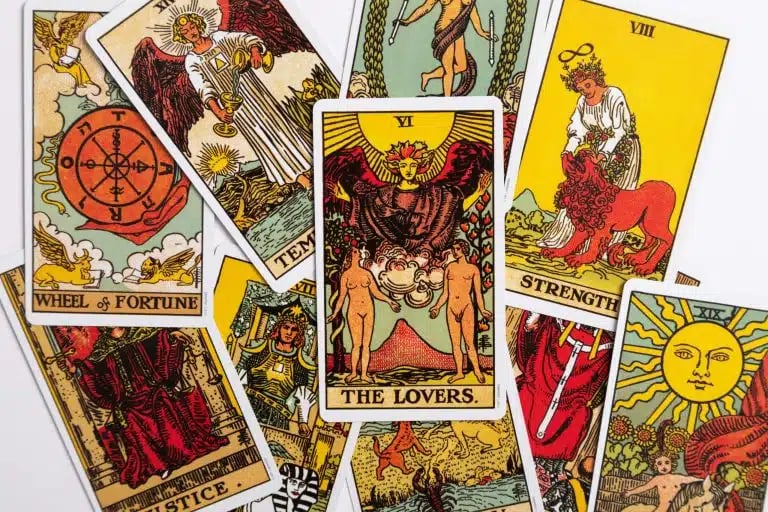
Introduction to Tarot
The tarot is one of the most widely used tools for divination, self-reflection, and spiritual exploration in modern occult practice. Whether you approach it as a psychological mirror, a divinatory system, or a bridge to the unconscious, understanding its history and structure will deepen your readings and respect for the tradition.
A Brief History of Tarot
Tarot's origins are debated among historians. The earliest known decks appeared in 15th-century Italy as playing cards for games such as tarocchini. The 22 trump cards (later called the major arcana) featured allegorical imagery; the four suits (later the minor arcana) resembled modern playing cards. Divination with tarot only became widespread in the late 18th century, when French and British occultists began to interpret the cards through Kabbalistic, astrological, and alchemical frameworks.
Antoine Court de Gébelin (1719–1784) argued that the tarot preserved ancient Egyptian wisdom. Eliphas Lévi (1810–1875) was central to the next shift. His work Transcendental Magic linked the 22 major arcana cards to the Hebrew alphabet and the Tree of Life, framing tarot as a map of spiritual development. This interpretation influenced the Hermetic Order of the Golden Dawn and later Western occultism.
In 1909, Arthur Edward Waite and artist Pamela Colman Smith created the Rider-Waite-Smith deck. It became one of the most influential tarot decks because the minor arcana cards were illustrated with full scenes instead of simple pips (repeating suit symbols). This made symbolism and intuition more accessible. Many modern decks build on this tradition while adapting it to contemporary themes and aesthetics.
The Structure of the Deck
A standard tarot deck has 78 cards in two groups:
Major Arcana (22 cards)
The major arcana represent major life themes, archetypal energies, and significant turning points. They are often numbered 0 (The Fool) through 21 (The World) and form a symbolic journey from beginnings to completion. Major arcana cards tend to indicate larger life themes rather than day-to-day details.
Common major arcana cards include The Fool, The Magician, The High Priestess, The Empress, The Emperor, The Lovers, The Chariot, Strength, The Hermit, The Wheel of Fortune, Justice, The Hanged Man, Death, Temperance, The Devil, The Tower, The Star, The Moon, The Sun, Judgement, and The World. When many major arcana appear in a spread, the reading often points to significant shifts or soul-level themes.
Minor Arcana (56 cards)
The minor arcana address everyday situations and are divided into four suits, each associated with an element:
| Suit | Element | Themes |
|---|---|---|
| Wands | Fire | Creativity, action, inspiration |
| Cups | Water | Emotions, relationships, intuition |
| Swords | Air | Thoughts, communication, conflict |
| Pentacles | Earth | Money, work, health, material life |
Each suit has 14 cards: Ace through 10, plus Page, Knight, Queen, and King. The numbered cards (2–10) often reflect stages or intensity of the suit's energy. The court cards usually represent people, roles, or aspects of the querent's personality. See the lessons on court cards and exploring the 78 cards for more detail.
Upright and Reversed
Many readers interpret cards in two orientations: upright and reversed. A reversed card is simply turned 180 degrees when drawn. In modern practice:
- Reversals can mean blocked or inverted energy, delay, or an inner/internal focus.
- Some readers treat reversals as a "dimmed" or "challenging" version of the upright meaning.
- Others prefer not to use reversals at all and instead rely on context and surrounding cards to provide nuance.
There is no single correct approach. Experiment and use what feels clear and useful for you. Some readers shuffle so that cards can reverse; others keep all cards upright.
Tarot in Modern Practice
Modern tarot is used for:
-
Self-reflection: Using the cards to explore inner states, choices, and patterns. A daily draw or a spread for self-inquiry can support personal growth.
-
Divination: Seeking guidance on questions about the past, present, or future. The cards offer symbols to reflect on; the reader and querent collaborate to find meaning.
-
Ritual and meditation: Incorporating cards into spellwork, pathworking, or meditation. A card may be chosen as a focus for a ritual or as a guide for a meditative journey.
-
Creative and therapeutic work: As prompts for journaling, storytelling, or therapy. The imagery sparks association and reflection.
Tarot works best when approached with curiosity and openness rather than superstition. The cards offer a symbolic language; the reader's intuition and the querent's context shape the interpretation. Whether you view the outcomes as psychological insight, synchronicity, or something more, a grounded understanding of structure and symbolism will serve you well as you move on to your first readings.
Further Reading
Explore More
Continue learning with related content from The Esoteric Witch: