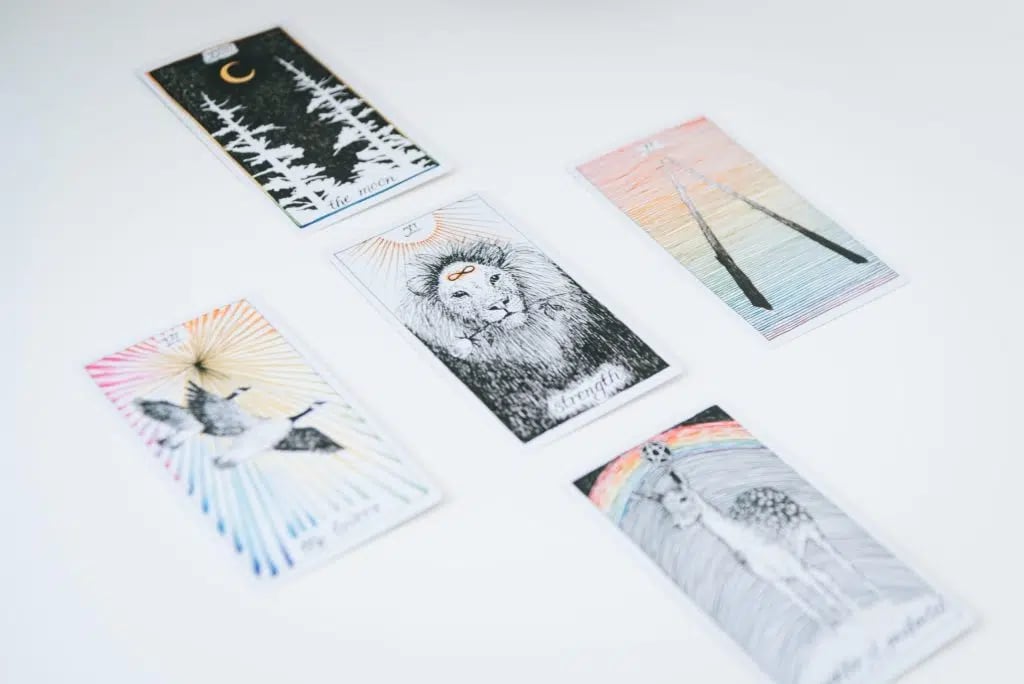
Your First Reading
Once you understand the basics of tarot structure and symbolism, the next step is to give a real reading. This lesson covers simple spreads, ethical considerations, and practical tips so you can read with confidence and respect.
Choosing a Spread
A spread is a layout that assigns positions to the cards. Each position has a meaning (e.g., past, present, future). Spreads give structure and keep readings focused. Start with simple layouts; add complexity as you grow more comfortable.
Three-Card Spread
The simplest and most versatile option. Three cards in a row, usually read left to right:
- Card 1: Past / situation / root cause
- Card 2: Present / challenge / current energy
- Card 3: Future / outcome / advice
You can adjust the positions to fit the question. Examples: "Situation – Obstacle – Advice," "Mind – Heart – Action," or "Option A – Option B – Synthesis." The three-card spread works for almost any question and is ideal for beginners.
Five-Card Cross (Celtic Cross–style)
A slightly more detailed spread for when you want more depth:
- Center: Current situation or heart of the matter
- Crossing: Challenge or influence crossing the situation
- Base: Past or foundation
- Recent: Recent influences
- Crown: Best possible outcome or direction
There are many variants of the Celtic Cross; this simplified version captures the core. Start with three cards until you feel comfortable; add more positions as needed.
Single-Card Draw
For daily reflection or a quick check, draw one card. Consider both upright and reversed meanings, or use your intuition to decide if the energy feels blocked or flowing. A single card can serve as a theme for the day, a prompt for journaling, or a quick yes/no style response when you learn to read card energies.
Before You Read
Clear your space. Many readers like to light a candle, burn incense, or take a few deep breaths. The goal is to shift into a calm, focused state. You do not need elaborate ritual; simplicity works. Even thirty seconds of intentional breathing can help.
State your intention. Silently or aloud, clarify why you are reading. Examples: "I seek insight into this situation" or "I offer this reading with respect and care." This centers you and sets the tone.
Shuffle mindfully. While shuffling, focus on your question or the querent's question. Some readers cut the deck or have the querent touch the deck to connect the energy. Overhand shuffle, riffle shuffle, or spreading the cards and choosing: all are valid. Choose what feels right for you. There is no single correct method.
During the Reading
Let the cards speak. Look at the images, symbols, and colors. Notice what stands out. Your first impression often carries useful information. A detail you had not noticed before may be exactly what the querent needs to hear.
Use your knowledge and intuition together. Book meanings are a starting point. How do they apply to this specific question and context? Trust your gut when it suggests a nuance or different emphasis. The same card can mean different things in different spreads.
Stay grounded. If a card feels negative (e.g., The Tower, the Three of Swords), frame it as a challenge or area for growth rather than a fixed doom. Tarot works best when it supports clarity and choice, not fear. You can acknowledge difficulty while leaving room for agency and hope.
Reading for Others
When reading for someone else:
-
Get consent. Make sure they want a reading and understand what it involves. Do not read for someone who has not asked.
-
Protect boundaries. Avoid promising outcomes you cannot guarantee. You are offering perspective, not controlling fate. Phrase predictions as possibilities, not certainties.
-
Respect privacy. Do not share their questions or interpretations without permission. What happens in a reading stays between you unless they say otherwise.
-
Know your limits. If a question touches mental health, medical decisions, or legal matters, encourage them to seek qualified professionals. Tarot can complement therapy; it does not replace it.
-
Be honest. If a spread is unclear, say so. It is fine to draw a clarifying card or suggest a follow-up reading later. Admitting uncertainty builds trust.
Reading for Yourself
Self-readings can be powerful but require care:
-
Notice bias. We sometimes see what we want. If a reading feels too convenient, sit with it and consider alternative interpretations. Ask: What might I be avoiding?
-
Space them out. Give yourself time to act on insights before pulling again on the same question. Repeated draws can become a form of avoidance.
-
Use journaling. Writing down your interpretations helps you track patterns and reflect on accuracy over time. Date your readings; revisit them to see what unfolded.
After the Reading
Thank the deck and the process. Some readers knock on the deck or say a short closing phrase. Store your cards in a way that feels respectful: a cloth, a box, or a dedicated drawer. There are no rules here; do what supports your sense of care for the practice.
Your first readings will improve with practice. Focus on clarity, kindness, and a willingness to learn. The cards are a tool; your intention and ethics shape how that tool is used.
Further Reading
Explore More
Continue learning with related content from The Esoteric Witch: