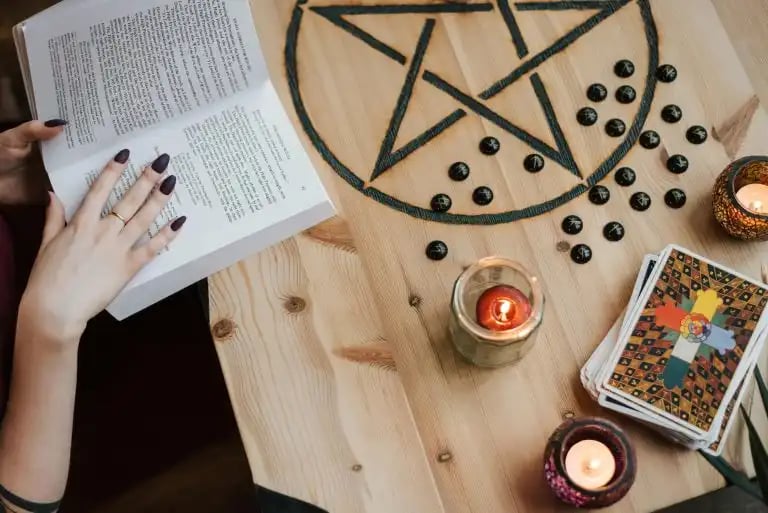
Witchcraft vs Wicca and Traditions
Witchcraft and Wicca are often confused, but they are not the same. Witchcraft is a practice; Wicca is a religion that includes witchcraft. This lesson clarifies these terms and surveys the diversity of traditions available to modern practitioners.
Witchcraft: Practice, Not Religion
Witchcraft refers to the practice of magic: working with intention, energy, symbolism, and sometimes deities or spirits to create change. It is not a religion in itself. Witches may be pagan, Christian, atheist, Jewish, or something else entirely. What unites them is the use of magical techniques: spells, divination, ritual, herbalism, and similar arts.
You can be a witch without being Wiccan. You can also be Wiccan and choose not to identify as a witch, though many Wiccans do. The terms overlap but are not interchangeable. Think of it this way: all Wiccans practice witchcraft (or magic), but not all witches are Wiccan.
Wicca: A Modern Pagan Religion
Wicca emerged in mid-20th-century Britain through figures such as Gerald Gardner and Doreen Valiente. It is a pagan religion that venerates a Goddess and God (often in multiple forms), observes the Wheel of the Year (eight Sabbats), and employs witchcraft as part of its practice. Wicca has initiatory traditions (Gardnerian, Alexandrian) and non-initiatory forms (Eclectic Wicca).
Key Wiccan elements include: dedication or initiation (in traditional forms), celebration of the Sabbats, reverence for the divine as gendered (Goddess and God), and the use of ritual magic. The Wiccan Rede ("An it harm none, do what ye will") and the Rule of Three (energy returns threefold) are common ethical frameworks, though not all Wiccans adhere to them literally.
Wicca introduced many people to witchcraft and helped popularize concepts like the Sabbats, the divine feminine, and earth-centered spirituality. Its influence is widespread: much of what is marketed as "witchcraft" in popular culture derives from Wiccan aesthetics and structure. But Wicca is only one path among many.
Other Traditions
Modern witchcraft includes numerous approaches beyond Wicca:
Traditional witchcraft: Draws on specific regional or folk traditions rather than Wiccan frameworks. British traditional witchcraft, Cochrane's Craft, and regional European folk magic fall here. Emphasis is often on land, ancestry, and pre-Wiccan or non-Wiccan practices.
Eclectic witchcraft: Combines elements from multiple sources according to personal preference. Many practitioners start here, blending Wiccan, folk, and other influences into a personalized practice.
Secular or naturalistic witchcraft: Practices magic as psychology and symbolism without belief in supernatural beings. Ritual, correspondences, and intention are used for psychological benefit, placebo effect, or personal empowerment. No gods or spirits required.
Hereditary or family tradition: Practices passed down within families. Authentic family traditions exist, but claims of ancient lineage are often unverifiable. Discernment is wise: ask questions, notice consistency, and avoid romanticizing "bloodline" narratives.
Demonolatry, Luciferianism, and other paths: Some witches work with spirits or deities that fall outside conventional Wiccan frameworks. These are valid paths with their own histories and ethics.
Understanding these distinctions helps you choose a path that fits your beliefs and goals, and to communicate clearly with others in the community. When someone says they are a witch, it does not tell you their religion, tradition, or cosmology. Ask if you need to know.
Choosing a Path
You do not need to pick one tradition forever. Many practitioners explore eclectically before settling (or not settling) into a more defined path. Some remain eclectic throughout. What matters is that your practice feels honest, ethical, and supportive of your growth. If a label or tradition stops fitting, you can change. Witchcraft and paganism are living traditions; they evolve with those who practice them.
Avoiding gatekeeping: The community sometimes debates who "counts" as a witch or how much study is required. These debates can be alienating. If you are practicing magic with intention and respect, you have a place. Learn, listen, and grow, but do not let others' standards silence your own valid path. You are accountable to your ethics and to your community, not to arbitrary tests of "real" witchcraft.
Further Reading
Explore More
Continue learning with related content from The Esoteric Witch: