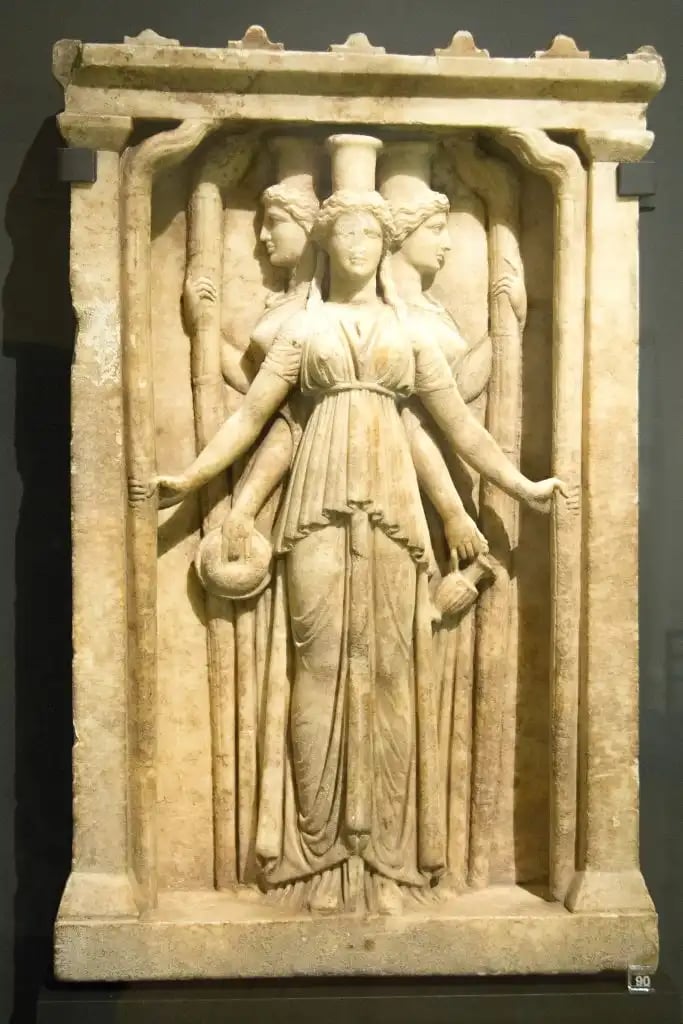
Hekate and the Dark Moon
The dark moon (the phase when the Moon is not visible in the sky) is particularly sacred to Hekate. In ancient Greece, offerings (the deipnon) were made to her at this time. Modern practitioners continue to honor her during this phase as a goddess of the unseen, the underworld, and transformation. This lesson explores why the dark moon matters for Hekate devotion and how to observe it today.
Why the Dark Moon?
Hekate's association with night, the Underworld, and liminal spaces aligns with the dark moon's energy. This phase represents rest, release, introspection, and the time before new beginnings. The Moon has "disappeared"; the sky is dark. Hekate holds torches to light the way when no other light is visible. She guides through darkness. Honoring her at the dark moon connects your practice to lunar cycles and to her role as psychopomp, keeper of mysteries, and guardian of thresholds.
The dark moon is also a time when the veil between worlds was traditionally thought to be thin. Divination, spirit communication, and ancestral work are often considered especially potent during this phase. Hekate, as a guide to the underworld and a mistress of magic, presides over these practices.
Traditional and Modern Rites
The Deipnon: Traditionally, offerings of food were left at crossroads or at a "Hekate's supper" spot. In ancient Athens, this was sometimes a low table or a spot at a crossroads where food was placed for Hekate and for restless spirits (the nekusia). The intent was to honor the goddess and to appease the dead so they would not trouble the living. Food might include bread, eggs, garlic, fish, or other items. After the offering, participants did not look back.
Modern practitioners adapt this in various ways:
-
Outdoor crossroads: Leave offerings at a three-way intersection (check local regulations; some areas prohibit leaving food). Ensure what you leave is safe for wildlife if applicable.
-
Home altar: Place offerings on the altar during the dark moon. After the rite, dispose of them respectfully: compost, bury, or leave in a natural area where appropriate. Do not let food sit until it spoils.
-
Donation in her name: Give to a food bank, animal shelter (dogs are sacred to Hekate), or other cause in her honor. This adapts the spirit of the deipnon (feeding, offering) to modern constraints.
-
Feeding wildlife: Some leave bird seed or other animal-safe food at a liminal spot (e.g., a garden boundary, a park edge). Research what is safe and legal in your area.
Dark moon ritual: Light candles for Hekate. Speak to her: offer thanks, ask for guidance, or request her presence in the coming lunar cycle. Meditate on release and renewal. Name what you wish to release; ask her to carry it. Divination during the dark moon is said to be potent for shadow work and ancestral communication. Scrying, tarot, or other methods can be used. End by thanking her and extinguishing the candles (or letting them burn out safely).
Practical Tips
Check a lunar calendar to find the exact dark moon date each month. The dark moon is the moment when the Moon and Sun conjunct; it typically lasts a day or two before the thin crescent of the new moon appears. Even a short acknowledgment (a candle, a few words, an offering) honors the tradition. If you cannot observe every dark moon, choose the ones that fit your life. Consistency over time matters more than perfect attendance.
If you miss the dark moon: Honor Hekate when you can. The dark moon is a potent time, but she is also present at other times. A belated offering or ritual is still valid. Flexibility respects the realities of modern life while keeping the practice meaningful.
Combining with other practices: The Deipnon can be combined with banishing, divination, or other dark moon work. Some practitioners use the dark moon for releasing spells, cord-cutting, or ancestral communion. Hekate's presence need not be the only focus; she can oversee a broader dark moon observance.
Further Reading
Explore More
Continue learning with related content from The Esoteric Witch: