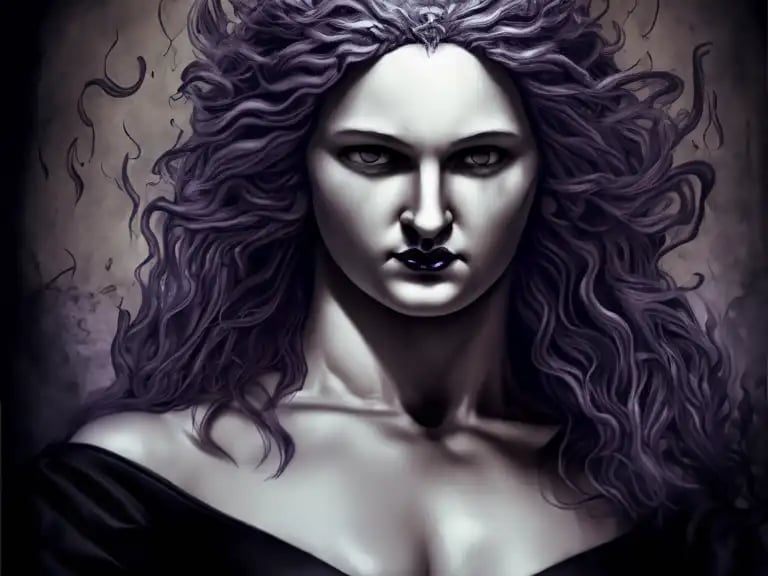
Hekate: Mythology and Symbols
Hekate (also spelled Hecate) is a Greek goddess associated with crossroads, entranceways, night, light, magic, witchcraft, the Moon, herbs, ghosts, and necromancy. Her origins remain debated: scholars suggest she may have been a pre-Greek deity adopted into the Greek pantheon, possibly from Caria or Thrace. Her influence on modern witchcraft is profound. This lesson surveys her mythology and key symbols to provide a foundation for respectful, informed devotion.
Mythology and Roles
In Greek myth, Hekate is generally considered the daughter of Perses (a Titan) and Asteria (a star goddess), and granddaughter of Phoebe. She is often described as a virgin goddess, meaning she was not defined by marriage or male consorts, though she is linked to figures such as Scylla and, in some traditions, Circe and Medea. She was a guardian of childbirth, associated with healing, and vital to funerary rites. She maintained relationships with Zeus, Artemis, and other deities, often as a mediator or guide. Zeus, according to Hesiod, gave her a share of earth, sea, and sky; she retained power in all three realms.
Hekate's connection to the Underworld and to magic developed over time. In Homer's Odyssey, she is not yet the mistress of witchcraft; that association strengthens in later literature. By the classical period, she was firmly linked to witchcraft, sorcery, and the liminal spaces where worlds meet. She appears in the myth of Persephone's abduction: she guides Demeter with her torches and later becomes Persephone's companion in the underworld. As a psychopomp, she escorts souls and presides over transitions between life and death.
Key Symbols
Triple form: Hekate is often depicted with three faces or bodies (Hekate Trimorphis or Hekate Triodos), symbolizing her connection to the three phases of the Moon (waxing, full, and waning) and to the maiden, mother, and crone archetypes. The triple form also represents her dominion over sky, earth, and underworld, and her presence at three-way crossroads. In art, she may hold different objects in each hand: torches, keys, serpents, or other symbols.
Torches: She holds torches to light the way, representing guidance, lunar light, and the illumination of hidden knowledge. In the Persephone myth, she uses them to aid Demeter. Torches also connect to her role in mystery rites and to the idea of light in darkness.
Key: A key at her side or around her neck represents her ability to unlock mysteries and open gates between realms. She holds the key to the underworld and to hidden knowledge. Modern practitioners often place a key on her altar as a symbol of access and transition.
Dogs: Dogs are sacred to Hekate: companions and guardians that watch the night. In some myths, she is accompanied by dogs; in others, she sends them as omens. They symbolize loyalty, protection, and her role as guide. Dog figurines or imagery often appear on Hekate altars.
Crossroads: As goddess of crossroads (especially three-way intersections, or triodos), Hekate presides over points of choice and transition. Crossroads were liminal places in the ancient world: boundaries between settlements, sites of offerings, and places where the physical and spiritual were thought to intersect. Offerings to Hekate were traditionally left at crossroads.
Serpents: In some depictions, Hekate wears or is accompanied by serpents, symbols of transformation, rebirth, and chthonic power. They reinforce her connection to the underworld and to magical knowledge.
Hekate in Historical Context
Hekate was both revered and feared. Households sought her favor with offerings at the door; she protected the home and its thresholds. At the same time, she was associated with ghosts, restless dead, and the darker aspects of magic. This duality (protector and keeper of the dead, bringer of light and mistress of the unseen) makes her a complex figure. Modern devotion often emphasizes her protective and guiding aspects while honoring her full range. Understanding these symbols and myths provides a foundation for the lessons that follow. When you place a key on her altar or light torches at a crossroads, you participate in a visual language that has carried meaning for millennia.
Further Reading
Explore More
Continue learning with related content from The Esoteric Witch: