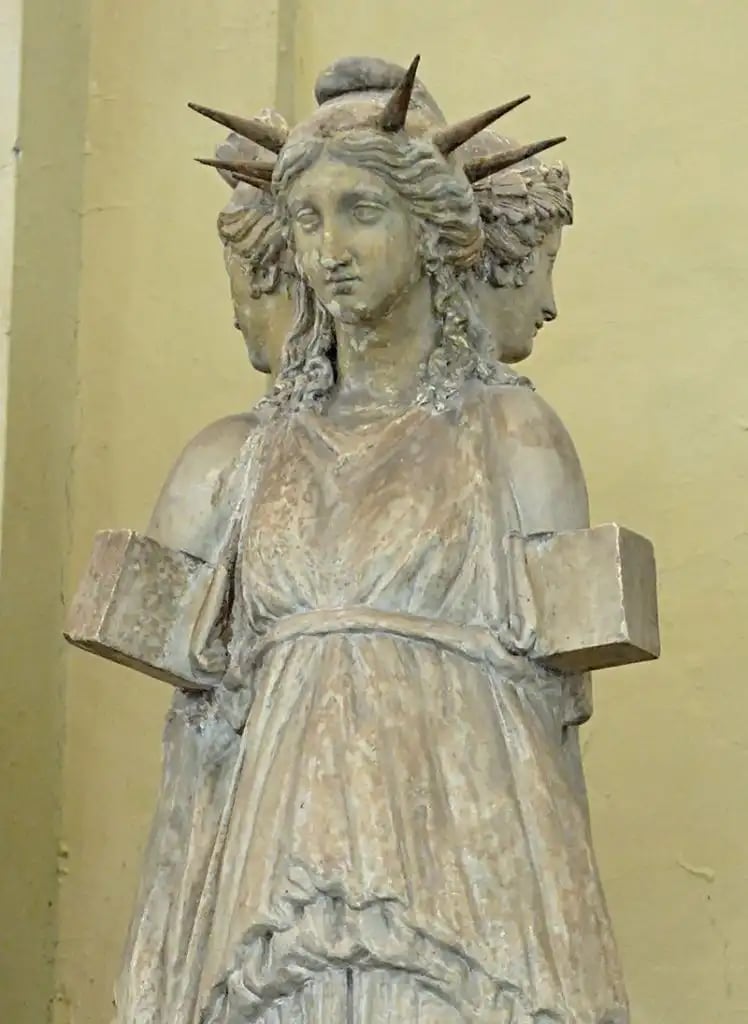
Hekate in Modern Devotion
Hekate has become a patron goddess for many modern witches. Her domains (magic, crossroads, the Moon, transformation) fit contemporary practice well. This lesson outlines ways to honor her in a modern context and build an ongoing relationship with her.
Why Hekate Appeals to Modern Practitioners
Hekate's association with magic, the Moon, and liminal spaces matches core witchcraft themes. She is invoked for protection, divination, and guidance through transitions: job changes, moves, grief, or identity shifts. Her connection to the dead supports ancestor work and spirit communication. Her independence and power (she was never subordinate to a male deity) inspire those seeking to reclaim their own authority.
Many practitioners also value her historical complexity: a goddess who evolved across cultures and centuries, who was both household guardian and mistress of the underworld. She offers a bridge between scholarly reconstruction and lived devotion. Whether you approach her through historical research, intuition, or a blend of both, she rewards sustained attention.
Devotional Practices
Offerings: Traditional offerings include garlic, eggs, honey, and bread. Some practitioners also offer red mullet (a fish), onions, or dog figurines. Contemporary additions might include dark chocolate, pomegranate, or herbs sacred to her (mugwort, dittany, lavender). Offer at a crossroads, at a home altar, or at the dark moon. Give what feels respectful and sustainable for you. Dispose of physical offerings before they spoil: compost organic matter, pour liquids onto earth if safe, or leave at an outdoor crossroads for wildlife (check local regulations).
Prayer and invocation: Speak to Hekate in your own words or use traditional hymns. The Greek Magical Papyri contain invocations; modern adaptations are widely available. Invoke her at the threshold of rituals, before divination, or during life transitions. A simple approach: light a candle, speak her name, and state your intention or gratitude.
The Deipnon: The ancient Greeks made offerings to Hekate at the new moon (deipnon = "meal"). Food was left at crossroads or at a designated spot (sometimes a refuse heap or liminal location) to honor her and placate restless spirits. Modern practitioners adapt this: leaving offerings at an outdoor crossroads, placing food on the altar and later disposing of it respectfully, or donating to those in need in her name. The dark moon is the traditional time; see the lesson on Hekate and the Dark Moon for more detail.
Threshold practices: Because Hekate presides over boundaries, some practitioners make a habit of acknowledging her at doors: a moment of thanks when leaving or entering, a small offering by the door, or a simple gesture of recognition. This keeps her presence woven into daily life.
Building Relationship
Consistency matters more than grandeur. A small daily gesture (a candle lit for a few minutes, a few words of acknowledgment, a moment at the threshold) builds relationship over time. Let Hekate guide you toward what she wants from you. Pay attention to dreams, synchronicities, and intuitive pulls. You might notice increased encounters with dogs, keys, or crossroads imagery when she is reaching out. Devotion is a dialogue, not a one-way performance.
When devotion feels stagnant: If your practice becomes routine, try something new: research a lesser-known aspect of her mythology, offer something you have not before, or ask her directly what she wants. Sometimes a pause and a fresh approach restores connection.
Ethics and Respect
Honoring Hekate does not require claiming unbroken ancient lineage. Modern devotion is valid. Be transparent about what you are doing: you are building a relationship with a goddess as she exists in your practice, informed by history but not bound by it. Avoid appropriating closed or initiatory traditions; if you draw on culturally specific practices, research their origins and respect their boundaries.
Signs of connection: Practitioners often report dreams of dogs, keys, or crossroads; synchronicities involving threes or thresholds; or a sense of presence when making offerings. These are not required for valid devotion, but they can affirm that relationship is growing. Trust your experience without demanding dramatic signs.
Further Reading
Explore More
Continue learning with related content from The Esoteric Witch: