Creating a Hekate Altar
An altar is a dedicated space for devotion and ritual. Hekate does not require grandeur; sincere devotion and consistency matter more than elaborate displays. This lesson offers guidance for creating a Hekate altar that works in modern living situations, including small spaces and shared housing.
Essential Elements
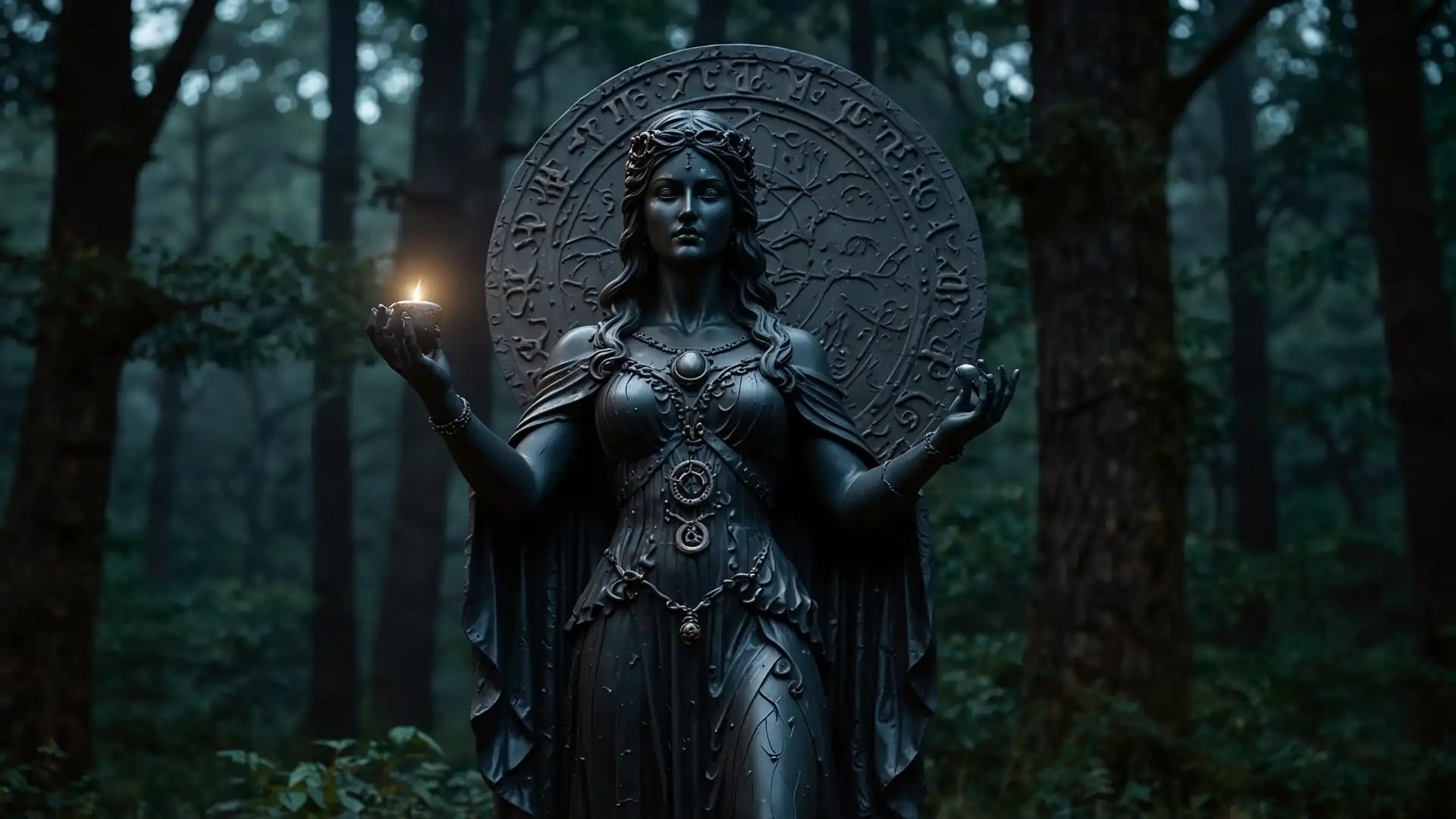
Images or statues: A representation of Hekate helps focus attention. Use a print, statue, or drawing. Triple-formed imagery (three faces or bodies) is traditional, but any respectful depiction works. If you cannot find or afford a statue, a printed image in a frame or a hand-drawn representation suffices.
Torches or candles: Hekate is associated with light. White, black, or silver candles are common choices. Some practitioners use three candles to reflect her triple aspect (maiden, mother, crone) or the three phases of the Moon. Tealights and LED candles are safe alternatives if you cannot leave flames unattended.
Key: A key (real or symbolic) represents her ability to unlock mysteries and open gates between realms. Place it on the altar or hang it above. Thrift stores often have interesting vintage keys; a simple key from a hardware store also works.
Offerings bowl: A dish or bowl for offerings. Keep it clean; replace offerings before they spoil. A small ceramic or metal bowl is sufficient.
Optional additions: Garlic (traditional), dog figurines, images of the Moon, crossroads symbols, herbs (mugwort, dittany, lavender), or stones (black obsidian, moonstone). Add items as they resonate; there is no mandatory list.
Placement and Space
Hekate's altars are traditionally placed at thresholds: near the front door, in a hallway, or at a window. A crossroads outside can also serve as a devotional site. If your space is limited, a small shelf, windowsill, or even a dedicated drawer (a "box altar" you open during practice) can become an altar. What matters is that the space feels intentional and respectful. Those who need discretion can use a subtle setup: a single candle and key on a shelf that does not announce itself to visitors.
Budget and Minimal Options
You do not need expensive items. A candle, a key, a small dish, and a printed image can form a complete altar. Thrift stores yield candle holders, bowls, and fabric for altar cloths. Garlic, eggs, and bread are low-cost traditional offerings. DIY symbols (a drawn triple goddess, found feathers or stones) carry meaning without high cost. Hekate rewards intention over expense.
Maintaining the Altar
Clear and dust regularly. Refresh offerings before they spoil. Light candles when you pray or perform ritual. If you use the Deipnon, remove and dispose of food offerings after the dark moon rite. Let the altar evolve as your relationship with Hekate deepens. Add or remove elements as your practice develops. An altar is a living practice, not a static decoration.
Altar as Threshold
Because Hekate guards boundaries, some practitioners place the altar at a transition point: between rooms, near the door, or at a window facing outward. This reinforces her role as guardian of thresholds. Even in a small space, the act of creating a dedicated spot can symbolize the boundary between ordinary and sacred time.
When Space Is Shared
If you live with others who do not share your practice, a discreet altar is fine. A shelf in your room, a drawer altar, or a portable setup you bring out during devotion can all work. You do not need to explain or justify; your relationship with Hekate is yours. Adaptability honors her practical, boundary-crossing nature. She governs thresholds; your altar can be a threshold between private devotion and shared living space without requiring visibility to others.
Evolving Your Altar
As your relationship with Hekate deepens, your altar may change. You might add symbols that emerge from dreams or synchronicities. You might simplify if clutter distracts. Seasonal offerings (spring flowers, autumn leaves) can reflect the Wheel of the Year. There is no final form; the altar grows with your practice.
Further Reading
Explore More
Continue learning with related content from The Esoteric Witch: