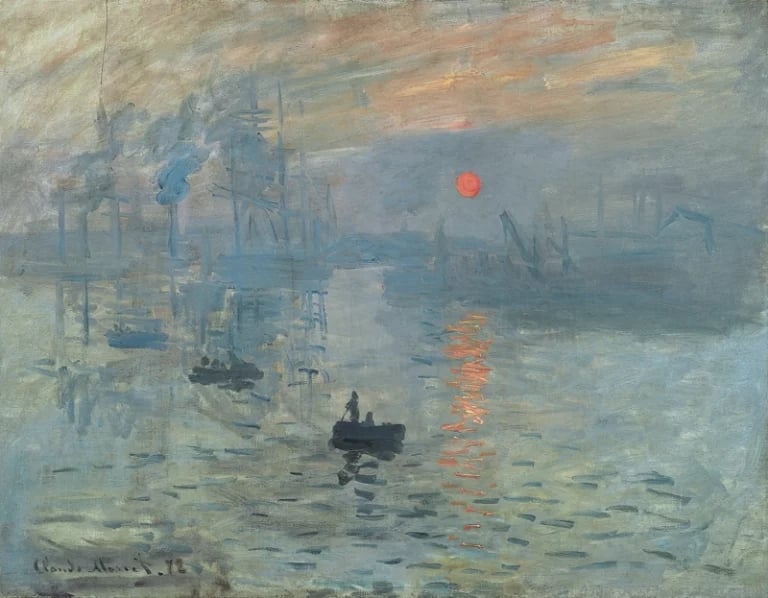
Period: 1865 – 1885
Characteristics: Emphasis on light and colour, loose brushwork, everyday subjects
Events: Exhibition of the Anonymous Society of Painters, Sculptors, and Printmakers (1874), Monet's creation of "Impression, Sunrise" (1872), The Birth of Neo-Impressionism (1886)
A Revolution of Light and Color
Throughout human history, art has served as a mirror reflecting the evolving spirit of civilization: our dreams, fears, beliefs, and aspirations captured in visual form. By the mid-19th century, European art had become highly formalized, governed by strict academic conventions and centered around idealized historical, mythological, and religious themes. Against this backdrop of artistic orthodoxy, Impressionism emerged like a burst of fresh air, fundamentally challenging how artists perceived and depicted the world around them.
Impressionism represented much more than just a new style of painting; it embodied a radical shift in artistic consciousness. Rather than carefully constructing idealized scenes in studio settings, Impressionist artists ventured outdoors to capture the ephemeral qualities of natural light, the vitality of modern life, and the sensory experience of a particular moment. With their vibrant colors, visible brushstrokes, and focus on ordinary subjects, these revolutionary painters prioritized the immediate visual impression of a scene over meticulous detail and formal composition. The result was art that felt alive with movement, atmosphere, and authentic feeling, qualities that resonated with a rapidly changing society experiencing the transformations of industrialization and modernization.
What made Impressionism truly revolutionary was its wholehearted rejection of established conventions. Academic painting of the time required years of formal training, adherence to classical techniques, and the creation of highly polished works with invisible brushstrokes. Impressionists deliberately broke these rules, embracing a more spontaneous approach that celebrated the artist's personal vision and emotional response to the world. Their bold experimentation with technique and subject matter opened new avenues for artistic expression that would influence generations of artists to come, effectively reshaping the trajectory of Western art and laying the groundwork for the range of modern art movements that followed.
The Birth of a Movement
Impressionism emerged in late 19th century France during a period of remarkable social and technological transformation. Paris was being redesigned under Baron Haussmann's massive urban renewal project, new technologies were transforming daily life, and traditional social structures were beginning to shift. Within this dynamic environment, a group of young artists found themselves increasingly frustrated with the rigid constraints imposed by the official art establishment, which was dominated by the prestigious École des Beaux-Arts and the annual Salon exhibitions that could make or break an artist's career.
The traditional academic approach championed highly finished paintings with precise lines, smooth surfaces, and historically significant subjects presented in idealized form. Success required conformity to these standards and acceptance by the jury of the official Salon. Artists who failed to conform faced professional obscurity and financial hardship. A group of young painters (including Claude Monet, Pierre-Auguste Renoir, Edgar Degas, Camille Pissarro, Berthe Morisot, and Alfred Sisley) found themselves repeatedly rejected by the Salon jury for their unconventional techniques and modern subject matter. This shared experience of rejection became the catalyst for one of the most significant artistic revolutions in Western history.
In 1874, these artists took the extraordinary step of organizing their own independent exhibition outside the official Salon system. The show, mounted by what they called the "Anonymous Society of Painters, Sculptors, and Printmakers," featured works that scandalized critics with their seemingly unfinished appearance, bright colors, and everyday subject matter. At this exhibition, Claude Monet displayed his painting "Impression, Sunrise," a hazy view of the harbor at Le Havre rendered in loose brushstrokes with vibrant orange and blue hues. Louis Leroy, a hostile critic writing for the satirical journal Le Charivari, seized upon Monet's title to mock the entire group, describing them as mere "impressionists" who failed to create proper, finished paintings. In one of history's great ironies, this intended insult was embraced by the artists themselves, who adopted "Impressionism" as the name for their movement in subsequent exhibitions.
The development of Impressionism was enabled by technological innovations that transformed artistic practice. The invention of portable paint tubes in the 1840s liberated artists from their studios, allowing them to paint outdoors (en plein air) and directly capture changing light conditions. Meanwhile, the burgeoning field of optical science, particularly the work of Michel Eugène Chevreul on color theory and simultaneous contrast, provided intellectual underpinnings for the Impressionists' approach to color. Rather than mixing colors on the palette to achieve the desired shade, many Impressionists placed pure colors side by side on the canvas, allowing the viewer's eye to blend them optically, a technique that created unprecedented luminosity and vibrancy in their paintings.
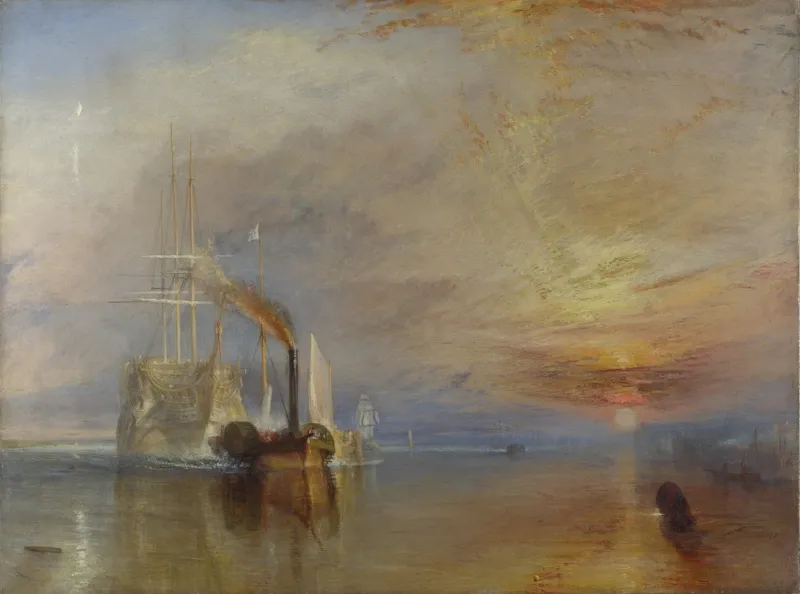
The Fighting Temeraire by J. M. W. Turner, 1839 (Source)

The Impressionist Vision
At the heart of Impressionism lies a radical reconsideration of what constitutes the essential subject of art. Rather than grand historical narratives or idealized beauty, Impressionist painters found inspiration in the transient beauty of ordinary life: the changing play of light across a landscape, the colorful bustle of urban leisure, the intimate moments of domestic life. Their goal was not to create timeless, monumental works but to capture the vivid sensory impression of a specific moment, with all its ephemeral qualities of light, atmosphere, and movement.
This emphasis on capturing fleeting moments required a complete reimagining of painting technique. Traditional academic painting involved careful preliminary drawings, layers of underpainting, and meticulous glazing to achieve a polished finish with invisible brushwork. Impressionists abandoned this approach in favor of rapid, visible brushstrokes that could quickly record visual sensations before they changed. Short, broken strokes of pure color, often applied wet-on-wet rather than in careful layers, created a vibrant, shimmering effect that conveyed not just the appearance of a scene but the experience of perceiving it. This technique was particularly effective for capturing the dappled effect of sunlight filtering through leaves, the sparkling reflection of light on water, or the atmospheric haze of a misty morning.
Color theory became central to Impressionist practice as artists rejected the traditional approach of using dark shadows and muted tones. Instead, they embraced the scientific understanding that shadows contain color rather than merely being darker versions of the lit areas. Impressionists often painted shadows in blues, purples, and other complementary colors rather than in blacks and browns, creating a revolutionary sense of luminosity and atmospheric effect. They observed that objects appear to change color depending on lighting conditions and surrounding colors, an apple might appear red in direct sunlight but take on purple tones in shadow or orange highlights when reflecting nearby objects. This understanding led to paintings of unprecedented chromatic richness and perceptual accuracy.
The Impressionists' choice of subject matter was as revolutionary as their technique. Turning away from mythology and history, they embraced the dynamic reality of modern life: Parisian cafés and dance halls, suburban leisure spots along the Seine, domestic interiors, and rural landscapes transformed by industrialization. They painted the new iron bridges spanning the Seine, steam trains cutting through the countryside, and crowded boulevards lined with gas lamps. Women artists like Berthe Morisot and Mary Cassatt brought particular attention to domestic scenes and the experiences of women and children, areas of life largely ignored in academic painting. Through their diverse subjects, Impressionists created a vivid chronicle of their rapidly changing world, celebrating both its scenery and its vibrant modernity.
Impressionism embodied a new relationship between the artist and visual reality. Rather than imposing preconceived ideas or academic rules on what they observed, Impressionists sought to respond directly and personally to the visual sensations before them. This emphasis on individual perception and subjective experience marked a decisive shift toward modernism in art, establishing the artist's unique vision as the primary source of artistic value. By privileging the authentic recording of personal visual experience over adherence to established conventions, Impressionists opened the door to the increasingly subjective and experimental approaches that would characterize art in the 20th century.
Masters of the Movement
While numerous artists contributed to the Impressionist movement, three figures stand out for their distinctive visions and profound influence: Claude Monet, Edgar Degas, and Pierre-Auguste Renoir. Each brought unique sensibilities and techniques to the movement, collectively demonstrating the remarkable creative diversity possible within Impressionism's revolutionary approach to art.
Claude Monet: The Quintessential Impressionist
Claude Monet (1840-1926) is often considered the quintessential Impressionist, whose work most purely embodied the movement's central concerns with light, color, and atmospheric effects. Born in Paris but raised in Normandy, Monet showed early artistic talent and received formative encouragement from Eugène Boudin, who introduced him to outdoor painting. After military service in Algeria and training in Paris, where he met fellow artists like Renoir and Pissarro, Monet developed the distinctive approach that would define Impressionism: direct observation of nature, emphasis on momentary effects of light, and a technique of broken color applied in distinct brushstrokes.
Throughout his long career, Monet remained dedicated to capturing the visual sensations of the natural world, particularly the effects of changing light and atmosphere. His commitment to painting outdoors in all seasons and weather conditions, sometimes working on multiple canvases simultaneously to capture different lighting effects, demonstrated his relentless pursuit of visual truth. In his later years, Monet created his famous water garden at Giverny, which became the subject of his extraordinary series of Water Lilies paintings, where reflections on water, floating blossoms, and atmospheric effects merged into compositions that verged on abstraction while remaining rooted in observed reality.
The Water Lilies series represents the culmination of Monet's artistic journey. In these works, created over the last three decades of his life, Monet moved beyond conventional representation toward an immersive exploration of light, color, and reflection that anticipated later developments in abstract painting. The canvases eliminate traditional perspective, with no horizon line to orient the viewer, creating instead a continuous surface of water, reflections, and vegetation that surrounds and envelops the viewer in pure visual sensation. These masterpieces demonstrate how Impressionism, far from being merely a style of pretty pictures, contained within itself the seeds of modernism's most radical innovations.
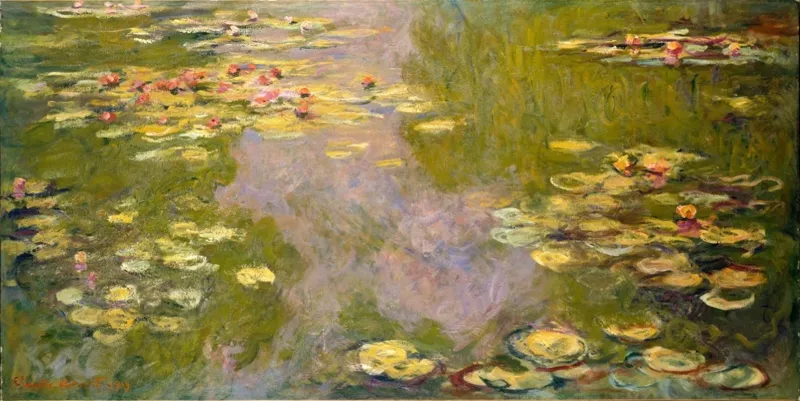
Water Lilies by Claude Monet, 1919 (Source)

Edgar Degas: The Urban Observer
Edgar Degas (1834-1917) brought a distinctive sensibility to Impressionism that both embraced and diverged from the movement's central tenets. Born into a wealthy banking family and trained in academic methods, Degas maintained certain traditional techniques while developing a highly original approach to depicting modern urban life. Unlike Monet's focus on landscapes and natural light, Degas was fascinated by the human figure in motion and the artificial environments of Paris: dance rehearsals, horse races, cafés, and private moments of women bathing or dressing.
Degas differed from his Impressionist colleagues in significant ways. He preferred working in the studio rather than outdoors, often creating composite scenes from sketches, memory, and imagination rather than direct observation. His draftsmanship remained precise and deliberate even as he embraced unusual compositions influenced by Japanese prints and the emerging medium of photography. These compositions frequently featured cropped figures, oblique viewpoints, and asymmetrical arrangements that created a sense of spontaneity and captured the dynamism of modern life.
"The Dance Class" (1875) exemplifies Degas' unique vision. The painting depicts a moment in a ballet rehearsal, with dancers scattered across the studio in various poses of practice, rest, and adjustment. Rather than presenting a centered, balanced composition as academic training would dictate, Degas creates a seemingly random arrangement that suggests a candid glimpse of an ongoing activity. The visual complexity of the scene, with its mirrors reflecting additional space, its diagonal thrust, and its numerous figures in different states of motion, creates a sense of energy and authenticity. Through this and similar works, Degas captured the essence of Parisian cultural life while developing a highly personal style that expanded the possibilities of what Impressionism could encompass.
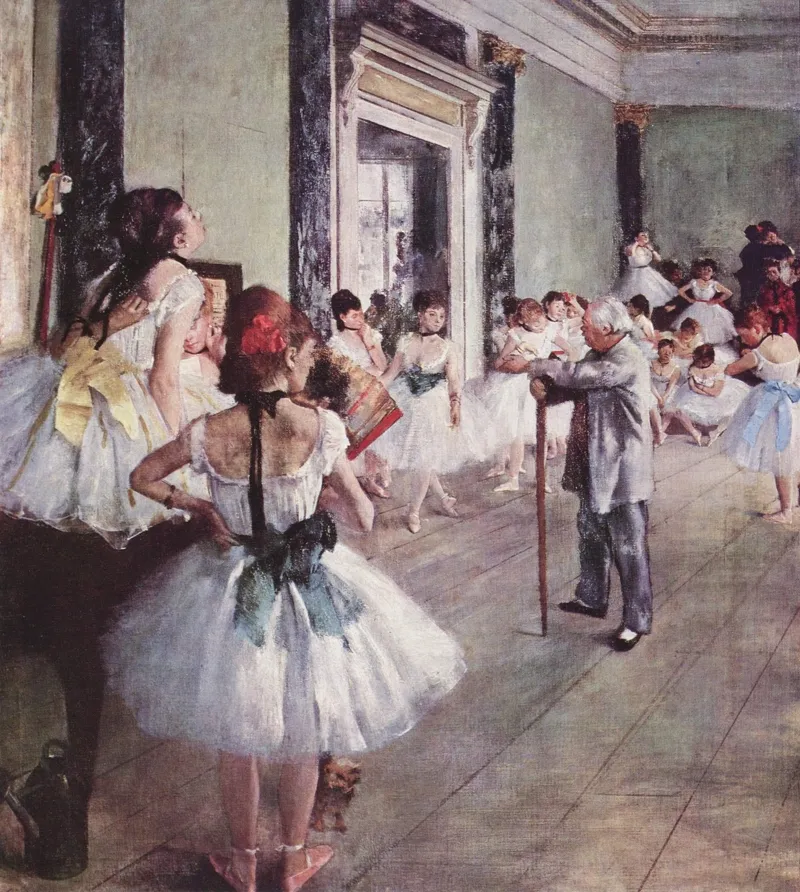
The Dance Class by Edgar Degas, 1875 (Source)

Pierre-Auguste Renoir: The Painter of Joy
Pierre-Auguste Renoir (1841-1919) brought to Impressionism an irrepressible joie de vivre and sensuality that distinguished his work from his contemporaries. Born into a working-class family in Limoges, Renoir began his artistic career decorating porcelain before saving enough money to study painting. His early artistic development took place alongside Claude Monet, with whom he painted side by side at La Grenouillère, a popular bathing spot on the Seine where they developed techniques for capturing the flickering effects of light on water and foliage that would become hallmarks of Impressionism.
While Renoir shared the Impressionist interest in light effects and modern life, his work was distinguished by its particular emphasis on the sensual beauty of the human figure, especially women, and the pleasures of social life. His palette tended toward warm, glowing colors that celebrated the vitality of his subjects, whether depicting outdoor leisure activities, intimate domestic scenes, or luminous nudes. Renoir's brushwork evolved throughout his career, from the feathery, broken strokes of his early Impressionist phase to the more rounded, flowing forms of his later work, but always maintained a characteristic softness and warmth.
"Dance at Le Moulin de la Galette" (1876) stands as one of Renoir's masterpieces and a defining image of Impressionism. This large canvas depicts a Sunday afternoon at an open-air dance garden in Montmartre, capturing the vibrant social life of working-class Parisians enjoying their leisure time. Renoir's handling of dappled sunlight filtering through the trees creates a shimmering effect across the entire scene, unifying the numerous figures in their varied activities of dancing, conversing, and observing. The painting pulses with life, warmth, and sensuous pleasure: young men and women flirt and dance, light plays across fashionable dresses and hats, and the entire scene conveys a palpable sense of music and movement. Through this joyful celebration of modern social life, Renoir created an enduring image of belle époque Paris and demonstrated Impressionism's unique capacity to capture the sensory richness of lived experience.
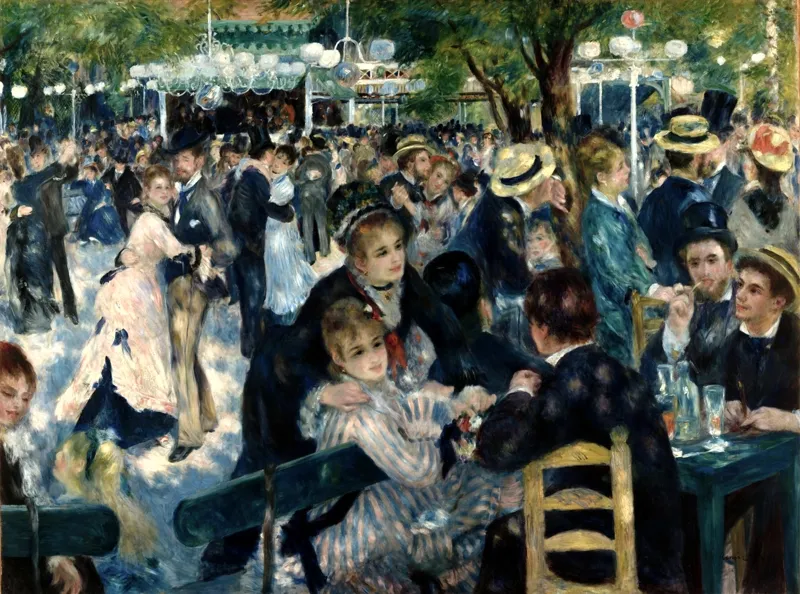
Dance at Le Moulin de la Galette by Pierre-Auguste Renoir, 1876 (Source)
The Lasting Impact of Impressionism
Few artistic movements have transformed visual culture as profoundly as Impressionism. What began as a radical rebellion against academic conventions by a small group of Parisian artists ultimately reshaped how we see and experience the world around us. The Impressionists' revolutionary techniques, their elevation of ordinary subjects and moments, and their emphasis on subjective visual experience created a decisive break with artistic tradition and opened pathways that would lead to the diverse artistic explorations of the 20th and 21st centuries.
Impressionism gave birth to several related movements that took its innovations in different directions. Neo-Impressionism, led by Georges Seurat and Paul Signac, developed the Impressionist approach to color into the more scientific technique of Pointillism, while Post-Impressionists like Vincent van Gogh, Paul Gauguin, and Paul Cézanne incorporated Impressionist techniques into more structured, emotionally expressive, or conceptually ambitious works. The emphasis on light, color, and spontaneous expression pioneered by the Impressionists influenced virtually every subsequent artistic movement, from Fauvism and Expressionism to Abstract Expressionism and beyond.
Beyond the world of fine art, Impressionism's influence permeated broader visual culture, affecting everything from commercial illustration and photography to cinema and fashion. The Impressionist sensitivity to light and atmosphere informed the development of cinematography, while their interest in capturing modern life and everyday moments helped shape documentary photography. Their chromatic innovations revolutionized color theory and influenced design across multiple disciplines. The Impressionist approach to seeing, attentive to momentary effects, sensitive to subtle variations of light and color, and appreciative of beauty in ordinary places, has become so thoroughly integrated into our visual consciousness that we hardly recognize how revolutionary it once was.
What makes Impressionist paintings continue to resonate with viewers today is their unique combination of visual pleasure and authentic engagement with life as it is actually experienced. Neither purely decorative nor intellectually abstract, these works speak directly to our sensory experience of the world: the glimmer of sunlight on water, the vibrant energy of a crowded street, the tender intimacy of a mother with her child. In their celebration of fleeting moments of beauty and their attentiveness to the visual richness of ordinary life, Impressionist paintings remind us to look more closely at the world around us and to find wonder in the play of light across the surfaces of our daily existence. This legacy of attentive seeing, perhaps even more than their specific techniques or subjects, represents Impressionism's most profound and enduring contribution to human culture.
Related in this topic
More from Occult Art History & Symbolism — Start Here.
Symbolism
Discover the meaning of symbolism! Learn its origins, art and famous symbolist painters. Find hidden emotions in art.
Naïve Art
Naïve art: untrained artists created startling originality through simplified forms, vivid colors, and unfiltered imagination.
Art Informel
Art Informel: the European parallel to Abstract Expressionism. Dubuffet, Tàpies, and the art of the unformed and the raw.
Street Art
Street Art: from subway tags to gallery walls. Banksy, Keith Haring, and the art that reclaims public space.
You Might Also Like
Art Informel
Art Informel: the European parallel to Abstract Expressionism. Dubuffet, Tàpies, and the art of the unformed and the raw.
Street Art
Street Art: from subway tags to gallery walls. Banksy, Keith Haring, and the art that reclaims public space.