Period: Mid-12th century to 15th century
Characteristics: Pointed arches; ribbed vaults; flying buttresses; stained glass; verticality and light; sculpture integrated with architecture
Events: Abbey of Saint-Denis rebuilt (1140s); Chartres Cathedral (1194–1260); spread across Europe
The Birth of the Gothic
Gothic art emerged in the Île-de-France in the mid-twelfth century. The term "Gothic" was originally derogatory: Renaissance critics used it to describe the "barbaric" style that had replaced classical antiquity. It has since been reclaimed. Gothic architecture, in particular, represents one of the greatest achievements of medieval European culture. The key innovations were the pointed arch, the ribbed vault, and the flying buttress. Together they allowed buildings to rise higher and to open large windows. The Gothic cathedral was a stone skeleton filled with light; the walls became screens for stained glass. The effect was meant to be transcendent: a vision of the Heavenly Jerusalem, a foretaste of divine glory.
The Abbey of Saint-Denis, near Paris, was rebuilt under Abbot Suger in the 1140s. Suger wrote about the importance of light in sacred architecture; he believed that material beauty could lead the soul toward the immaterial. The choir of Saint-Denis introduced the new style: pointed arches, ribbed vaults, and large stained-glass windows. The style spread rapidly. By 1160, construction had begun on Notre-Dame de Paris. By 1194, Chartres Cathedral had been rebuilt after a fire. The Gothic spread to England (where it was called "English" or "Perpendicular"), to Germany, Spain, and Italy, each region adapting the style to local traditions.
Chartres: The Exemplary Cathedral
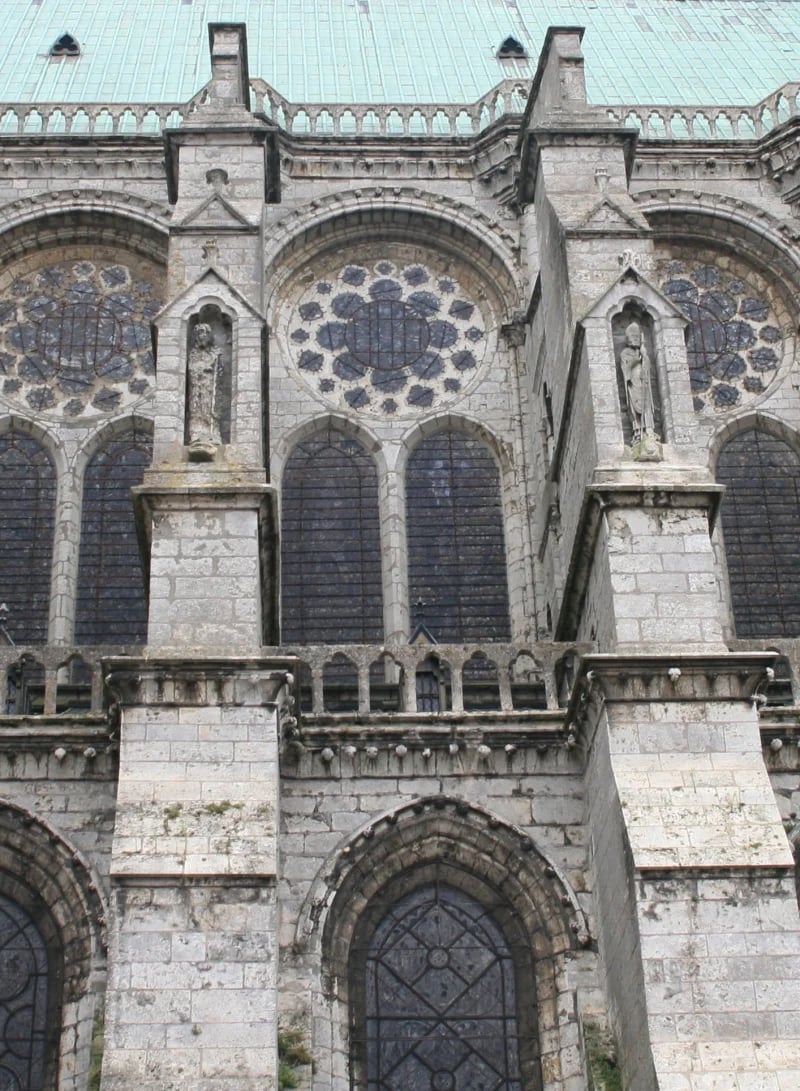
Chartres Cathedral (1194–1260) is often considered the finest example of High Gothic. Its west facade retains sculpture and glass from the mid-twelfth century; the rest was rebuilt after the fire of 1194. The nave rises to 120 feet; the vaults are supported by flying buttresses that allow the walls to be pierced with enormous windows. The cathedral holds more than 150 medieval stained-glass windows, including the famous "Blue Virgin" and the three lancets of the west facade. The glass tells the story of salvation: Old Testament prophets, the life of Christ, the Virgin, and the saints. For a largely illiterate population, the windows were a visual Bible.
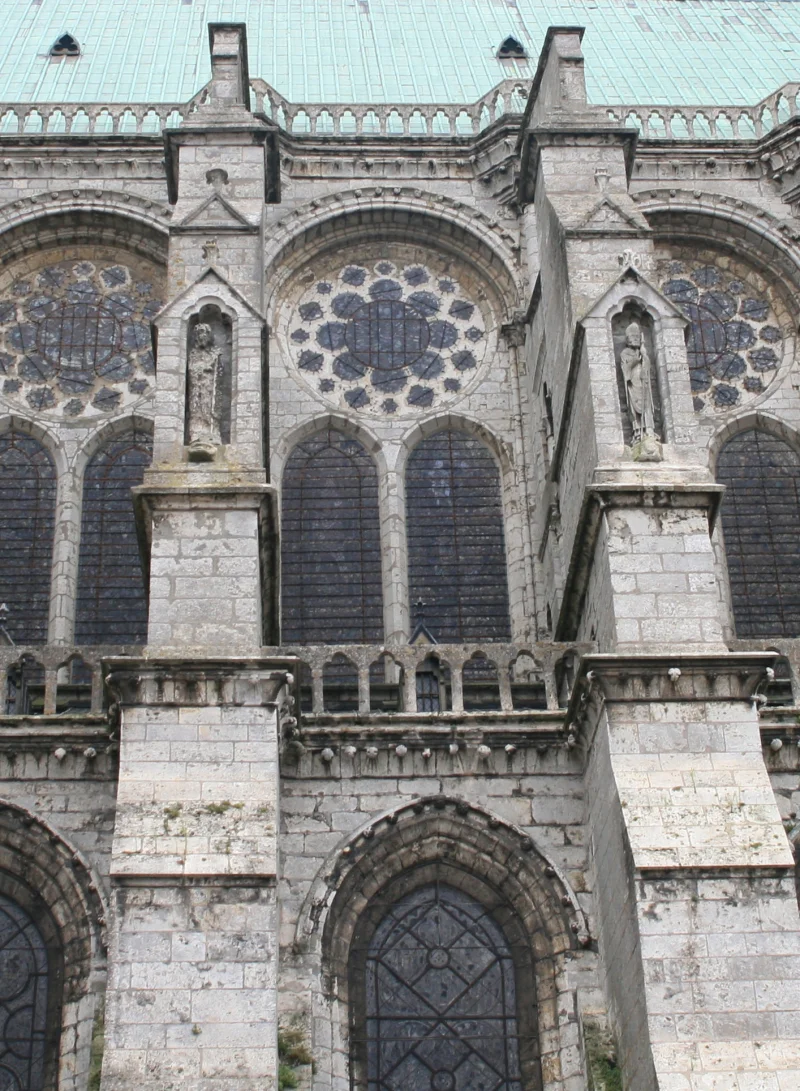
Chartres Cathedral clerestory exterior, 1194–1220 (Source)

The sculpture of Chartres is equally important. The Royal Portal (1145–55) shows the twenty-four elders of the Apocalypse, the signs of the zodiac, and the labours of the months. The jamb figures of the south transept (c. 1220–30) depict saints and Old Testament figures with a new naturalism: they stand on their own, their drapery falls in coherent folds, their faces suggest individual character. Gothic sculpture moved away from the column-bound figures of the Romanesque toward freestanding, more naturalistic form. The transition from Romanesque to Gothic was not abrupt; it took decades. But by 1200, the new style was dominant.
Stained Glass: Divine Light
Gothic stained glass was not merely decorative. It was theological. Light was a metaphor for the divine; the coloured light that flooded the interior was meant to suggest the radiance of God. Suger wrote that he felt "transported from this inferior to that higher world" when surrounded by the "multitude of sacred virtues" in the gemlike glass. His writings, preserved in the twelfth century, articulate a theology of light that would shape Gothic thought for centuries. Light was not merely a physical phenomenon; it was a symbol of divine wisdom, of the way truth illuminated the soul. The coloured light of the stained glass was therefore a spiritual medium: it transformed the material into the immaterial. Visitors to Chartres or Sainte-Chapelle today can still experience something of this effect. The way light moves through the glass, changing with the hour and the weather, creates an environment that is never static. The cathedral becomes a machine for producing sacred sensation. The technique involved cutting coloured glass into shapes, painting details in black enamel, and joining the pieces with lead. The windows were set in stone tracery that grew increasingly elaborate: first plate tracery (holes cut in a stone plate), then bar tracery (stone bars forming geometric patterns). The rose window became a Gothic signature: a large circular window, often at the west end or transept, divided into segments like a flower.
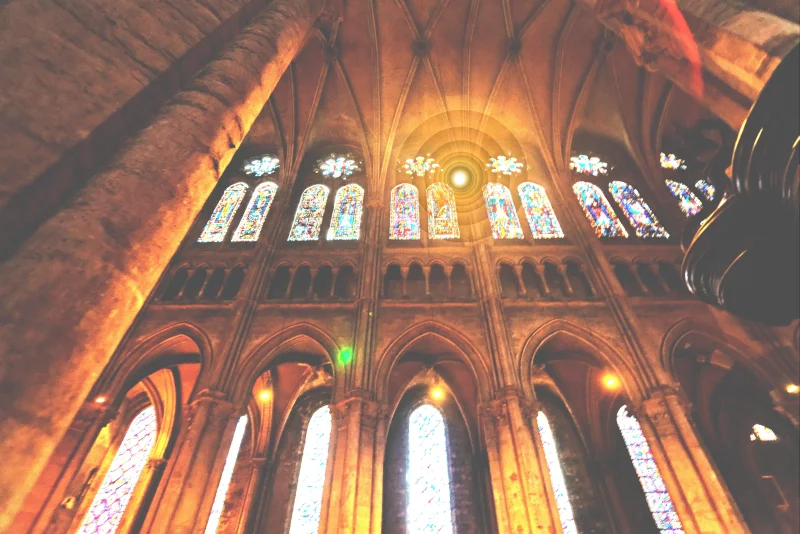
Chartres Cathedral, nave central view upward (Source)

Illuminated Manuscripts and Panel Painting
Gothic style extended beyond architecture. Illuminated manuscripts of the thirteenth and fourteenth centuries adopted the elongation, elegance, and decorative detail of Gothic sculpture. The Hours of Jeanne d'Evreux (c. 1325–28), by Jean Pucelle, shows the influence of Italian painting and the new interest in spatial depth. Panel painting emerged as a major form; the altarpiece became a focus for devotional imagery. Duccio's Maestà (1308–11) and Giotto's frescoes at Padua (1305) marked the transition from Gothic to Renaissance, but they retained Gothic elements: gold grounds, hierarchical scale, and the integration of narrative with sacred purpose. For practitioners interested in sacred space, in the use of light and colour in ritual, or in the way architecture can shape spiritual experience, Gothic art offers a deep and lasting model.
The Rayonnant and the Flamboyant
Later Gothic developed in new directions. Rayonnant (from "rayon," or ray) described the style of the mid-thirteenth century, when tracery became more delicate and windows larger. The Sainte-Chapelle in Paris (1242–48), built to house the Crown of Thorns, is a virtual cage of glass. Flamboyant Gothic (late fourteenth to sixteenth century) used undulating, flame-like tracery; the name comes from the French for "flaming." The style was often criticised as overly decorative, as Gothic gone to excess. But it produced some of the most spectacular buildings in Europe. The distinction between "structural" and "decorative" Gothic is itself a modern one; medieval builders did not separate the two. The cathedral was a unified whole, and every element served both structure and meaning.
Legacy
Gothic art defined the visual culture of the High Middle Ages. Its cathedrals remain among the most visited and admired buildings in the world. The style's emphasis on verticality, light, and the integration of the arts (architecture, sculpture, glass) has influenced later periods, including the Gothic Revival of the nineteenth century. The Gothic cathedral was a total work of art: every surface, every detail, contributed to a single vision. That vision was theological, but it was also communal: the cathedral was built by and for a community, a collective offering and a collective space. For those who work with sacred space, with light, or with the idea that form can serve transcendence, Gothic art remains a touchstone.
Related Resources
- Medieval Art – Broader survey of medieval visual culture
- Byzantine and Islamic Art – Eastern influences and parallels
- Renaissance Art – The period that followed and reacted to Gothic
- Introduction to Art History
Related in this topic
More from Occult Art History & Symbolism — Start Here.
Symbolism
Discover the meaning of symbolism! Learn its origins, art and famous symbolist painters. Find hidden emotions in art.
Naïve Art
Naïve art: untrained artists created startling originality through simplified forms, vivid colors, and unfiltered imagination.
Art Informel
Art Informel: the European parallel to Abstract Expressionism. Dubuffet, Tàpies, and the art of the unformed and the raw.
Street Art
Street Art: from subway tags to gallery walls. Banksy, Keith Haring, and the art that reclaims public space.
You Might Also Like
Art Informel
Art Informel: the European parallel to Abstract Expressionism. Dubuffet, Tàpies, and the art of the unformed and the raw.
Street Art
Street Art: from subway tags to gallery walls. Banksy, Keith Haring, and the art that reclaims public space.