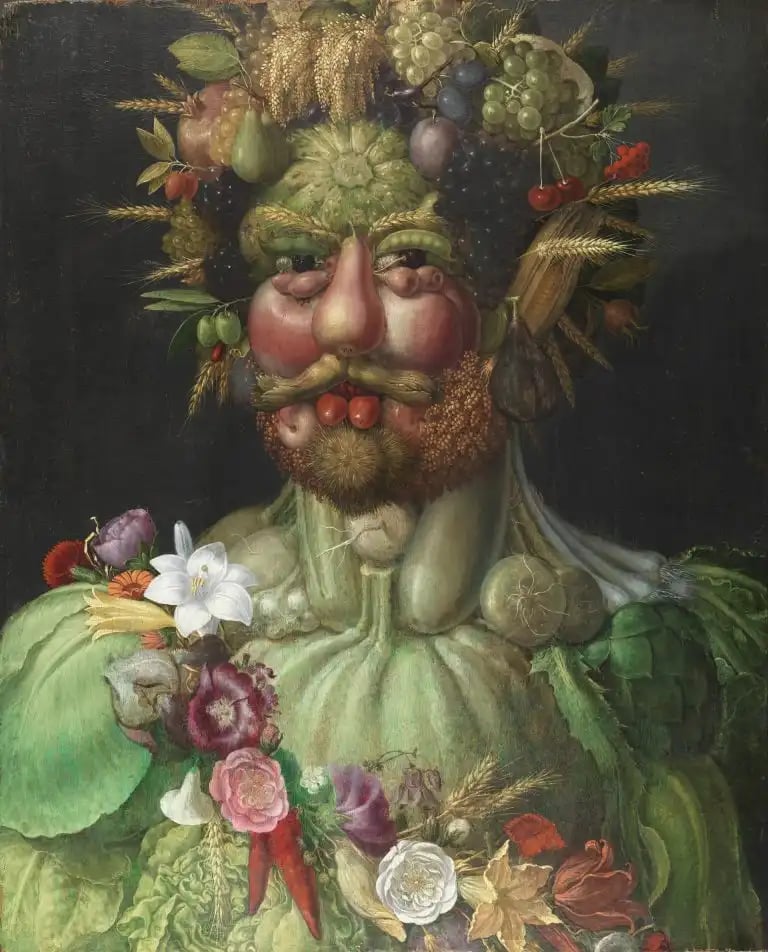
Period: 1520 – 1600
Characteristics: Artifice over naturalism, technical virtuosity, intellectual sophistication
Events: Sack of Rome (1527), Council of Trent (1545-1563), Religious wars across Europe (1540s-1590s)
Between Renaissance and Baroque: Understanding Mannerism
In the wake of the High Renaissance's achievements, a new artistic approach emerged that would challenge the very principles of harmony, balance, and naturalism perfected by masters like Leonardo, Raphael, and the young Michelangelo. This movement, Mannerism, arose in the artistic centers of Florence and Rome around 1520 and spread throughout Europe, thriving until approximately 1600. Rather than rejecting Renaissance values outright, Mannerism represented a clever response to them: an artistic style that acknowledged classical principles while purposely subverting them through exaggeration, artifice, and technical showmanship.
Mannerism stands apart from both Renaissance and Baroque aesthetics through its self-aware manipulation of artistic conventions. While Renaissance artists aimed to create natural-looking representations guided by mathematical proportion and classical harmony, Mannerist artists deliberately distorted these principles to create works of heightened emotional intensity and intellectual complexity. Stretched proportions, twisted poses, illogical spatial arrangements, and unnatural color schemes became hallmarks of the style, creating a visual language that valued artistic invention over realistic representation. These formal innovations weren't mistakes but deliberate aesthetic choices that showcased the artist's cleverness and intellectual depth.
The historical backdrop that gave rise to Mannerism was one of deep crisis and transformation. The sack of Rome in 1527 by mutinous troops of the Holy Roman Emperor Charles V dealt a crushing blow to Renaissance confidence in human reason and classical ideals. The Protestant Reformation, which began in 1517 with Martin Luther's challenges to Catholic doctrine, shattered the religious unity of Western Europe and triggered decades of violent conflict. In this climate of instability and uncertainty, Mannerist art reflected a new psychological complexity—a sense that the world was less orderly and understandable than Renaissance humanism had suggested.
Mannerism's appeal lay in its ability to convey emotional states and spiritual tensions through formal innovation. The style found supporters among sophisticated courts and educated elites who appreciated its intellectual depth and technical brilliance. The movement's preference for artifice over naturalism, refinement over simplicity, and complexity over clarity made it particularly well-suited to express the psychological and religious tensions of an age caught between Renaissance idealism and the more emotional, dramatic sensibility that would later define the Baroque era.
The Mannerist Challenge: Redefining Beauty and Proportion
At the heart of Mannerism lay a bold reconsideration of Renaissance principles of beauty, harmony, and proportion. While Renaissance artists had sought to represent the human figure according to classical ideals of balance and naturalism, Mannerist artists deliberately distorted these proportions to achieve greater expressive power. Elongated limbs, small heads atop impossibly long necks, and exaggerated musculature became signature features of the Mannerist style, creating figures of unusual elegance and artifice that challenged viewers' expectations and showcased the artist's technical skill.
This departure from classical principles wasn't a rejection of the Renaissance tradition but rather a sophisticated extension of it. Mannerist artists were deeply knowledgeable about Renaissance achievements in anatomy, perspective, and proportion, their distortions were conscious choices made from a position of technical mastery rather than ignorance. By manipulating these formal elements, Mannerist artists sought to achieve what art historians have called "grazia" (grace), a quality of refinement and elegance that went beyond mere realistic representation. The resulting works often possess a strange, otherworldly beauty that comes precisely from their departure from natural appearances.
Color in Mannerist painting similarly strayed from Renaissance principles of harmony and naturalism. Artists used unexpected, sometimes jarring color combinations: acidic yellows against cool blues, hot pinks against sickly greens, that created emotional tension and visual complexity. This approach to color, known as "disegno colorito" (colored design), emphasized the artificial, constructed nature of the artwork rather than attempting to mimic natural appearances. The resulting palette, often described as "acid" or "unnatural," became another means through which Mannerist artists asserted their artistic freedom and technical sophistication.
Compositional complexity represented another aspect of the Mannerist challenge to Renaissance principles. Where High Renaissance compositions had emphasized clarity, balance, and harmonious spatial arrangements, Mannerist works often featured crowded, complex compositions with multiple focal points, shifting spatial perspectives, and ambiguous relationships between figures. This approach, sometimes called "horror vacui" (fear of empty space), created works of remarkable visual density that rewarded long study and demonstrated the artist's ability to orchestrate complex visual narratives. The resulting compositions often possess a nervous energy and psychological intensity absent from the more serene, balanced arrangements of High Renaissance art.
The Serpentinata: Paintings of Elegant Complexity
Parmigianino's "Madonna with the Long Neck" (c. 1535-1540) stands as one of the defining masterpieces of Mannerist painting, embodying the movement's radical reimagining of religious imagery. The painting's most immediately striking feature is its extraordinary distortion of human proportions—the Madonna's elongated neck, small head, and impossibly tapered fingers create a figure of supernatural elegance that transcends earthly reality. The Christ Child, balanced precariously on her lap, displays a similarly elongated, sinuous form that echoes the Madonna's ethereal grace. These anatomical liberties weren't the result of technical limitation but deliberate aesthetic choices that emphasized the spiritual, otherworldly nature of the holy figures.
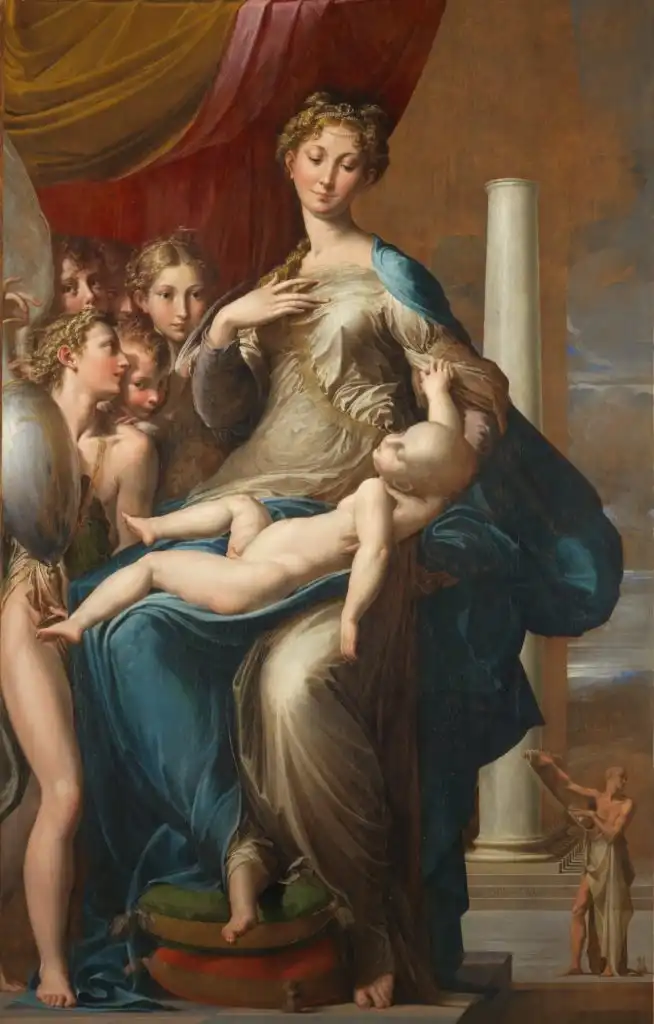
Madonna with the Long Neck by Parmigianino, 1535-40 (Source)

The composition further challenges Renaissance principles through its spatial puzzles and unresolved elements. The columns in the background seem impossibly tall, with no clear architectural function. The mysterious figure in the lower right corner, holding an unfurled scroll, remains partially outside the composition, creating a sense of spatial instability. Most strikingly, a group of miniature angels clusters at the Madonna's feet, their tiny size bearing no logical relationship to the central figures. These deliberate inconsistencies create a dreamlike quality that defies logical spatial relationships, emphasizing the painting's status as an artistic invention rather than a realistic depiction.
Bronzino's "Venus, Cupid, Folly, and Time" (c. 1545) exemplifies Mannerism's intellectual complexity and technical virtuosity. This enigmatic allegory presents a disturbing erotic encounter between Venus and Cupid, surrounded by various symbolic figures representing concepts like Folly, Time, and Truth. The painting's porcelain-smooth surfaces, achieved through careful application of oil glazes, create an almost artificial quality that heightens the work's sense of intellectual detachment. The figures' pale, marble-like flesh tones and frozen, balletic poses contribute to an atmosphere of suspended emotional tension that is characteristic of Bronzino's courtly style.
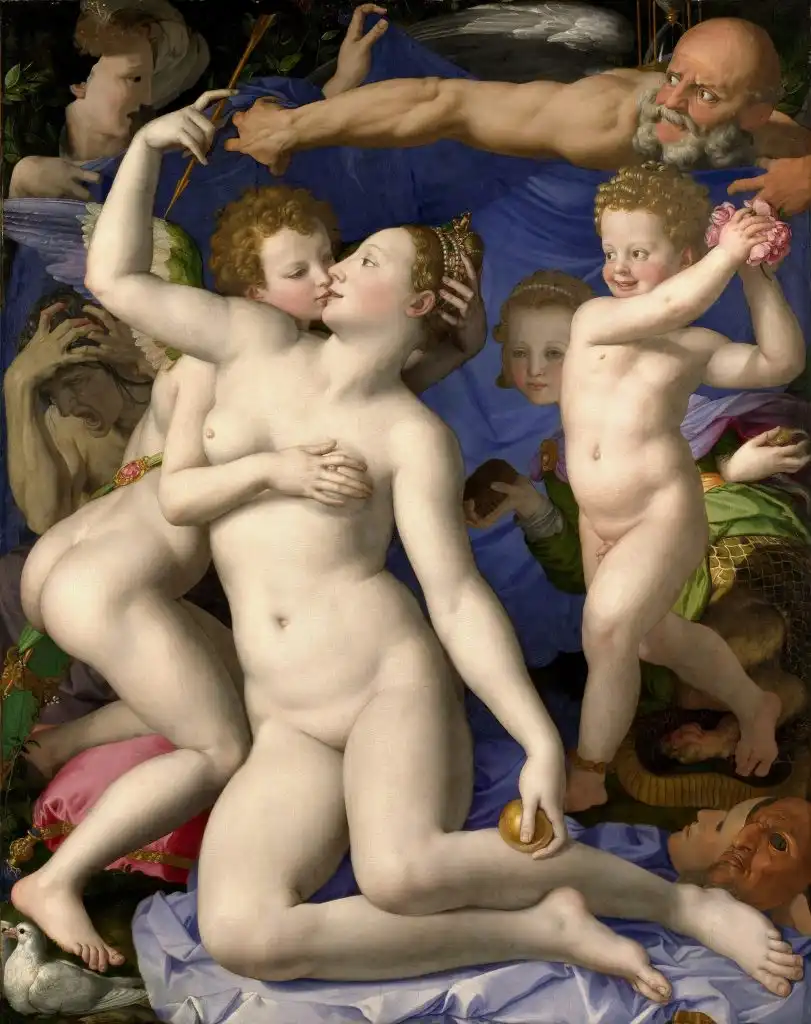
Venus, Cupid, Folly and Time, Angelo Bronzino, 1545 (Source)

The painting's complex symbolism creates multiple layers of meaning that resist simple interpretation. The unnatural contortions of the figures, particularly Cupid's twisted pose as he kisses his mother Venus, create a disquieting eroticism that seems deliberately transgressive. The inclusion of masks, deceptive appearances, and symbolic objects creates an intellectual puzzle that engages the viewer's mind rather than appealing directly to emotional response. This emphasis on intellectual engagement over emotional reaction typifies the Mannerist approach, which valued sophistication, complexity, and artistic invention over immediate emotional impact or religious devotion.
El Greco, whose late works represent a highly personal variation on Mannerist principles, pushed the style's expressive distortions to new extremes. In paintings like "The Burial of the Count of Orgaz" (1586-1588), elongated figures with flickering, flame-like forms create a sense of spiritual ecstasy that transcends physical reality. El Greco's vibrant, sometimes clashing color harmonies and irrational spatial arrangements create visionary religious images that express mystical experience through formal distortion. His work demonstrates how Mannerist principles could be adapted to create deeply personal, emotionally charged religious art that departed radically from Renaissance naturalism while maintaining extraordinary technical sophistication.
Figura Serpentinata: Sculpture's Dynamic Twist
Mannerist sculpture embraced a dynamic, spiraling compositional principle known as "figura serpentinata" (serpentine figure), which created a sense of movement and energy through twisting, turning forms. This approach represented a deliberate departure from the balanced, self-contained compositions of High Renaissance sculpture, creating works that engaged with surrounding space in new and complex ways. The resulting sculptures often appear to be in motion, their forms unfolding in multiple directions simultaneously to create a sense of dynamic tension and energy.
Giambologna's "The Rape of the Sabine Women" (1581-1583) exemplifies this serpentine principle at its most virtuosic. This monumental marble sculpture, carved from a single block, presents three intertwined figures in a spiraling composition that rises dramatically upward. A complex narrative unfolds as the eye travels from the crouching older man at the base, through the struggling Sabine woman in the middle, to the triumphant Roman youth at the top. The figures' intertwined limbs and twisting torsos create a composition that can be appreciated from multiple viewpoints, each offering a different perspective on the dramatic narrative.
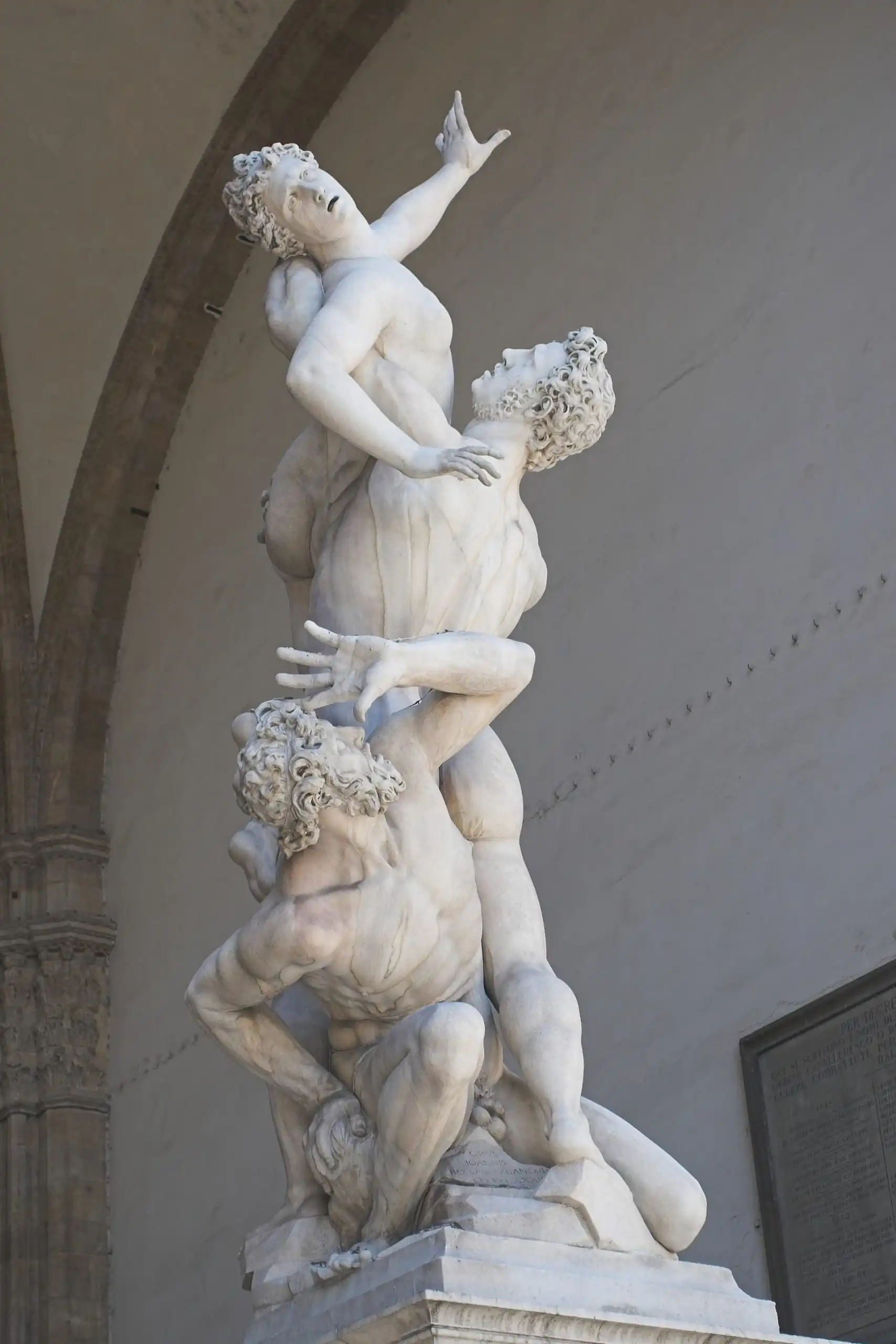
Abduction of a Sabine Woman by Giambologna, 1579–1583 (Source)

The technical skill displayed in this sculpture is extraordinary. Giambologna has created a composition that seems to defy the limitations of marble, with projecting limbs, deep undercutting, and carefully balanced masses that create an impression of weightless movement. The surface treatment alternates between highly polished areas and more textured passages, creating subtle variations that enhance the work's visual complexity. Most remarkably, the entire composition is self-supporting, with no visible struts or supports to distract from the pure, continuous flow of forms. This technical mastery exemplifies the Mannerist fascination with difficulty and virtuosity for its own sake, a demonstration of artistic skill that goes beyond practical or devotional functions.
Benvenuto Cellini's "Perseus with the Head of Medusa" (1545-1554) represents another masterpiece of Mannerist sculpture, combining technical brilliance with complex imagery. Cast in bronze, this statue depicts the mythological hero Perseus triumphantly displaying the severed head of Medusa while standing upon her fallen body. The figure's contrapposto stance and elegant proportions reflect classical influences, but Cellini transforms these Renaissance principles through exaggeration and dramatic emphasis. Perseus's slender limbs, elongated torso, and elaborate costume create a figure of courtly elegance rather than heroic naturalism.
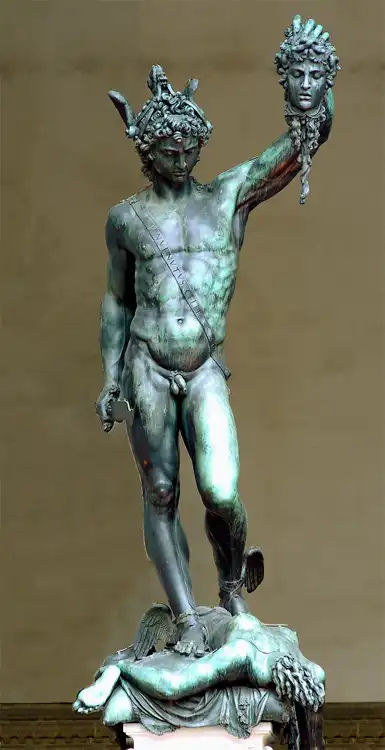
Perseus with the Head of Medusa by Cellini, 1545–1554 (Source)

What makes this work particularly impressive is the technical feat of casting such a complex composition in bronze, an achievement that Cellini himself documented in his autobiography. The flowing lines of Perseus's body, the intricate details of his winged sandals and helmet, and the horrific features of Medusa's severed head demonstrate Cellini's extraordinary skill as both sculptor and metalworker. The work's placement in the Loggia dei Lanzi in Florence created a deliberate dialogue with earlier Renaissance sculptures nearby, asserting Mannerism's sophisticated relationship to artistic tradition while demonstrating its distinctive approach to form and expression.
Architectural Caprice: Spaces of Invention and Surprise
Mannerist architecture departed from High Renaissance principles of harmony, proportion, and clarity by introducing elements of surprise, tension, and deliberate rule-breaking. Where Renaissance architects had sought to create buildings that embodied mathematical harmony and classical order, Mannerist architects delighted in unexpected juxtapositions, spatial ambiguities, and playful manipulations of architectural elements. This approach created buildings that surprised and intrigued viewers through their deliberate subversion of classical expectations.
Giulio Romano's Palazzo del Te in Mantua (1524-1534) stands as the quintessential example of Mannerist architectural playfulness. Built as a pleasure palace for Federico II Gonzaga, the building deliberately subverts classical principles through what might be called "architectural jokes." In the Sala dei Giganti (Hall of the Giants), trompe l'oeil frescoes create the illusion that the room itself is collapsing around the viewer, with painted architecture seeming to crumble as the mythological giants attempt to storm Mount Olympus. This fusion of architecture and painting creates a theatrical environment that deliberately destabilizes the viewer's sense of solid architectural reality.
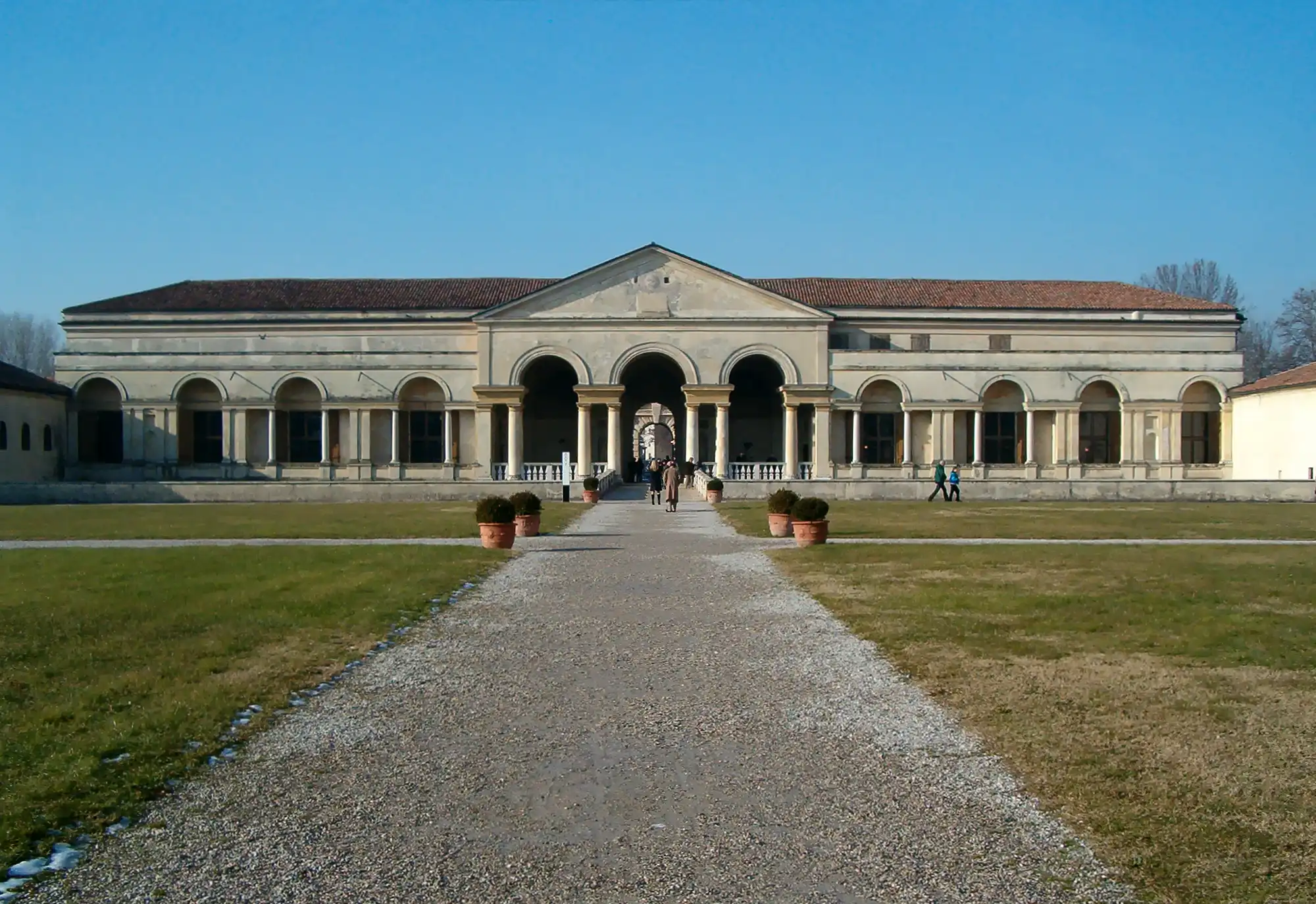
Palazzo del Te (Source)

Most famously, the palazzo's exterior features elements that seem to be slipping out of place: keystones that appear to be sliding downward, triglyphs that drop below the architrave as if pulled by gravity. These deliberate "mistakes" represent not structural failures but clever visual jokes that demonstrate Romano's complete mastery of classical vocabulary and his freedom to manipulate it for expressive effect. The building thus becomes a showcase of the architect's wit and invention, challenging viewers to appreciate the sophisticated play with architectural conventions that would have been immediately apparent to educated Renaissance audiences.
The Laurentian Library in Florence, designed by Michelangelo in the 1520s but not completed until the 1550s, represents a more dramatic, emotionally charged approach to Mannerist architecture. The building's entrance vestibule features elements that seem compressed and trapped within too small a space, paired columns recessed into niches, console brackets that support nothing, and a staircase that flows like lava into the room. These features create a sense of psychological tension and compressed energy that contrasts sharply with the serene, rational spaces of High Renaissance architecture.
Michelangelo's deliberate manipulations of classical elements, columns without clear structural purpose, moldings that break unexpectedly, proportional relationships that seem unstable, create an architecture of emotional expressiveness rather than mathematical harmony. The resulting space seems to embody psychological states of tension, constraint, and potential release, demonstrating how Mannerist architecture could express emotional and intellectual content through the manipulation of architectural forms. This approach would influence generations of architects, from the theatrical spaces of Baroque architecture to the emotional expressiveness of certain strains of modernism.
Juan Bautista de Toledo and Juan de Herrera's El Escorial near Madrid (1563-1584) represents a more severe, intellectualized strain of Mannerist architecture. Built for Philip II of Spain as a combination palace, monastery, and mausoleum, the massive complex employs a stripped-down classical vocabulary that creates an impression of austere grandeur. The building's immense scale, rigorous geometrical planning, and severe ornamental restraint create a monumental presence that expresses the power of the Spanish monarchy and the Counter-Reformation Catholic Church.
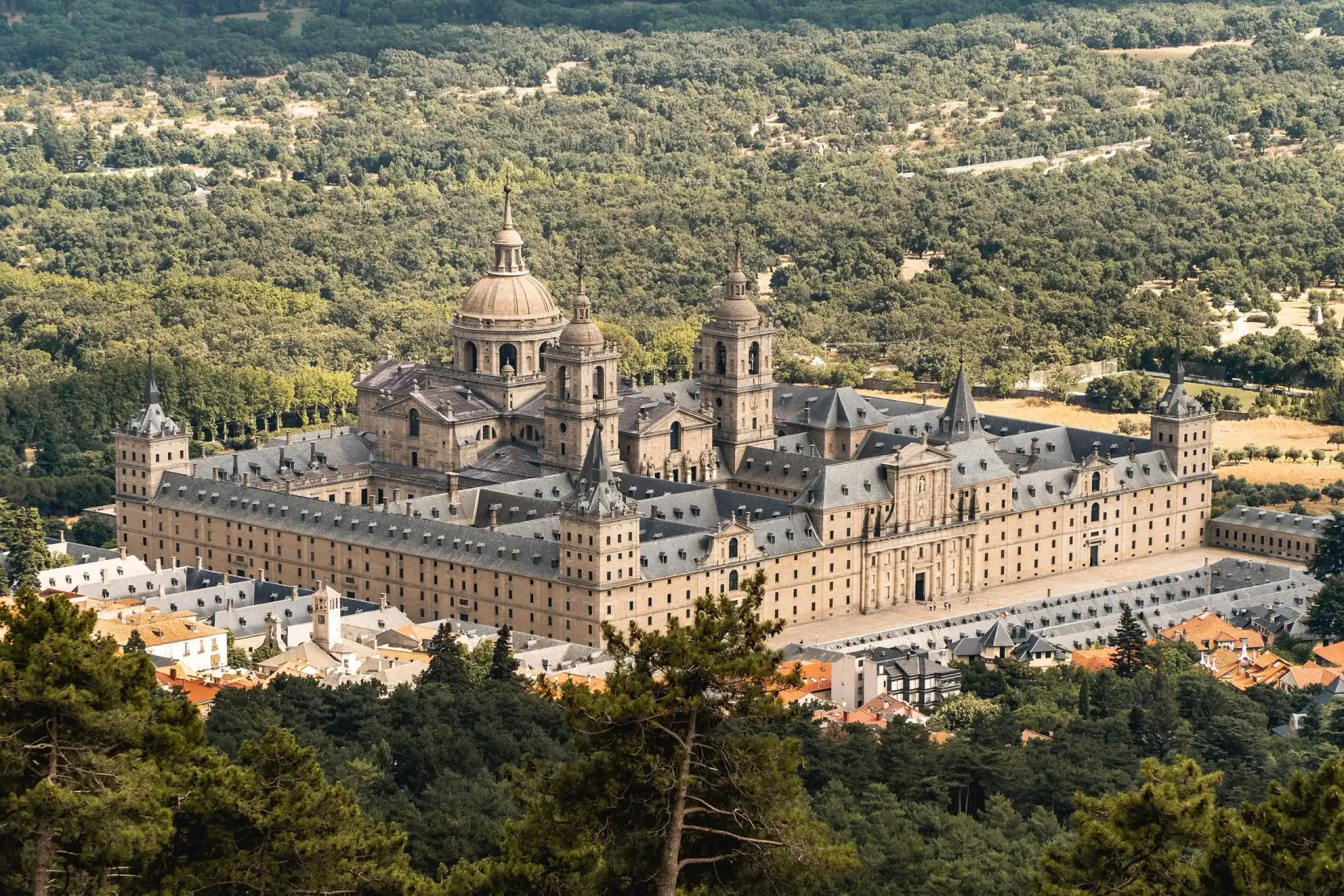
El Escorial (Source)

What makes El Escorial distinctively Mannerist is its intellectual complexity and self-conscious manipulation of classical principles. The building's planning reflects Renaissance ideals of geometric order and proportion, but its severe, almost abstract treatment of classical elements creates an emotional effect of superhuman scale and power. The contrast between the building's rigorous external simplicity and the richly decorated interior spaces creates an effect of surprise and revelation that is characteristic of Mannerist approaches to architectural experience. El Escorial thus demonstrates how Mannerist principles could be adapted to express the ideological and spiritual concerns of Counter-Reformation Catholicism through architectural forms.
The Mannerist Legacy: Between Renaissance and Baroque
As the 16th century drew to a close, the formal experiments and emotional intensities of Mannerism gradually evolved into the more direct emotional appeal and dynamic movement of the Baroque. Yet Mannerism's manipulations of classical tradition, its emphasis on artistic invention and intellectual complexity, and its exploration of psychological states through formal means left a lasting impact on Western art. Rather than a mere transitional style between Renaissance and Baroque, Mannerism represents a distinctive artistic approach that continues to fascinate through its combination of technical virtuosity, intellectual sophistication, and emotional complexity.
The legacy of Mannerism can be traced through multiple strands of later European art. Its emphasis on artifice and stylization influenced the development of court styles throughout Europe, from the elegant refinement of Fontainebleau to the sophisticated portraits of Elizabethan England. Its exploration of spiritual states through formal distortion found echoes in the visionary works of El Greco and, centuries later, in aspects of Expressionism. Its interest in technical virtuosity and complexity for their own sake anticipated similar concerns in Baroque art, particularly in the work of artists like Bernini who combined technical brilliance with emotional impact.
Perhaps most significantly, Mannerism established a tradition of self-conscious artistic innovation that would become important to modernism. By deliberately manipulating established conventions for expressive purposes, Mannerist artists asserted the primacy of artistic invention over mimetic representation, a principle that would resurface repeatedly in later movements from Romanticism to Surrealism. The Mannerist emphasis on the artist's personal vision and technical virtuosity helped establish the modern conception of the artist as an individual creator rather than a craftsman working within established traditions.
Contemporary viewers often find Mannerist works strangely compelling precisely because of their deliberate artifice and psychological complexity. In an age that values authenticity and emotional directness, the calculated elegance and intellectual sophistication of Mannerism can seem alien yet fascinating, a reminder of an artistic culture that valued complexity, virtuosity, and invention for their own sake. The strange beauty of Mannerist works, with their elongated figures, unnatural colors, and spatial ambiguities, continues to challenge and intrigue viewers, demonstrating the enduring power of an art that deliberately pushed beyond the boundaries of naturalistic representation to explore new realms of formal and expressive possibility.
Related in this topic
More from Occult Art History & Symbolism — Start Here.
Symbolism
Discover the meaning of symbolism! Learn its origins, art and famous symbolist painters. Find hidden emotions in art.
Naïve Art
Naïve art: untrained artists created startling originality through simplified forms, vivid colors, and unfiltered imagination.
Art Informel
Art Informel: the European parallel to Abstract Expressionism. Dubuffet, Tàpies, and the art of the unformed and the raw.
Street Art
Street Art: from subway tags to gallery walls. Banksy, Keith Haring, and the art that reclaims public space.
You Might Also Like
Art Informel
Art Informel: the European parallel to Abstract Expressionism. Dubuffet, Tàpies, and the art of the unformed and the raw.
Street Art
Street Art: from subway tags to gallery walls. Banksy, Keith Haring, and the art that reclaims public space.