Period: 1915 – 1940
Characteristics: Geometric shapes; luxury materials; machine-age aesthetics; symmetry and streamlining
Events: Exposition Internationale des Arts Décoratifs (Paris, 1925), Chrysler Building completed (1930), Great Depression (1930s)
The Style of the Age: Luxury Meets Industry
Art Deco emerged in the years around World War I and flourished through the 1920s and 1930s, becoming the defining aesthetic of interwar modernity. The name derives from the Exposition Internationale des Arts Décoratifs et Industriels Modernes, held in Paris in 1925, though the style had been developing for a decade. Art Deco combined the geometric vocabulary of Cubism with the luxury of fine materials, the sleekness of streamlining, and influences from ancient Egypt, African art, and the machine.
Unlike Art Nouveau's organic flow, Art Deco favoured clear lines, bold geometric forms, and symmetrical compositions. It embraced the machine age (celebrating speed, technology, and urban life) while retaining an emphasis on craftsmanship and luxury. The style appeared in architecture, interior design, jewellery, fashion, and graphic design, creating a cohesive visual language for an era of optimism (before the Depression) and glamour.
The Paris Exposition and the Birth of a Name
The 1925 Paris Exposition Internationale des Arts Décoratifs et Industriels Modernes was not the beginning of Art Deco, but it gave the movement its name and a platform to reach an international audience. France had been developing the style since before the war, partly in reaction to Art Nouveau's perceived excess. Designers sought something that could speak to the age of the automobile, the ocean liner, and the skyscraper: bold, confident, and unapologetically modern.
The exposition showcased pavilions, furnishings, and objects from France and abroad. Visitors saw geometric motifs, stepped forms, and luxe materials used in ways that felt fresh and forward-looking. Critics and patrons took note. Within a few years, "Art Deco" had spread across the Atlantic and around the world, adapted to local tastes and materials but always retaining its core vocabulary of geometry, symmetry, and glamour.
Architecture: Reaching for the Sky
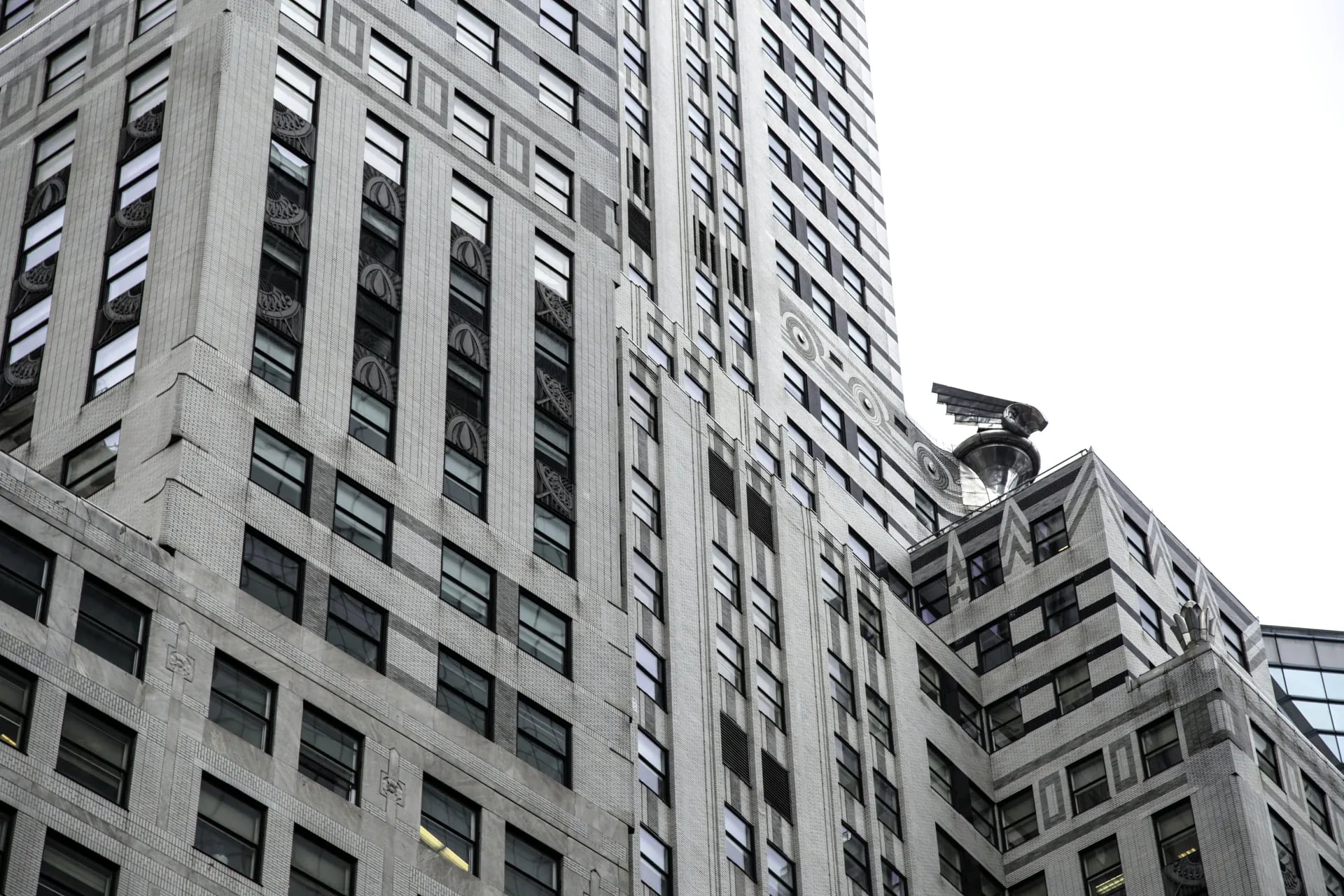
Art Deco architecture transformed the skylines of American cities. The Chrysler Building in New York, completed in 1930, is a prime example of the style. Its stainless steel crown, eagle gargoyles, and lobby of African marble and onyx combine industrial material with decorative grandeur. William Van Alen's design was in a direct race with the Empire State Building for the title of world's tallest; the Chrysler Building briefly held the record before the Empire State claimed it in 1931. The building's gleaming spire, topped with a sunburst pattern, became an icon of 1920s ambition and style.
Other landmark Art Deco structures include the Empire State Building, Miami's South Beach district, and the Hoover Building in London. The style favoured setbacks (terraced upper floors required by zoning laws), which created the distinctive stepped profiles of Art Deco skyscrapers. Ornament (zigzags, chevrons, sunbursts, stylised flora) adorned facades without the organic excess of Art Nouveau. Architects treated the building as a unified sculptural object, with every detail from the lobby floor to the rooftop finial contributing to a single aesthetic statement.
The Empire State Building, completed in 1931, took the height record from the Chrysler Building and held it for four decades. Its lobby features murals depicting the building as the "Eighth Wonder of the World," and its observation decks became symbols of New York itself.
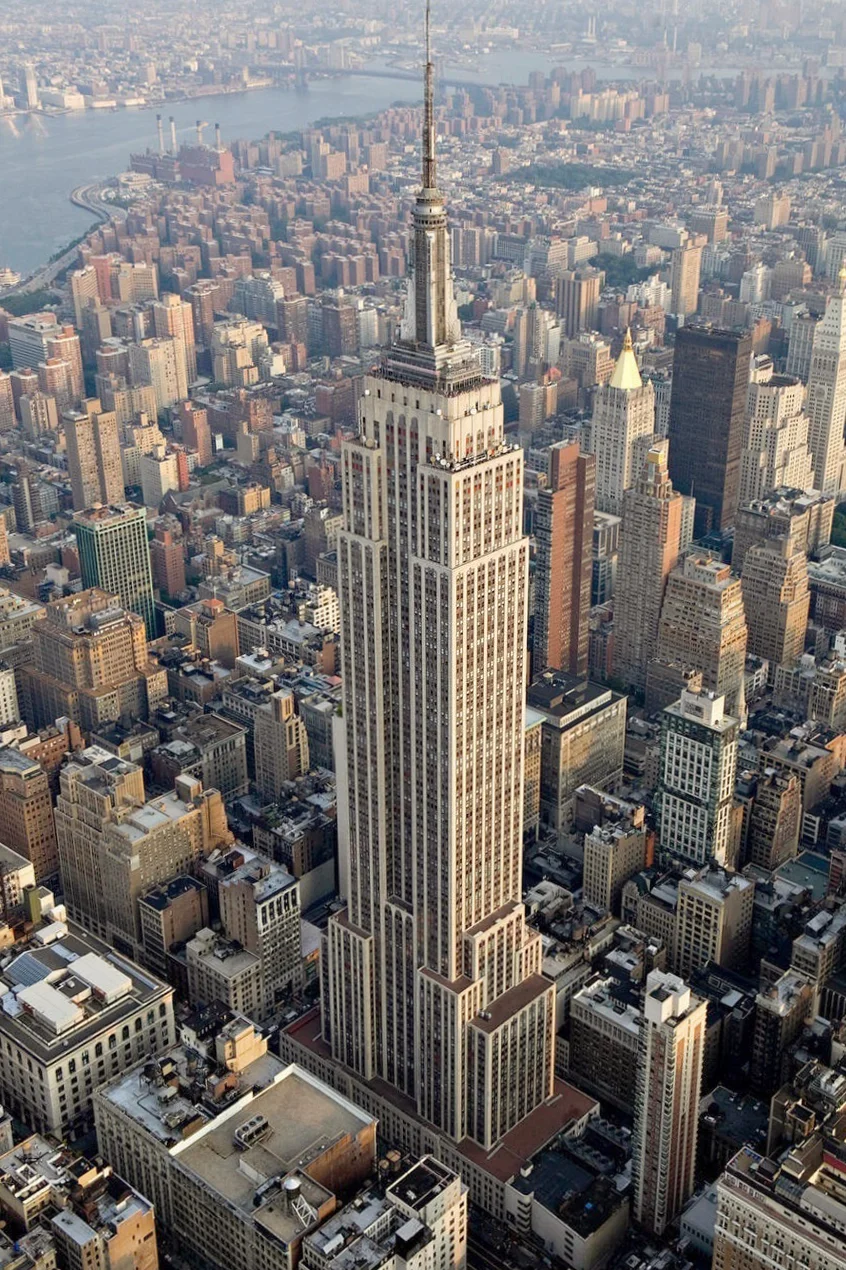
Empire State Building, New York (Source)
.jpg)
Miami Beach's Art Deco district, built largely in the 1930s, applied the style to smaller-scale hotels and apartment blocks. Pastel colours, nautical motifs, and terrazzo floors gave these buildings a tropical inflection that distinguished them from their northern counterparts. The district fell into decline after the war before preservation efforts in the 1970s helped save over eight hundred structures.
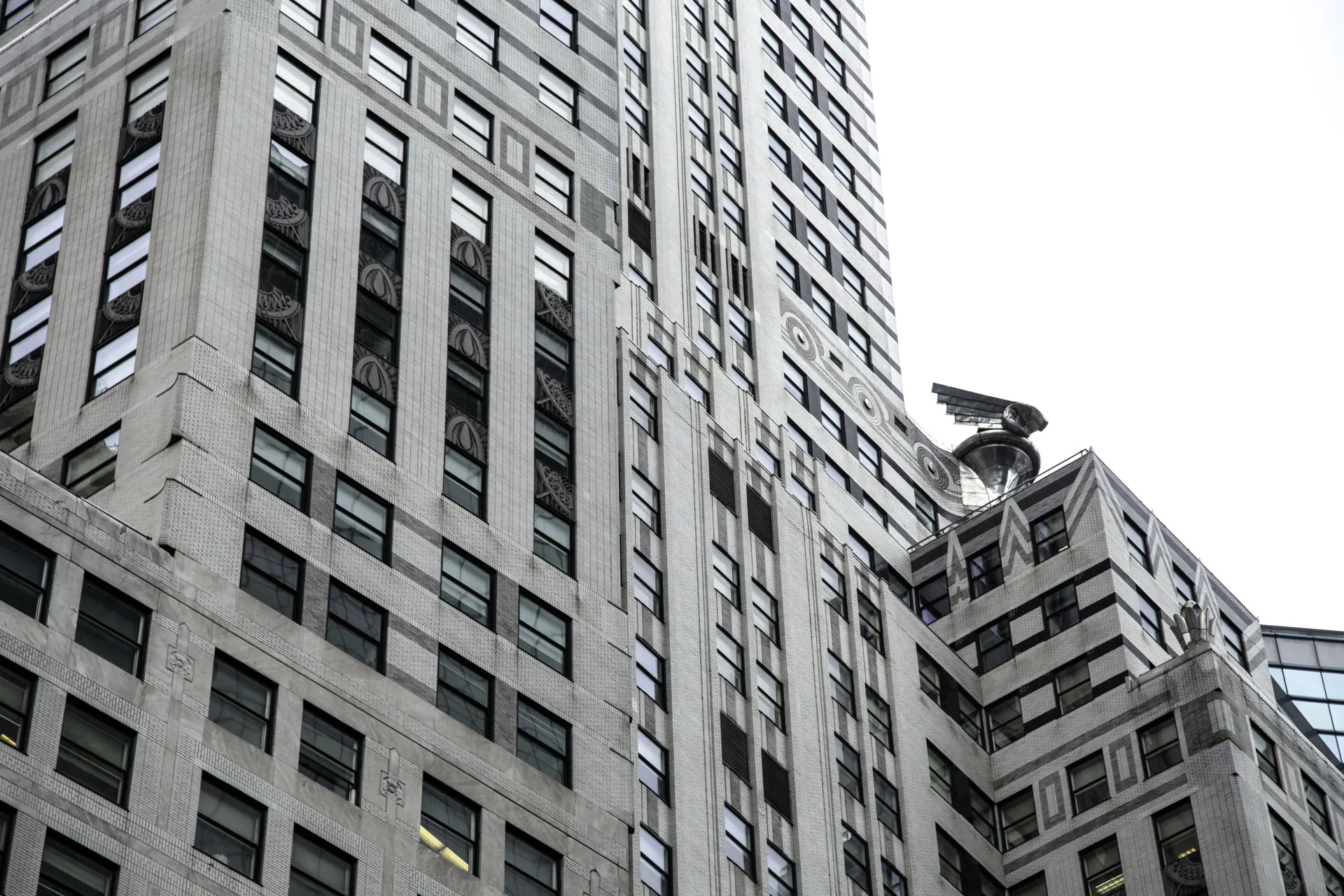
Chrysler Building, New York (Source)

Key Designers and Makers
Art Deco was less a cult of individual genius than a collective style, but several figures left lasting marks. René Lalique moved from jewellery to glass, producing moulded glass panels, vases, and decorative objects that combined geometric clarity with organic accents. His work appeared in the Orient Express dining cars and in luxury boutiques. Eileen Gray, an Irish designer working in Paris, created furniture and lacquer screens that balanced machine-age geometry with subtle elegance; her Bibendum chair and E-1027 house remain influential.
In painting, Tamara de Lempicka fused Art Deco sleekness with portraiture. Her subjects, often wealthy, glamorous, and slightly aloof, were rendered with smooth, polished surfaces and a cool palette. The look was unmistakably Deco: geometric simplification, sharp edges, and an air of modern sophistication. Polish-born, Paris-based, she captured the cosmopolitan spirit of interwar Europe before fleeing to America in 1939. Her Auto-Portrait (1925), showing her at the wheel of a green Bugatti, became one of the defining images of the independent, modern woman.
Fashion and cinema also embraced Art Deco. Hollywood set designers used the style for films like Metropolis (1927) and the Fred Astaire–Ginger Rogers musicals. Costume designers favoured bias-cut gowns, geometric jewellery, and sleek silhouettes that complemented the architecture and interiors on screen. The "Art Deco woman" was often portrayed as independent, athletic, and unencumbered by Victorian layers, a product of changing social norms as much as aesthetics.
Decorative Arts and Design
Art Deco extended to every scale of design. Furniture combined exotic woods (macassar ebony, amboyna) with ivory inlays and chrome fittings. Chairs and tables often featured tubular metal frames or stepped bases that echoed the setbacks of skyscrapers. Jewellery featured geometric patterns, Egyptian motifs (spurred by Tutankhamun's tomb discovery in 1922), and the use of platinum, diamonds, and coloured gemstones. Cartier, Van Cleef & Arpels, and Boucheron produced pieces that married ancient motifs with modern cut and setting techniques.
Graphic design (posters for travel, entertainment, and commerce) employed bold typography, limited colour palettes, and stylised figures. Advertisements for steamship lines, railroads, and airlines presented travel as glamorous and cosmopolitan. The style's accessibility varied. High-end Art Deco served wealthy clients; mass-produced versions brought the aesthetic to a broader public through radios, clocks, and tableware. The distinction between "high" and "low" Art Deco captures the era's democratisation of design alongside persistent luxury.
Esoteric and Egyptian Influence
The 1922 discovery of Tutankhamun's tomb sparked a wave of Egyptomania that influenced Art Deco significantly. Scarabs, lotus motifs, stepped pyramids, and stylised hieroglyphic elements appeared in jewellery, architecture, and decorative objects. Designers did not simply copy ancient forms; they abstracted and geometricised them to fit the new aesthetic. A lotus capital might become a repeating pattern; a pharaoh's headdress might inspire a brooch.
This fascination with ancient Egypt overlapped with the period's continued interest in Theosophy, spiritualism, and alternative cosmologies. Madame Blavatsky's ideas had circulated for decades; in the 1920s they mingled with a broader appetite for the exotic and the esoteric. Practitioners who work with Egyptian deities or who appreciate the symbolic use of geometric form will find Art Deco a useful reference: a period when esoteric and Egyptian references entered mainstream visual culture, often in playful or commercial form.
The stepped pyramid motif, borrowed from ziggurats and Egyptian tombs, appeared in everything from jewellery to cinema architecture. It carried associations of ancient wisdom and ascent, whether or not consumers consciously recognised the source. Sunburst patterns suggested both solar deities and the radiance of the machine age. Art Deco did not distinguish sharply between sacred geometry and commercial appeal; the two often overlapped. Radio cabinets, ashtrays, and cocktail sets carried the same motifs as high-end commissions, making the style one of the first to achieve true mass-market penetration while retaining recognisable formal unity.
Decline and Revival
Art Deco's dominance ended with World War II. The austerity of the war years and the rise of modernism's functionalist aesthetics made its ornament and luxury seem excessive. International Style architecture, with its emphasis on pure form and rejection of decoration, presented a clear alternative. Yet the style never fully disappeared. Revival interest began in the 1960s and intensified in subsequent decades as historians and collectors reassessed interwar design. Art Deco remains a potent symbol of 1920s–30s glamour, machine-age optimism, and the integration of art into everyday life. Miami's South Beach historic district preserves one of the largest concentrations of Art Deco architecture in the world, and auction houses regularly achieve strong prices for period furniture and jewellery.
Art Deco in Context
Art Deco occupied a narrow window between the end of Art Nouveau and the full triumph of International Style modernism. It shared with modernism a belief in progress and in the machine, but it refused to strip away ornament entirely. The result was a style that felt modern without feeling austere, glamorous without being nostalgic. Its popularity in cinemas, department stores, and ocean liner interiors made it one of the most public-facing styles of the 20th century. When the Normandie sailed in 1935, its interiors displayed French Art Deco at its most lavish. The style's association with luxury travel, entertainment, and urban life made it inseparable from the idea of the "roaring twenties" in the popular imagination.
Related Resources
- Art Nouveau – The style that preceded Art Deco
- Cubism – Geometric influence on Art Deco
- Symbolism – Earlier decorative and symbolic tendencies
- Introduction to Art History
Related in this topic
More from Occult Art History & Symbolism — Start Here.
Symbolism
Discover the meaning of symbolism! Learn its origins, art and famous symbolist painters. Find hidden emotions in art.
Naïve Art
Naïve art: untrained artists created startling originality through simplified forms, vivid colors, and unfiltered imagination.
Art Informel
Art Informel: the European parallel to Abstract Expressionism. Dubuffet, Tàpies, and the art of the unformed and the raw.
Street Art
Street Art: from subway tags to gallery walls. Banksy, Keith Haring, and the art that reclaims public space.
You Might Also Like
Art Informel
Art Informel: the European parallel to Abstract Expressionism. Dubuffet, Tàpies, and the art of the unformed and the raw.
Street Art
Street Art: from subway tags to gallery walls. Banksy, Keith Haring, and the art that reclaims public space.