Period: Late 1960s to present
Characteristics: Painting from photographs; extreme technical precision; urban and commercial subjects; neutrality of style; attention to reflection and surface
Events: Documenta 5 includes photorealists (1972); "Sharp Focus Realism" exhibition (1972); spread to Europe in 1970s
The Photograph as Source
Photorealism (also called Super-Realism or Hyperrealism) emerged in the United States in the late 1960s. Its practitioners made paintings that looked like photographs: meticulously detailed, with sharp focus, and often based directly on slides or prints. The camera was not just a reference but the primary source; many photorealists projected slides onto the canvas and traced or transferred the image before painting. The result was a kind of double mediation: the world became a photograph, and the photograph became a painting. The movement was a reaction against Abstract Expressionism and Pop Art; where Pop had used commercial imagery with irony, the photorealists approached the photographic image with cool technical precision and no apparent editorial comment.
The term "Photorealism" was coined by the dealer Louis K. Meisel in 1969. He used it to describe work by artists such as Richard Estes, Chuck Close, Audrey Flack, and Ralph Goings. The first major exhibition of such work was "Sharp Focus Realism" at the Sidney Janis Gallery in New York in 1972. The following year, Documenta 5 in Kassel included several photorealists, bringing the movement to an international audience. By the mid-1970s, photorealist painting had spread to Europe, where artists such as Gottfried Helnwein and Franz Gertsch developed their own versions.
Richard Estes: Urban Reflections
Richard Estes (b. 1932) is the photorealist most closely associated with urban subjects. He paints storefronts, buses, diners, and street scenes, often focusing on the play of reflections in glass and metal. His Double Self-Portrait (1976) shows the artist reflected in a shop window; the image folds and doubles, questioning where the "real" view begins and ends. Estes typically works from multiple photographs, combining angles and moments into a single painted image. The result is more composed than any single snapshot; the precision of the rendering can make the scene feel both hyper-real and strangely still.
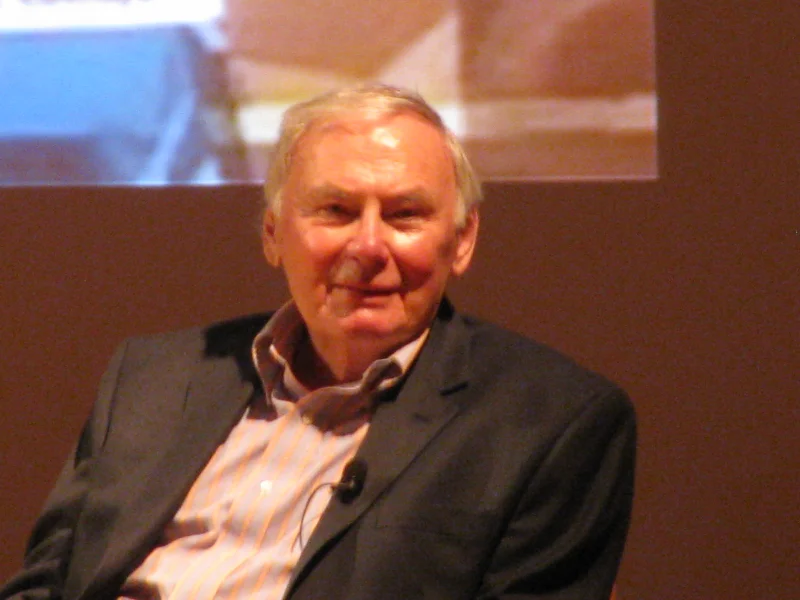
Richard Estes painting at Smithsonian American Art Museum (Source)

Estes has continued to paint into the twenty-first century, expanding his subjects to include landscapes and cruise ships. His early work from the 1970s, with its focus on American urban life at a moment of transition, has become a historical record as well as an aesthetic achievement. For practitioners interested in the relationship between observation and representation, or in the idea that intense attention to surface can reveal something about perception itself, Estes's work offers a clear example.
Chuck Close: The Portrait Grid
Chuck Close (1940–2021) began as an Abstract Expressionist before turning to photorealism in the late 1960s. His breakthrough work was a series of huge black-and-white portraits based on passport-style photographs. Big Self-Portrait (1967–68) showed the artist smoking a cigarette, his face filling a canvas over nine feet wide. Close used a grid system: he divided the photograph into small squares and transferred each square to the canvas, often at a much larger scale. The result was an image that looked photographic from a distance but revealed its construction up close. The grid became a visible part of the work, and Close later made it more explicit by filling each cell with circles, fingerprints, or other marks.
Close was paralysed from the neck down in 1988 but continued to paint using a brush attached to his wrist. His later work became more abstract: the pixel-like marks replaced the smooth rendering of his early portraits. But the underlying logic remained: the face as a system of information, the grid as a way of organising perception. His work raises questions about identity, representation, and the relationship between the whole and its parts. For those interested in systematic approaches to image-making, or in the way repetition can generate complexity, Close's method has wide application.
Audrey Flack, Ralph Goings, and Other Pioneers
Audrey Flack (b. 1931) painted still lifes that resembled advertising photography: cosmetics, jewellery, fruits, and flowers arranged with theatrical lighting. Her Marilyn (1977) showed a vanity table covered with objects associated with the actress; the image was lush and nostalgic, blurring the line between tribute and critique. Ralph Goings (1928–2016) painted diners, pickup trucks, and roadside scenes with the same precision Estes brought to cities. His McDonald's (1970) and Airstream series captured a certain American vernacular with apparent neutrality. Robert Bechtle (1932–2020) painted suburban streets and cars with a similar coolness; his work has been compared to the paintings of Edward Hopper, though without the melancholy.
Duane Hanson (1925–1996) applied photorealist principles to sculpture. His life-size figures of tourists, security guards, and shoppers were cast from real people and painted with meticulous realism. Placed in museums, they often fooled visitors into thinking they were real people. Hanson's work extended the movement's interest in the ordinary and the overlooked into three dimensions.
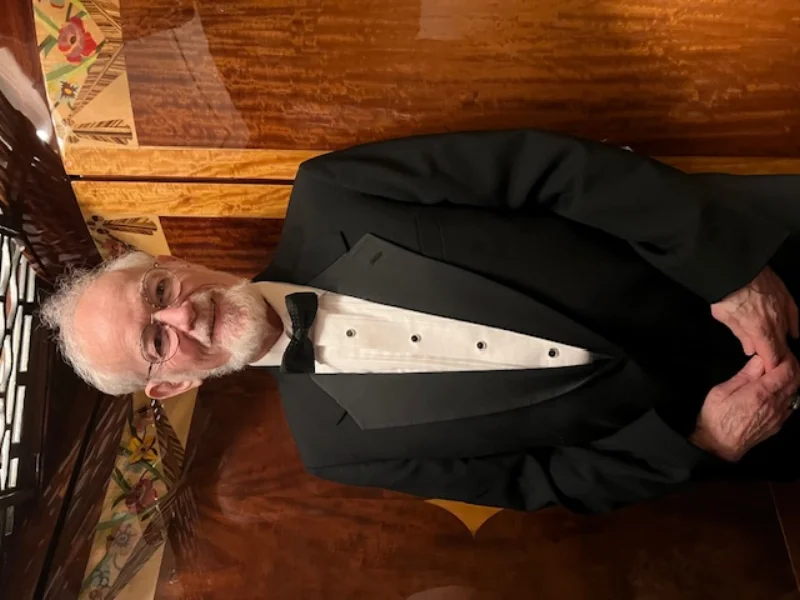
Richard Estes, Academic (Source)

The Photorealist Method
Most photorealists worked from slides projected onto the canvas. The image was traced or transferred, then painted with brushes small enough to achieve the required detail. Some used an airbrush for smoother gradients. The process could take months; a single painting might involve hundreds of hours of work. The artist's decisions came in the selection of the photograph, the cropping, the colour adjustments, and the way certain areas were emphasised or softened. The result was not a literal copy but an interpretation: the photograph as raw material, the painting as the finished object. This method differed from traditional realist painting, which typically worked from life or from preparatory sketches. The photorealists embraced the camera's flattening, its framing, and its capture of a single moment. They did not try to "improve" on the photograph; they rendered it with maximum fidelity, and in doing so, revealed how strange the photographic image could be when translated into paint.
Criticism and Legacy
Photorealism was criticised for being merely technical, for lacking the subjectivity and expression that "real" art was supposed to have. Some saw it as a dead end, a capitulation to the camera's gaze. The photorealists themselves argued that their choice of subject, their cropping, their colour decisions: all of these involved interpretation. The photograph was a tool, not a master. The movement has continued into the twenty-first century, with younger artists such as Yigal Ozeri and Robert Longo (in his charcoal drawings) extending its logic. The rise of digital imaging has changed the context: when anyone can manipulate a photograph with a few clicks, the labour of hand-painting a photorealistic image takes on a different meaning.
For practitioners interested in attention, observation, or the idea that the familiar can become strange when viewed with sufficient precision, photorealism offers a historical model. The movement asked what it means to see, to record, and to represent. The answers were not simple; they remain relevant wherever the boundary between the real and the represented is in question. In an age of AI-generated images and deepfakes, the labour of hand-painting a photorealistic image takes on new significance. The photorealists showed that the choice to make a painting, rather than simply displaying a photograph, was a meaningful one. The time spent, the decisions made, the slight imperfections that remain: these become part of the work's meaning. For anyone interested in attention as a practice, in looking closely at the world and rendering it with care, photorealism offers both a history and a method.
Contemporary Photorealism
The movement has not ended. Artists such as Yigal Ozeri (b. 1958) paint large-scale landscapes and figures with photorealistic precision; his work often references film and fashion photography. Roberto Bernardi (b. 1974) and Raphaella Spence (b. 1978) paint still lifes and urban scenes with similar technical rigor. The term "Hyperrealism" is now often used for work that goes beyond the photograph, adding detail or effect that no camera could capture. Sculpture has continued the tradition through artists such as Ron Mueck, whose oversized or undersized figures are made with silicone and resin to achieve an uncanny realism. The line between photorealism and digital art has blurred; some artists now work from digital images or use digital tools in their process. The core impulse remains: to render the visible world with such precision that the boundary between the real and the represented is called into question.
Related Resources
- Pop Art – Earlier use of photographic and commercial imagery
- Realism – Nineteenth-century precedents for painting from life
- Introduction to Art History
Related in this topic
More from Occult Art History & Symbolism — Start Here.
Symbolism
Discover the meaning of symbolism! Learn its origins, art and famous symbolist painters. Find hidden emotions in art.
Naïve Art
Naïve art: untrained artists created startling originality through simplified forms, vivid colors, and unfiltered imagination.
Art Informel
Art Informel: the European parallel to Abstract Expressionism. Dubuffet, Tàpies, and the art of the unformed and the raw.
Street Art
Street Art: from subway tags to gallery walls. Banksy, Keith Haring, and the art that reclaims public space.
You Might Also Like
Art Informel
Art Informel: the European parallel to Abstract Expressionism. Dubuffet, Tàpies, and the art of the unformed and the raw.
Street Art
Street Art: from subway tags to gallery walls. Banksy, Keith Haring, and the art that reclaims public space.