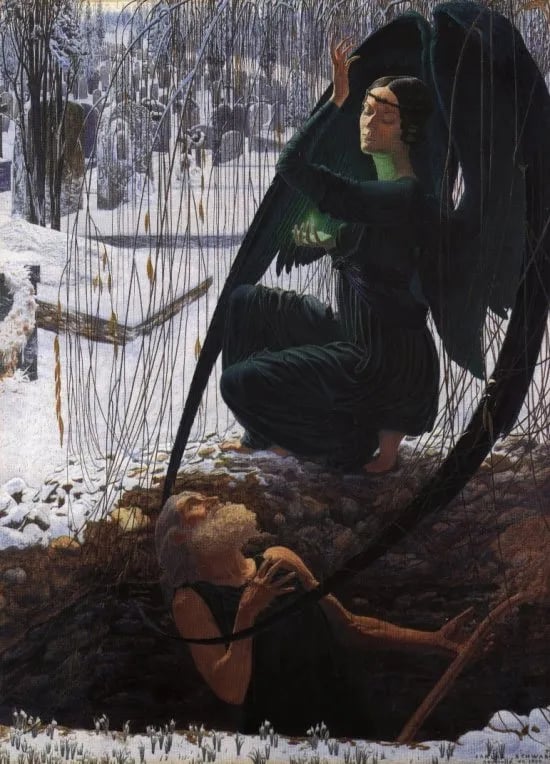
Period: 1924 – 1960s
Characteristics: Dream imagery; automatic techniques; irrational juxtaposition; exploration of the unconscious; challenge to rational thought
Events: First Surrealist Manifesto (1924), International Surrealist Exhibition (London, 1936), Breton's exile to New York (1941)
Beyond Reason: The Surrealist Revolution
Surrealism emerged in Paris in the early 1920s as a cultural and political movement that sought to free the human imagination from the constraints of reason, convention, and bourgeois morality. André Breton, its chief theorist, defined Surrealism in his 1924 manifesto as "psychic automatism in its pure state" and the "resolution of dream and reality into a surreality." The movement drew on Freudian psychoanalysis, the irrational, and the idea that the unconscious held truths that rational thought could not reach.
The Surrealists rejected the logic of cause and effect, the separation of dream from waking life, and the notion that art should serve imitation or decoration. They wanted to revolutionise not just art but life itself. Their methods (automatic writing, dream transcription, collage, the exquisite corpse, found objects) aimed to bypass conscious control and tap into deeper sources of imagery and meaning. For practitioners interested in trance, divination, or the use of the irrational in magic, Surrealism provides a major historical precedent: artists who treated the unconscious as a legitimate source of revelation.
André Breton and the Birth of the Movement
André Breton (1896–1966) had trained as a psychiatrist and worked in psychiatric hospitals during the First World War. There he encountered Freud's ideas and observed the power of patients' spontaneous speech and associations. He had also been involved in Dada, the anti-art movement that flourished during and after the war. When Dada's nihilism began to tire its participants, Breton sought something more constructive: a positive programme that could harness the irrational for creative and even revolutionary ends.
The First Surrealist Manifesto (1924) laid out the movement's aims. Breton emphasised automatism, the production of work without conscious intervention, and the cultivation of the "marvellous," the eruption of the extraordinary into ordinary experience. He was fascinated by dreams, coincidence, and what would later be called synchronicity. The Surrealist group included poets (Paul Éluard, Robert Desnos, Benjamin Péret) and painters (Max Ernst, André Masson, Yves Tanguy) from the start. Salvador Dalí and René Magritte joined later, each developing a distinct visual language within the broader movement.
Salvador Dalí: Paranoiac-Critical Method
Salvador Dalí (1904–1989) joined the Surrealists in 1929 and quickly became one of the movement's most visible figures. His "paranoiac-critical method" involved inducing a state of controlled delirium that allowed him to perceive double images and irrational connections. He painted melting clocks (The Persistence of Memory, 1931), drawers emerging from human bodies, and impossible architectures with the precision of an academic realist. The effect was unsettling: familiar forms rendered strange, space and time made fluid.
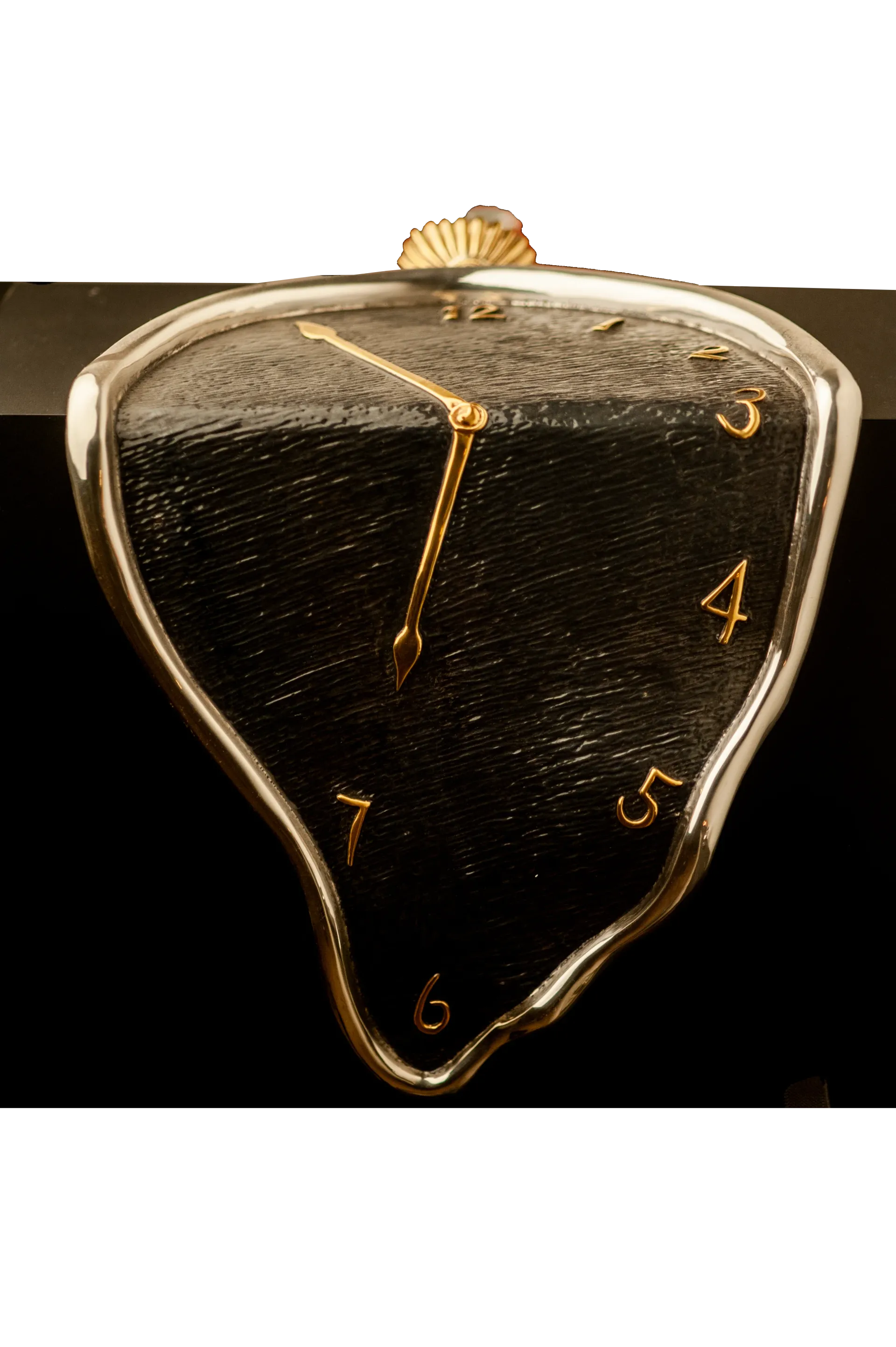
The Persistence of Memory—sculpture after Salvador Dalí (Source)

Dalí's work drew on his own anxieties, his Catalan landscape, and his obsession with his wife Gala. He was also interested in scientific and pseudoscientific ideas (nuclear physics, DNA, mystical geometry), which he incorporated into his later work. His relationship with Breton soured in the late 1930s; Breton accused him of commercialism and expelled him from the group. But Dalí's imagery had already entered the collective imagination. The soft clocks, the elongated elephants, the desert landscapes populated by uncanny objects remain some of the most recognisable Surrealist images.
René Magritte: The Mystery of the Ordinary
René Magritte (1898–1967) took a different approach. Where Dalí favoured hallucinatory transformation, Magritte worked with deadpan literalness. He painted a pipe with the caption "Ceci n'est pas une pipe" (This is not a pipe). A pipe is a representation, not the thing itself.
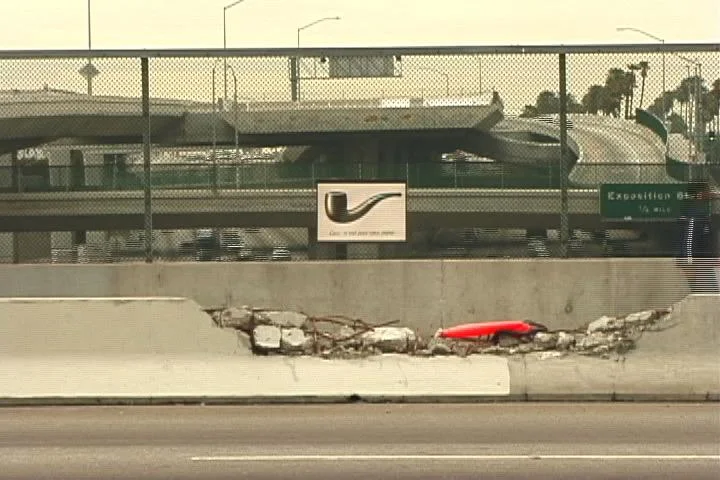
La Trahison des images (The Treachery of Images) by René Magritte (Source)

He painted men in bowler hats with faces obscured by apples or doves. He painted skies that were also walls, or day and night coexisting in the same frame. The effect was philosophical and unsettling: the ordinary made strange not through distortion but through dislocation.
Magritte lived most of his life in Brussels and worked as a commercial designer to make ends meet. His paintings often repeated a limited set of motifs (the bowler hat, the cloud, the curtain, the bourgeois interior) in new combinations. The result was a body of work that questioned representation, identity, and the nature of reality. Practitioners who work with sigils, where a symbol both is and is not what it represents, may find Magritte's visual puzzles relevant.
Max Ernst, Leonora Carrington, and the Women Surrealists
Max Ernst (1891–1976) developed frottage (rubbing) and grattage (scraping) to generate imagery from textured surfaces. He also pioneered collage novels; Une Semaine de Bonté (1934) used Victorian engravings cut and reassembled into bizarre narratives. Ernst had a long interest in alchemy, mythology, and the bird-man figure Loplop, which appeared throughout his work.
Leonora Carrington (1917–2011) joined the Surrealists as a young woman and developed a fiercely independent vision. Her paintings combined Celtic and Mexican folklore, alchemical symbolism, and autobiographical elements. After fleeing the Nazi occupation and suffering a breakdown, she settled in Mexico, where she continued to paint and write. Her novella The Hearing Trumpet (1976) is a Surrealist masterpiece. Carrington, Remedios Varo, Dorothea Tanning, and other women Surrealists often explored themes of transformation, the animal self, and female embodiment, themes that connect to contemporary goddess spirituality and shapeshifting mythology.
Occult Connections
Breton was fascinated by magic, mediumship, and the occult. He visited the Cabaret of Hell in Paris and wrote about the power of suggestion and trance. The Surrealist "exquisite corpse," a collaborative drawing or text where each participant adds to a folded work without seeing what came before, parallels techniques used in spirit drawing and certain forms of automatic writing. The interest in chance (poetry made from random words, collage from found images) fits with divinatory practices that rely on randomness to access the non-rational.
Austin Osman Spare (1886–1956), though not a Surrealist, developed automatic drawing and sigil techniques that influenced later occultists. His work circulated in esoteric circles; some Surrealists knew of it. The overlap between Surrealist method and occult technique is not coincidental: both assume that the conscious mind can be bypassed to reach other sources of knowledge or imagery.
The Surrealists also conducted "sleep sessions," gatherings where participants would fall asleep and report their dreams, which would then be transcribed and discussed. The group was interested in hypnosis, séances, and the power of suggestion. Breton's Nadja (1928), a semi-autobiographical work about a woman he met by chance, explores the role of coincidence and the marvellous in daily life. The book argues that seemingly random encounters can reveal hidden connections; the Surrealist project was to make such moments more frequent and more visible.
Photography, Film, and Object
Surrealism extended into photography and film. Man Ray's rayographs and solarised prints created dreamlike images without a camera. Claude Cahun's self-portraits explored identity and masquerade. Luis Buñuel and Salvador Dalí's Un Chien Andalou (1929) remains one of the most famous short films ever made. Its sequence of a razor slicing an eye has lost none of its power to shock. The Surrealists also made "objects"—assemblages of found or manufactured things that disrupted ordinary expectation. Meret Oppenheim's Object (1936), a fur-covered cup, saucer, and spoon, turned a domestic item into something simultaneously desirable and repulsive. These objects asked: what happens when we combine things that do not belong together?
Legacy and Influence
Surrealism's influence extended far beyond painting and poetry. It affected photography, film, fashion, and design. The movement fractured during the Second World War (many artists fled to the Americas), but Surrealist ideas persisted. Abstract Expressionists in New York learned from the Surrealists' emphasis on automatism and the unconscious. Contemporary artists who use dream imagery, collage, or the irrational continue to work in Surrealism's shadow.
For practitioners who use automatic drawing in ritual, who work with dream journals as creative and divinatory sources, or who seek the marvellous in everyday life, Surrealism provides a twentieth-century precedent. The movement asked what would happen if we took the unconscious seriously, not as pathology but as a source of truth and transformation. That question remains open. The Surrealist object, the automatic drawing, the dream transcribed: these forms have migrated into popular culture, therapy, and spiritual practice. They are no longer the property of any movement. Surrealism's lasting gift may be the normalization of the irrational as a source of creativity and meaning.
Related Resources
- Symbolism – Precursor to Surrealist interest in dream and myth
- Expressionism – Another movement that privileged inner experience
- Dada – The anti-art movement that preceded Surrealism
- Introduction to Art History
Related in this topic
More from Occult Art History & Symbolism — Start Here.
Symbolism
Discover the meaning of symbolism! Learn its origins, art and famous symbolist painters. Find hidden emotions in art.
Naïve Art
Naïve art: untrained artists created startling originality through simplified forms, vivid colors, and unfiltered imagination.
Art Informel
Art Informel: the European parallel to Abstract Expressionism. Dubuffet, Tàpies, and the art of the unformed and the raw.
Street Art
Street Art: from subway tags to gallery walls. Banksy, Keith Haring, and the art that reclaims public space.
You Might Also Like
Art Informel
Art Informel: the European parallel to Abstract Expressionism. Dubuffet, Tàpies, and the art of the unformed and the raw.
Street Art
Street Art: from subway tags to gallery walls. Banksy, Keith Haring, and the art that reclaims public space.