


In this lesson: the five parts of the Lemegeton, how to read old ritual language as a historian and a step-by-step plan for a year of study.
You have compared texts, checked pictures and traced claims. In this last lesson you learn to read the ritual language of the grimoires the way a historian does, you see the whole Lemegeton in its five parts, and you plan a year of study you can actually keep. It is still study only, and that is a complete and respectable way to know this material.
The Lemegeton in five parts
Historical The Lemegeton, or Lesser Key of Solomon, was compiled in the mid-seventeenth century from older material. It has five parts: the Ars Goetia, with its 72 spirits; the Theurgia-Goetia, spirits of the compass points; the Ars Paulina, angels of the hours and the zodiac; the Ars Almadel, angels approached through a wax tablet; and the Ars Notoria, a thirteenth-century Latin art of prayers and figures for memory and learning. Some manuscripts lack the Ars Notoria.
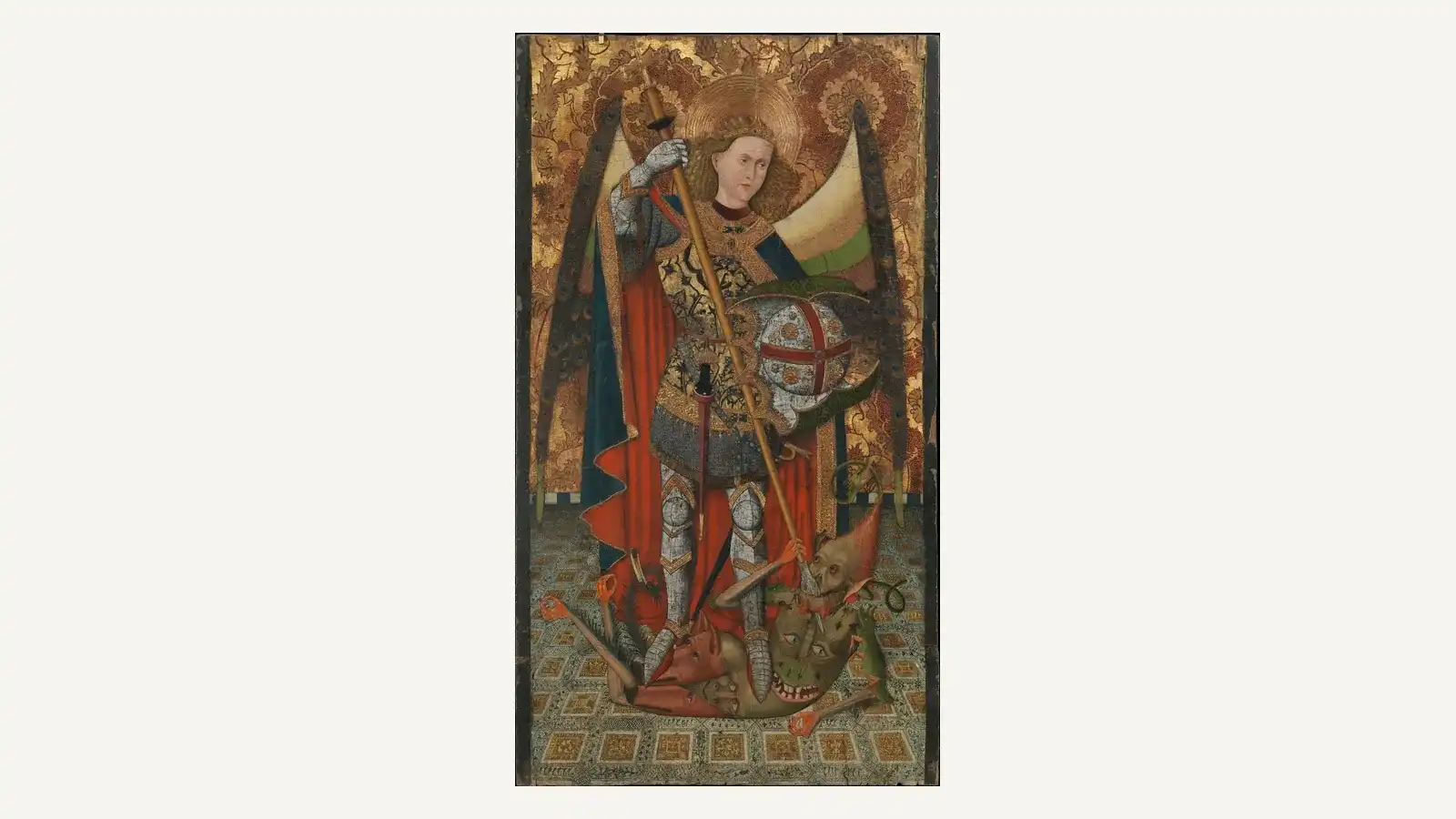
Historical Behind them stands an older legend. The Testament of Solomon is a Greek text in which Solomon builds the Temple with the help of demons, controlled by a ring from the archangel Michael. Its date is debated: scholars’ suggestions range from late antiquity to the Middle Ages. It shows how old the legend of Solomon as master of spirits is, not how old the Goetia is.
The five parts in more detail
Historical Each part of the Lemegeton has its own character, and only the first is about the 72 spirits. The Ars Goetia is the spirit list with seals and conjurations. The Theurgia-Goetia lists spirits of the compass points, said to be partly good and partly evil, and draws on the work of the abbot Johannes Trithemius. The Ars Paulina deals with the angels of the hours of the day and night and of the zodiac degrees.
The Ars Almadel describes a wax tablet, the almadel, used to contact angels of the four “altitudes”. The Ars Notoria, “the notory art”, is a much older text, known from the thirteenth century, made of prayers and figures meant to help the reader learn quickly and remember everything. It was condemned by church writers, including Thomas Aquinas, yet copied widely by students.
Reading ritual language in context
Historical The conjurations in the 1904 Goetia are full of names of God, angels and biblical events. The magician claims authority from God, not from personal power. The texts assume a Christian, or Christian and Jewish, world view in which spirits must obey divine names.
Modern Modern approaches, from psychological readings to devotional demonolatry, often drop this framework. Knowing the original language helps you see how far a modern practice has moved from the text, and to describe modern religions on their own terms without sensationalism.
Your study practice, step by step
What you need: a notebook, two colored pencils, about forty minutes for the reading, and a scan of the 1904 Goetia from a free library. For the year plan, a calendar.
- Find the first conjuration in the 1904 scan and read its opening paragraph silently, as a document.
- Underline every name of God or of an angel in one color.
- Underline every biblical reference in the other.
- Write three sentences on what these words tell you about the writers’ beliefs.
- Draw a five-box chart of the Lemegeton and write one line about each part.
- Plan your study year: one source per season, for example Weyer in winter, Scot in spring, the 1904 Goetia in summer and the Testament of Solomon in autumn.
- Each month, add one page to your notebook: a comparison, a claim you checked or a picture you studied.
Journal prompts: How did the conjuration’s language change your picture of who used these books? Which of the five parts would you most like to read in full, and why? What do you want to understand better in a year, and which source will help?
Exorcism and conjuration as mirror images
Historical Reading the conjurations as documents, one thing stands out: they sound very like church exorcisms. Both command a spirit by the names of God, the angels and holy events, and both use the legal language of a courtroom, with words like “I command” and “I adjure”. The Catholic Rituale Romanum of 1614 included an official rite of exorcism with this kind of commanding language.
Historians point out that conjurers and exorcists drew on the same pool of words and beliefs; one aimed to drive spirits out, the other to call them in and bind them. Seeing that likeness helps you read the Goetia as a product of Christian Europe, not of some ancient pagan religion.
Historical Another feature is the piling up of divine names in Hebrew, Greek and Latin, sometimes garbled by copyists. Names such as Tetragrammaton, Adonai and Sabaoth appear again and again. For a historian, these lists show the belief that names carry power, a belief you met in Mesopotamian incantations and in the Testament of Solomon.
A study year, in prose
Your study year after this course can be simple. Choose one primary text, such as Scot’s book 15 or the 1904 edition, and one scholarly book, such as Owen Davies’s Grimoires. Read a little of each every week and keep notes on dates, names and changes between versions. Every three months, reread your notes and write one page on what you have learned. At the end of the year, look back at the page you wrote in lesson 1 about where you first met the idea of demons, and see how your picture has changed.
Modern Beginners often ask whether they should read the conjurations at all. Reading them silently as historical documents is study; this course does not ask you to perform them, and it does not teach ritual. People also ask what to read next. Lesson 7’s month-by-month list is a good map. A last myth to drop is that the Lemegeton is one ancient book; it is a seventeenth-century compilation of very different texts.
A small glossary of ritual words
Ritual texts use a vocabulary of their own, and a few definitions make silent reading much easier.
Conjure comes from the Latin coniurare, “to swear together”. In the grimoires it means to charge a spirit by a solemn oath, not to produce something by trickery, which is a later sense.
Adjure means to command someone by appeal to a higher name, as in “I adjure thee by”. You will meet the same verb in exorcism rites.
Tetragrammaton is Greek for “the four letters”, the Hebrew name of God written YHWH. Adonai is Hebrew for “my Lord”, and Sabaoth means “of hosts”, as in the biblical title “Lord of hosts”.
Constrain and bind come from the legal language of the period. They describe the magician’s claim to hold a spirit to its obligations, much as a court binds a person to appear.
Historical Knowing these words, you can see how much of the conjuration is borrowed from the Bible and the church. The phrase in the worked example below echoes Psalm 33:9, which in the King James Bible reads: “For he spake, and it was done; he commanded, and it stood fast.” The writers chose a verse about God’s word creating the world because they believed divine words had real force. That belief, not any secret pagan lore, is the engine of the whole text.
The older roots of two parts
Historical Two parts of the Lemegeton are clearly older than the compilation. The Theurgia-Goetia draws on the first book of the Steganographia by Johannes Trithemius, an abbot who wrote around 1500; the book circulated in manuscript and was printed in 1606. Scholars still debate how far it was about spirits and how far it was a code for secret writing. The Ars Notoria goes back to the thirteenth century. Medieval students copied it hoping to learn faster, which tells you that anxious learners existed long before exam season.
A question beginners ask: “What if, after all this study, I feel drawn to practice?” This course stays with study and does not teach ritual. If you ever consider any practice, wait some months, be 18 or over, reread the safety guide and talk it over with someone you trust. There is no hurry, and study alone remains a complete path.
A worked example
A learner reads the opening of the first conjuration silently. She underlines names of God, such as El, and a biblical echo in the phrase about Him “Who spake and it was done”, from Psalm 33. She also notices strange words she cannot place and marks them with a question mark. She writes: “This was written by someone who believed God’s names had power over spirits. It is a Christian magical text, not a pagan one.” Her year plan names one source per season and ends with a review page in December.
Try this
Read the opening paragraph of the first conjuration in a scan of the 1904 Goetia silently, as a document. Underline every name of God and every biblical reference, then write three sentences on what it tells you about the world view of the people who wrote it.
Recap
The Lemegeton has five parts, compiled in the seventeenth century from older material. The Testament of Solomon is older legend, with a debated date. The Goetia’s ritual language assumes authority from God’s names. A year of study, one source a season, gives you real understanding without any ritual.
What next
Keep your notebook going for twelve months. My Lemegeton page goes into each part, modern approaches describes how people work with this material today, and Occult History for Beginners places the grimoires in the wider story of ceremonial magic.
You have finished Demons for Beginners. Press “Mark as done” and claim your certificate of completion. Then read which spirits suit a beginner and the Goetia safety guide again with fresh eyes.
Further reading: Joseph H. Peterson (ed.), The Lesser Key of Solomon (Weiser, 2001), with notes on the manuscripts. Claire Fanger (ed.), Conjuring Spirits: Texts and Traditions of Medieval Ritual Magic (Sutton, 1998).
Sources
- S. L. MacGregor Mathers (trans.) and Aleister Crowley (ed.), The Book of the Goetia of Solomon the King (Boleskine, 1904).
- British Library, Sloane MS 3825, the Lemegeton, mid-seventeenth century, edited online by Joseph H. Peterson.
- F. C. Conybeare (trans.), “The Testament of Solomon”, Jewish Quarterly Review 11 (1898).
Quick check
Go deeper: the Goetia pages on this site
Your certificate with an account
You have finished every lesson of Demons for Beginners. Well done. Your free certificate of completion is waiting.
Your certificate is ready.
Get the free Mini-Grimoire
A short printable starter guide to tarot and everyday witchcraft, plus my newsletter. Unsubscribe any time.
Opens Substack in a new tab to confirm. More about the newsletter · Privacy
Comments
Questions and notes from readers. Anyone with a free account can comment, and I reply when I can. Please read the community guidelines.
Comments load from Google Firebase (EU) when you ask for them. Nothing is stored on your device. Privacy