

Hello, I’m Lauri
I’m Lauri Mukkala, and I write this site. I am a Finnish writer of practical witchcraft and tarot. Everything I write sorts what we actually know from what people later added, and then gives you something small to practice. That is what this page gives you: a map, a plan for your first week and one free course to start with.
You do not need to believe anything to use this site. You only need some curiosity and about fifteen minutes a day.
How this site works: history, tradition and modern practice
Most beginner pages mix three very different things in one sentence. A card is “ancient Egyptian”, a rune is “Viking magic”, a spell is “what witches always did”. Some of that is true, some of it is later tradition, and some of it is a modern idea that someone wrote down in the 1970s. All three can be valuable. They are just not the same thing.
So every guide here uses three small labels:
- Historical means what the old sources actually show: a card painted in Milan around 1450, a rune carved on a stone, a court record from a witch trial. I name the source so you can check it.
- Later tradition means what groups and writers built on top of those sources, often in the 18th to 20th centuries. The Golden Dawn’s link between tarot and astrology is a good example. It is old enough to be a tradition, but it is not medieval.
- Modern means today’s practice: what readers, witches and teachers do now, including my own habits. Modern does not mean worse. It means honest about its age.
When you see these labels, you know where a claim comes from. If you want to read more about how I research, choose images and correct mistakes, see how I make content.
The paths in detail
You do not need to choose forever. Pick the one that pulls at you most today. Each path below says who it suits, what to read first, which free course goes with it and, where I have one, which of my books goes deeper.
Tarot
Who it is for: anyone who likes pictures, stories and journaling. Tarot is the easiest path to start on, because a single card a day already teaches you something.
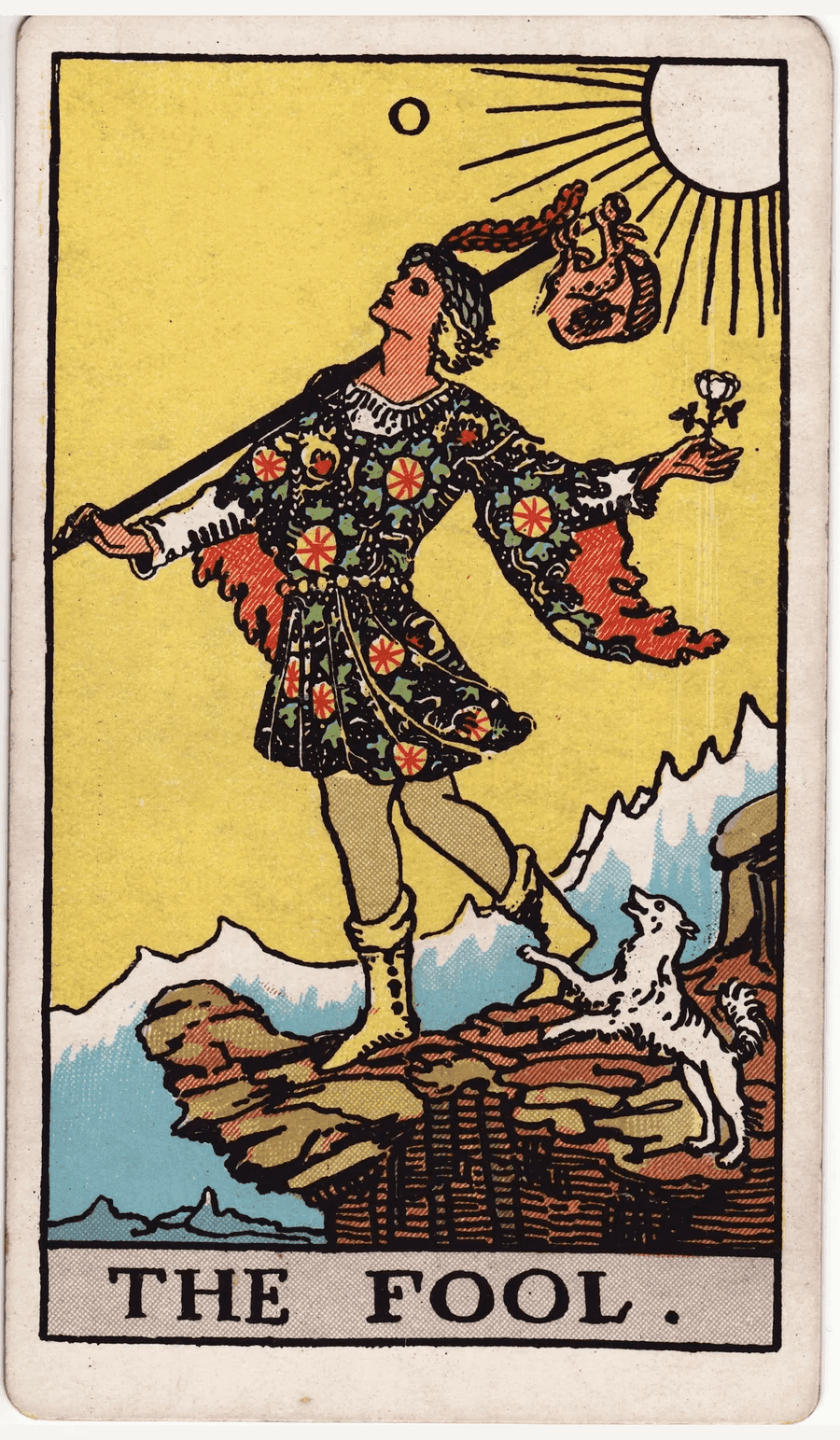
Read first: the tarot pillar, then The Fool and The Magician.
Free course: Tarot for Beginners, 30 short lessons. Time: about 15 minutes a day for six weeks.
Book: The Novice’s Guide to Tarot.
Witchcraft
Who it is for: people who want small, practical rituals for ordinary life: a candle, a cup of tea, a walk at the new moon. It suits you if you like doing more than reading.
Read first: the witchcraft pillar, then the short history of witchcraft and ethical witchcraft.
Time: five minutes a day is enough.
Books: The Novice’s Guide to Witchcraft, and if your days are full, The 5-Minute Witch.
Runes
Who it is for: history lovers and people who like learning a system. The 24 runes of the Elder Futhark were an alphabet first, so this path starts with real inscriptions.
Read first: the runes pillar and how to cast runes.
Time: a little more reading than tarot at first.
The Ars Goetia
Who it is for: readers curious about the 72 spirits of the old grimoire who want the history before any practice. This is not a beginner’s first path, and that is fine.
Read first: Goetia safety, ethics and mental health, then the Goetia pillar.
Free course: Demons for Beginners, seven study-only lessons. Time: go slowly, weeks rather than days.
Art history
Who it is for: anyone who loves old paintings, tarot art or the look of the occult revival. You need no tools at all, only your eyes and a notebook.
Read first: the art history pillar and how to look at art.
Free course: Art History for Beginners, seven lessons, with every period on the art movements timeline.
Hekate, Lilith and Lucifer
Who it is for: readers drawn to one of these three figures who want to know where the stories come from before working with them.
Read first: the deities hub and working with deities: ethics and discernment.
Free courses: Hekate for Beginners, Lilith for Beginners and Lucifer for Beginners.
Your first week: a 7-day plan
Here is a gentle plan for your first seven days. Each task takes about fifteen minutes and uses things you already have at home. You do not need to buy anything. If you miss a day, simply carry on the next day. Nothing breaks.
Day 1: Make a notebook. Take any notebook or a few sheets of paper. Write today’s date and one line: “What I want to learn, and why.” This becomes your practice journal, and later your book of shadows if you like.
Day 2: Make a quiet corner. Clear a small space on a shelf or windowsill. Put one object there that feels calm to you: a stone from a walk, a cup, a photo. Sit with it for five minutes and just breathe. That is a beginner’s altar.
Day 3: Look at one picture slowly. Open the Fool card page or any old painting. Set a timer for ten minutes and write down everything you see: colors, gestures, objects, direction of movement. You are learning the skill that tarot and art history share.
Day 4: Learn three things that are old and three that are new. Read the opening of the tarot pillar or the witchcraft pillar. In your notebook, write three facts with a Historical label and three with a Modern label.
Day 5: A one-minute grounding. Stand with your feet on the floor. Breathe in for four counts and out for six. Notice your weight, the air, the sounds around you. Write one sentence afterward about how you feel. Grounding is the base of most practice, and it is also simply good for you.
Day 6: Ask one clear question. Write a question that starts with “What can I learn about…” or “How can I…”. Avoid yes or no. If you have a deck, draw one card. If not, open a book at a random page and read the first line. Write what it makes you think about.
Day 7: Look back. Read your notes from the week. Which day did you enjoy most? That is your path. Start lesson one of Tarot for Beginners, or bookmark the pillar for the path you picked.
What you do not need
You will see a lot of things for sale. Here is what you can safely skip.
- An expensive kit. A notebook, a pen and a candle (or an LED light) are enough for months. Most of what I teach on this site uses things already in your kitchen drawer.
- An initiation, a lineage or a teacher’s permission. Some traditions have initiations and that is their business. Tarot, runes, study and solitary witchcraft do not require one. Nobody can tell you that you are not “allowed” to start.
- A special gift. You do not have to be born a witch or be psychic. Reading cards and symbols is a skill. It grows with practice like any other.
- Fear. You do not need to be afraid of cards, runes, old books or names. Nothing on this site asks you to put yourself in danger, and nothing you read here can harm you by being read.
- Results on a deadline. I will never promise you money, love or a cure. Practice helps you think, notice and choose. That is plenty.
Safety and ethics in one minute
Most of what you will do here is reading, looking and writing. That is safe. A few simple rules cover the rest.
- Fire: never leave a candle burning unattended, keep it away from curtains, pets and children, and use an LED if you live with others who might knock it over.
- Plants: do not eat, drink or burn a herb unless you know it is safe for you, your pets and the people around you. Smoke and incense can harm birds and people with asthma.
- Mind: if a practice leaves you frightened, sleepless or stuck in repeated checking, stop and talk to someone. The Goetia safety page and the chaos magic safety page go into this carefully.
- Others: read for other people only with their consent, and never use a practice to control or harm someone.
- Getting help: if you are in crisis, contact your local emergency number (112 in Europe, 911 in the US and Canada) or a crisis line. The Goetia safety page lists more numbers. Nothing on this site replaces medical, legal or psychological advice, see the disclaimer.
Free tools for the journey
- The Novice’s Mini-Grimoire: a free starter guide with tarot basics and first rituals. It arrives by email when you sign up for my newsletter. Read what is inside.
- Printables: cheat sheets, a book of shadows template and reading logs live in free resources.
- The School: every course is free and saves your progress in your browser. See the School.
Frequently asked questions
Is this a religion?
No. Tarot, runes and art history are skills you can learn whatever you believe. Witchcraft is a practice that some people hold as part of a religion, such as Wicca, and others keep entirely secular. This site does not ask you to join anything, and I write for readers of every faith and none.
Do I need a tarot deck?
Not to start. The free course begins with the card images on this site, and you can print or draw a few cards. When you want a deck, I suggest a Rider-Waite-Smith style deck, because most beginner books, including mine, follow its pictures.
Is it safe?
Reading, studying and the simple practices here are safe for most adults. Candles need ordinary fire care, herbs are never eaten unless you know they are safe, and the Goetia and chaos magic pages carry extra mental health notes. If you are struggling, a doctor or a crisis line comes first.
Is the School really free?
Yes. Every lesson is free, there is no account, and your progress stays in your own browser. My books go deeper, but you never need one to finish a course.
Sources
- Ronald Hutton, The Triumph of the Moon: A History of Modern Pagan Witchcraft (Oxford University Press, 1999).
- Michael Dummett, The Game of Tarot (Duckworth, 1980).
- Lauri Mukkala, The Novice’s Guide to Tarot (2026), Quickstart and Introduction.
Get the free Mini-Grimoire
A short printable starter guide to tarot and everyday witchcraft, plus my newsletter. Unsubscribe any time.
Opens Substack in a new tab to confirm. More about the newsletter · Privacy