

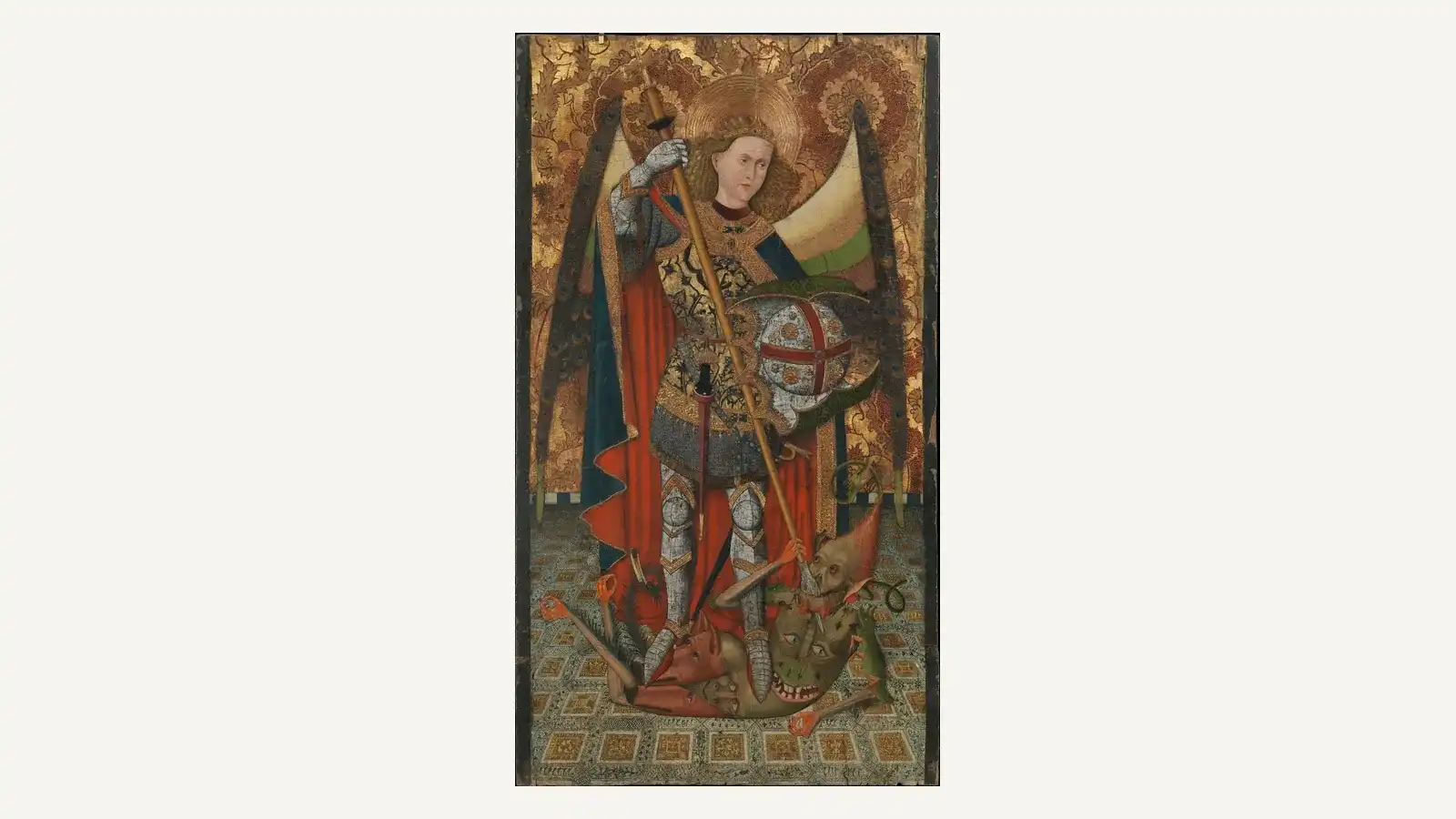
This course is free and always will be. No account, no email needed. Your progress stays in your own browser. If you have seen a demon’s seal on a T-shirt, a horror film or a social media post and wondered what is real, this course is for you.
Demons for Beginners: A Novice’s Path is a study course. It follows the idea of the demon from the neutral daimones of ancient Greece, through the legends of King Solomon and his ring, to the seventeenth-century Ars Goetia, the famous list of 72 spirits, and the 1904 edition that made it known. You will learn to read a spirit entry the way a historian does, to tell the old text from later additions and to keep yourself safe and calm. The last three lessons are hands-on study: comparing sources, reading seals and pictures critically and planning a year of reading. Each lesson teaches one thing, ends with a small exercise and has a quick quiz.
What you will learn
- What the word demon meant before Christianity, and how it changed.
- How Solomon became the master of spirits in Jewish, Christian and Islamic legend.
- How medieval grimoires, Weyer and Scot led to the Ars Goetia.
- What Mathers and Crowley added in 1904.
- How to read a spirit entry: rank, appearance, offices, legions and seal.
- Safety, ethics and the most common myths.
- How people approach the Goetia today, and how to plan a year of study.
How it works
Open a lesson, read it, try the exercise and press “Mark as done”. Your progress is saved privately in your browser, so nothing is sent to me. When every lesson is done, you can open your certificate of completion.
I label what I teach in three layers, as everywhere on this site: Historical for evidence from the texts and their times, Later tradition for what editors and occultists added, and Modern for practice today. Modern does not mean fake. It means honest about its age.
The lessons
- What is a demon?
- Demons in the ancient world
- Solomon and the grimoires
- Weyer, Scot and the 1904 Goetia
- How to read a spirit entry
- Safety, ethics and myths
- Modern approaches and a year of study
- One spirit, three sources: a comparison practice
- Pictures, seals and claims
- Reading ritual language and your study year
How each lesson works
Every lesson opens with why the topic matters. Then comes the teaching itself in plain prose, a worked example that shows the idea in action, one small exercise for your notebook and a short recap, with the sources I used listed at the end. A three-question quiz checks the main idea, and nobody sees your answers. The last line links to the next lesson.
Who this course is for
Curious beginners, readers of horror and fantasy, witches who want to check what they read online and anyone who is a little afraid of the subject and would like to understand it. You do not have to believe in demons. You do not have to practice anything. The whole course works as history.
If you are struggling right now, call your local emergency number (112 in Europe, 911 in the US and Canada) or see Getting help.
What you need
A notebook. For lesson 5, the spirit directory on this site, which has a page for each of the 72 spirits. For lessons 8 to 10, the free scans of Weyer and Scot at the Internet Archive.
Start now
Begin with What is a demon?. It takes about ten minutes.
Go deeper
The Goetia hub links every page in this part of the site, from the history of the Goetia to ranks and offices and the safety guide.
Sources
- S. L. MacGregor Mathers and Aleister Crowley, The Book of the Goetia of Solomon the King (Boleskine, 1904).
- Reginald Scot, The Discoverie of Witchcraft (London, 1584), book 15.
- Joseph H. Peterson (ed.), The Lesser Key of Solomon (York Beach: Weiser, 2001).
- Owen Davies, Grimoires: A History of Magic Books (Oxford University Press, 2009).
0% done · 10 of 10 lessons ready
Comments
Questions and notes from readers. Anyone with a free account can comment, and I reply when I can. Please read the community guidelines.
Comments load from Google Firebase (EU) when you ask for them. Nothing is stored on your device. Privacy