

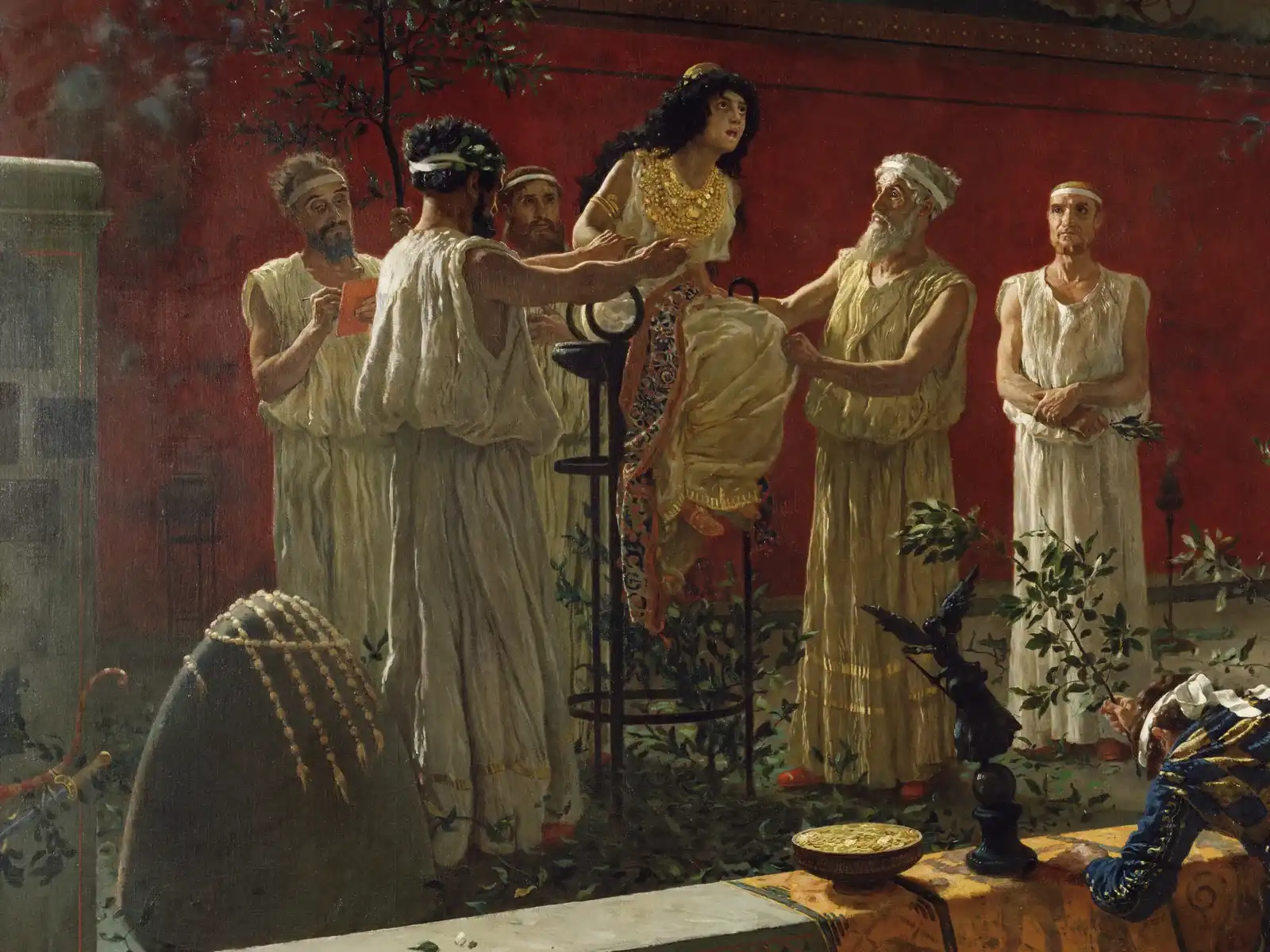
This course is free and always will be. No account, no email needed. Your progress stays in your own browser. If you have been curious about pendulums, runes or tea leaves but did not know which to try first, or how seriously to take them, you are exactly who I wrote it for.
Divination for Beginners: A Novice’s Path introduces the main families of divination in ten short lessons. We start with what divination is and how people practised it from Babylon to Rome, then try the pendulum, the runes, Lenormand and oracle cards, scrying and tea leaves. We finish with ethics, a journal that keeps you honest and a simple way to choose your method, then add playing cards, dreams and a month of practice. Tarot has its own course, so this one covers everything else.
What you will learn
- What divination is, and how Cicero sorted it into two kinds.
- How to use a pendulum, and why it moves (the ideomotor effect).
- The Elder Futhark and what history really says about casting runes.
- How Lenormand and oracle decks differ from tarot.
- How to scry in water and read tea leaves, safely.
- Reading ethics, the Forer effect and keeping a divination journal.
- How to choose one method and build a weekly practice.
How it works
Open a lesson, read it, try the exercise and press “Mark as done”. Your progress is saved privately in your browser, so nothing is sent to me. When every lesson is done, you can open your certificate of completion.
I label what I teach in three layers, as everywhere on this site: Historical for what the evidence shows, Later tradition for what writers and occultists added later, and Modern for practice today. Modern does not mean fake. It means honest about its age.
The lessons
- What divination is, and where it comes from
- Pendulums and the ideomotor effect
- Runes for beginners: an alphabet you can cast
- Oracle and Lenormand cards
- Scrying and reading tea leaves
- Ethics and keeping a divination journal
- Choosing your method and building a practice
- Reading ordinary playing cards
- Dreams and a dream journal
- A month of divination practice
How each lesson works
Every lesson opens with why the topic matters. Then comes the teaching itself in plain prose, a worked example that shows the idea in action, one small exercise for your notebook and a short recap, with the sources I used listed at the end. A three-question quiz at the bottom checks the main idea, and nobody sees your answers. The last part of each lesson links to the next one. If a lesson needs a second evening, give it one.
Who this course is for
This course is for complete beginners and for anyone who wants an honest, grounded introduction. It does not ask you to believe that divination predicts the future. It asks you to try each method with curiosity and to write down what actually happens.
What you need
A notebook, a pen and things you probably have already: a ring or key on a thread, some card or paper to make runes, a dark bowl, and a cup of loose-leaf tea. A Lenormand or oracle deck is nice for lesson 4 but not required. For lesson 8, an ordinary deck of playing cards.
Start now
Begin with What divination is, and where it comes from. It takes about ten minutes.
Go deeper
My divination overview compares the methods side by side, the runes hub has a page for every rune, and the free Tarot for Beginners course teaches the 78 cards step by step.
Sources
- Marcus Tullius Cicero, On Divination, translated by W. A. Falconer (Loeb Classical Library, 1923).
- R. I. Page, Runes (British Museum Press, 1987).
- Ronald Decker, Thierry Depaulis and Michael Dummett, A Wicked Pack of Cards: The Origins of the Occult Tarot (Duckworth, 1996).
- Ray Hyman, “The Mischief-Making of Ideomotor Action”, The Scientific Review of Alternative Medicine 3 (1999).
0% done · 10 of 10 lessons ready
Comments
Questions and notes from readers. Anyone with a free account can comment, and I reply when I can. Please read the community guidelines.
Comments load from Google Firebase (EU) when you ask for them. Nothing is stored on your device. Privacy