


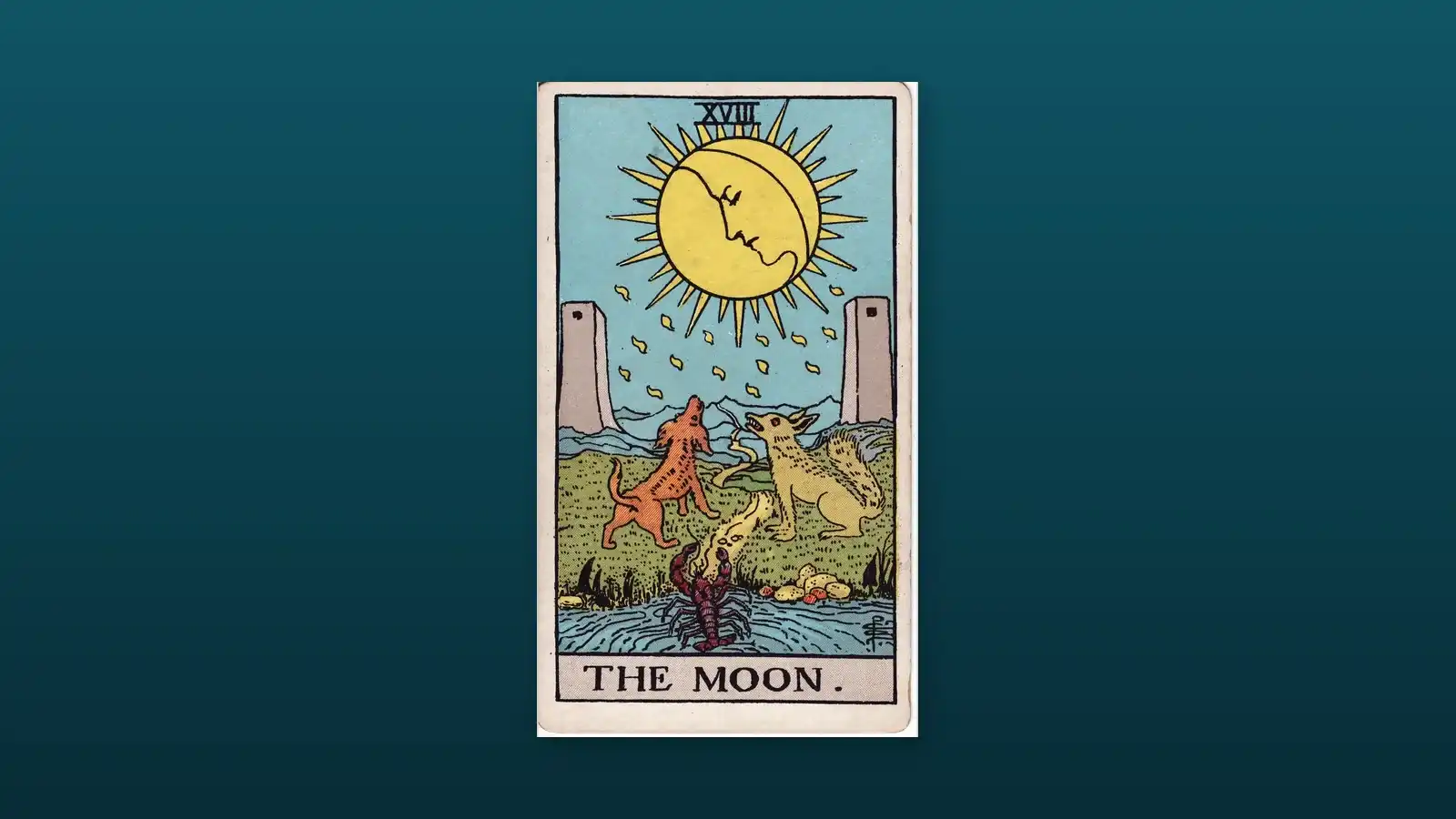
In this lesson: the common tarot myths about gifted decks, bad cards, evil cards, cleansing and Egypt, and what is actually true.
Almost every beginner arrives carrying a few rules they heard somewhere: never buy your own deck, never let anyone touch it, the Death card means someone will die. These rules sound small, but they can stop you from ever shuffling, or make you afraid of your own cards. Clearing them away makes the craft usable, not smaller. This lesson looks at the myths I hear most often and replaces each with something you can actually work with.
Myths about the deck
The first cluster of myths is about the cards as objects. You may hear that your first deck must be a gift. Receiving one can feel lovely, but it is not a rule, and buying your own deck is how most readers begin. You may hear that no one else should touch your cards. Some readers keep a deck private and others share decks in classes and shops. Hygiene and personal comfort are perfectly good reasons for a preference. Superstition is not required.
Then there is cleansing. Many readers enjoy a cleansing ritual for a new deck, and if it helps you focus, keep it. It is optional. A moment of quiet, a dry cloth or a thorough shuffle works too. If you use smoke or a candle, open a window, stay with the flame and keep it away from pets.
Keep salt and water off the cards, because both ruin card stock. Finally, the cards are not evil or dangerous. Tarot is a set of printed images with a long history as a game and a reflective tool. Some people avoid it for religious or personal reasons, and that is their choice to make. The cards themselves cannot curse you or open a door you did not choose.
Myths about reading
The second cluster is about what readings do. Tarot does not predict the future with certainty. It is better at mapping influences, choices and patterns, and a reading reflects the moment you ask in. As your choices change, so can the picture. Use the cards as a mirror and a planning tool, not as a script you must perform.
There are no good cards and bad cards either. Hard cards name pressure, grief, conflict or endings. Gentle cards name ease, support or clarity. Both are information, and a hard card in the right place can be the most useful card on the table. In the same way, a reversed card is not an automatic misfortune. It shifts how a theme shows up, and you can skip reversals entirely if you prefer.
You do not need to be psychic, and you do not need a special ritual. Practice, attention and honesty are what make a reader. A clear question, a quiet minute and sincere attention are enough. And tarot is not only for fortune-telling. Many people use it for journaling, creative prompts, ethical reflection and conversation.
A myth about origins
The last myth is the oldest: that tarot comes from ancient Egypt. As you saw in the last lesson, that story was invented in France in 1781. Tarot began as a card game in fifteenth century Italy.
Where the Romani myth came from
Historical One persistent myth says that Romani people brought tarot to Europe. It became popular in the nineteenth century through French writers, including Papus, whose 1889 book was called Le Tarot des Bohémiens, “the tarot of the Bohemians”, an old word for Roma.
The dates do not fit: playing cards were in Europe by the late 1370s, and tarot was invented in Italy in the early fifteenth century, while Romani groups are first recorded in western Europe in the early fifteenth century. Some Romani people did and do read cards, like many other people, but the origin story is a romantic invention that has also fed harmful stereotypes. It is kinder and more accurate to drop it.
The “Death means death” myth in detail
In the 1909 deck, Death rides a white horse past a fallen king, a praying bishop, a girl and a child, while the sun rises between two towers. In his description, Waite wrote of “change, transformation and passage from lower to higher”, though his short list of fortune-telling meanings still begins “End, mortality”.
Most modern teachers read the card as endings and transformation. Older decks show a skeleton with a scythe, which in a culture full of reminders of mortality meant the great leveler that comes to everyone. Neither tradition makes the card a prediction of anyone’s death. If a film or a friend told you otherwise, this is the moment to let that go.
Watching a myth dissolve: an example
Imagine a beginner who draws the Death card in her first week. She has heard it means someone will die, and her stomach drops. Now imagine she has done this lesson. She looks at the picture instead: a rider on a white horse, people of every rank before him, and on the horizon a sun rising between two towers.
She remembers that hard cards are information and that no card predicts a death. She reads it as the card is usually read, as an ending that makes room for something new, and she asks herself what in her life is already finishing. Her week did not change. Her relationship with the deck did.
How myths spread, and how to test one
Many tarot myths travel because they are good stories, are repeated without sources and feel ancient. You can test any claim with three questions. Who first said it, and when? What evidence do they give? Does it appear in sources from the time it describes? For example, the claim that “you must never read for yourself” cannot be traced to any historical source; it seems to come from twentieth-century advice about bias, which is a fair point but not a rule. The claim that “tarot is from Egypt” can be traced exactly, to 1781.
More myths you may meet
Beginners collect rules from friends, films and social media, and a few come up so often that they deserve a calm answer each.
“You must never read for yourself.” Many readers read for themselves every day, and this course is built on it. The real challenge is honesty: it is easy to see what you hope for. Writing your reading down before you act on it helps a great deal.
“You have to use reversed cards.” Reversals are a choice, and many skilled readers never use them. Lesson 7 helps you decide.
“Reading too often wears out the deck’s power.” Reading often can wear out the card stock, but not any power. It can, however, wear out your judgment if you keep asking the same question until you get the answer you want. One reading per question, then a pause, is a good habit for that reason.
“You must not read during a full moon, on certain days or after dark.” These are personal customs, not rules of tarot. If a time of day feels right to you, enjoy it. If you are tired, any time is a poor time.
“The deck chooses you.” A deck you love will invite you to look at it more, and that matters. But you can choose a deck for practical reasons, and it will work just as well.
Myths with a grain of truth
Some myths contain a useful warning wrapped in a wrong explanation. “Don’t let strangers handle your cards” is not about energy, but about respect for a well-kept tool. “Never read for someone who doesn’t want it” is not about bad luck, but about consent, which module 2 covers properly. When you meet a rule, ask what sensible worry might lie behind it. Keep the sense and drop the superstition.
Talking with a worried family member
Sometimes it is a parent, partner or friend who believes a myth and feels anxious about your new hobby. You do not need to win an argument. Explain simply what you do: you look at pictures and use them to think. Offer to show them a one-card draw, or not, as they prefer. Respect their beliefs, especially religious ones, and keep your practice private if that keeps the peace. A calm, ordinary manner answers most fears better than any history lesson.
A myth audit for your notebook
Here is a short exercise that turns this lesson into a habit. Make a page in your notebook headed “Rules I have heard”. Each time you meet a new tarot rule, in a book, a video or a conversation, write it down with where you found it. Next to it, add one of three marks: a tick if you can find good evidence or a clear practical reason, a question mark if you are unsure, and a cross if it does not survive the three questions from earlier in this lesson.
After a few months the page becomes a record of how your thinking has grown. You may notice that the rules with ticks are almost always about care, honesty and respect, while the rules with crosses are about fear. That pattern is worth remembering every time a new rule makes you anxious.
Questions beginners ask
Is reading tarot against my religion? Different religions and communities answer this differently. This course treats tarot as a tool for reflection, and it is your choice.
Can tarot cards be cursed? Cards are printed cardboard. A deck feels like whatever you bring to it.
Will reading tarot open me to spirits? Nothing in reading the cards themselves involves contacting spirits. This course does not teach any such practice.
Myths to drop: A deck does not have to be a gift. Reversed cards are not always negative. And you do not have to read “psychically” to read well.
Try this
Write down one tarot myth you believed before today, and one sentence about what you believe now. If you are not sure you believed any, write down the myth you think your friends or family believe, and how you might gently answer them.
Recap
No rule about gifts, touching or cleansing makes a deck work or fail, and the cards cannot curse you. Readings show influences and choices, not a fixed fate. Every card, upright or reversed, is information rather than a verdict of good or bad. You need attention, not psychic powers or ritual. And tarot comes from a fifteenth century Italian card game, not from Egypt.
What next
Press “Mark as done” and continue with Consent and confidentiality. For a longer list, see tarot misconceptions, and for gentle, safe cleansing ideas read how to cleanse tarot cards.
Further reading: Helen Farley, A Cultural History of Tarot (I. B. Tauris, 2009).
Sources
- Lauri Mukkala, The Novice’s Guide to Tarot, “Common Misconceptions”.
Quick check
Go deeper: The Novice's Guide to Tarot: Common Misconceptions
Get the free Mini-Grimoire
A short printable starter guide to tarot and everyday witchcraft, plus my newsletter. Unsubscribe any time.
Opens Substack in a new tab to confirm. More about the newsletter · Privacy
Comments
Questions and notes from readers. Anyone with a free account can comment, and I reply when I can. Please read the community guidelines.
Comments load from Google Firebase (EU) when you ask for them. Nothing is stored on your device. Privacy