


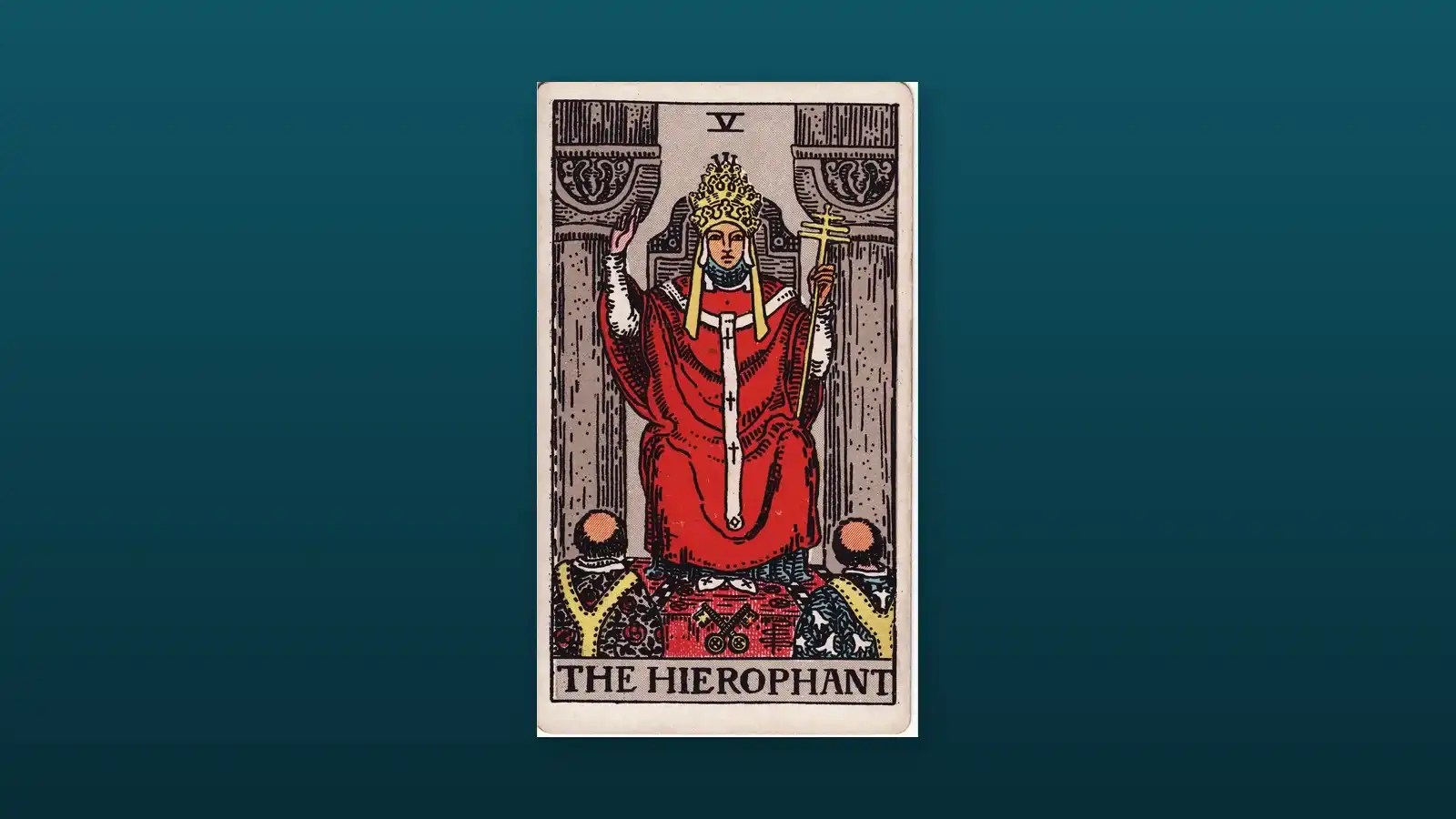
In this lesson: the honest history of tarot, from Italian card game to the occult revival, the 1909 deck and the Fool’s Journey.
Why spend a lesson on history when you could be learning card meanings? Because the story you believe about where tarot came from shapes how you treat it. If you think the cards are a secret Egyptian book, you may feel you need a priest’s permission to read them. If you know they began as a beautiful card game and gathered meanings over five centuries, you are free to learn them as a living craft. Honest history makes the symbols more interesting, not less.
A card game in Renaissance Italy
Most historians agree that tarot began as a card game in fifteenth century northern Italy. The early decks were called carte da trionfi, triumph cards, because the special picture cards worked as trumps in a trick-taking game, a little like trumps in bridge. Some decks were luxury objects. The Visconti-Sforza cards, painted for the rulers of Milan, are among the best-known survivors: hand-painted, gilded and clearly made for play and for display.
The trump pictures mixed allegories, social types and virtues: an emperor, a pope, love, death, the wheel of fortune, the sun and the moon. To a player in the 1400s these were familiar images from paintings, processions and sermons, not secret codes. Picture a Milanese courtier laying down the card of Death to win a trick. He would have recognized the skeleton from church walls, and he would have thought about winning the game, not about his fate.
From printed decks to the occult revival
Printing made decks cheaper, and regional patterns spread through France, Switzerland and beyond. The family of designs that English speakers call the Tarot de Marseille took shape in France across the seventeenth and eighteenth centuries. If you have seen a woodcut tarot card in bold red, blue and yellow, it was probably a Marseille card, and many people still read with them today.
The turn towards mysticism came late. In 1781 the French writer Antoine Court de Gébelin claimed in his book Le Monde primitif that the trumps preserved the wisdom of ancient Egypt. There was no evidence for this, and the Egyptian hieroglyphs had not even been deciphered yet, but the idea caught on. Soon after, the Paris card reader known as Etteilla published one of the first decks designed for divination.
In the nineteenth century the French occultist Éliphas Lévi linked the 22 trumps to the 22 letters of the Hebrew alphabet. In 1888 the Hermetic Order of the Golden Dawn was founded in London, and its members built tarot into a large system of astrology, elements and Kabbalah. That is why many modern decks print zodiac signs or Hebrew letters on the cards. Those layers can enrich your study later. You do not need them to read clearly.
The first fortune-telling decks
Historical Court de Gébelin’s volume of 1781 also contained a short essay by the Comte de Mellet, who linked the trumps to the 22 Hebrew letters and described a way of telling fortunes with tarot. A few years later, the Parisian card reader Jean-Baptiste Alliette, who called himself Etteilla, published books on reading tarot and, around 1789, issued a deck redesigned for divination, with meanings printed on the cards for both upright and reversed positions. That makes it one of the first decks made specifically for fortune-telling.
Historical The Egyptian story outlived its evidence. In 1822 Jean-François Champollion announced his decipherment of Egyptian hieroglyphs, and no tarot appeared in any Egyptian text. Yet nineteenth-century writers such as Éliphas Lévi, whose Dogme et rituel de la haute magie appeared in 1854 to 1856, and Papus, whose Le Tarot des Bohémiens came out in 1889, kept building ever larger mystical systems on the cards.
The deck most beginners use
In 1909 the London publisher Rider issued a new deck designed by A. E. Waite, a Golden Dawn member, with pictures by the artist Pamela Colman Smith. Smith gave every one of the 78 cards a scene, including the number cards, which earlier decks usually showed as rows of cups or swords.
Waite explained the cards in The Pictorial Key to the Tarot in 1910. Today the deck is often called the Rider-Waite-Smith, so that Smith gets the credit she deserves. Her scenes are the reason a beginner can look at the Five of Cups and feel its sadness before reading a word.
One more modern layer is worth knowing. In 1970 Eden Gray’s A Complete Guide to the Tarot included an epilogue called “The Fool’s Journey”, which reads the Major Arcana as the stages of a life. Many teachers, including me, still use that idea because it works. It is a modern teaching aid, not a medieval doctrine.
A timeline to keep
If you remember only five moments, remember these.
- Fifteenth century, northern Italy: tarot appears as a card game with painted trumps.
- Seventeenth and eighteenth centuries, France: printed Marseille-pattern decks spread.
- 1781: Court de Gébelin invents the Egyptian origin story.
- 1888: the Golden Dawn is founded and builds tarot into its magical system.
- 1909: the Rider-Waite-Smith deck gives every card a scene.
Waite in his own words
Historical A. E. Waite’s The Pictorial Key to the Tarot (1910) is now in the public domain, and it is worth reading a few lines. Of the Fool he wrote that the young man walks “with light step, as if earth and its trammels had little power to restrain him”.
Waite also mocked the Egyptian theory. Ending his chapter on history, he wrote that the subject “has no history prior to the fourteenth century, when the first rumors were heard concerning cards”. He was, in his own odd way, a careful historian, even while he built new mystical meanings of his own.
The word “tarot”
Historical The early Italian name was trionfi. The word tarocchi appears only around the beginning of the sixteenth century, in Italian sources, and its origin is unknown; there are many guesses, but none is proven. French tarot comes from the Italian. So even the name of the cards is younger than the cards themselves.
Why this matters for you
Game first, esoteric reading later. You can love the symbols without needing them to be older than the paper they were printed on. Knowing the history also protects you from anyone who claims secret ancient authority over the cards. Tarot is a living craft, and from today you are part of its story.
How the Egyptian story made tarot fashionable
Historical Waite himself described what Court de Gébelin’s theory did in Paris. “The suggestion that divination by cards had behind it the unexpected warrants of ancient hidden science, and that the root of the whole subject was in the wonder and mystery of Egypt,” he wrote, “reflected thereon almost a divine dignity”. The first person to make a living from it, he says, was “the illiterate but zealous adventurer, Alliette”, better known as Etteilla, who published books on card reading and, in the late eighteenth century, issued one of the first decks designed specifically for divination.
Waite’s tone is snobbish, but his point is sound. A romantic story about origins turned a card game into a fashionable mystery. You can see the same thing happen today when a new deck is marketed as “ancient” or “secret”.
The deck that came before Smith
Historical Pamela Colman Smith was not the very first to give the numbered cards scenes. A deck made in northern Italy in the 1490s, now called the Sola Busca tarot after a later owner, has illustrated figures on all its cards, including the pips.
Photographs of it were shown at the British Museum in 1907, two years before the Rider deck appeared, and several of Smith’s designs echo it closely. Since 2009 the original cards have belonged to the Pinacoteca di Brera in Milan. The Sola Busca is a reminder that tarot history is full of experiments that came and went before one design caught on.
A game that never went away
Historical It surprises many readers that tarot is still played as a card game. In France, jeu de tarot is a popular trick-taking game with its own clubs and tournaments, played with a deck whose trumps show everyday scenes rather than esoteric figures. In Austria and parts of central Europe, versions of Tarock are played in cafés and at family tables. If you ever see one of these game decks, notice how ordinary its pictures are. That ordinariness is closer to the fifteenth-century spirit of the cards than any mystical deck.
A practice variation: place a Marseille-style trump and the same card from a Waite-Smith deck side by side. List three things that stayed and three that changed, then guess which changes came from the occult revival.
Questions beginners ask
Did fortune-tellers use tarot in the 1400s? There is no clear evidence of this. Using cards of any kind for divination is documented from later centuries, and tarot divination specifically from the eighteenth century.
Was tarot ever banned? Card games of all kinds were sometimes restricted by city laws and preachers, especially for gambling, but tarot was not singled out as magic in its early history.
Who was Pamela Colman Smith? An artist, illustrator and storyteller who drew all 78 cards of the 1909 deck. The art history course has more about her life.
Myths to drop: Tarot did not come from ancient Egypt. It was not brought to Europe by Romani travelers. And it was not a secret book disguised as a game.
Try this
Pick one Major Arcana card and write two lines in your notebook. In the first, imagine what it meant to a card player in 1450: a familiar figure from art or sermons. In the second, write what it means to you today. The gap between the two lines is the history of tarot in miniature.
Recap
Tarot began as a card game in fifteenth century Italy. The Egyptian origin story was invented in 1781, and occultists added Hebrew letters, astrology and Kabbalah in the nineteenth century, culminating in the Golden Dawn. The 1909 deck with Pamela Colman Smith’s pictures shapes most modern reading, and the Fool’s Journey is a helpful twentieth century teaching story.
What next
Press “Mark as done” and continue with Myths to drop on day one. For more detail, read the history of tarot and the story of Pamela Colman Smith. If the occult revival fascinates you, the Occult History for Beginners course tells it in full.
Further reading: Michael Dummett, Ronald Decker and Thierry Depaulis, A Wicked Pack of Cards: The Origins of the Occult Tarot (Duckworth, 1996). A. E. Waite, The Pictorial Key to the Tarot (1910), free online.
Sources
- Lauri Mukkala, The Novice’s Guide to Tarot, “The History of Tarot”.
- Antoine Court de Gébelin, Le Monde primitif, vol. 8 (Paris, 1781).
- A. E. Waite, The Pictorial Key to the Tarot (London: Rider, 1910).
- Eden Gray, A Complete Guide to the Tarot (1970).
Quick check
Go deeper: The Novice's Guide to Tarot: The History of Tarot
Get the free Mini-Grimoire
A short printable starter guide to tarot and everyday witchcraft, plus my newsletter. Unsubscribe any time.
Opens Substack in a new tab to confirm. More about the newsletter · Privacy
Comments
Questions and notes from readers. Anyone with a free account can comment, and I reply when I can. Please read the community guidelines.
Comments load from Google Firebase (EU) when you ask for them. Nothing is stored on your device. Privacy