


In this lesson: how to keep a simple tarot journal, what to write after a reading and how to review it so it teaches you faster.
You have been keeping a notebook since the very first lessons. Now let us turn it into a real tarot journal, one that actively teaches you. Honestly, this is the single most effective learning tool in the whole course. Books give you meanings. Your journal shows you how those meanings show up in your own life, and that is the knowledge that makes you a reader rather than someone who has read about tarot.
Why a journal works
Over weeks, a journal shows you your patterns: the card that keeps appearing during stressful times, the suit that dominates when you are in love, the reading that turned out to be surprisingly accurate, or completely off. That feedback trains your eye faster than rereading theory, because every meaning is tied to a moment you remember.
The basic entry
Keep each entry small enough that you will actually write it. Short is fine. The four basics are the date, the question in one line, the cards (with their positions and whether any were reversed) and one sentence that sums up your reading. Then, a week or so later, add one line about what happened. That later line exists to compare the reading with what happened, and it is where the learning happens. Five lines in all. If you write more, wonderful. If you write only this, it is enough.
Write before you look it up
When you draw a card, write your first impression before you open a book or a card page. What do you see in the picture? What feeling does it give you? Then compare with the meaning. Over time your first impressions will come closer to the traditional meanings, and you will trust them more.
When you have more time, you can enrich an entry: a quick sketch of a detail that caught your eye, a note about your mood before the reading, an answer to a journal prompt from the card page. Some readers give one card its own page and add to it every time it appears, or keep a running list of cards they struggle with and revisit it every few weeks.
Why writing helps
Modern Writing about your thoughts and feelings has been studied for decades. In 1986 the psychologist James Pennebaker and his student Sandra Beall asked students to write about upsetting experiences for fifteen minutes on four days. Compared with students who wrote about neutral topics, they later made fewer visits to the health center. Many later studies found smaller but real benefits for mood and wellbeing. A tarot journal is not therapy, but it uses the same simple tool: putting experience into words, which helps you see it more clearly.
A full sample entry
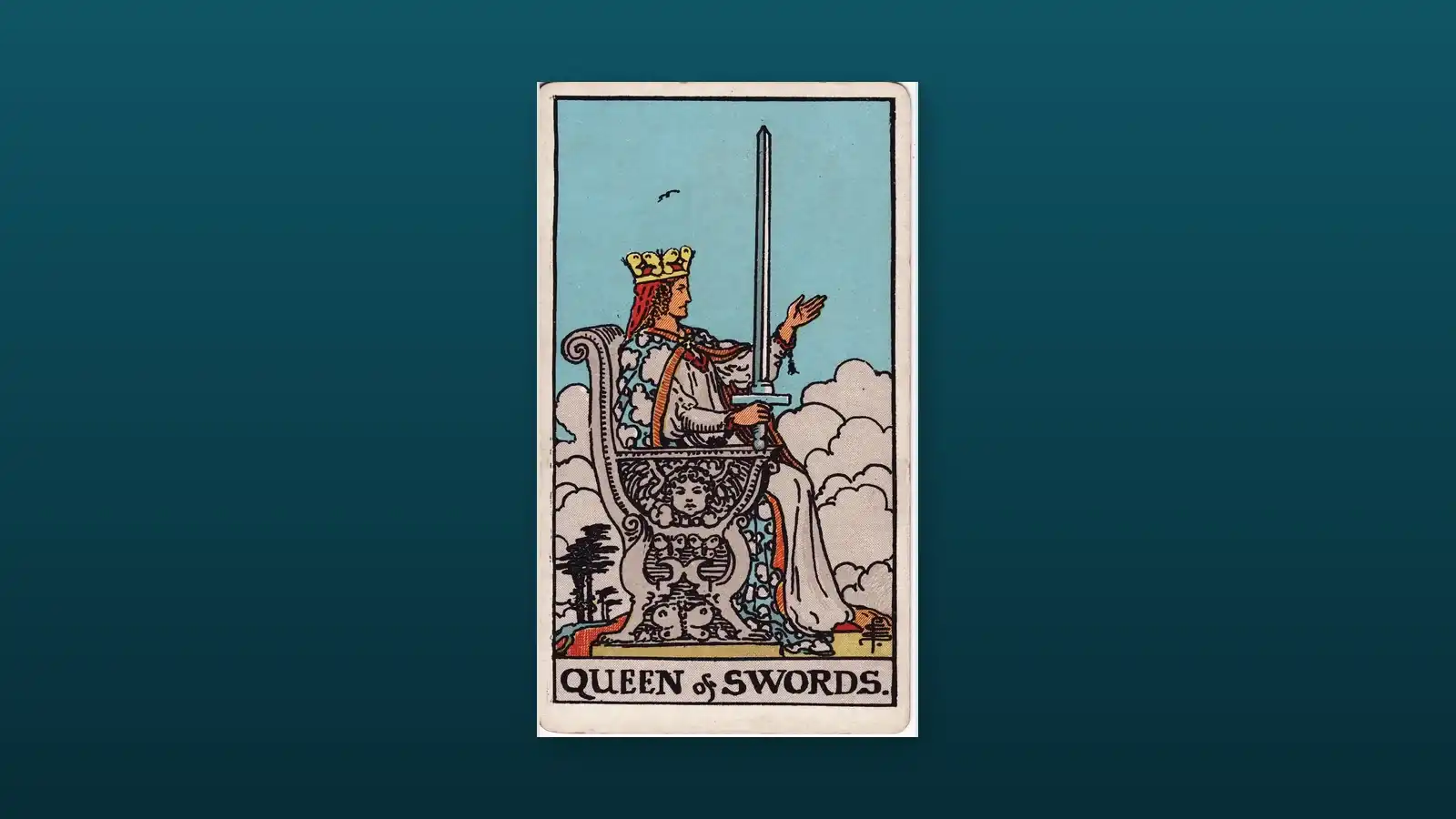
Here is a complete entry to model. Date and time: Tuesday, 7.30 in the morning. Deck: my first deck. Question: “What do I need to know about today’s meeting?” Card: Queen of Swords. What I see: a woman on a throne, sword upright, one hand raised, clouds below, a single bird above. First meaning, before the book: “Speak clearly and fairly; do not be afraid to be direct.” Feeling: a bit nervous. After the book: “Waite’s book calls her a widow and sadness, which feels too old-fashioned. I keep my meaning.” Evening note: “I raised a problem clearly, and it was well received.”
The weekly review
Once a week, reread the past seven days. Which suits came up most? Did any card repeat? Which reading fitted what happened, and which missed? What did you learn about a card that you did not know before? Do not force a story. Sometimes a week is just a week. But often you will notice something you would never have seen in a single reading.
An example: what a review can show
Imagine a beginner rereading her first three weeks. She notices that the Knight of Swords has appeared four times, always on days she wrote that she felt rushed. She notices that her Cups readings were usually right, while her Pentacles readings often missed, because she kept reading them as money when they were really about her body and tiredness. Neither insight is in any book. Both will change how she reads from now on. That is a journal teaching.
Paper or digital, and being kind
Either works. Paper is pleasant and away from screens. A notes app is quick and searchable. Choose the one you will actually use, and if you keep your journal on a shared device, remember that other people may be able to see it.
Some old entries will make you wince. That is a good sign: it means you are growing. You are allowed to be a novice for a long time, and your journal is the proof of how far you have come.
Variations on the journal
Some readers keep a card diary, one page per card, where every time a card appears they add the date and the context; after a year, each card has its own history. Others keep a themes list, noting repeated cards and suits each month. Some prefer a photo journal, taking a picture of each spread and writing a short note beside it in an app. And some keep a dream and tarot journal together, noticing when dream images and cards echo each other. Choose one main method and keep it simple enough to continue.
Card meanings are themselves a journal
Historical It may help to know that the card meanings in books began, in a sense, as other people’s notes. Waite described the traditional meanings in The Pictorial Key to the Tarot (1910) as “the records of findings in the past based upon experience; as such, they are a guide to memory”. He added that readers with intuition “will supplement the experience of the past by the findings of their own faculty”.
Your journal does the same thing on a personal scale. Each entry is a small record of how a card showed up in your life. Over months, those records become your own book of meanings, built on experience rather than borrowed from someone else.
Building a personal card dictionary
Alongside your daily entries, keep one page for each of the 78 cards, at the back of the journal or in a separate notebook. Every time a card appears and teaches you something, add one line to its page with the date. A typical page after a few months might read: “Eight of Pentacles: finished the shelves slowly, enjoyed it. Practice before the exam. Reminded me to check my work twice.”
These lines are worth more than any keyword list, because they are tied to real moments you remember. When the card appears again, read its page before you interpret it. You will be reading with your own history behind you.
Tags and symbols
A few simple marks make a journal much easier to search later. You might draw a small star next to readings that turned out especially useful, a question mark next to readings you did not understand, and a circle next to readings you want to revisit. Some readers write the main suit of each reading in the margin, so a glance down the page shows whether a month was full of Swords or of Cups. Choose two or three marks only. Too many become a chore.
Practice variations
The monthly letter. At the end of each month, write a short letter to yourself about what the cards and the journal showed you. What patterns came up? Which cards kept returning? What did you learn about yourself? Keep the letters together at the front of the journal.
One card, one year. Choose a card you find difficult. Each time it appears over the next year, add an entry to its page. By the end of the year you will understand that card better than most books could teach you.
The prediction check. If you sometimes read for the future, write a clear, specific expectation in your entry and a date to check it. On that date, note honestly what happened. This keeps the journal honest and protects you from remembering only the readings that seemed to come true.
Drawings, not words. On days when writing feels like too much, make a quick sketch of the card and one detail you noticed. Some people remember images far better than words.
A worked example: a three-month review
Imagine a beginner reads back over three months of entries. She notices that the Hermit and the Four of Swords appeared often in March, a month when she was tired and overcommitted. In April, after she cut back on evening plans, Wands cards became more common and her notes became more energetic.
In May she drew the Three of Cups twice before seeing old friends. None of this proves the cards predicted anything. But the journal gives her a clear, honest picture of her spring: what drained her, what helped and what she enjoyed. That picture is the real value of keeping a journal.
Keeping your journal private and safe
Your journal will contain personal thoughts and possibly notes about others. Keep it somewhere private. If you write about readings for friends, use initials only. If you keep a digital journal, protect the device with a passcode, and think twice before using shared or public cloud folders. A journal that you know is safe is a journal you will write in honestly.
A beginner’s question: “What if I fall behind and have nothing written for weeks?” Start again today with one line. A journal with gaps is still a journal.
Questions beginners ask
How much should I write? One line is enough on busy days. Consistency matters more than length.
Should I record readings for others? Only with permission, and without identifying details.
What if I read my old entries and feel embarrassed? That is a sign of growth. Keep them.
Myths to drop: You do not need to write beautifully. A journal is not only for “accurate” readings; misses teach the most. And a digital journal is just as good as a paper one.
Try this
Reread every entry in your notebook so far. Write three things you have noticed about your readings: a repeating card or suit, a reading that fitted well, and one that missed.
Recap
A tarot journal turns general meanings into personal knowledge. The four basics of an entry are date, question, cards and one sentence, plus a line a week later to compare the reading with what happened. Short is fine. Write your first impression before looking anything up, review weekly without forcing a story, and be kind to your past self.
What next
Press “Mark as done” and continue with Reading for others. If you also practice witchcraft, your journal can live inside a Book of Shadows.
Further reading: James W. Pennebaker and Joshua M. Smyth, Opening Up by Writing It Down (Guilford Press, third edition 2016).
Sources
- Lauri Mukkala, The Novice’s Guide to Tarot, “Words of Encouragement”.
Quick check
Go deeper: The Novice's Guide to Tarot: Words of Encouragement; tips
Get the free Mini-Grimoire
A short printable starter guide to tarot and everyday witchcraft, plus my newsletter. Unsubscribe any time.
Opens Substack in a new tab to confirm. More about the newsletter · Privacy
Comments
Questions and notes from readers. Anyone with a free account can comment, and I reply when I can. Please read the community guidelines.
Comments load from Google Firebase (EU) when you ask for them. Nothing is stored on your device. Privacy