


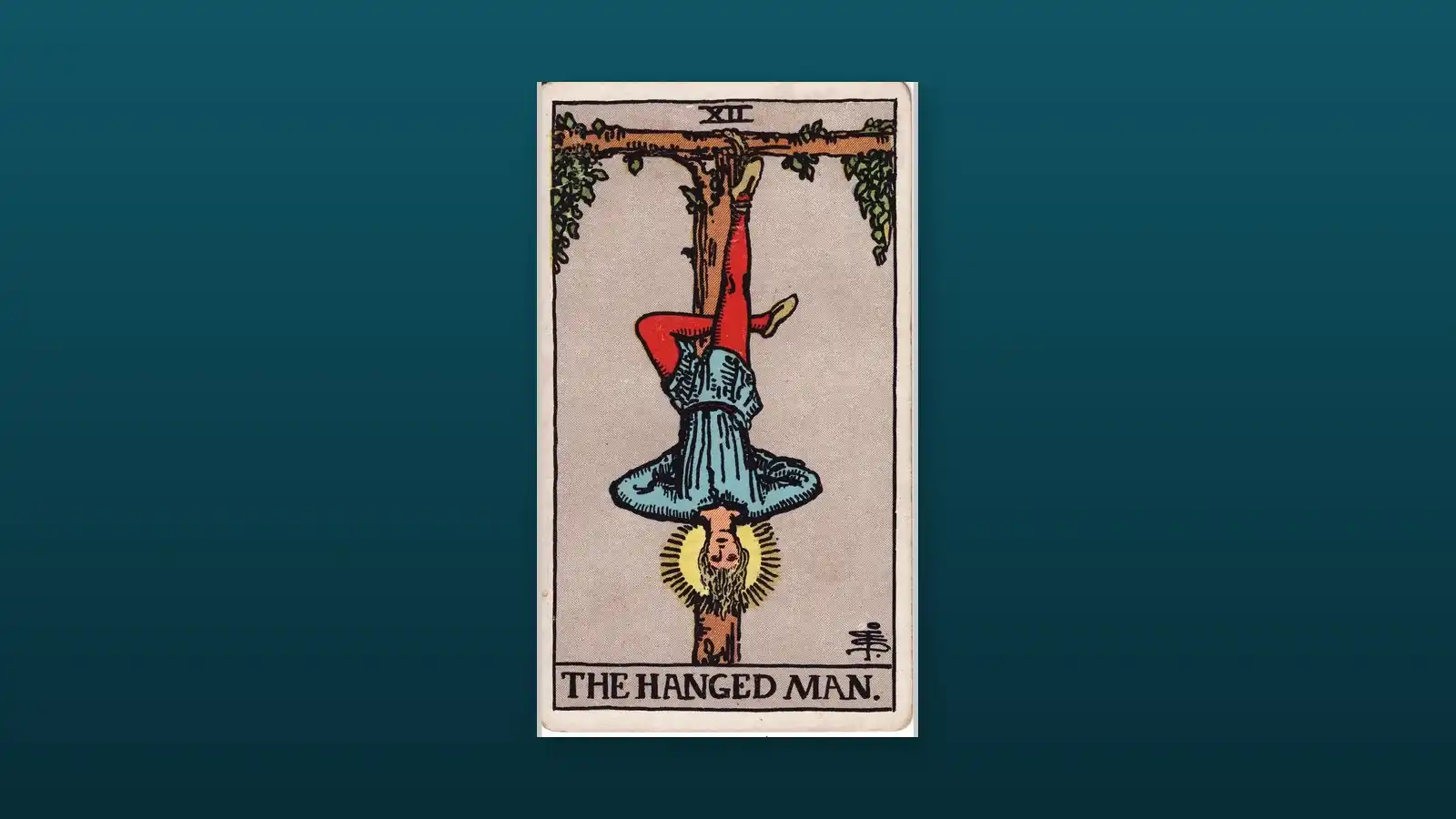
In this lesson: whether to read reversed cards, four simple ways to read them, and how to use yes or no questions responsibly.
Two questions come up for every beginner sooner or later. What do I do when a card lands upside down? And can I ask tarot yes or no questions? Both matter because they change how you read every spread. Settling them now, with a clear method, saves you from the most common kind of confusion: drawing a card and not knowing which rule you are playing by.
What is a reversed card?
A reversed card is simply a card that appears upside down relative to the way you are holding the deck. Some readers give reversed cards their own meaning. Others turn every card upright and ignore reversals completely. Both are fine, and you do not have to read reversed cards at all. It is your choice. Many excellent readers never use them. If you are just starting, skipping reversals for a few weeks can make learning easier, and you can add them later.
Ways to read a reversal
If you do read reversals, there are four common approaches. Pick one and stay consistent within a reading.
- Blocked energy: the theme is present but stuck.
- Turned inward: the theme is happening inside you rather than outside.
- Advice to pause: slow down before acting on the card’s theme.
- Quieter volume: the upright meaning, softer or weaker.
A reversed Chariot read as blocked energy might mean a plan that has stalled. A reversed Empress read as turned inward might be about how you care for yourself. A reversed Sun read as quieter volume is joy that is muted, not gone. A reversed card is never an automatic misfortune. It shifts how a theme shows up.
To allow reversals, turn a portion of the deck upside down while you shuffle, then square the pack, so some cards can land reversed. Whatever you choose, decide before you shuffle how you will read reversed cards, and then follow through. Clarity beats superstition.
A short history of reversals
Historical Reversed meanings appear early in tarot divination. Etteilla’s decks from around 1789 print two meanings on many cards, one for upright and one for reversed. Waite’s Pictorial Key (1910) gives a reversed meaning for every card, often unrelated to the upright one; for the Ten of Swords, for instance, the reversal is “Advantage, profit, success, favour, but none of these are permanent”.
Modern Twentieth-century teachers, such as Mary K. Greer in The Complete Book of Tarot Reversals (2002), developed the more systematic approaches you met above, such as blocked or inward energy. Many readers today do not use reversals at all. So you are joining a long, mixed tradition whichever you choose.
Yes or no questions
Open questions usually give richer readings, as you learned in module 2. But simple yes or no questions have their place for small, everyday things. Many readers use a rule of thumb: bright, forward-moving cards such as the Sun, the Star or the Ace of Cups lean yes; heavy or stuck cards such as the Tower, the Five of Pentacles or the Eight of Swords lean no; quiet or mixed cards such as the High Priestess or Justice lean maybe. Every Major Arcana card page on this site has a short yes or no section.
A yes or no card is a reflective prompt, not a forecast. Treat it as one clue among keywords, pictures and the other cards. Never use yes or no on the topics from module 2: health, pregnancy, death, court cases, investments, medication or another person’s private feelings. Do not let a printed yes or no override ethics, consent or professional advice.
An example: a reversal and a yes or no
Imagine someone asks, “Should I sign up for the pottery class this term?” She has decided to read reversals as “quieter volume”. She draws the Three of Pentacles reversed. Upright, it is skill meeting teamwork, a strong yes for a class. Reversed and quieter, it leans to a gentle yes with a caution: perhaps the timing or the group is not ideal.
She follows the middle way and draws one advice card, the Knight of Pentacles: slow and steady. Her note reads, “Yes, but commit to the whole term rather than dipping in.” The yes or no gave her a tone. The advice card gave her something to do.
A practice variation: the reversal week
If you are unsure about reversals, test them. For one week, allow reversed cards in your daily draw and read each with your chosen method. For the next week, turn every card upright. At the end of the fortnight, compare your journal entries. Which week’s readings were clearer, more helpful or more honest? Your own results are a better guide than any rule.
A yes or no method with three cards
Some readers prefer three cards for yes or no questions instead of one. Draw three; if most lean bright and forward, read it as “leaning yes”; if most lean heavy, “leaning no”; if mixed, “not yet clear, look at the details”. Then read the cards for the why, which is usually more useful than the answer. Keep these questions for small matters, and remember the list of topics from module 2 that are not suitable for yes or no.
How varied Waite’s reversals are
Historical Many beginners assume a reversed card simply means the opposite of the upright, or something bad. Waite’s own reversed meanings in The Pictorial Key to the Tarot (1910) show how untidy the tradition really is. For the Four of Wands he wrote: “The meaning remains unaltered”. For the Queen of Cups reversed he admitted: “The accounts vary”. For the Ace of Pentacles, he said the reversal shows “The evil side of wealth” but also “great riches”. And for the Eight of Swords reversed, he gave “Disquiet, difficulty, opposition, accident, treachery”.
So even the designer of the most popular deck did not follow one rule. Some reversals soften the card, some intensify it, some contradict it and some change nothing at all. This is good news for you. It means you are free to choose a clear, simple method of your own, and it will be no less traditional than any other.
Choosing your method, and writing it down
If you decide to read reversals, pick one main method for at least a month. Here are three that work well for beginners.
Blocked energy. The card’s upright meaning is present but held back or delayed.
Inward energy. The card’s meaning is turned inward, as a private feeling or process rather than an outward event.
Too much or too little. The card’s quality is either overdone or lacking. A reversed Four of Pentacles might be holding on too tightly, or not being careful enough.
Write your chosen method on the first page of your journal. When a reversal appears, apply that method first. Later, once you know the cards well, you can let the picture and the context guide you more freely.
Practice variations
Upright and reversed side by side. Take any card and lay it upright, then lay a second copy, or a written note, reversed beside it. Write one line for each. Doing this for one card a day builds your reversal vocabulary quickly.
The rotation test. Turn a card upside down and look at the picture as it is. What falls, what spills, what looks unsteady? Some readers find the inverted image itself suggests the meaning. In the reversed Three of Swords, for instance, the swords seem to be falling out of the heart.
A month without. If you already read reversals, try a month without them, reading every card upright. Notice whether your readings become clearer or flatter. Either answer teaches you something about your own style.
A worked example: one card, three methods
Imagine someone draws the Sun reversed for the question “How can I enjoy my weekend?” With blocked energy, the joy is there but something is holding it back, perhaps a lingering worry. With inward energy, the joy is quiet and private, a peaceful weekend at home rather than a busy one. With too much or too little, it might be trying too hard to have fun. She chooses the second reading because it fits how she feels, and plans a quiet Saturday. None of the readings is wrong. The method simply gave her a clear place to start.
Turning a yes or no into something more useful
Even when you do use a yes or no method, the answer is only the start. After you have your yes, no or maybe, ask one follow-up question: “What would help this go well?” or “What do I need to know about this?” Draw one more card for it. A bare “no” can leave you stuck, while a “no” followed by a card such as the Page of Pentacles might suggest that more study or preparation is needed first. In this way even the simplest question becomes a small reflective reading, which is where tarot is strongest.
Remember too that the yes or no method in this lesson is a playful tool, not a decision maker. For anything important, let the cards prompt your thinking, and then decide with your own judgment.
Questions beginners ask
Is a reversed card always bad? No. A reversed hard card can mean that the difficulty is easing.
Do I have to read reversals if my deck guide does? No. The guidebook is a suggestion.
What if I forget to decide before shuffling? Decide now and read accordingly. Next time, decide first.
Myths to drop: Reversals are not the “real” or “advanced” way to read. A reversed card is not a warning from the universe. And yes or no answers are not promises.
Try this
Decide today whether you will read reversals for the next two weeks. If you will, choose one of the four methods. Write your decision on the first page of your notebook, so you never have to wonder mid-reading.
Recap
A reversed card is upside down as you hold the deck, and reading reversals is your choice. If you use them, choose one method, such as blocked, inward, pause or quieter, and decide before you shuffle. Yes or no readings work for small things when treated as a tone, especially with an advice card added. Never use yes or no on questions about health or the law, or any of the sensitive topics from module 2.
What next
Press “Mark as done” and continue with A tarot journal that teaches you. For more examples, read reversed cards.
Further reading: Mary K. Greer, The Complete Book of Tarot Reversals (Llewellyn, 2002).
Sources
- Lauri Mukkala, The Novice’s Guide to Tarot, “What Are Reversed Cards?”.
Quick check
Go deeper: The Novice's Guide to Tarot: What Are Reversed Cards?
Get the free Mini-Grimoire
A short printable starter guide to tarot and everyday witchcraft, plus my newsletter. Unsubscribe any time.
Opens Substack in a new tab to confirm. More about the newsletter · Privacy
Comments
Questions and notes from readers. Anyone with a free account can comment, and I reply when I can. Please read the community guidelines.
Comments load from Google Firebase (EU) when you ask for them. Nothing is stored on your device. Privacy