


How to read the labels Historical what the old sources say. Later tradition what later writers added. Modern modern practice and my own notes.
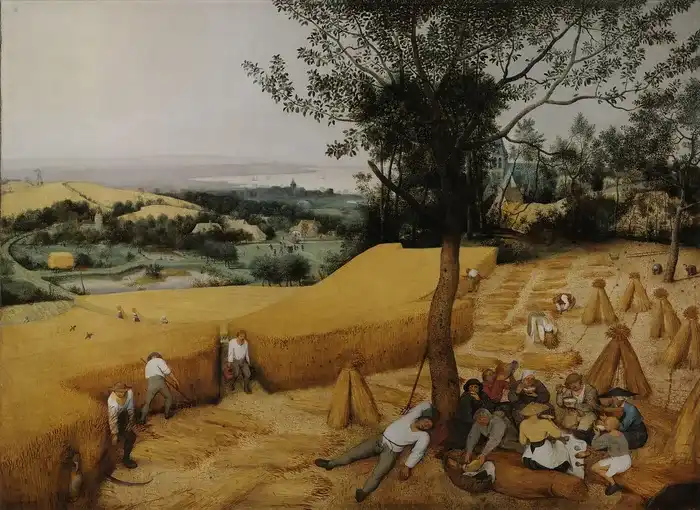
Lughnasadh (usually pronounced LOO-nuh-suh) or Lammas marks the beginning of the harvest. It falls on July 31 to August 1 in the Northern Hemisphere and February 1 to 2 in the Southern. In grain-growing country, it is the time the first wheat, barley, and oats are cut.
It is a festival of first fruits, bread, skill, games, and gratitude, with an undertone of sacrifice: the grain must be cut for the bread to be made.
My book The Novice’s Guide to Witchcraft gives the two names and a share-a-loaf practice. This page adds a fuller history, a solitary first-loaf rite and a five-minute version, a simple yeast loaf, a corn husk or straw figure and a Lughnasadh tarot spread.
When Lughnasadh is
Lughnasadh, or Lammas, is kept on July 31 to August 1 in the Northern Hemisphere, and on February 1 to 2 in the Southern Hemisphere. It is a fixed calendar date, so it falls on the same days in 2027 as in any other year.
Some witches prefer to mark it on the nearest weekend, or at the astronomical midpoint between the solstice and the equinox, which can land a few days later. Either is fine. The point is to notice the season where you are.
In the Southern Hemisphere, Lughnasadh falls around February 1 to 2, in late summer, while Imbolc and St. Brigid’s Day are kept in the north. Grain harvests may come earlier or later where you live. Celebrate whatever is being harvested locally, whether grain, stone fruit, or grapes.
Fire danger is high in late summer; use LEDs and follow fire bans.
History: what is old, what is modern
I label each part of the history so you can see how old it is.
Historical means it is recorded in old sources, Folk custom means it is recorded in later village or household practice, Later tradition means it was added by scholars, writers or occultists, and Modern means it comes from today’s witchcraft.
Lughnasadh in the oldest records
Historical Lughnasadh (modern Irish Lúnasa, the name of the month of August) means roughly “the assembly of Lugh.” It is one of the four quarter days of the medieval Irish year.
Medieval Irish tradition says that the god Lugh founded the festival in honor of his foster mother Tailtiu, who died after clearing the plains of Ireland for agriculture, and the great assembly at Tailtiu (Teltown, County Meath) was held at this time, with games, horse races, trading, and marriages.
Lugh himself is a skilled god, master of many crafts, which is why modern witches often honor skill at this festival.
Historical The folklorist Máire MacNeill’s classic study The Festival of Lughnasa (1962) gathered evidence of surviving customs across Ireland.
She found that on or around the last Sunday of July or the first of August, people climbed hills and mountains, picked bilberries, held fairs, danced, and competed in games.
The pilgrimage up Croagh Patrick in County Mayo on Reek Sunday, the last Sunday of July, and the Puck Fair at Killorglin in County Kerry, where a wild goat is crowned king for three days in August, are among the best-known survivals.
MacNeill argued that many of these customs preserved traces of an ancient harvest festival; her work is still the starting point for anyone interested in the subject.
Historical In England, the same day was Lammas, from the Old English hlafmæsse, “loaf mass.”
It is recorded in Old English sources from the tenth century. On Lammas Day, bread baked from the first grain of the harvest was brought to church to be blessed.
Lammas was also a quarter day for rents and accounts in parts of Britain, and “Lammas lands” were common lands opened for grazing after the hay harvest.
Lughnasadh in folk custom
Folk custom Grain harvests across Europe were full of custom.
The last sheaf cut was often treated specially: braided into a figure, called the “neck,” the “mare,” the “maiden,” or the “old woman” (cailleach in Scotland), dressed up, carried home in triumph, and kept until the next year.
These customs belong to the end of the harvest rather than to August 1, but modern witches often bring them into Lughnasadh.
The English folk song “John Barleycorn,” known from seventeenth-century broadsides and later versions including one by Robert Burns, tells the story of the barley “killed” in the harvest and reborn as bread and beer; many Pagans love it as a harvest song.
Lughnasadh as a modern sabbat
Later tradition Gardner’s early witches called this festival August Eve.
Modern Wicca often frames it as the time when the God begins to give his life in the harvest so that the people may live.
Many witches today focus instead on first fruits, bread, skill, and gratitude, with or without a deity.
Symbols, themes and altar
Modern These themes and altar ideas are modern practice. Take what speaks to you and leave the rest.
The heart of Lughnasadh is the first harvest: gratitude for food and for what your own work has produced. Bread and grain carry that theme, so baking, sharing and blessing a loaf is the most common way to keep the day.
Because Lugh is a god of many crafts, this is also a festival of skill. It is a good time to honor the skills you have and to start learning a new one. The old fairs and games give it a playful side too: competition, gatherings and long summer evenings with friends.
There is a quieter theme underneath. The grain has to be cut for the bread to be made, so Lughnasadh is also about sacrifice and exchange: what you give up so that something else can grow.
Like the old Lammas quarter day for rents and accounts, it is a good time for stocktaking. Check your finances, your calendar and your commitments for the rest of the year. And because a harvest is meant to be shared, many witches donate food or time to people who need it.
For the altar or the kitchen table, start with a loaf of bread, homemade or bought. Add sheaves or stalks of wheat, barley or oats, or dried grasses, and early fruits and vegetables such as berries, apples, corn, beans or zucchini. Sunflowers and other late-summer flowers suit the season.
A tool of your craft or trade belongs here too: a pen, a hammer, a laptop, knitting needles. You can add a corn husk or straw figure (see the craft below) and candles in gold, orange and brown, or LEDs.
Keep dried grain and straw away from candle flames, and keep bread and grapes out of reach of pets, because grapes and raisins are toxic to dogs.
A solitary first-loaf rite
Modern This rite blesses the first loaf of the harvest and gives thanks for your own harvest so far. It takes about thirty to forty minutes, plus baking time if you bake.
Before you begin, bake the loaf below, or buy a good loaf from a local bakery. Set your altar with the bread on a board, a candle in a stable holder or an LED, a cup of water or juice, a small dish of salt, a tool of your craft, your notebook, and a pen.
To open, ground yourself. Open your space in the way you usually do, with a simple circle or just a pause at the threshold. Say: “This is Lughnasadh, the first harvest. The grain is cut, and the bread is made.”
The rite, step by step
Then move through the heart of the rite:
- Lighting. Light the candle. Say: “I give thanks for the sun that ripened the grain.”
- Blessing the bread. Place your hands over the loaf. Say: “From seed to stalk, from stalk to flour, from flour to bread. I give thanks to the earth, the rain, the sun, and every hand that made this possible.” Think of the farmers, millers, bakers, and drivers.
- Breaking the bread. Break off a piece. Sprinkle a few grains of salt on it if you like. Eat it slowly, paying attention to the taste.
- Your harvest. In your notebook, list what you have harvested this year so far: things finished, learned, earned, or grown. Read the list aloud. Say: “This is my harvest. I give thanks.”
- Skill. Hold the tool of your craft. Name one skill you are proud of and one you want to develop. Say: “May my hands grow skilled, and my work be good.”
- What was given up. Name something you gave up this year so that something else could grow: time, comfort, a habit, a place. Honor it. Say: “Nothing grows without cost. I honor what I gave.”
- Sharing. Set aside a piece of the bread to share with someone tomorrow, or to give to a neighbor. If you leave a piece as an offering, compost it the next day rather than leaving it out.
To close, thank whatever you honor. Extinguish the candle. Close your space the way you opened it.
Afterward, eat more bread with butter, cheese, or soup. Write your sabbat page.
Safety and a five-minute version
Label the ingredients of any bread you share. Keep straw and grain decorations away from the flame.
On a busy day, try the five-minute version. Hold a slice of bread. Say: “Thank you to the earth, the sun, and every hand that made this bread.” Name one thing you have harvested this year. Eat the bread slowly.
Kitchen and craft ideas
A simple first loaf
This makes one loaf. It is a plain yeast bread, so it suits a first try at baking, and you can shape the top like a sheaf of wheat.
- 3 1/2 cups (450 g) bread flour, or a mix of bread flour and whole-wheat flour
- 1 teaspoon salt
- 2 1/4 teaspoons (one 7 g packet) instant yeast
- 1 tablespoon honey or sugar
- 1 1/3 cups (320 ml) warm water (about 105°F or 40°C; warm to the touch, not hot)
- 1 tablespoon olive oil
Then bake:
- Mix flour, salt, and yeast in a large bowl.
- Stir the honey into the warm water, then add the water and oil to the flour. Mix to a rough dough.
- Knead on a lightly floured surface for 10 minutes, until smooth and elastic.
- Put the dough in an oiled bowl, cover, and leave in a warm place for 1 to 1 1/2 hours, until doubled.
- Punch down, shape into a round or a long loaf, and put it on a floured baking sheet or in a loaf pan.
- Optional: shape the top into a sheaf by cutting slashes, or make a braid.
- Cover and leave to rise again for 30 to 45 minutes.
- Heat the oven to 425°F (220°C). Bake 30 to 35 minutes, until the loaf is golden and sounds hollow when tapped underneath.
- Cool on a rack before slicing.
The bread contains wheat (gluten). Honey is not suitable for babies under one year; use sugar instead if the bread is for an infant.
Do not eat raw dough; raw flour can carry E. coli. Bread keeps 2 to 3 days at room temperature or freezes well.
A corn husk or straw figure
This little figure echoes the old last-sheaf customs. You need dried corn husks (sold for tamales) or long, clean straw, a bowl of warm water, cotton string or raffia and scissors. Scraps of fabric or ribbon are optional.
- Soak the husks or straw in warm water for 10 minutes until pliable.
- Take a bundle of four to six husks and tie them tightly about 1 inch (2.5 cm) from the top.
- Fold the husks down over the tie, so the top becomes a rounded head. Tie again below the head to make a neck.
- Roll a separate husk into a tube for the arms and slide it through the body, under the neck. Tie below the arms to make a waist.
- Leave the bottom as a skirt, or split it and tie each half to make legs.
- Let the figure dry completely. Dress it with fabric scraps or ribbon if you like.
- Keep it on your altar or in your kitchen until next year’s harvest, then compost it and make a new one.
Keep dry husk and straw figures away from candles and stoves. Supervise children with scissors.
A tarot spread for Lughnasadh
Modern The first harvest is a time to look at the results of your work. A harvest spread helps you take stock.
| Position | Question |
|---|---|
| 1 | What I planted: an intention or effort from earlier in the year |
| 2 | What has grown: the results so far, visible or not |
| 3 | What I can harvest now: something ready to enjoy, finish or share |
| 4 | What needs more time: something still ripening |
| 5 | What to give thanks for |
This is a good moment to read back through your Book of Shadows to Imbolc or Ostara, find the intentions you wrote there, and lay a card or rune beside each one.
Compare honestly: some will have grown, some will have changed, and some will have quietly been dropped. All three are useful to know.
If you work in a group, a shared harvest reading can be part of a games afternoon: each person draws one card for the season ahead, and the group talks about them over the first loaf. Keep it light and let people pass if they prefer.
If you are new to spreads, start with the three-card spread and come back to this one when it feels easy.
Staying safe
Wheat and gluten are central to this festival, so offer gluten-free options and label everything you share. Do not eat raw dough. If you forage for berries or greens, be certain of the identification.
Dry straw and grain decorations burn quickly, so keep them well away from flames. Grapes, raisins and yeast dough are dangerous to dogs, and rising dough can expand in a dog’s stomach.
The grain will ripen and be cut whether or not you bless a loaf. But stopping to taste bread slowly, to think of every hand that made it, and to count your own harvest is a good antidote to a life that rushes past its own achievements.
Try this: count your harvest
This week, take ten minutes with your journal and a slice of bread. Write down what you have harvested so far this year: things finished, learned, earned or grown. Then answer three questions.
What skill am I proud of, and what skill do I want to learn? What did I give up so that something else could grow? Who are the hands behind my daily bread? Eat the bread slowly while you read your answers back.
What next
The wheel turns from Litha to Lughnasadh to Mabon, the second harvest. The Wheel of the Year page shows all eight festivals together.
The moon pages cover the smaller monthly rituals in between, and a candle in harvest gold is an easy way to mark the day.
Questions
When is Lughnasadh?
Lughnasadh falls on July 31 to August 1 (February 1 to 2 in the Southern Hemisphere).
What is the difference between Lughnasadh and Lammas?
Lughnasadh is the Irish festival linked with the god Lugh. Lammas, from the Old English hlafmæsse, loaf mass, is the English first-harvest day when bread from the new grain was blessed. Many witches use both names.
Do I need special tools to celebrate Lughnasadh?
No. A candle or LED light, something seasonal from outside or the kitchen, and a few quiet minutes are enough. Everything on this page can be done at home with what you have.
How do you pronounce Lughnasadh?
Usually LOO-nuh-suh. The modern Irish name of the month of August is Lúnasa.
Is Lughnasadh an ancient festival?
The Irish festival and the English Lammas are both recorded in medieval sources. Its place as one of eight witches' sabbats, and most rituals for it, are modern.
Can I celebrate Lughnasadh if I cannot eat gluten?
Yes. Use a gluten-free loaf, oatcakes made with certified gluten-free oats, or any first fruit of the season. The theme is harvest and gratitude, not wheat itself.
Get the free Mini-Grimoire
A short printable starter guide to tarot and everyday witchcraft, plus my newsletter. Unsubscribe any time.
Opens Substack in a new tab to confirm. More about the newsletter · Privacy