


In this lesson you will write your own ground rules, hold experience lightly, spot red flags in dark goddess spaces and use a six-question check.
In lesson 7 you learned four rules of respect and a first evening rite. Before going further, this lesson helps you build a practice that protects you. Lilith’s best-known story is about refusing an arrangement she did not choose. It would be strange to build a practice around her that did not protect your own “no”, and respect other people’s.
Holding personal experience lightly
Modern Practitioners use the term UPG, unverified personal gnosis, for an insight that comes through personal experience: a dream, an image in meditation, a feeling of presence. It can matter a great deal to the person who has it. The difficulty with Lilith is that UPG spreads fast online and soon sounds like fact. You will read that she “loves” certain offerings, colors or days, that she “chooses” people or that she punishes neglect. Most of these claims trace back to one person’s experience or to modern correspondence lists, not to any historical source.
Historical No ancient source describes a cult of Lilith at all. She appears in incantations, amulets and stories as a figure to be kept away. So any statement about what she likes is modern by definition.
Label your own experiences as UPG in your journal. That does not dismiss them. It keeps them in the right place. Do not universalize: your Lilith may like roses without anyone else’s needing to. Ask where a claim comes from, and hold fear-based claims especially lightly. They make practice anxious rather than rich.
Why discernment matters with Lilith in particular
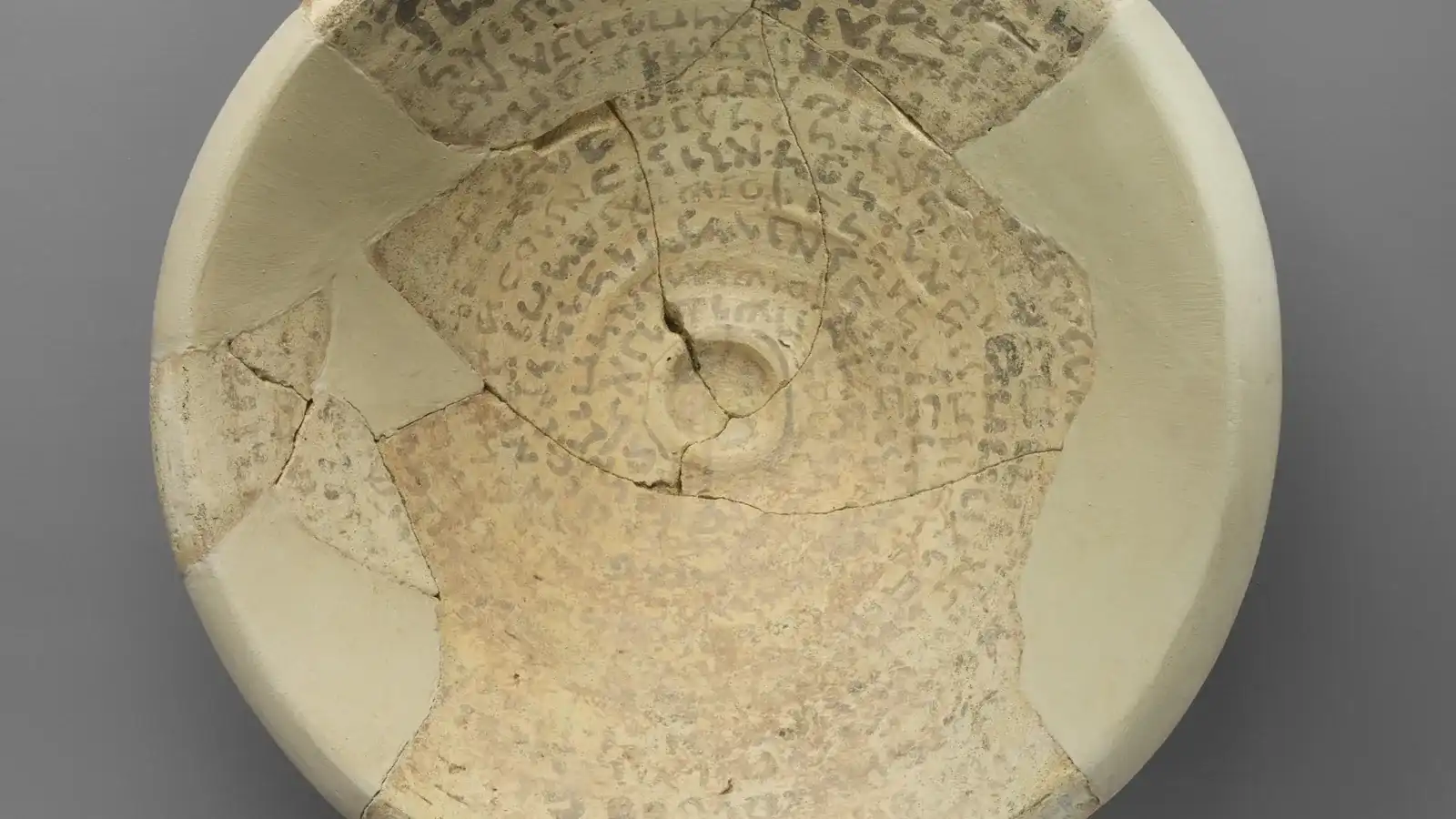
Historical Few figures have as many contradictory claims attached to them as Lilith. In the first half of this course you met at least four very different Liliths: Mesopotamian night demons called lilû and lilītu, the single word lilith in Isaiah 34:14, the child-harming demon of the Aramaic incantation bowls, and Adam’s first wife in the medieval Alphabet of Ben Sira. Later came the Kabbalistic consort of Samael, the Romantic beauty of Goethe and Rossetti, and the feminist icon of the 1970s. Each layer is real, but they do not add up to one consistent ancient goddess.
That is why discernment is the first practice skill in this course. When you meet a claim, online or in a book, you can ask which of these layers it comes from. If someone says “the ancient Sumerians worshiped Lilith as a goddess of sexual freedom”, you already know that no Sumerian source supports this. If someone says “in Jewish folklore Lilith was feared as a danger to newborns”, you know that is well documented in amulets and bowls. Being able to sort claims this way protects you from both naive belief and cynical dismissal.
Personal experience and how traditions test it
Historical Religious traditions have long had ways to test inner experiences. Early Christian writers spoke of the “discernment of spirits”, drawing on 1 John 4:1, “test the spirits”. Jewish mystical writers warned that visions must be checked against teaching and community.
Modern pagans use the term UPG, unverified personal gnosis, for insights that come from your own experience and are not found in sources. When several people independently report similar experiences, some call it SPG, shared personal gnosis. These labels are a modern tool, but they do the same job as older tests: they keep personal experience honest without dismissing it.
A worked example of the six-question check
Imagine a beginner who keeps hearing an inner voice say “Lilith wants red roses every Friday”. Running the check: Is it consistent with sources? There is no ancient tradition of roses for Lilith, so this is UPG. Is it safe and affordable? Roses every week may not be. Does it make life better?
She feels pressured rather than supported. Would a trusted friend see a red flag? Possibly. So she decides on one rose a month for three months, records how she feels, and keeps the claim labeled as personal. That is discernment in action: not rejecting the experience, not obeying it blindly.
Red flags, teachers and consent
Modern Lilith attracts communities, teachers and products. Many are thoughtful. Watch for fear and urgency (“she will be angry if you ignore her”), exclusive access (“only my course is safe”), costs that keep escalating, sexual pressure, discouragement from talking to friends or therapists, grandiosity (“you are Lilith reborn”), encouragement to curse or control an ex, and antisemitism dressed up as esoteric knowledge. When several appear together, step back. A healthy group is glad when you ask questions, take breaks or leave.
Good books cite sources, separate evidence from modern practice, treat Jewish tradition with accuracy and respect and make no promises of power, love or revenge. Consent runs through all of it. You can stop any practice, decline any offering and end a relationship with a deity, or never begin one. Do not work on another person without their knowledge, which rules out love, attraction and binding spells.
In a shared home, agree on candles and images. If you are under 18, practice with the knowledge of a parent or another safe adult, and leave sexuality and trauma themes for later. And if someone at home is hostile, your safety comes first: a practice can live entirely in your head and your journal.
Knowing when to step back
Pause your practice if it makes you more anxious, fearful or isolated, if you are in a crisis and need your energy for that, if you are pregnant or have recently given birth or had a loss and Lilith’s history around childbirth feels too close, or if money, time or attention on practice worries you or people who care about you. Stepping back is not betrayal. Thank her, close the altar box and return later, or never.
A six-question check
Use this check whenever you meet a new claim, teacher, product or experience.
- What is the source: ancient text, later tradition, a named modern author or personal experience?
- Is it labeled clearly?
- Does it ask for money, secrecy or sexual involvement?
- Does it make me more afraid or more grounded?
- Does it respect Jewish tradition and other people’s consent?
- Does following it make my life steadier and kinder, or more chaotic?
Write the answers briefly. If several trouble you, set the claim aside.
Questions beginners ask
Is it wrong to work with Lilith if I am not Jewish? Lilith comes from Jewish texts and folklore, but she has been part of Western art, literature and occultism for centuries. Many Jewish feminists have welcomed wider interest. The respectful approach is to learn the Jewish history accurately, avoid using Hebrew amulet texts as decorations, and never present Jewish sources as “pagan”.
How do I know if a teacher is trustworthy? Good teachers cite sources, distinguish history from modern practice, charge fair prices, respect your boundaries and never ask for secrecy about harm. Lesson 8’s red flags apply to anyone, including authors you admire.
What if what I feel contradicts history? You can hold both: history tells you what people in the past believed; your experience tells you what is meaningful for you now. Just do not rewrite history to match the experience.
Myths to drop: The claim that Lilith was a Sumerian goddess is not supported, as lesson 2 explained. The claim that she is “the dark feminine” in all cultures flattens many traditions into one. And the claim that you are cursed if you stop working with her has no basis in any source.
A worked example
Imagine someone who finds an online group offering a “Lilith initiation” before the next eclipse, for a fee, with a warning that latecomers will “feel her wrath”. She runs the check. The source is the group leader’s revelation, it is not labeled as such, it asks for money and urgency, and it makes her more afraid.
Four answers trouble her, so she sets it aside. In her ground rules she adds: “I will not pay for anything that comes with a threat.” Then she goes back to her evening rite and her water cup, which cost nothing and frightened no one.
Try this
Write five to eight ground rules for your Lilith practice in your own words. Include one about respect for Jewish tradition, one about your mental health, one about other people’s consent, one about when you will pause and one about how you will label personal experience.
Journal prompts: Which Lilith did I first meet, and from which century does she come? What claim have I believed without checking? How do I tell the difference between a feeling of awe and a feeling of pressure?
Practice variations for discernment
The waiting week. When something feels important, such as a dream, a strong feeling or a sign, write it down and wait seven days before acting on it. Most true insights survive a week; most passing moods do not.
The trusted friend. Tell one sensible person about an experience and ask what they notice. Choose someone who will be honest, not someone who will only agree.
The source check. If an experience seems to tell you a fact about Lilith’s history, check it against this course’s sources. Experience can guide your practice, but it cannot change what a text says.
Recap
Personal experience (UPG) is valuable and should be labeled, not universalized. Most claims about what Lilith likes or demands are modern, since no ancient cult of her is known. Red flags include fear, urgency, exclusivity, escalating costs, sexual pressure, isolation and prejudice. Consent covers you, other people and your household. Stepping back is always allowed, and a six-question check helps with every new claim.
What next
Press “Mark as done” and continue with Protection, offerings and altar care. For the wider ethics of practice, see my witchcraft ethics guide and deity ethics, safety and mental health.
Further reading: Siegmund Hurwitz, Lilith, the First Eve (Daimon Verlag, 1992), a Jungian reading that also collects many sources. Rachel Adler’s essays in Engendering Judaism (Jewish Publication Society, 1998) offer a Jewish feminist view of tradition and change.
Sources
- Raphael Patai, The Hebrew Goddess (New York: Ktav, 1967; third edition Detroit: Wayne State University Press, 1990).
- Siegmund Hurwitz, Lilith, the First Eve (1980; English translation Einsiedeln: Daimon, 1992).
- Lilith magazine (New York, founded 1976).
Quick check
Go deeper: the Lilith pages on this site, and The Novice's Guide to Witchcraft
Get the free Mini-Grimoire
A short printable starter guide to tarot and everyday witchcraft, plus my newsletter. Unsubscribe any time.
Opens Substack in a new tab to confirm. More about the newsletter · Privacy
Comments
Questions and notes from readers. Anyone with a free account can comment, and I reply when I can. Please read the community guidelines.
Comments load from Google Firebase (EU) when you ask for them. Nothing is stored on your device. Privacy