


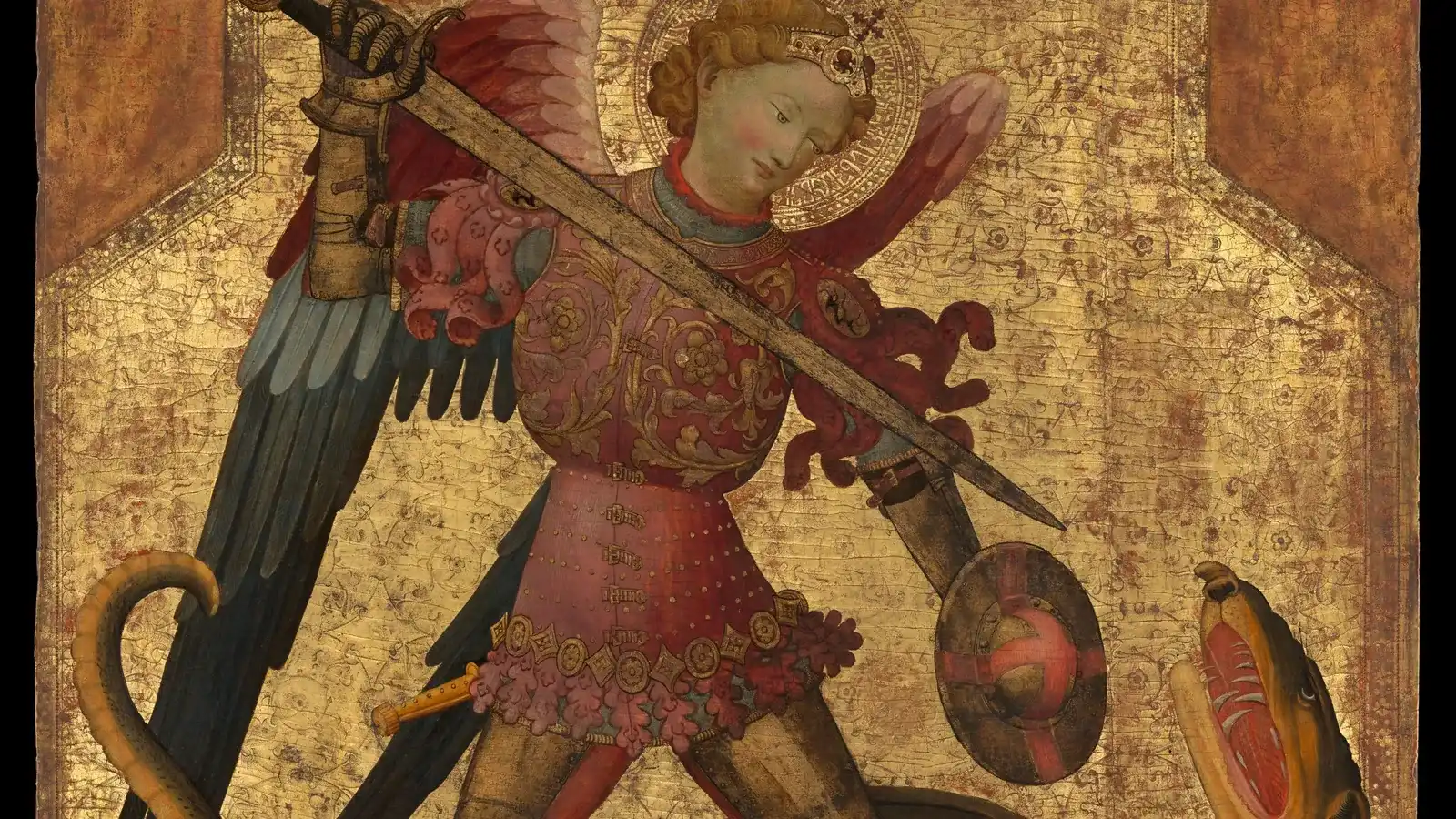
In this lesson: what the Latin word means, how Lucifer, Satan and the Devil differ, and the map of a story that runs from Rome to today.
For many people, Lucifer, Satan and the Devil are simply three names for the same frightening being. Historically they are not. One is a Latin word for a star, one is a Hebrew word for an accuser and one is a Greek word for a slanderer, and they came together only over many centuries. Separating them is the first and most useful step in this course. Once you can tell them apart, a great deal of fear and confusion falls away, and the real history becomes much more interesting.
A word for a star
Historical Lucifer is a Latin word built from lux, “light”, and ferre, “to carry”. It means “light-bearer”. In Roman usage it was the ordinary poetic name for the Morning Star, the planet Venus when it rises in the east before the Sun.
The orator Cicero explains it in On the Nature of the Gods (2.53): the star of Venus is called Phosphoros in Greek and Lucifer in Latin when it goes before the Sun, and Hesperos when it follows. In the fourth century a Christian bishop, Lucifer of Cagliari, carried the name without any embarrassment. It was simply a word for dawn.
You do not need to be a witch, a Pagan or a Luciferian to take this course. Many people study Lucifer only for the history and the art, and the practice lessons later on are optional.
Satan the accuser, and the Devil the slanderer
Historical In the Hebrew Bible, satan is a common noun meaning “adversary” or “accuser”. In Numbers 22:22 an angel of the Lord stands in Balaam’s road “for an adversary against him”. In Job 1 and 2 and Zechariah 3, ha-satan, “the accuser”, appears among the heavenly beings. He tests and accuses, but he serves within God’s court. This is how many Jewish readers still understand the figure. Later Jewish writers of the Second Temple period developed ideas of rebel angels, and Elaine Pagels’ The Origin of Satan traces how Satan grew into the great enemy.
Historical The ancient Greek translation of the Hebrew Bible often rendered satan as diabolos, “slanderer”. The New Testament uses both Satanas and diabolos for the opponent of God, and Revelation 12:9 gathers the images together: “that old serpent, called the Devil, and Satan”. The English word “devil” comes from diabolos.
More about the accuser
Historical One small comparison shows how the idea of Satan changed inside the Bible itself. In 2 Samuel 24:1, God moves King David to count the people. In 1 Chronicles 21:1, written later and retelling the same event, “Satan stood up against Israel” and provoked David. Between the two books, a role once given to God has been handed to an adversary.
In the centuries between the Hebrew Bible and the New Testament, Jewish writers developed the idea further. The Book of the Watchers, part of 1 Enoch and probably from the third century BCE, tells of angels who came down to earth and taught forbidden arts. The Book of Jubilees has a chief of evil spirits called Mastema, and the Dead Sea Scrolls speak of Belial. None of these is called Lucifer. Together they built the idea of a leader of evil spirits that the New Testament takes for granted.
How the three became one
Later tradition The name Lucifer joined the other two through one verse, Isaiah 14:12, which in Latin addresses a fallen “lucifer”. Early Christian readers took the verse as a picture of Satan’s fall, and over the centuries Lucifer became Satan’s name before his fall. We will read that verse closely in lesson 3. Here is the map of the rest of the course:
- The Morning Star in Greek and Roman sky lore.
- Isaiah 14 and how a king became an angel.
- Dante, the witch trials, Milton and Blake.
- Blavatsky, Crowley and modern Luciferianism.
- Ethics, safety and mental health.
- Lucifer as a symbol, and a stargazing practice.
Questions beginners ask
Is Lucifer in the Bible? The Latin word lucifer appears in Jerome’s Vulgate, and the King James Version keeps “Lucifer” in Isaiah 14:12. The Hebrew original has helel, “shining one”. Most modern English Bibles translate it as “Day Star” or “morning star”.
Are Lucifer and Satan the same? In later Christian tradition, yes: Lucifer is Satan’s name before his fall. In the Bible itself, the two are not explicitly linked.
Is it sinful or dangerous to study Lucifer? Studying history is not a ritual. If the subject raises fear for you, lesson 6 is there to help, and you can go slowly.
Do Satanists worship Lucifer? Most organized Satanists do not believe in a literal Devil at all. Lesson 5 explains the differences.
Myths to drop:
- “Lucifer was God’s music leader in heaven.” This comes from later readings of Ezekiel 28, a poem about the king of Tyre, joined to Isaiah 14. It is tradition, not a statement in either text.
- “Lucifer is named many times in the Bible.” In the King James Version the name appears once.
- “Lucifer was always a name of the Devil.” For centuries it was a word for dawn, and even a bishop’s name.
A worked example
Imagine a Roman poet in the first century CE, a Jewish scribe copying the book of Job and a medieval monk, all looking at the word lucifer. The poet sees the bright star that tells lovers dawn is coming. The scribe, reading Hebrew, never meets the word at all; for him the satan is a heavenly prosecutor in God’s court. The monk, reading Isaiah 14 in Latin, sees the proud angel who fell. Three people, three meanings, and only the last one is frightening. When you hear “Lucifer” today, it helps to ask which of them is speaking.
The accuser in his own scene
Historical It helps to read the oldest picture of “the satan” in its own words. Job 1:6 to 7, in the King James Version of 1611, reads: “Now there was a day when the sons of God came to present themselves before the LORD, and Satan came also among them. And the LORD said unto Satan, Whence comest thou? Then Satan answered the LORD, and said, From going to and fro in the earth, and from walking up and down in it.”
Notice what this scene shows. The satan stands among the heavenly court, speaks with God and roams the earth like an inspector. He is not a ruler of hell and not a fallen star. In Hebrew he is ha-satan, “the accuser”, a title more than a name. Reading the scene once is the quickest cure for the idea that the Bible’s earliest pages describe the Devil of later art.
The same image, used for Christ
Historical One more verse surprises many beginners. In Revelation 22:16, in the King James Version, Jesus says: “I am the root and the offspring of David, and the bright and morning star.” The Morning Star here is a title of Christ, not of the Devil.
In the same way, 2 Peter 1:19 speaks of the “day star” rising in believers’ hearts, and Jerome’s Latin Vulgate uses lucifer for it. The image of the Morning Star was never owned by one side. It was a picture of light before dawn, and writers used it for whatever they saw as coming light.
Where the word “Devil” comes from
The English word “devil” comes from the Greek diabolos, “slanderer”, through Latin diabolus and Old English deofol. So the three names in this lesson come from three languages: Latin lucifer, “light-bearer”; Hebrew satan, “accuser”; and Greek diabolos, “slanderer”. Each began as an ordinary word. Only over centuries did they become proper names for one figure.
A second worked example, step by step
Imagine you read: “The Bible says Lucifer is Satan.” Work through it. Where does “Lucifer” appear? In the King James Version, once, in Isaiah 14:12, about a king of Babylon. Where does “Satan” appear? In Job, Zechariah, 1 Chronicles and often in the New Testament. Does any verse say they are the same? No.
The link was made by early Christian interpreters, such as Origen, who read Isaiah 14 alongside Luke 10:18. Your honest rewrite: “Christian tradition identified Isaiah’s fallen Morning Star with Satan; the Bible itself does not name them together.” That sentence is accurate and respectful to believers and historians alike.
More questions beginners ask
Is it bad luck to say the name Lucifer? No. It is a Latin word for the planet Venus, and Christian hymns used it for centuries in a positive sense, as lesson 3 shows.
Can I study Lucifer if I am a Christian? Yes. Many Christians study how their tradition’s ideas about the Devil developed. Study is not worship.
Try this
Write the three names Lucifer, Satan and Devil at the top of a page. Under each, write what you were taught or have assumed about it. Do not judge it. Keep the page; in lesson 7 you will look at it again.
Journal prompts: What did the word Lucifer mean to me before this lesson? How does it feel to learn it first meant the morning star? Which of the three names carries the most emotional weight for me, and why?
Recap
Lucifer is Latin for “light-bearer”, the ordinary Roman name for the Morning Star, Venus before sunrise. Satan is a Hebrew word for an adversary or accuser, who in Job serves in God’s court. Devil comes from the Greek diabolos, “slanderer”. The three merged because early Christians read Isaiah 14:12, with its fallen “lucifer”, as a picture of Satan’s fall, and Lucifer became Satan’s name before the fall.
What next
Press “Mark as done” and continue with The Morning Star. For an overview, read the Lucifer page and the common Lucifer myths.
Further reading: Elaine Pagels, The Origin of Satan (Random House, 1995). Henry Ansgar Kelly, Satan: A Biography (Cambridge University Press, 2006). Jeffrey Burton Russell’s four-volume history begins with The Devil (Cornell University Press, 1977) and continues with Satan (1981), Lucifer (1984) and Mephistopheles (1986).
Sources
- Cicero, On the Nature of the Gods 2.53.
- Numbers 22:22; Job 1 and 2; Revelation 12:9, King James Version (1611).
- Elaine Pagels, The Origin of Satan (New York: Random House, 1995).
Quick check
Go deeper: the Lucifer pages on this site
Get the free Mini-Grimoire
A short printable starter guide to tarot and everyday witchcraft, plus my newsletter. Unsubscribe any time.
Opens Substack in a new tab to confirm. More about the newsletter · Privacy
Comments
Questions and notes from readers. Anyone with a free account can comment, and I reply when I can. Please read the community guidelines.
Comments load from Google Firebase (EU) when you ask for them. Nothing is stored on your device. Privacy