


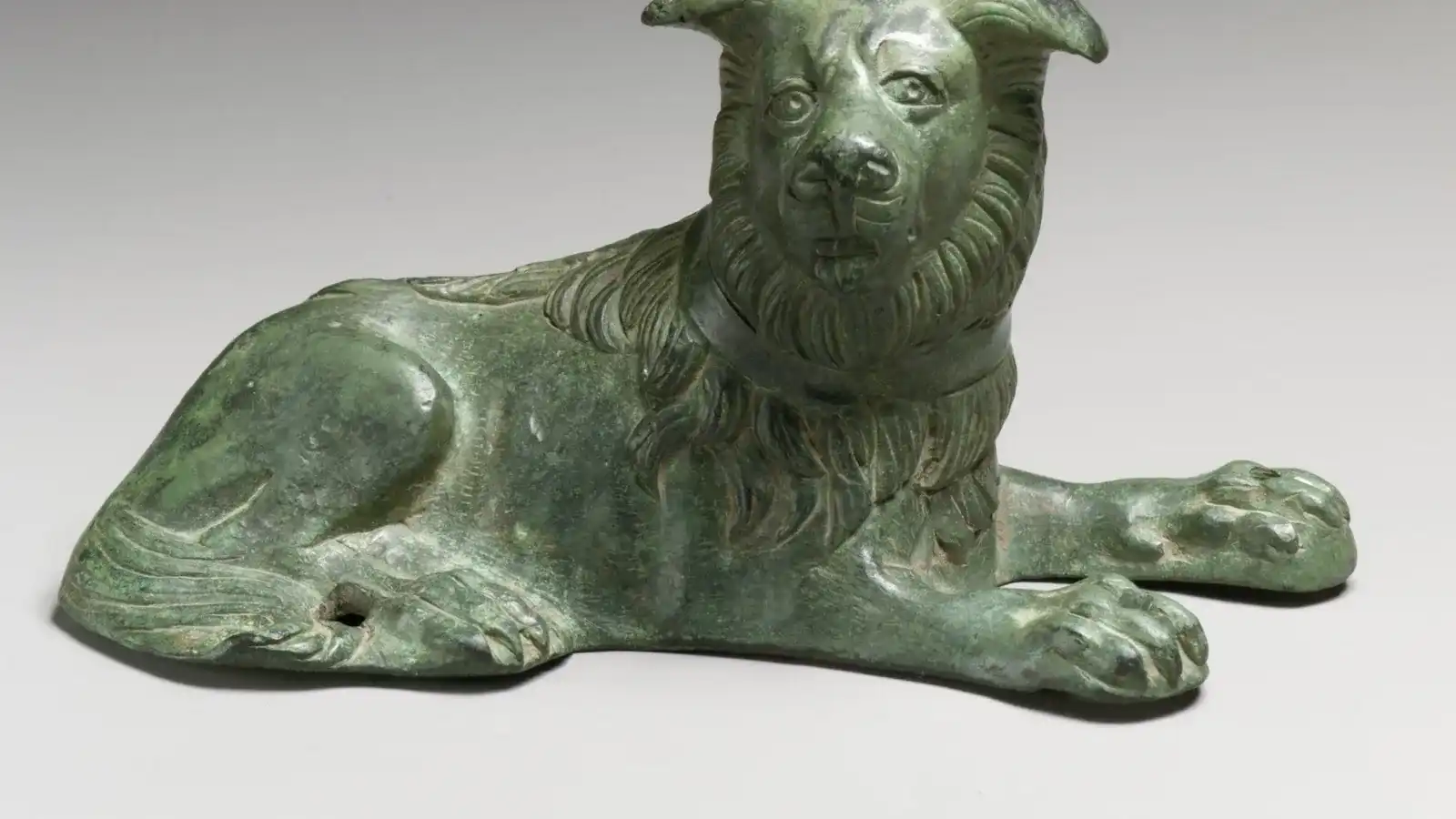
Torches, keys, dogs, crossroads, the moon and poisonous plants: these are the symbols most often linked with Hekate today. Some are ancient, some grew over centuries and some are modern, and a few must stay on paper for your safety. Knowing which is which makes your study more honest and your practice safer. In this lesson we go through her emblems one by one and finish at your own front door.
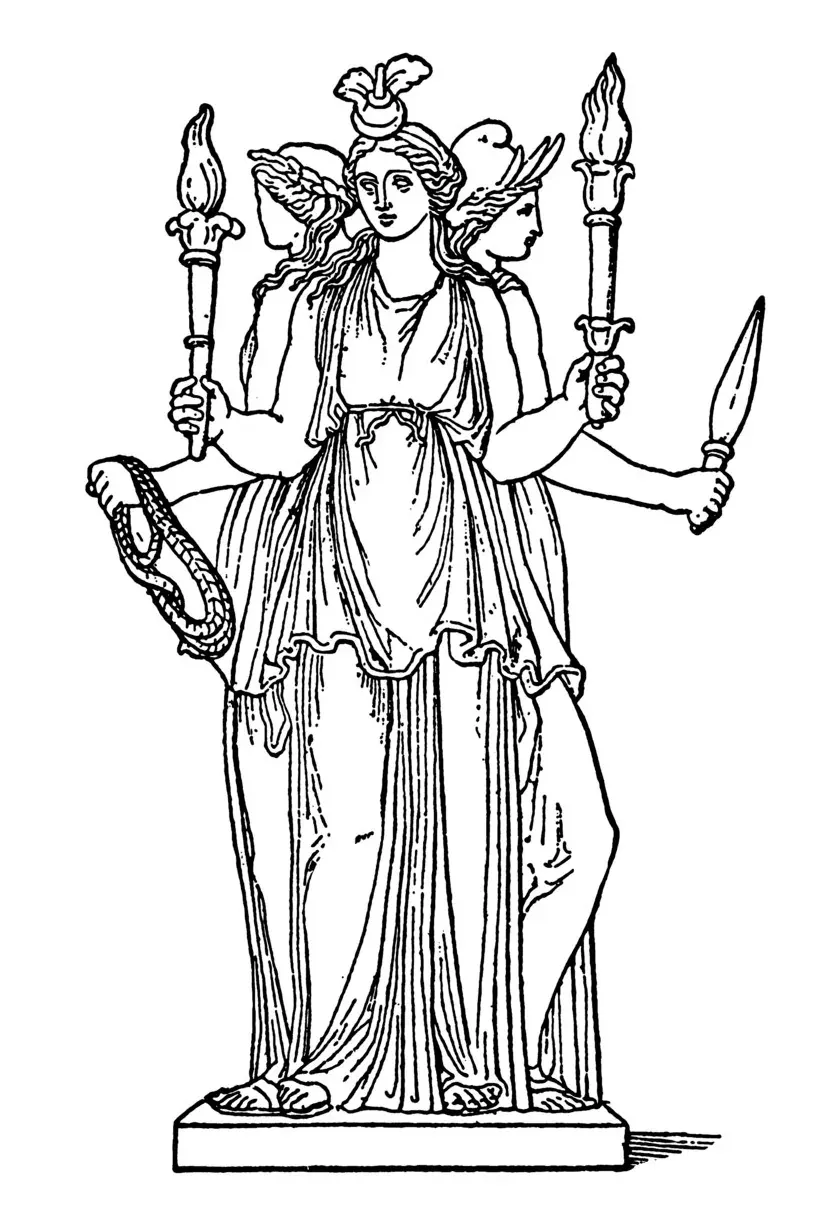
Triple Hecate statue in the Capitoline Museums, Rome. Engraving, 1891. Public domain, via Wikimedia Commons.
Torches and keys
Historical Torches are her oldest emblem. She meets Demeter with one in the Hymn, vase paintings show her with two, and titles such as Phosphoros, “light-bringer”, name the role. Torches belonged to night festivals, weddings, funerals and mystery rites. They lit the way and marked a boundary moment.
Keys came into focus more slowly. They are clearest in Roman-era inscriptions about a key procession at Lagina and in the magical papyri, where “Key” is among her names. A key opens and closes, so it suits a goddess of doorways.
Dogs
Historical Dogs are closely tied to her in ancient sources. In Theocritus’ second Idyll, howling dogs tell the speaker that the goddess is at the crossroads. There is a harder truth too: Plutarch and Pausanias report that dogs were sacrificed to Hekate or to Enodia in some rites. I mention it because you will meet it in research. It has no place in modern practice in any form, and no animal should ever be harmed in devotion.
Stories behind the dogs and other animals
Historical A later Greek story ties a famous queen to Hekate’s dogs. After the fall of Troy, Queen Hecuba (Hekabe in Greek) was said to have been turned into a dog. The poem Alexandra by Lycophron, a difficult Hellenistic text, makes her one of Hekate’s companions. In Apollonius’ Argonautica, which you met in lesson 4, the goddess arrives with barking hounds around her.
Dogs were also the animals of thresholds and night watching. They guard doors, bark at strangers and notice what we miss. It makes sense that a goddess of gates would keep them.
Other animals appear more rarely. The collector of myths Antoninus Liberalis tells of Galinthias, a servant who was turned into a polecat and became Hekate’s attendant. Snakes wind around her in the Argonautica and in some papyri. Horses appear among her many forms in the magical papyri. Modern The frog and the owl are sometimes listed as “Hekate’s animals” online. I have not found good ancient support for either, so I treat them as modern choices.
Epithets as a map of symbols
Historical Each emblem matches a title. Phosphoros, “light-bringer”, goes with the torch. Kleidouchos, “key-holder”, goes with the key. Propylaia, “before the gate”, and Trioditis, “of the three ways”, go with doors and crossroads. Enodia, “of the road”, was the name of a goddess honored in Thessaly who was often merged with Hekate. When you choose a symbol for your shelf, it helps to know which title it belongs to.
Crossroads, thresholds and the moon
Historical Her places are crossroads, doorways and city gates. In Greek thought these places were powerful because they were uncertain. At a crossroads you must choose. At a threshold you pass from one space into another. A goddess who stood there guarded travelers and kept harm out.
The moon link is real, but it grew. It is faint in early sources and strong in Hellenistic and Roman ones, when Hekate merged with Selene. Modern The dark moon as “Hekate’s night” builds on the ancient end-of-month suppers. Colors such as black and purple, the number three in every rite and long lists of crystals are modern correspondences. Enjoy them as modern.
Plants: symbols only
Many plants linked with Hekate online, such as aconite, belladonna, mandrake and henbane, are poisonous. Treat them as symbols only: a picture or a word on a card, never the plant itself. Do not handle, burn or swallow a plant you are unsure of, and keep all of them away from children and pets. If you think a person or animal has been poisoned, call your local emergency number or poison information center straight away.
Medea’s garden
Historical Why are so many poisonous plants tied to Hekate? Mostly through Medea. In Ovid’s Metamorphoses (book 7), aconite, also called wolfsbane, springs from the foam of Cerberus, the hound of the underworld. Medea uses it in a poisoned cup. Diodorus describes a garden of drugs belonging to Hekate in Colchis. These are stories about danger, and that is the point: they warn more than they recommend.
Questions beginners ask
Do I need a dog to honor Hekate? No. A picture, a small figure or simply kindness to dogs in your life is enough.
What is Hekate’s color? No single ancient color is recorded for her. Black, purple and saffron are modern choices. Choose what feels right and call it modern.
Is the full moon or the dark moon hers? The ancient household suppers were tied to the end of the lunar month. The moon link in general grew strong in the Hellenistic and Roman periods.
Myths to drop:
- “You must offer poisonous plants to be serious.” No. Poisonous plants stay on paper, always.
- “Every symbol online is ancient.” Many are modern correspondences, and that is fine when you say so.
- “Keys were always her main emblem.” Torches came first. Keys grew important in Roman times.
A worked example
Imagine you want to make a small Hekate display and you find a list online: torch, key, dog figurine, black candle, amethyst, dried belladonna. Sort it. Torch and key are ancient, and a candle or LED and an old house key cover both. A dog figurine honors an ancient link without harming any animal. The black candle and amethyst are modern correspondences, fine if you like them. Dried belladonna is poisonous, so it becomes a small drawing on a card instead. You end up with a display that is honest about its layers and safe for everyone in the house.
The dogs and torches in the sources
Historical It helps to see the old evidence in its own words. In the Homeric Hymn to Demeter, in Hugh G. Evelyn-White’s 1914 translation, “Hecate, with a torch in her hands,” meets the grieving Demeter. In Theocritus’ second Idyll, in Andrew Lang’s 1889 prose version, “the very whelps shiver before her as she fares through black blood and across the barrows of the dead.”
In Apollonius’ Argonautica, in R. C. Seaton’s 1912 translation, Medea warns Jason not to turn back at “the baying of hounds”, and when the goddess comes there is “a gleam of countless torches”. Three different poets, across about four centuries, agree on two things: torches and dogs. That agreement is why those two emblems stand on firm ground.
A worked example: building your own symbol table
Here is a simple way to sort Hekate’s symbols. Draw four columns in your notebook: symbol, earliest source I found, approximate date, layer. Then fill a few rows.
The torch goes with the Hymn to Demeter, seventh or sixth century BCE, Historical. The dog goes with Theocritus and Apollonius, third century BCE, Historical. The key goes with the title Kleidouchos and later imagery, Historical, though less constant than the torch. The triple form goes with Pausanias on Alkamenes’ statue, fifth century BCE for the statue, Historical. The labyrinth-in-a-circle wheel goes with American goddess spirituality, around the 1980s, Modern. The frog and the owl go with modern lists, with no clear ancient source found, Modern.
When you finish, you will see the pattern at a glance. Your table is also a great tool for checking any new claim you read online: if a symbol has no source in your second column yet, it stays in pencil.
Practice variations with symbols
A one-symbol week. Choose one emblem, perhaps a key, and keep it on your shelf for seven days. Each evening, hold it for a minute and write one line about what doors, beginnings or choices it brings to mind.
A walk of thresholds. On an ordinary walk, notice doorways, gates and places where paths meet. You do not need to do anything there. Simply noticing is a way to live with Hekate’s symbols in a modern town.
A drawing practice. Sketch a torch, a key and a dog in simple lines. Drawing slows you down and helps symbols settle in memory, and no artistic skill is needed.
Try this
Find one threshold in your home, a door or a window you open every day. Stand in it for one minute. Write down what changes as you step from one side to the other: sound, light, temperature, mood. This is the kind of place the Greeks gave to Hekate.
Journal prompts: Which of Hekate’s symbols already lives in your home without any effort? Which modern correspondence do you love, knowing it is modern? What does a threshold mean in your life right now?
Recap
The torch is Hekate’s oldest and most constant emblem; keys grew more important in Roman times; dogs are tied to her in ancient sources, though ancient dog sacrifice has no place in modern devotion. Her places are crossroads and thresholds, and her moon link grew strong in the Hellenistic and Roman periods. Colors, crystals and the dark moon as “her night” are modern. Poisonous plants such as aconite and belladonna are symbols only: never handle, burn or swallow them.
What next
Press “Mark as done” and continue with Ethics, safety and a simple shrine. For the full list of emblems, read Hekate’s symbols, and for safe herbs, see my herbs guide.
Further reading: Sarah Iles Johnston, Restless Dead (University of California Press, 1999) on Hekate, ghosts and the crossroads. Robert Von Rudloff, Hekate in Ancient Greek Religion (Horned Owl, 1999). The Capitoline Museums and the British Museum both show triple Hekate statues on their free online collection pages.
Sources
- Homeric Hymn to Demeter, translated by H. G. Evelyn-White (1914).
- Theocritus, Idyll 2.
- Pausanias, Description of Greece 3.14.9.
- Plutarch, Roman Questions 68.
- Sarah Iles Johnston, Hekate Soteira (Atlanta: Scholars Press, 1990).
Quick check
Go deeper: the Hekate pages on this site
Get the free Mini-Grimoire
A short printable starter guide to tarot and everyday witchcraft, plus my newsletter. Unsubscribe any time.
Opens Substack in a new tab to confirm. More about the newsletter · Privacy
Comments
Questions and notes from readers. Anyone with a free account can comment, and I reply when I can. Please read the community guidelines.
Comments load from Google Firebase (EU) when you ask for them. Nothing is stored on your device. Privacy