


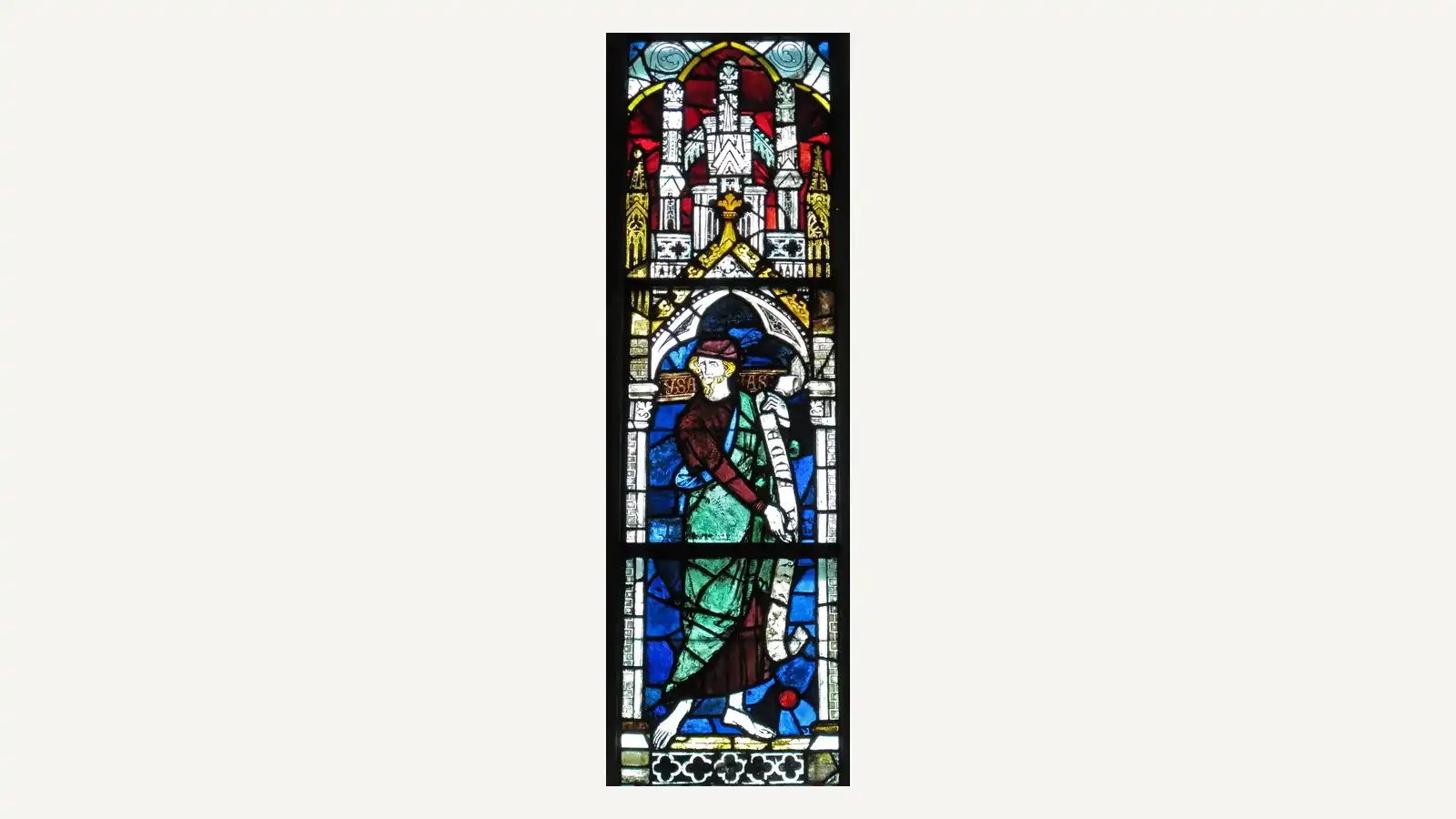
One verse turned a star into a fallen angel. Isaiah 14:12, “How art thou fallen from heaven, O Lucifer, son of the morning!”, is the reason the name Lucifer means what it means to most people today. Yet the poem it belongs to is about a human king, and the same Latin word was also used for Christ. In this lesson you will read the verse in its own setting first, then follow how translators and early Christian thinkers turned it into the story of an angel’s fall.
A taunt song for a tyrant
Historical Isaiah 13 and 14 belong to prophecies against foreign nations. Chapter 14 contains a taunt song, a poem mocking a dead tyrant, the “king of Babylon”. The underworld, Sheol, stirs to greet him. The kings of the nations, now shades, say he has become as weak as they are.
Then comes the famous passage, here in the King James Version: “How art thou fallen from heaven, O Lucifer, son of the morning! how art thou cut down to the ground, which didst weaken the nations!” (Isaiah 14:12). The poem goes on to mock the king’s boast that he would climb above the stars of God, and ends with onlookers staring at his corpse: “Is this the man that made the earth to tremble?” (14:16). Throughout, the subject is a human ruler.
Historical The Hebrew of verse 12 calls him helel ben shahar. Many scholars read this as “shining one, son of dawn”, a name for the Morning Star. The word helel appears nowhere else in the Hebrew Bible, so certainty is impossible. The image fits: Venus climbs high in the dawn sky but always fades before the rising Sun, just as the proud king fell. Scholars often compare a Ugaritic myth of the god Athtar, who tried Baal’s throne and was too small for it.
Is there an older myth behind the poem?
Historical Some scholars think Isaiah’s poet drew on an older Canaanite story about a minor god who tried to take a high throne and fell. They point to Shahar, “Dawn”, whom you met in lesson 2, and to the Ugaritic god Athtar. In one Ugaritic text Athtar sits on Baal’s throne but is too small to fill it and comes down again. The parallel is suggestive and debated. It is safest to say the poem may echo older myths of a star that rose too high, but we cannot name a single source.
Ezekiel 28
Historical Christian tradition paired Isaiah 14 with Ezekiel 28, a lament over the king of Tyre. Ezekiel pictures the king in Eden, adorned with precious stones, as an “anointed cherub” who was perfect until wickedness was found in him and who was cast down. Like Isaiah 14, it is addressed to a human ruler. Read together, the two poems gave later readers the outline of a glorious being who fell through pride.
Jerome’s lucifer
Historical The Greek Septuagint translated the phrase as heosphoros, the dawn-bringer. Around 390 to 405 CE, Jerome made his Latin Vulgate and wrote lucifer, the ordinary Latin word for the Morning Star. He used the same word in Job 11:17 and 38:32 for dawn and the morning star. Early Latin manuscripts had no consistent capitals, so lucifer in Isaiah looked like the word in Job. The King James translators of 1611 kept “Lucifer” as a name, following earlier English Bibles. Most modern translations have “Day Star” or “morning star” instead.
From king to angel, and the other Lucifer
Later tradition Christians read Isaiah alongside other passages: “I beheld Satan as lightning fall from heaven” (Luke 10:18) and the war in heaven of Revelation 12. Origen of Alexandria, in the third century, argued in On First Principles (1.5.5) that Isaiah 14 describes a being who “formerly was Lucifer”.
Augustine, in The City of God (book 11), made pride the root of the angels’ fall. From then on, Western Christianity told of a great angel, Lucifer, who fell through pride and became Satan. For many Christians that reading is a true reading of scripture, and I describe its history without judging it.
Later tradition At the same time, the same word kept another meaning. In 2 Peter 1:19, the “day star” rising in believers’ hearts is lucifer in the Vulgate. The Exsultet, the ancient hymn of the Easter Vigil, prays that the morning star, “which knows no setting”, Christ himself, may find the Easter candle still burning. In Latin Christianity, lucifer named both the fallen one and the risen one.
The whole boast, in the King James Version
Historical The famous verse makes more sense when you read the lines that follow it. Isaiah 14:13 to 15, in the King James Version, continues: “For thou hast said in thine heart, I will ascend into heaven, I will exalt my throne above the stars of God: I will sit also upon the mount of the congregation, in the sides of the north: I will ascend above the heights of the clouds; I will be like the most High. Yet thou shalt be brought down to hell, to the sides of the pit.”
Read it as a poem about pride. The tyrant wanted to rise like the Morning Star above all others, and instead he falls into Sheol, the place of the dead. “The mount of the congregation, in the sides of the north” recalls the mountain where, in Canaanite poetry, the gods met. “Hell” in this translation renders Sheol, the shadowy underworld of the Hebrew Bible, not the fiery hell of later Christian art. Small notes like these change how the verse feels.
Ezekiel’s jewelled cherub
Historical Ezekiel 28:13 to 14, in the same translation, addresses the king of Tyre: “Thou hast been in Eden the garden of God; every precious stone was thy covering… Thou art the anointed cherub that covereth; and I have set thee so: thou wast upon the holy mountain of God.”
The chapter goes on to describe his fall through pride and trade. Like Isaiah 14, it is addressed to a human king, here the ruler of a rich trading city. Later readers joined the two poems into one story of a beautiful angel who fell, and that combined story shaped Christian ideas about Lucifer for centuries.
A worked example: comparing two poems
Draw two columns in your notebook, Isaiah 14 and Ezekiel 28. For each, write who is addressed, what images are used and why he falls. You will find a king of Babylon pictured as the Morning Star, and a king of Tyre pictured as a cherub in Eden, both brought down by pride. Then write one line on what they share and one on how they differ. This exercise shows you exactly how later interpreters could read them together, and why many modern scholars read them separately.
Who was the king?
Isaiah 14 does not name the tyrant. Scholars have proposed several rulers, among them Assyrian and Babylonian kings, and the question is debated. Some think the poem was first written about one king and later applied to Babylon. You do not need to solve it. What matters for this course is that the poem mocks a human ruler, using the Morning Star as an image of high ambition.
A reading variation
Read Isaiah 14:3 to 23 aloud, slowly, in any translation. Pause at each change of speaker: the prophet, the trees of Lebanon, the shades of Sheol, the king himself. Hearing the voices makes the taunt song come alive, and it shows clearly that the fallen Morning Star is one dramatic image within a longer poem.
Questions beginners ask
So is Isaiah 14 about Satan or not? In its own setting it is a taunt against a king of Babylon. Christian tradition has read it as Satan’s fall since at least Origen. Both readings exist, and they come from different questions.
Why do modern Bibles say “Day Star”? Because they translate the Hebrew directly instead of keeping Jerome’s Latin word.
Is calling Christ “lucifer” a mistake? No. In Latin, lucifer simply meant morning star, and Christian hymns used it for Christ in that sense.
Myths to drop:
- “The Hebrew says Lucifer.” The Hebrew says helel ben shahar.
- “Jerome invented Lucifer as the Devil’s name.” He used the normal Latin word for the morning star.
- “Ezekiel and Isaiah describe the same angel.” Both poems address human kings. Tradition joined them later.
A worked example
Imagine reading Isaiah 14 twice. The first time, you read it as an exile in Babylon might have heard it: a song of relief that the tyrant who crushed the nations is dead, mocked by the ghosts of the kings he defeated, his glory fading like the Morning Star at sunrise.
The second time, you read it as Origen did, beside Luke 10:18 and Revelation 12, and you see a radiant angel cast down for pride. The words are the same. What changed is the other texts you read them beside. That is how one king’s funeral song became the story of Lucifer.
Try this
Read Isaiah 14:4 to 20 in any translation. Underline every word that shows the subject is a human king. Then write one sentence on why later readers saw an angel there.
Journal prompts: How does it feel to read the taunt song as a poem about a tyrant? Why do I think the story of a proud angel became so powerful? What does “lucifer” in the Easter hymn change for me?
Recap
Isaiah 14 is a taunt song for a dead king of Babylon, who is called helel ben shahar, probably “shining one, son of dawn”, a name for the Morning Star. The Septuagint wrote heosphoros and Jerome’s Vulgate wrote lucifer, the normal Latin word for the Morning Star, which the King James Version kept as a name. Origen and Augustine read the verse alongside Luke and Revelation as the fall of a proud angel. Yet in 2 Peter and the Easter Exsultet, lucifer also names Christ.
What next
Press “Mark as done” and continue with Medieval devils and Milton. For a verse-by-verse reading, see Isaiah 14, and return to the Lucifer page.
Further reading: Brevard S. Childs, Isaiah (Westminster John Knox, 2001) for the chapter in context. Jeffrey Burton Russell, Satan: The Early Christian Tradition (Cornell University Press, 1981). Henry Ansgar Kelly, Satan: A Biography (Cambridge University Press, 2006).
Sources
- Isaiah 14:4 to 20, King James Version (1611).
- Jerome, Biblia Sacra Vulgata, Isaiah 14:12; Job 11:17 and 38:32; 2 Peter 1:19.
- Origen, On First Principles 1.5.5, translated by Frederick Crombie (Ante-Nicene Fathers, vol. 4).
- Augustine, The City of God, book 11, chapters 13 to 15.
Quick check
Go deeper: the Lucifer pages on this site
Get the free Mini-Grimoire
A short printable starter guide to tarot and everyday witchcraft, plus my newsletter. Unsubscribe any time.
Opens Substack in a new tab to confirm. More about the newsletter · Privacy
Comments
Questions and notes from readers. Anyone with a free account can comment, and I reply when I can. Please read the community guidelines.
Comments load from Google Firebase (EU) when you ask for them. Nothing is stored on your device. Privacy