


In this lesson: a fifteen-minute dark moon sitting, letters to Lilith, labeling replies honestly and a journal that shows what helps.
Lilith’s name has long been linked with night. This lesson gives you two of the gentlest practices in the whole course: sitting at the dark moon, and writing. Writing suits her in a particular way. Her modern meaning is about having a voice and being heard, and a journal lets you see over months what actually helps.
Night and the dark moon
Historical Lilith’s link with night comes through her role as a night spirit in Mesopotamian and Jewish demonology, and through a popular, though debated, connection with the Hebrew word laylah, night. Medieval Kabbalistic writing, including passages of the Zohar, ties her activity to the waning of the moon. No ancient rite to her at any lunar phase is known.
Modern The dark moon is the night or nights before the new crescent appears. Many modern practitioners treat it as a time of rest, endings and inner work, which fits Lilith’s modern themes. That is a choice, not a rule. Any evening works, and so does any time of day.
Keep night practice at home. If you want to go outside, choose your own garden or a safe, lit, public place, tell someone where you are and leave nothing behind. Mind your sleep: if late practice disturbs it, move it earlier. You do not need total darkness, either. Keep a light within reach.
Night in the ancient sources
Historical Why is Lilith linked with night? Partly because of language. In later Jewish tradition the name Lilith was connected with the Hebrew word layla, “night”. Most scholars today think the name actually comes from the Akkadian demon names lilû and lilītu, which may be related to a word for wind or spirit, and that the link with layla is a later folk etymology. Folk etymology means an explanation of a word’s origin that feels right but is not historically accurate. Both ideas shaped how people imagined her.
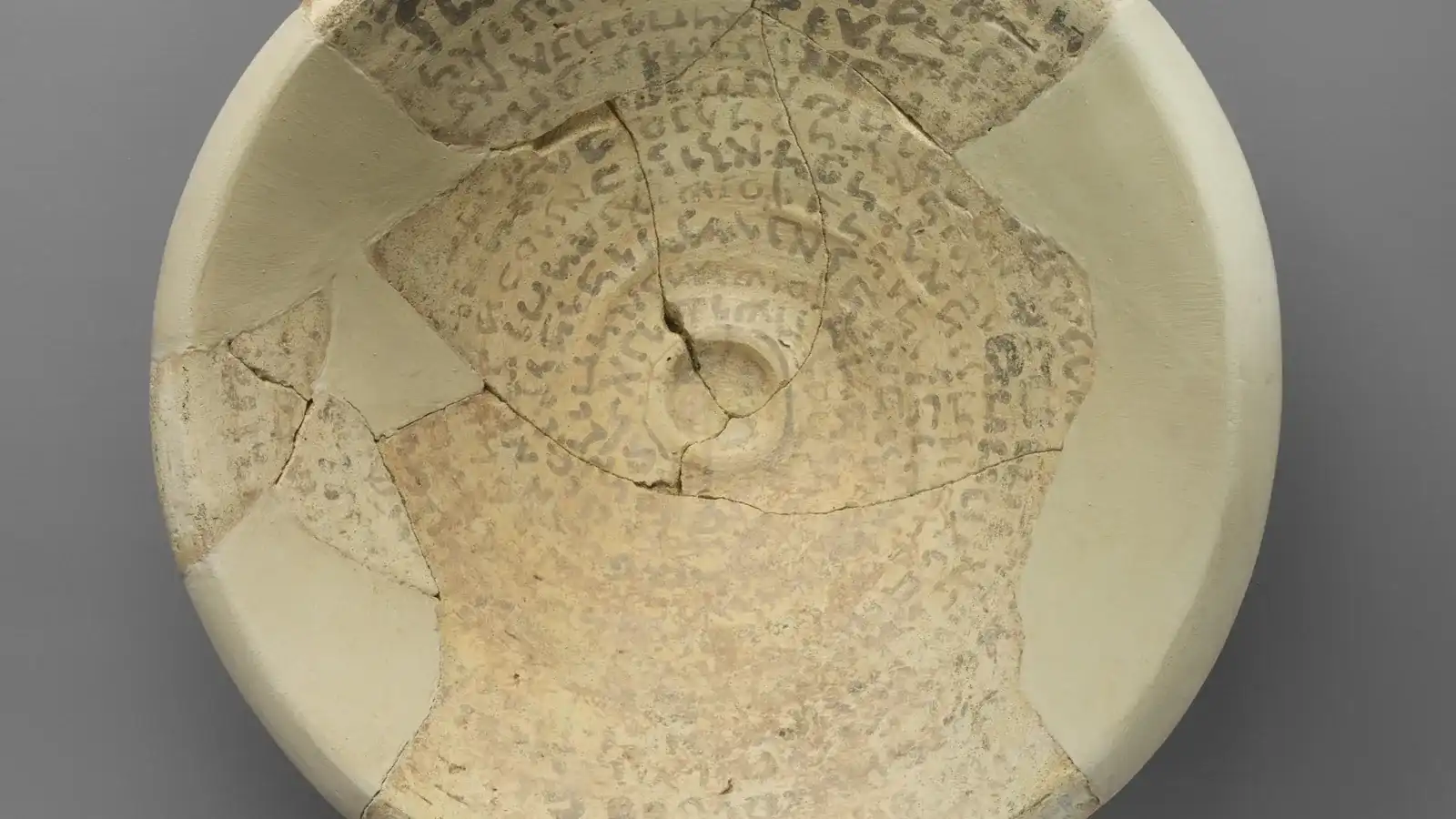
Historical The Babylonian Talmud, compiled around 500 CE, gives a few short lines about Lilith. It warns that a man should not sleep alone in a house, lest Lilith seize him (tractate Shabbat 151b), and it describes Lilith as having long hair (Eruvin 100b) and wings (Niddah 24b). These brief mentions show she was imagined as a winged night spirit long before the medieval story of Adam’s first wife.
The dark moon as a modern choice
Modern There is no ancient source that links Lilith with a particular phase of the moon. The connection with the dark moon grew in twentieth-century witchcraft and astrology, partly because of Black Moon Lilith, which you will meet in lesson 12. That is fine, as long as you label it. A monthly date helps any practice, and the dark moon, when the night sky is darkest, suits a figure of night.
Letters as a practice across history
Historical Writing to a spiritual being has a long history. In the Mesopotamian world, people sometimes wrote letters to gods, and examples survive from the Old Babylonian period. Jewish tradition has the custom of placing written prayers in the cracks of the Western Wall in Jerusalem. These are not the same as writing to Lilith, but they show that a letter is a natural human way to address the unseen.
A worked letter, step by step. Begin with the date and a greeting: “Lilith, on this dark moon.” Write what has happened since your last letter, in plain sentences. Say what you are struggling with, without asking for anything at first. Then, if you wish, write one request or intention, phrased as something you will do: “Help me keep my boundary with my manager.”
Close with thanks. Fold the letter and keep it in a box or journal. After three months, reread all your letters in one sitting. Many people find that this is where the real insight comes: in seeing their own patterns over time.
A variation for those who prefer not to address a figure at all: write the letter to “the part of me that refuses to be small”. The practice works as reflective writing either way.
Letters, replies and a journal habit
Modern Many practitioners write letters to Lilith: confessions, questions, angers, hopes. You can treat a letter as prayer, as conversation with an archetype or as a way of talking to yourself through a figure. All are valid. Some people then pause and write a reply “from Lilith”, letting words come unplanned.
If you try it, label the reply as your own writing, a form of UPG, and read it critically. If a reply tells you to harm yourself or others, to cut off people who care about you or that you are under attack, stop. That is a sign to pause and talk to someone you trust, as in lesson 8.
Each time you practice, note the date and moon phase if you track it, what you did, how you felt before and after, anything you noticed and a UPG label for anything that felt like contact. Once a month, read back and ask what is helping and what has become empty routine. Keep the journal private. If that is hard at home, write on loose paper you destroy afterward, or use a password-protected file.
A dark moon sitting
This takes fifteen to twenty minutes. Check a moon calendar for the next dark moon, or use any evening.
- Dim the lights, leaving one lamp or your candle.
- Sit before your altar and take five slow breaths.
- Light your candle or switch on your LED. If you like, say: “Lilith, at the dark of the moon, I sit with what is hidden.” These are my own modern words.
- Ask one question and let it sit for a few minutes: What have I been holding in that wants to be seen?
- Write freely for five to ten minutes without editing.
- Read it back and underline one line that matters.
- Say “Thank you”, aloud or silently, and put out the flame.
- Ground yourself: drink water, eat a snack, stretch or step outside for a breath of air.
Questions beginners ask
Should I burn my letters? Only if you have a safe fireproof place and never leave the flame. Keeping them is often more useful, because rereading is the heart of the practice. Tearing them up and recycling them is another option.
What if I feel I get a reply? Write it down, label it as personal experience and check it with the six questions from lesson 8.
Can I do this without a dark moon? Yes. Any regular date works, such as the first Sunday of the month.
Myths to drop: The claim that Lilith’s name means “night” in Sumerian is not correct. The claim that she was always a moon goddess has no ancient support. And the idea that you must do this at midnight is only a mood choice; evening works just as well.
A worked example
Imagine someone who sits on the evening before the new crescent. Her question, what have I been holding in, brings up a page about a job she has quietly hated for two years. She underlines one line: “I keep saying it’s fine.” Two days later she writes her first letter.
The reply she writes after a pause says, “You already know.” She labels it “my writing / UPG” and notes that it feels true rather than frightening. In her monthly read-back she sees the job appear four times, and decides to talk to a careers adviser. The practice gave her a voice. The decision is hers.
Try this
Write a first letter. Head a page “Dear Lilith,” and write for ten minutes about why you came, what you hope for and what you are tired of. Sign it, sit quietly for two minutes and, if you wish, add a short reply labeled “Reply (my writing / UPG)”.
Journal prompts: What would I write if no one, including me, ever read it again? What pattern appears across my last three letters? What does night feel like to me: rest, fear, freedom?
Letter variations
The unsent letter. Write to someone you cannot or should not contact, such as a former partner or a younger version of yourself. Keep it in your journal, or tear it up and recycle it.
The letter to the future. Write to yourself one year from now. Seal it in an envelope with the date and open it at next year’s matching dark moon.
The gratitude letter. Write one page of thanks: to your body, your friends, your work. A Lilith practice about knowing your own mind includes knowing what is good in your life.
The boundary letter. Write, in plain words, a boundary you want to keep. Read it aloud once. You do not have to send it; saying it clearly to yourself is the first step.
A beginner’s worry, answered. “I am not a good writer.” Letters in this practice are not for anyone else to read. Short, messy and honest is perfect.
Keeping letters safe. Letters often hold private things. Keep the journal somewhere only you can reach, or write on loose pages you can recycle afterwards. If you share a home, a simple folder at the back of a drawer is enough. Privacy is part of honesty here: you will write more truthfully when you know nobody else will read the page.
How often to write. Once a month at the dark moon is a good rhythm for a beginner. If a month feels like too much, write every second dark moon instead. A small habit you keep is worth more than a big plan you drop.
Recap
Lilith’s link with night is old, but the dark moon focus is a modern choice, and any evening works. A dark moon sitting is breath, one question, free writing and grounding. Letters are a modern practice you can hold as prayer, archetype or self-dialogue. Replies are your own writing, labeled UPG, and any reply urging harm or isolation is a signal to stop. A simple journal habit and a monthly read-back show you what helps.
What next
Press “Mark as done” and continue with Shadow work and saying no. For moon timing, see my dark moon guide, and for keeping your notes, the book of shadows.
Further reading: The Babylonian Talmud passages are available in translation at Sefaria (sefaria.org). Raphael Patai, The Hebrew Goddess (Wayne State University Press, 3rd edition 1990), chapter on Lilith.
Sources
- The Zohar: Pritzker Edition, translated by Daniel C. Matt (Stanford: Stanford University Press, 2004 onward).
- Siegmund Hurwitz, Lilith, the First Eve (English translation Einsiedeln: Daimon, 1992).
- Raphael Patai, The Hebrew Goddess (third edition, Detroit: Wayne State University Press, 1990).
Quick check
Go deeper: the Lilith pages on this site, and The Novice's Guide to Witchcraft
Get the free Mini-Grimoire
A short printable starter guide to tarot and everyday witchcraft, plus my newsletter. Unsubscribe any time.
Opens Substack in a new tab to confirm. More about the newsletter · Privacy
Comments
Questions and notes from readers. Anyone with a free account can comment, and I reply when I can. Please read the community guidelines.
Comments load from Google Firebase (EU) when you ask for them. Nothing is stored on your device. Privacy