


In this lesson: a five-question ethics frame, consent, divination with honest limits and how to keep a simple, useful Book of Shadows.
This lesson gathers up three things you will carry long after the course ends: a way to think about ethics when magic touches other people, a safe way to use divination, and a notebook that holds your practice together. None of them is glamorous, but they are what separate a practice that grows over years from one that burns out or goes wrong. By the end you will have your own ethics frame and the first real page of your Book of Shadows.
No single rule
Modern No rule binds every witch. The Wiccan Rede, “An it harm none, do what ye will”, belongs to modern Wicca; Doreen Valiente used that eight-word form publicly in 1964. The threefold law, the idea that magic returns to you multiplied, is also modern. You can find both useful without treating them as ancient. What matters more is having a way to think through a decision before you act.
A five-question frame
Before any working that touches anyone but you, ask five questions. Who is affected: people, pets, your household and the land? Did they consent? Silence is not a yes, and hope is not consent. What is the ordinary step, such as medicine, locks, leaving, reporting or talking, and have you taken it first? What if you are wrong: can you undo it, apologize or stop? And would you do this without magic? If the non-magical version would be stalking, fraud or assault, do not spiritualize it.
Your own habits, home and attention are yours to work on. Another adult’s love, faith, job or body is not yours to steer. If someone asks you for a spell on another person, a clear no is enough: “I can help you with your own next step, not with controlling them.” If you fear you have been cursed, do not pay strangers for curse removal; sleep, food, locks and real support come first.
Divination with limits
Modern Divination means asking a structured question and reading a response from cards, a pendulum or a page. Treat the answer as a prompt for your own next step, not a verdict on fate. Ask open questions about your own part: “What can I focus on in this job search?” works better than “Will I get the job?”
Do not use divination to predict death, illness, pregnancy or the outcome of a diagnosis or court case, and do not read a third party without consent. Stop if a session spikes panic or the urge to pull “one more card” for hours.
Your Book of Shadows
Modern “Book of Shadows” is a name from modern Wicca, and today many witches use it for any practice journal. Yours needs four simple sections.
- Log: the date, what you did, what you noticed, the ordinary step and the review result, including “nothing obvious”.
- Reference: correspondences and recipes, each with its source.
- Safety: allergies, pets in the home, plants and oils you avoid and your fire rules.
- Seasons: a page you revisit each year.
Mark which entries are your own experiments and which come from a book or teacher. One good week is not proof, and one bad week is not failure.
Where the ethics come from
Historical The best-known ethical statement in modern witchcraft is the Wiccan Rede: “An it harm none, do what ye will.” It was first recorded publicly in a speech by Doreen Valiente in 1964. A longer poem version was published by Lady Gwen Thompson in 1975.
The idea echoes earlier sources: Aleister Crowley’s “Do what thou wilt shall be the whole of the Law” (1904) and, much further back, Augustine’s “Love, and do what you will” (a sermon on 1 John, around 407 CE). The Threefold Law, the belief that what you send out returns three times, was popularized by Raymond Buckland and others in the 1970s, drawing on a passage in Gerald Gardner’s novel High Magic’s Aid (1949).
Modern Many witches do not follow the Rede or the Threefold Law. Some follow broader ethics, such as kindness and consent, and others follow the ethics of their own religion. This lesson offers questions instead of one rule, because a beginner is better served by thinking than by a slogan.
The history of the Book of Shadows
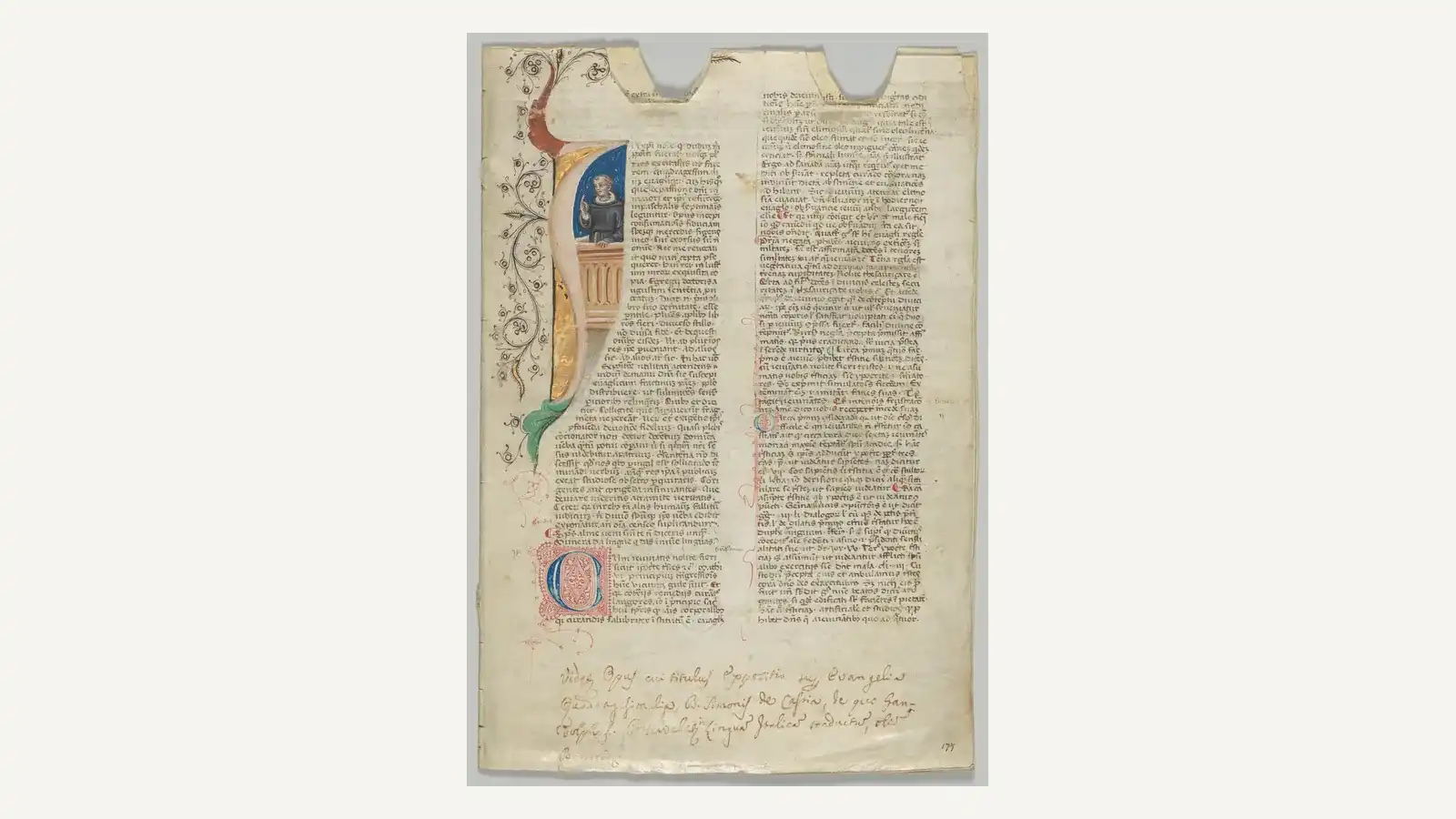
Historical The term Book of Shadows comes from Gerald Gardner’s Wiccan tradition in the 1950s. Gardner’s own book of rituals was handed to initiates to copy by hand. The name may have come from an article titled “The Book of Shadows” published in 1949 in an occult magazine, about Indian palmistry, but this is uncertain. Earlier, cunning folk and magicians kept handwritten notebooks and grimoires (handbooks of magic). Today a Book of Shadows can be a notebook, a binder, a digital document or a private blog.
Worked examples of ethical thinking
Example 1: a love spell. A friend asks you to do a spell to make her ex come back. Using the five questions, you see that it aims at another person’s will and could harm both people. You offer instead to do a candle for her healing and self-worth, and to go for a walk with her.
Example 2: a reading for someone else. A colleague asks for a tarot reading about whether her partner is cheating. You decide not to read on a third person’s private life, and instead offer a reading about what she needs to feel secure.
Example 3: a protection practice at work. You want to protect yourself from a hostile manager. You choose a private grounding practice and a written record of incidents for HR, rather than a curse. Ethics here and practical protection point the same way.
A worked example
Imagine a friend asks you for a spell to make her ex come back. You run the five questions. The person most affected is the ex, and he has not consented. The ordinary step would be a conversation, and they have already had that. If you are wrong, you cannot easily undo meddling in someone’s feelings.
And without magic, repeatedly trying to change his mind against his wishes would look a lot like harassment. So you say kindly, “I won’t do a spell on him, but I would love to do a self-care working with you for the heartbreak.” That evening you write the conversation in your Book of Shadows log, with the date and what you offered instead.
A divination entry, worked through
Here is what a good divination entry in your Book of Shadows can look like. “Date: a Sunday evening in March. Question: what can I focus on in my first month at the new job? Method: one tarot card. Card: the Page of Pentacles. My reading: be a beginner, ask questions, learn the practical side first. Ordinary step: write down three questions for my manager on Monday. Feeling: calmer than before I started.”
A month later, the same learner adds a review line underneath: “Asked the questions. It helped. The card did not predict anything, but it gave me a useful angle.” Over a year, entries like this show you how you use divination: as a mirror for reflection, which is its healthiest role.
Variations for your Book of Shadows
The loose-leaf binder. A ring binder lets you move pages around as your sections grow. Many people find it easier than a bound book, because a messy page can simply be rewritten.
The digital book. A notes app or a document on your computer works well, especially for searching old entries. Use a password if you share devices, and keep a backup.
The two-book system. Some witches keep a rough daily notebook and copy only the entries worth keeping into a neater book once a month. The copying itself becomes a monthly review.
Questions beginners ask
Is it unethical to do a spell for money? Many witches think spells for your own needs are fine, especially when paired with real action. The main ethical concern is not harming others or manipulating them.
Can divination predict the future? There is no scientific evidence for this. Many people use divination for reflection and insight instead.
Should my Book of Shadows be secret? It can be private, like a diary. Secrecy is a choice, not a requirement.
What if I make an ethical mistake? Acknowledge it, make amends if you can and learn. That is what ethics in every tradition asks.
Myths to drop: The Rede is not an ancient law. The Threefold Law is not a cosmic rule shared by all witches. And a Book of Shadows does not need to be old, handwritten or bought.
Try this
Set up your Book of Shadows with the four sections in this lesson. Add your first entry: the intention from lesson 2, what you did and what you noticed. Then reread the page from lesson 1. What has changed?
Journal prompts: What is my own one-sentence ethic? Which situation in my life would test it? What do I want my Book of Shadows to hold?
Recap
No single rule binds every witch; the Rede and the threefold law are modern. The five-question frame asks who is affected, whether they consented, what the ordinary step is, what happens if you are wrong and whether you would do it without magic. Divination is a prompt for your own next step, never a verdict on health, death or another person’s private life. A Book of Shadows with log, reference, safety and seasons sections will carry your practice for years.
What next
Press “Mark as done” and continue with The witch trials and cunning folk: an archive practice. Then read more about ethics, divination and the Book of Shadows. If divination caught your interest, the Divination for Beginners course is a natural next step, and Tarot for Beginners goes deep into the cards.
Further reading: Ronald Hutton, The Triumph of the Moon (Oxford University Press, 1999), on Gardner and the Rede. Doreen Valiente, The Rebirth of Witchcraft (Robert Hale, 1989).
Sources
- Lauri Mukkala, The Novice’s Guide to Witchcraft, chapter 9, “Divination”, chapter 15, “Advanced Studies”, and chapter 16, “Ethical Witchcraft”.
- Ronald Hutton, The Triumph of the Moon: A History of Modern Pagan Witchcraft (Oxford University Press, 1999).
Quick check
Go deeper: The Novice's Guide to Witchcraft
Get the free Mini-Grimoire
A short printable starter guide to tarot and everyday witchcraft, plus my newsletter. Unsubscribe any time.
Opens Substack in a new tab to confirm. More about the newsletter · Privacy
Comments
Questions and notes from readers. Anyone with a free account can comment, and I reply when I can. Please read the community guidelines.
Comments load from Google Firebase (EU) when you ask for them. Nothing is stored on your device. Privacy