


Some questions are really problems: something is not working and you want to fix it. The four-card problem-solving spread keeps a reading concrete. It defines the problem, looks at the cause, finds what helps and ends with a step you can take this week.
It sits nicely between challenge and advice and the five-card cross.
When to use it
Reach for it in moments like these. A practical problem: a conflict, a stuck habit, a plan that keeps stalling. You want to understand why it is happening, not just what to do. You need an answer that ends in action.
It is not the best spread for big life direction questions or for situations that are mostly about feelings you have not named yet. For those, start with three cards.
The layout
Lay four cards in a row, left to right. Before you shuffle, write the problem as specifically as you can. Vague problems lead to vague advice.
Positions explained
1. Problem. The problem as it really is. Sometimes this card confirms what you thought; sometimes it reframes it, and that reframe is the most useful part of the reading.
2. Cause. What feeds the problem. A pattern, a hidden motive, a missing resource, a habit of thought. Read it without blame.
3. Help. What supports a solution. Help can be a person, a habit, a boundary or an attitude.
4. Next step. One thing to do. It should be doable this week. If the card points to something big, find the smallest piece of it.
Example reading
This example is teaching fiction, not a prediction about anyone’s life.
The question: “There is conflict on a shared project. What is going on and what helps?”
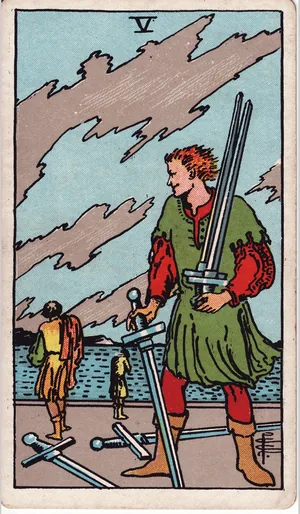
Problem: the Five of Swords. A figure gathers swords while two others walk away. A win that costs trust. Someone may be right on paper and still losing the team.
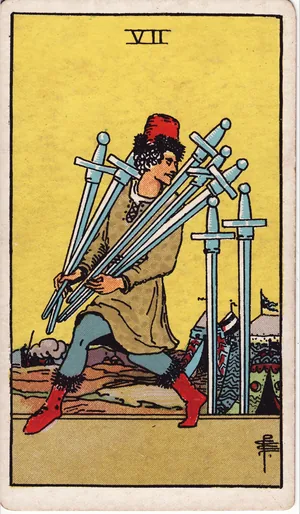
Cause: the Seven of Swords. A figure sneaks off with an armful of swords. Side strategies and incomplete honesty. Not everything is being said in the open.
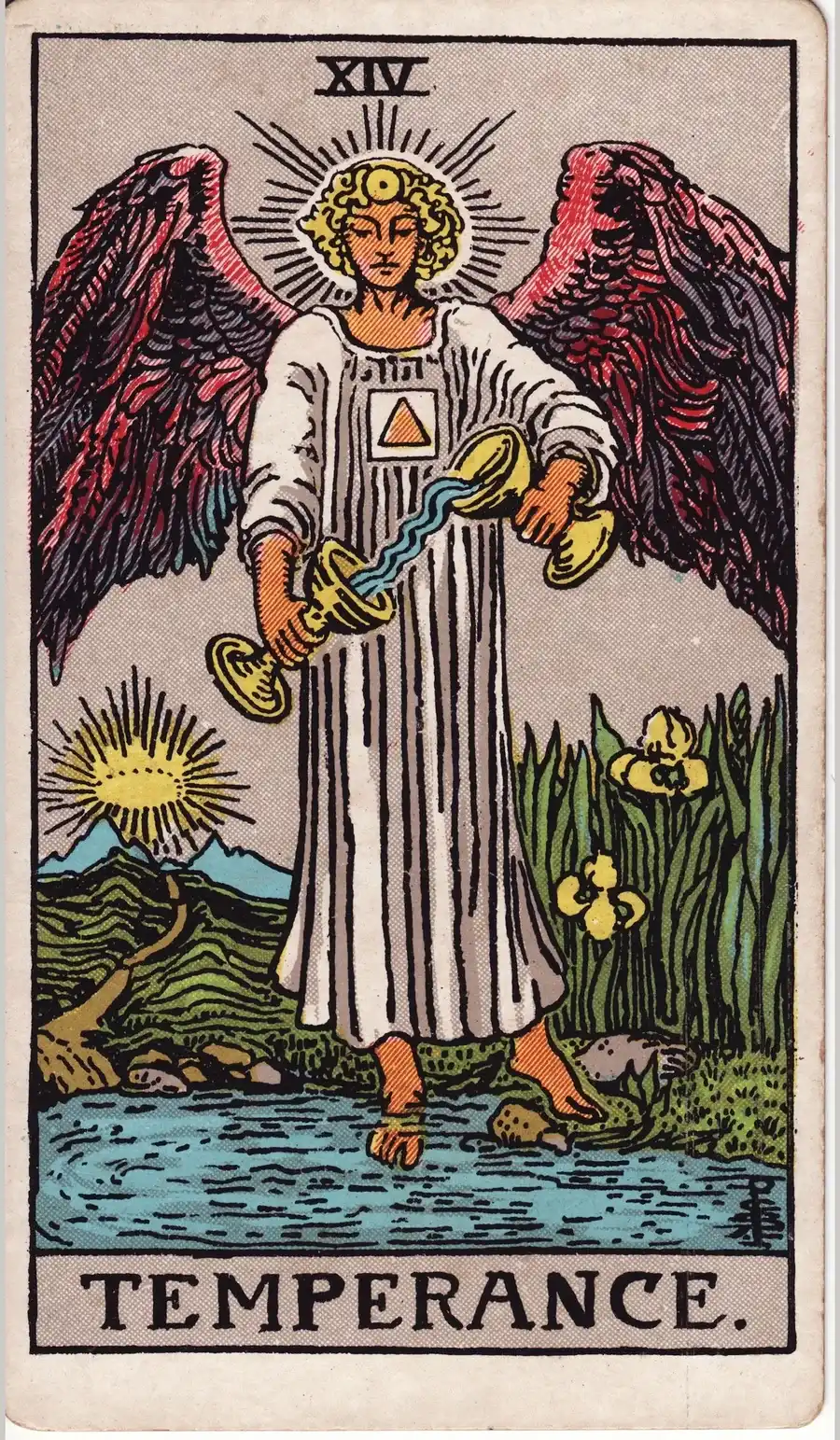
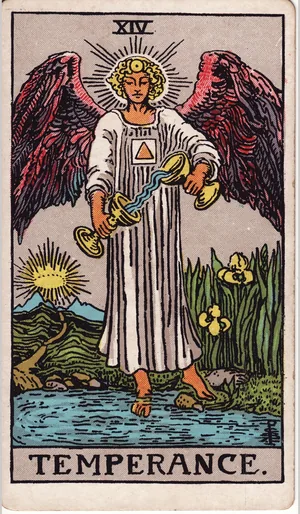
Help: Temperance. An angel pours water from one cup to another. Slow blending. Stop forcing a false peace and let people adjust at their own pace.
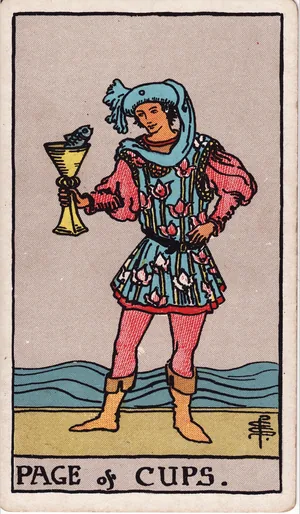
Next step: the Page of Cups. A young figure looks with surprise at a fish in a cup. One sincere, low-stakes olive branch.
Together: three Swords and Cups cards tell a story about communication and feelings, with Temperance as the bridge. The next step is not a big meeting. It is one small, honest, friendly gesture, like a message saying, “I think we got off track. Can we talk about how to split this fairly?”
Reading the four together
Problem and cause often share a suit. If they do, the cause lives in the same area as the problem. If not, the problem may be showing up somewhere other than where it starts.
Help and next step should fit together. If the help card is calm and the next step card is bold, look for a calm way to take a bold step.
A Major in the help position suggests a change of attitude, not just a tactic.
A court card in any position may point to a person involved, or to a way of acting you could borrow.
Common mistakes
Making the problem too big. “My career” is not a problem you can solve in four cards. “My manager and I disagree about deadlines” is. The smaller the problem, the more useful the reading.
Reading the cause card as an accusation. The cause is often a pattern several people share, or a situation nobody planned. Look for what you can influence rather than who to blame.
Ignoring a help card you dislike. If help comes as the Four of Swords, the answer may be rest or a pause before you act, even if you wanted a plan. Help does not always look like action.
Skipping the next step. It is tempting to stop after the help card, because it feels like an answer. Do not. The next step card turns insight into action, and that is the whole point of this spread.
Variations
| Variation | When it helps |
|---|---|
| Five cards: add an obstacle | Put an extra card between help and next step for what might get in the way. |
| Problem, cause, help, next step, outcome | Add a fifth card for where it leads if you take the step. Keep it conditional. |
| Two helps | Draw one card for inner help (your own strengths) and one for outer help (people and resources). |
Try this
A few habits make this spread work better.
Be specific in the problem card. Write one sentence before you shuffle.
Help can be a person, habit or boundary.
The next step should be doable this week.
Check back in a week. Did you take the step? What happened? That feedback is how you learn.
Afterwards, write the date, your question and the cards in your journal. Then pick one or two of these questions to answer.
Did the problem card describe my problem as I see it, or reframe it? What part of the cause is mine to change? Who or what in my life matches the help card? What exactly will I do this week, and when?
What next
When you want more room, the five-card cross adds a root and an outlook. All spreads are on the spreads hub.
Questions
What is the four-card problem-solving spread?
A small layout with four positions: the problem, its cause, what helps and a next step. It keeps a reading practical without a big layout.
What can the help card mean?
Help can be a person, a habit, a boundary, a resource or an attitude. Ask which of those fits your situation.
How specific should the next step be?
Doable this week. If the card suggests something huge, find the smallest version of it you could start now.
Get the free Mini-Grimoire
A short printable starter guide to tarot and everyday witchcraft, plus my newsletter. Unsubscribe any time.
Opens Substack in a new tab to confirm. More about the newsletter · Privacy