


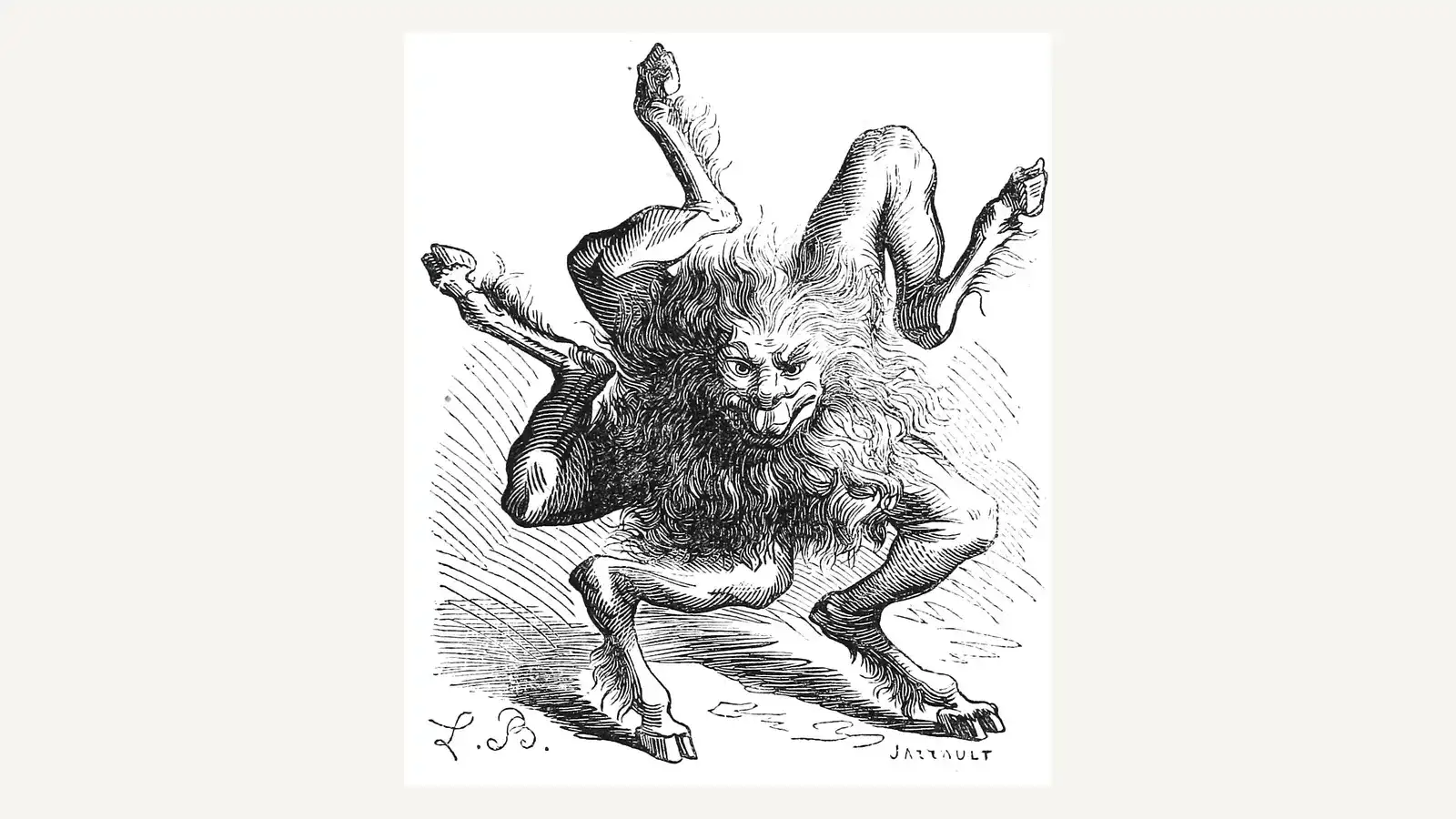
The 72 spirit entries are the heart of the Goetia, and they are where most confusion begins. Online, a single spirit page might mix the seventeenth-century text, Golden Dawn correspondences and someone’s personal visions without telling you which is which. In this lesson you will learn to read any entry like a historian: recognize its five standard parts, spot the later layers added on top and handle the entries that describe harm. Once you have this skill, all 72 spirit pages on this site become much easier to use.
An example: Stolas
Historical Here is spirit 36 in the 1904 text. Stolas is a great prince who appears “in the Shape of a Mighty Raven at first before the Exorcist; but after he taketh the image of a Man.” He teaches astronomy and the virtues of herbs and precious stones, and he governs 26 legions of spirits. Then comes his seal. Almost every entry has the same five parts.
The five parts
- Rank. The titles are those of a European court: king, duke, prince, marquis, earl, president, knight. The 1904 “classified list” counts 9 kings, 23 dukes, 7 princes, 15 marquises, 14 presidents, 10 earls and 1 knight. That adds to 79, because seven spirits appear twice in the list.
- Appearance. Often an animal first, then a human shape when commanded, as with Stolas. Some entries mention a voice or temperament: Vassago is “of a Good Nature”; Beleth is “very furious at his first appearance”.
- Offices. What the spirit is said to do or teach. Many entries mix gentle offices, such as teaching languages or the virtues of herbs, with harsh ones, such as causing discord or wounds.
- Legions. The number of spirits under its command, an echo of “Legion” in Mark 5.
- Seal. A sigil drawn in the manuscripts and redrawn for the 1904 printing. The “Observations” link ranks to metals: gold for kings, copper for dukes, tin for princes, silver for marquises, mercury for presidents, copper and silver for earls and lead for knights.
The full entry for Stolas
Historical Here is the complete entry for spirit 36 in the 1904 edition, quoted from the public domain text: “The Thirty-sixth Spirit is Stolas, or Stolos. He is a Great and Powerful Prince, appearing in the Shape of a Mighty Raven at first before the Exorcist; but after he taketh the image of a Man.
He teacheth the Art of Astronomy, and the Virtues of Herbs and Precious Stones. He governeth 26 Legions of Spirits.” Read it slowly and find the five parts: the number and name, the rank (prince), the appearance (raven, then man), the offices (astronomy, herbs and stones) and the legions (26). Under the entry in the book sits the seal, a drawn symbol.
Reading the words of the period
Some words in spirit entries need a gloss. “Exorcist” here means the magician who calls the spirit, not a priest who drives it out. “Office” means a duty or job. “Legion” was a Roman army unit, used here to suggest a large following. “Virtues” of herbs and stones means their powers or properties, as in old herbals. Knowing these words keeps you from reading modern meanings into early modern English.
Layers on top
Later tradition Planets, zodiac decans, tarot cards and colors for each spirit mostly come from the Golden Dawn and Crowley’s 777 (1909), not from the Goetia itself.
Modern Personalities, favorite offerings and “what the spirit wants” usually come from modern practitioners’ unverified personal gnosis, often shortened to UPG. The old text names offerings for only three spirits: Paimon, Belial and Malphas. Modern lore can be meaningful, but label it.
Offices of harm, and comparing with Scot
Some offices describe harm: wounds, death, storms or love by compulsion. Read them as history. They tell you what early modern people feared and hoped for. On this site, offices of harm are marked as not taught.
Historical For any spirit in Weyer’s list, you can compare the Goetia’s wording with Scot’s English of 1584. Ranks and numbers sometimes differ: Barbatos is an earl and a duke in Scot but only a duke in the Goetia. Each spirit page on this site shows these differences.
A second practice entry
Try the same method on another entry, Marbas, spirit 5. In the 1904 edition he is a great president who first appears as a great lion and then takes human shape. He answers truly about hidden things, causes and cures diseases, gives skill in mechanical arts and can change men into other shapes, and he rules 36 legions.
Find the rank, the appearance, the offices and the legions. Then notice the double edge of the offices, causing and curing disease in the same breath. Many entries mix helpful and harmful offices like this, which tells you how their writers saw spirits: powerful, useful and dangerous.
A third entry, in Scot’s English
Historical For a harder test, read an entry in the spelling of 1584. Here is Agares, the second spirit, in Reginald Scot’s translation of Weyer: “The first duke under the power of the east, is named Agares, he commeth up mildlie in the likenes of a faire old man, riding upon a crocodile, and carrieng a hawke on his fist; hee teacheth presentlie all maner of toongs, he fetcheth backe all such as runne awaie, and maketh them runne that stand still; he overthroweth all dignities supernaturall and temporall, hee maketh earthquakes, and is of the order of vertues, having under his regiment thirtie one legions.”
Read it aloud once, slowly, and the spelling soon stops being a barrier. “Presentlie” means at once, “toongs” are languages and “regiment” means rule. Now find the five parts. The rank is duke. The appearance is a fair old man on a crocodile with a hawk.
The offices run from teaching languages to causing earthquakes. The legions number thirty one. There is one extra detail: he “is of the order of vertues”, one of the ranks of angels in Christian tradition. That phrase tells you how the writers imagined these spirits, as fallen angels who once had a place in heaven.
The legions, too, have a biblical background. In the King James Bible the possessed man in Mark answers Jesus: “My name is Legion: for we are many” (Mark 5:9). A reader in 1584 would have heard that echo at once.
Keeping an entry card
A simple habit makes this skill stick. For each spirit you read, fill a small index card with five lines, one for each part, and a sixth line headed “later layers” for anything a book or website adds. After a dozen cards you will notice patterns on your own: how often the animal shape comes first, how many entries mix help and harm and how rarely the old text mentions offerings. Patterns you find yourself stay with you far longer than any list I could give you.
One more worry: some beginners feel uneasy writing a spirit’s name on a card. Writing a name is note taking, exactly as a historian writing about Roman gods takes notes. If the unease grows into a need to check or undo what you wrote, that belongs to the safety lesson that follows, and it is a reason to pause, not to add rituals.
Questions beginners ask
Does the rank mean a spirit is stronger? Within the text, rank places the spirit in a court hierarchy, but the book does not explain rank in detail. Later writers have built systems on it, and those are modern additions.
Why are some appearances so strange? Many combine animals, and some may come from older bestiaries or simply from copying errors. Lesson 9 looks at the pictures.
Are the offices promises? They are claims in a seventeenth-century text. Studying them tells you what people hoped for or feared, such as learning, love, treasure or revenge.
Myths to drop: A spirit’s rank does not mean it is “good” or “evil”. The planetary and zodiac attributions you see online are mostly later additions, as the “Layers on top” section explains. And reading an entry aloud does not summon anything.
A worked example
Imagine you are reading a popular blog post about Stolas. It says he is a prince with 26 legions who appears as a raven and teaches astronomy, herbs and stones; that he is linked to a planet and a zodiac decan; that he loves offerings of lavender and dark chocolate; and that he is gentle and patient with beginners. With three colored pencils, you sort it.
Prince, 26 legions, raven, astronomy, herbs and stones: 1904 text, first color. The planet and decan: Golden Dawn or later correspondences, second color. Lavender, chocolate and a patient personality: modern lore, third color, and not in the old text at all, since Stolas is not one of the three spirits with named offerings. The post is not wrong to share modern lore, but now you know what you are reading.
If you are struggling right now, call your local emergency number (112 in Europe, 911 in the US and Canada) or see Getting help.
Try this
Choose one spirit from the list below. Open its page and fill in five lines: rank, appearance, first office, legions and one thing that was added after 1904.
A variation: make a simple five-column table in your notebook for three spirits you choose, and fill it from the 1904 text only. Later, compare with a website and mark anything the website adds.
Recap
Every Goetia entry has five parts: a courtly rank, an appearance, offices, a number of legions and a seal. Planetary and tarot links mostly come from the Golden Dawn and Crowley’s 777, and personalities and offerings usually come from modern personal gnosis; the old text names offerings for only Paimon, Belial and Malphas. Offices of harm are history, not instructions. Comparing with Scot’s 1584 English shows how the text changed.
All 72 spirits
Every spirit has its own page, listed here in the 1904 order, and the spirit directory shows them as cards with seals. In order: 1. Bael, 2. Agares, 3. Vassago, 4. Samigina, 5. Marbas, 6. Valefor, 7. Amon, 8. Barbatos, 9. Paimon, 10. Buer, 11. Gusion, 12. Sitri. 13. Beleth, 14. Leraje, 15. Eligos, 16. Zepar, 17. Botis, 18. Bathin, 19. Sallos, 20. Purson, 21. Marax, 22. Ipos, 23. Aim, 24. Naberius. 25. Glasya-Labolas, 26. Bune, 27. Ronove, 28. Berith, 29. Astaroth, 30. Forneus, 31. Foras, 32. Asmoday, 33. Gaap, 34. Furfur, 35. Marchosias, 36. Stolas.
37. Phenex, 38. Halphas, 39. Malphas, 40. Raum, 41. Focalor, 42. Vepar, 43. Sabnock, 44. Shax, 45. Vine, 46. Bifrons, 47. Vual, 48. Haagenti. 49. Crocell, 50. Furcas, 51. Balam, 52. Alloces, 53. Camio, 54. Murmur, 55. Orobas, 56. Gremory, 57. Ose, 58. Amy, 59. Orias, 60. Vapula. 61. Zagan, 62. Volac, 63. Andras, 64. Haures, 65. Andrealphus, 66. Cimejes, 67. Amdusias, 68. Belial, 69. Decarabia, 70. Seere, 71. Dantalion, 72. Andromalius.
What next
Press “Mark as done” and continue with Safety, ethics and myths. For more, read about ranks and offices and seals, the circle and the triangle, and try the method on Stolas.
Sources
- S. L. MacGregor Mathers and Aleister Crowley, The Book of the Goetia of Solomon the King (Boleskine, 1904), spirit 36 and the “Observations”.
- Aleister Crowley, 777 (London, 1909).
- Reginald Scot, The Discoverie of Witchcraft (London, 1584), book 15.
Quick check
Go deeper: the Goetia pages on this site
Get the free Mini-Grimoire
A short printable starter guide to tarot and everyday witchcraft, plus my newsletter. Unsubscribe any time.
Opens Substack in a new tab to confirm. More about the newsletter · Privacy
Comments
Questions and notes from readers. Anyone with a free account can comment, and I reply when I can. Please read the community guidelines.
Comments load from Google Firebase (EU) when you ask for them. Nothing is stored on your device. Privacy