

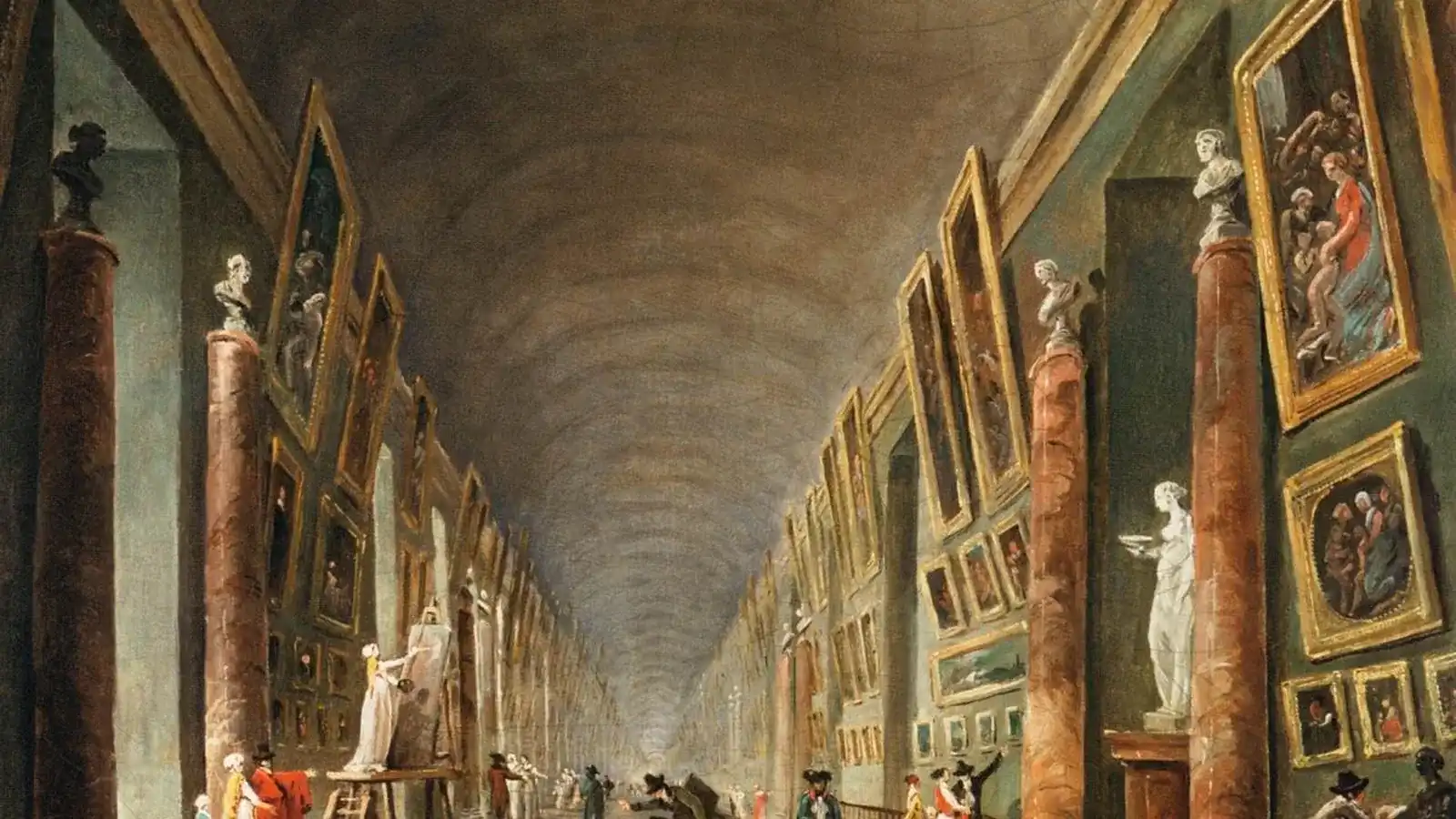
This course is free and always will be. No account, no email needed. Your progress stays in your own browser. If you have ever stood in a museum, glanced at a famous painting for a few seconds and walked on feeling that you were missing something, you are exactly who I made it for.
Art History for Beginners: A Novice’s Path has ten short lessons. We start with the most useful skill of all: how to look slowly at one picture. Then we learn the basic language of images, and walk through the story of Western art from ancient protective spirits to abstract painting. Because this is The Esoteric Witch, we stop along the way at the places where art meets magic, astrology, alchemy and tarot. Each lesson ends with a small looking exercise and a quick quiz.
What you will learn
- A ten-minute method for slow looking, and four steps for writing about any work.
- The basic vocabulary of line, color, composition and perspective.
- How to read symbols honestly, and how to tell an old meaning from a modern guess.
- The main eras of Western art, from the ancient Near East to early abstraction.
- Where the esoteric really appears in art history: melancholy, witches, the Pre-Raphaelites, the Symbolists and the painters of the spiritual.
- How to find free, high-quality images in museum open-access collections.
How it works
Open a lesson, read it, try the looking exercise and press “Mark as done”. Your progress is saved privately in your browser, so nothing is sent to me. When every lesson is done, you can open your certificate of completion.
I label what I teach in three layers, as everywhere on this site: Historical for what the evidence shows, Later tradition for what writers and critics added later, and Modern for how we read and use images today. In art history this matters a lot. Many “hidden meanings” you read online are modern guesses, and a good looker learns to ask: who in that time and place would have understood this symbol?
The lessons
- Why art history, and how to look
- The language of images
- Ancient and medieval symbols
- Renaissance: magic, perspective and melancholy
- From Baroque light to Romantic night
- Pre-Raphaelites, Symbolists and the occult revival
- Modern art and the spiritual
- Witches in prints: a slow-looking practice
- Goya and the witch as satire
- Your own museum practice
How each lesson works
Every lesson opens with why the topic matters. Then comes the teaching itself in plain prose, a worked example that shows the idea in action, one small exercise for your notebook and a short recap, with the sources I used listed at the end. A three-question quiz at the bottom checks the main idea. Nobody sees your answers. Each lesson links to the art movement pages, where every movement has its own page with key works, dates and free public-domain images, much like each tarot card has its own page on this site.
Who this course is for
This course is for complete beginners, for tarot readers who want to understand the images on their cards, for witches who love old engravings and for anyone who wants to enjoy museums more. You do not need to draw, and you do not need to travel. A screen and a museum website are enough to start.
What you need
A notebook and pen, about fifteen minutes per lesson and an internet connection to open museum collections. Many of the world’s great museums, such as the Metropolitan Museum of Art in New York and the Art Institute of Chicago, now share large parts of their collections as free open-access images. See open-access museums for where to look. A pencil for quick sketches helps too, and no drawing skill is needed.
A note on images
Every image on the movement pages is public domain, and I do not choose artworks with nudity for these pages. The one exception on the site is the original 1909 tarot deck by Pamela Colman Smith, which I show complete, all 78 cards as they were printed. Where a famous work includes nudity, I describe it in words and link the museum’s own page instead. Many twentieth-century works are still protected by copyright, so some movement pages have no picture. Each page tells you where you can see the works legally.
Start now
Begin with Why art history, and how to look. It takes about fifteen minutes.
Go deeper
The art history hub links every guide on this site, from how to look at art to the esoteric in art and the history of tarot art. The free Tarot for Beginners course is a lovely companion, because every tarot card is a small picture to read.
Sources
- Edmund Burke Feldman, Art as Image and Idea (Englewood Cliffs: Prentice-Hall, 1967).
- Erwin Panofsky, Meaning in the Visual Arts (Garden City: Doubleday, 1955).
- E. H. Gombrich, The Story of Art (London: Phaidon, 1950).
- Jeffrey K. Smith and Lisa F. Smith, “Spending Time on Art”, Empirical Studies of the Arts 19 (2001).
0% done · 10 of 10 lessons ready
Comments
Questions and notes from readers. Anyone with a free account can comment, and I reply when I can. Please read the community guidelines.
Comments load from Google Firebase (EU) when you ask for them. Nothing is stored on your device. Privacy