


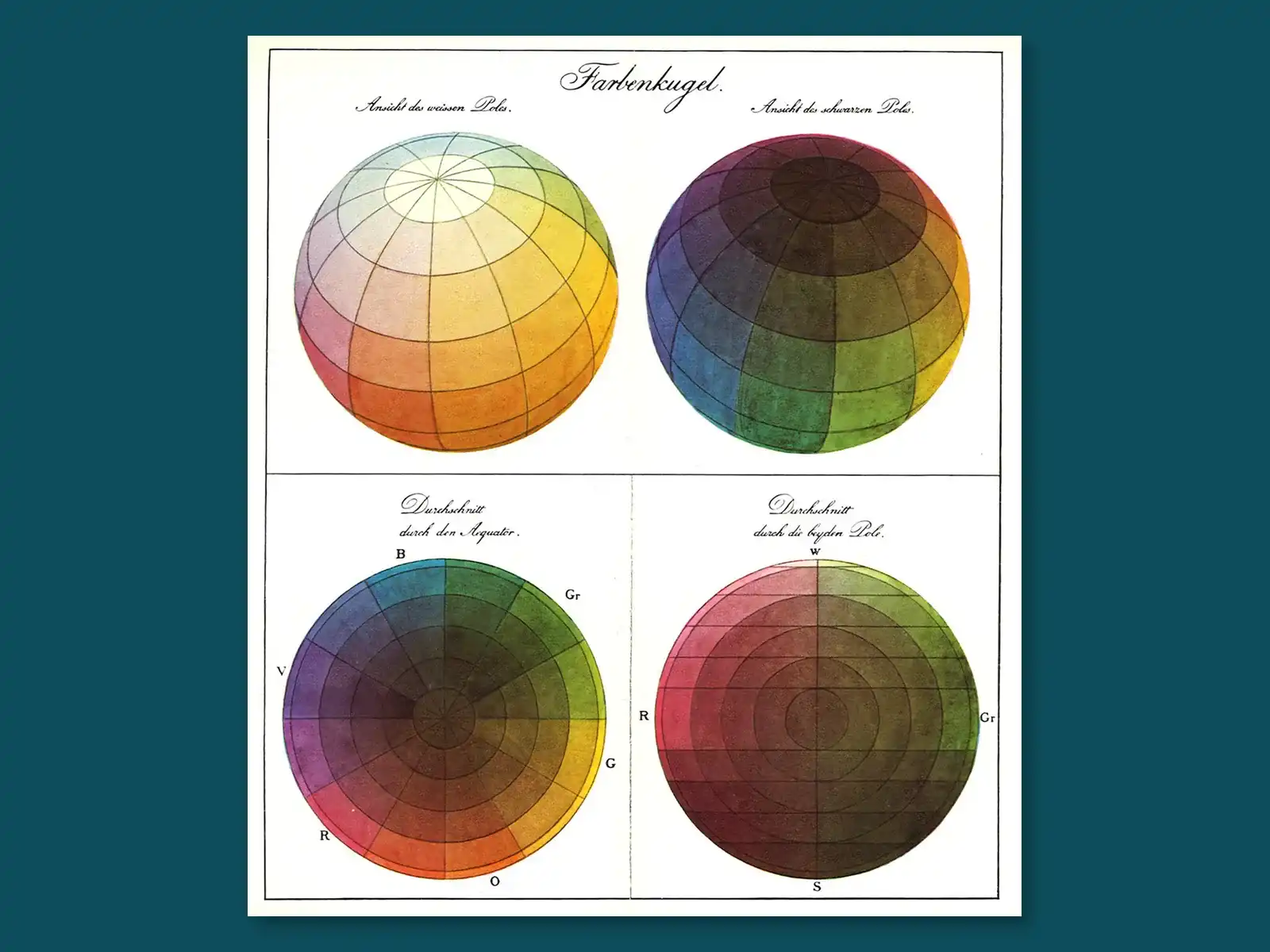
Open almost any spell book and you will find tables: Tuesday for courage, green for growth, rosemary for remembrance. Beginners often feel they must memorize all of it before they are allowed to start. You do not. Correspondences are a shared symbolic language, and like any language you learn it by using a few words well. In this lesson you will learn what correspondences are and are not, where the familiar tables come from, and how to make a small table of your own that actually means something to you.
What a correspondence is
Modern A correspondence is a symbolic association. An element, a planet, a color or a day of the week stands for a theme, the way a flag stands for a country. When you choose a red candle for a working about courage, you are not switching on a power inside the wax.
You are choosing a reminder that fits your aim, so that every part of a small ritual points the same way. That coherence helps attention, and attention is what a spell works with. Correspondences do not make a spell succeed or fail, and nothing in a table predicts events or replaces medical, legal or financial help.
Where the tables come from
Later tradition The tables in most English-language spell books follow one Western lineage. Renaissance magic gathered older astrological and philosophical ideas into great systems, most famously Heinrich Cornelius Agrippa’s Three Books of Occult Philosophy, published in full in 1533. Plant rulerships come mostly from Renaissance herbals and astrology, such as Nicholas Culpeper’s Complete Herbal (1653). In the late 1800s the Hermetic Order of the Golden Dawn organized these links into tidy systems of elements, planets, colors and tarot suits, and modern Wicca inherited much of that work.
Historical Some links are much older. The seven-day week was named for the seven classical planets in the Roman world, which is why Sunday is the Sun’s day and Monday the Moon’s. Many European languages still show it: Tuesday is Mars’s day in French mardi, and Saturday keeps Saturn’s name in English.
Different books disagree, and other cultures have their own color and plant languages. White is a mourning color in parts of East Asia, while in much of Europe it is worn at weddings. Neither map is wrong. If you grew up with a different symbolic language, your own associations are the ones that will speak to you most clearly.
A closer look at the old sources
Historical Correspondence thinking goes back at least to the ancient idea that the world is woven together by sympathies, hidden likenesses between things. The Greek philosopher Theophrastus wrote about plants in the fourth century BCE, and later writers such as Pliny the Elder in his Natural History (77 CE) recorded many beliefs about plants and stones.
In the Renaissance, Heinrich Cornelius Agrippa gathered these traditions in his Three Books of Occult Philosophy (printed 1533). Book 1 lists, for example, which plants, animals and stones belong to the Sun, the Moon and each planet. For the Sun, he names things such as gold, the heliotrope (a plant that turns toward the sun), the lion and the rooster.
Historical Nicholas Culpeper, the English herbalist, linked plants to planets in The Complete Herbal (1653), and his book stayed in print for centuries. Many modern correspondence lists still echo Culpeper. Colors had their own history: in Christian liturgy, for instance, colors for church seasons were standardized in the Roman rite by the sixteenth century, with violet for penitence and white for feasts. Some modern candle color charts draw on these older color meanings, but many entries were simply invented in the twentieth century.
How to trace one correspondence
Take a common claim: “rosemary is for remembrance”. Trace it backward. Shakespeare’s Ophelia says “There’s rosemary, that’s for remembrance” in Hamlet (act 4, scene 5, written around 1600). Earlier still, rosemary was used at weddings and funerals in England. So this correspondence has a documented history of over four centuries.
Now take “green candles attract money”. You will find it in many twentieth-century books, often explained by the color of US banknotes. That is a modern correspondence, not ancient, and it works only if green means money to you. Both are fine to use. What matters is knowing which is which.
Color, culture and your own feelings
Colors carry different meanings in different cultures. White is linked with weddings in many Western countries and with mourning in parts of East Asia. Red can mean danger, love or luck. So a correspondence chart written in one country may not match your own associations. When you build your own table, write down what each color means to you personally, and where that meaning came from: a memory, a culture, a book. A personal table is often more powerful than a borrowed one.
A worked example
Imagine someone preparing for a job interview on a Wednesday. She wants a small working for clear speech. She glances at a correspondence table: Wednesday is Mercury’s day, linked with speech and study; yellow is linked with air, thought and words. She does not own a yellow candle, so she uses a white tea light, the usual stand-in, and places a yellow sticky note with her opening sentence under the holder.
A sprig of mint from the kitchen, linked with air, sits beside it. She lights the candle, reads her sentence aloud three times, puts the flame out and practices her answers for half an hour. Every symbol cost nothing and pointed the same way. The practice afterward is what will help her most in the room.
The days of the week, traced
Historical The days of the week are the easiest correspondence to trace yourself, because the evidence is in the words you use every day. The Romans named the seven days after the seven classical planets: the Sun, the Moon, Mars, Mercury, Jupiter, Venus and Saturn. When Germanic peoples took over the seven-day week, they swapped in their own gods for some of the Roman ones, choosing gods they saw as similar.
So Sunday and Monday kept the Sun and the Moon. Tuesday belongs to Tiw, a Germanic god of war matched with Mars, which is why French has mardi. Wednesday is Woden’s day, matched with Mercury (mercredi). Thursday is Thor’s day, matched with Jupiter (jeudi). Friday is named for the goddess Frigg, matched with Venus (vendredi). Saturday kept Saturn’s name in English.
Not every language follows the planets. The Finnish keskiviikko simply means “the middle of the week”, with no god at all. That is a good reminder that correspondences are cultural choices, and a modern witch’s “Wednesday is for communication” rests on this long chain of Roman astrology and Germanic translation.
Building your own
The most useful correspondence table is the one you write yourself. Start small: the four elements. For each, pick one color and one everyday object that already feel right to you, and write one line about why. Maybe earth is the brown of your garden soil and a mug from your grandmother, because it feels steady. Maybe water is grey, not blue, because the sea where you grew up was grey. Over months, add days, plants and seasons as they come up in your practice, always noting where a pairing came from: a book, a teacher or your own experience.
A month-long correspondence test
Here is a simple way to find out which correspondences really speak to you. Choose one borrowed pairing, such as “yellow for clear thinking”. For a month, use it whenever it fits: a yellow note on your desk before study, a yellow cloth on your altar on a busy day.
Each time, write one line in your Book of Shadows about how it felt. At the end of the month, read the lines back. If the pairing felt natural, add it to your own table with the note “tested”. If it felt like wearing someone else’s coat, cross it out without guilt.
Questions beginners ask
Do I have to use the “right” color? No. If you only have white candles, use white; many witches treat white as suitable for any purpose.
Why do different books give different correspondences? Because they draw on different traditions and often on the author’s own preferences. That is normal.
Can I make up my own? Yes. Many of the correspondences in modern books began that way.
Are correspondences magic in themselves? They are a symbolic language. Whether they have power beyond helping your focus is a question of belief. They are never a substitute for medicine, safety or practical action.
Myths to drop: Correspondence tables are not ancient secrets passed down unchanged. Planetary correspondences do not prove anything about the plants’ chemistry. And no color is “forbidden” for a beginner.
Try this
Make a one-page correspondence table of your own. List the four elements, and for each choose one color and one everyday object you already own. Write one line on why each pairing makes sense to you. Put the page in your notebook, and add the source of any pairing you borrowed.
Journal prompts: Which color do I instinctively reach for, and why? Which correspondence in my favorite book can I trace back to a source? What does my personal color table say about my life?
Recap
Correspondences are symbolic associations, a menu rather than a recipe. Most Western tables come from Renaissance magic such as Agrippa, Renaissance herbals such as Culpeper and the Golden Dawn, while the planet-day links go back to the Roman seven-day week. Tables disagree and cultures differ, so use them to make a ritual coherent, substitute freely (white works for any color) and build your own table over time.
What next
Press “Mark as done” and continue with Herbs and kitchen witchcraft, safely. For the full tables, see correspondence tables and candle colour meanings, and look up any unfamiliar word in the witchcraft glossary.
Further reading: Agrippa’s Three Books of Occult Philosophy is available online in the 1651 English translation by J. F. (public domain). Michel Pastoureau’s books on the history of colors, such as Blue: The History of a Color (Princeton University Press, 2001).
Sources
- Heinrich Cornelius Agrippa, Three Books of Occult Philosophy (Cologne, 1533).
- Nicholas Culpeper, The Complete Herbal (London, 1653).
- Ronald Hutton, The Triumph of the Moon: A History of Modern Pagan Witchcraft (Oxford University Press, 1999).
Quick check
Go deeper: the witchcraft pages on this site, and The Novice's Guide to Witchcraft
Get the free Mini-Grimoire
A short printable starter guide to tarot and everyday witchcraft, plus my newsletter. Unsubscribe any time.
Opens Substack in a new tab to confirm. More about the newsletter · Privacy
Comments
Questions and notes from readers. Anyone with a free account can comment, and I reply when I can. Please read the community guidelines.
Comments load from Google Firebase (EU) when you ask for them. Nothing is stored on your device. Privacy