


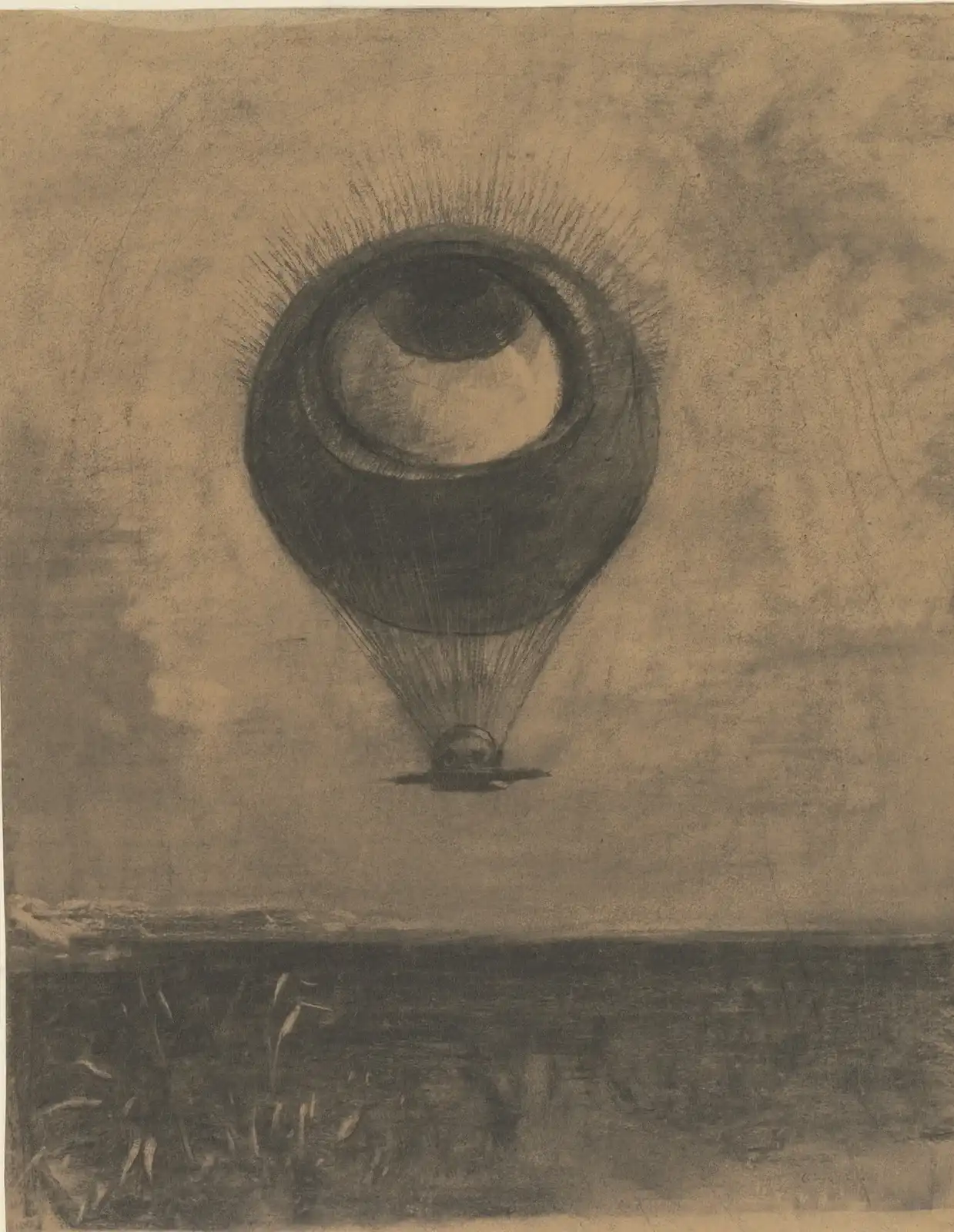
How to read the labels Historical what the old sources say. Later tradition what later writers added. Modern modern practice and my own notes.
Surrealism is the art and literary movement launched in Paris in 1924, when the poet André Breton published his first Manifesto of Surrealism. Artists such as Max Ernst, Salvador Dalí, René Magritte, Joan Miró, Leonora Carrington, Remedios Varo and Dorothea Tanning explored dreams, chance and the unconscious mind. It spread worldwide and lasted, in Breton’s circle, until his death in 1966.
Surrealism is the art movement that felt most like magic to me when I first met it, and it turns out that was no accident.
Its founders wanted to free the mind from logic, and they reached for the same tools witches use: dreams, chance, symbols and the tarot. The movement’s leaders were mostly men who talked about women as muses. Some of the most magical work came from the women themselves.
Key dates
| When | What happened |
|---|---|
| 1924 | André Breton publishes the first Surrealist manifesto. |
| 1925 | The first Surrealist group exhibition in Paris. |
| 1927 | Yves Tanguy paints Mama, Papa is Wounded! |
| 1936 | The International Surrealist Exhibition in London. |
| 1941 to 1942 | Remedios Varo and Leonora Carrington settle in Mexico City. |
What is Surrealism?
Surrealism is art that tries to free the imagination by drawing on dreams, the unconscious and unexpected combinations, beyond the control of reason.
Throughout this page I mark three layers. Historical What the records show. Later tradition The legends. Modern How we use it now.
Historical The manifesto. In 1924 the French poet André Breton, who had worked with shell-shocked soldiers during the war and read Freud, published the Manifesto of Surrealism. He defined it as “psychic automatism”, thought expressed without the control of reason.
The group practiced automatic writing, recorded dreams and played games like the exquisite corpse, in which each person adds to a drawing or sentence without seeing what came before.
Historical Painting the dream. Max Ernst rubbed pencil over wood grain and leaves to find creatures hidden in their textures. Joan Miró let shapes float like stars.
Salvador Dalí painted dream images with photographic precision, like the melting watches of The Persistence of Memory (1931), now at MoMA. René Magritte in Brussels painted calm, impossible scenes: a pipe labeled “This is not a pipe”, a night street under a daylight sky.
Historical Leonora Carrington and Remedios Varo. The English painter Leonora Carrington (1917 to 2011) and the Spanish painter Remedios Varo (1908 to 1963) both escaped wartime Europe and settled in Mexico City in the early 1940s, where they became close friends. Their paintings are full of alchemists, witches, tiny kitchens that are also laboratories, and women weaving the world.
They studied alchemy, the Kabbalah, Gurdjieff and the tarot together. Carrington painted her own Major Arcana, published in facsimile in 2020, and wrote the wonderful novel The Hearing Trumpet. In 2022 the Venice Biennale took its title, The Milk of Dreams, from a book of her stories.
Historical Who counts as a Surrealist?. Breton liked to welcome artists into the movement whether they wanted it or not. When he visited Mexico in 1938 he called Frida Kahlo a natural Surrealist.
She rejected the label and is widely quoted as saying that she never painted dreams, only her own reality. Dorothea Tanning and Kay Sage, both American, worked alongside the group but kept their own voices. Being near a movement is not the same as belonging to it, and the women knew the difference.
Key artists
| Artist | Lived | Why they matter |
|---|---|---|
| André Breton | 1896 to 1966 | Poet and founder of the movement. |
| Max Ernst | 1891 to 1976 | Inventor of frottage and painter of strange forests. |
| Yves Tanguy | 1900 to 1955 | The painter of empty dream beaches full of soft forms. |
| René Magritte | 1898 to 1967 | The Belgian painter of calm, impossible scenes. |
| Leonora Carrington | 1917 to 2011 | The painter and writer of alchemical, witchy worlds. |
| Remedios Varo | 1908 to 1963 | The Spanish-born painter of mystical journeys in Mexico. |
How do you recognise Surrealism?
Look for dream logic: realistic painting of impossible things, empty landscapes with long shadows, melting or hybrid forms. Automatic drawing and chance games come first. Many works draw on alchemy, tarot and magic.
Common misconceptions. One is that Surrealism means Dalí. He was one member, and Breton expelled him from the group in 1939. Much Surrealism, like Miró’s or André Masson’s automatic drawing, is abstract.
Another is that its weird images had no ancestors. The Surrealists themselves claimed Bosch, Arcimboldo, Goya, Grandville and Henri Rousseau as forerunners, and Alfred Barr hung many of them in the Museum of Modern Art’s exhibition Fantastic Art, Dada, Surrealism in 1936. A third is that women were only muses. Leonora Carrington, Remedios Varo, Dorothea Tanning, Leonor Fini, Kay Sage, Claude Cahun and Lee Miller made major work, and Carrington and Varo developed it further in Mexico.
Esoteric themes
Historical In 1940 and 1941, waiting in Marseille for visas to escape the war, Breton and his friends designed a card game, the Jeu de Marseille, with suits of flame, star, wheel and lock, and Surrealist heroes in place of kings and queens.
Breton’s book Arcane 17 (1945) is named after the Star card of the Tarot of Marseille and meditates on hope after catastrophe. The Swiss Surrealist Kurt Seligmann wrote a history of magic, The Mirror of Magic (1948).
Later tradition Surrealism is sometimes remembered as a men’s club with women as models. The women’s own work, long overlooked, is now at the center of the story.
Modern For the history of tarot, see the history of tarot and tarot in art history.
Works to see
| Work | Artist | Date | Where to see it |
|---|---|---|---|
| Mama, Papa is Wounded! | Yves Tanguy | 1927 | The Museum of Modern Art, New York |
| The Sleeping Gypsy (a precursor) | Henri Rousseau | 1897 | The Museum of Modern Art, New York |
| The Eye Like a Strange Balloon Mounts toward Infinity (a precursor) | Odilon Redon | 1878 | The Museum of Modern Art, New York |
Every work in this list is free of nudity, so you can look them up with confidence. Works still in copyright are named but not shown here.
How to look at a Surrealist painting
Look for the thing that does not belong. A lion beside a sleeper, a face made of books, a clock that melts. Then ask what the combination makes you feel. Surrealists wanted the jolt of strangeness, not a single correct meaning.
The images below show the Surrealists’ chosen ancestors, all now in the public domain.
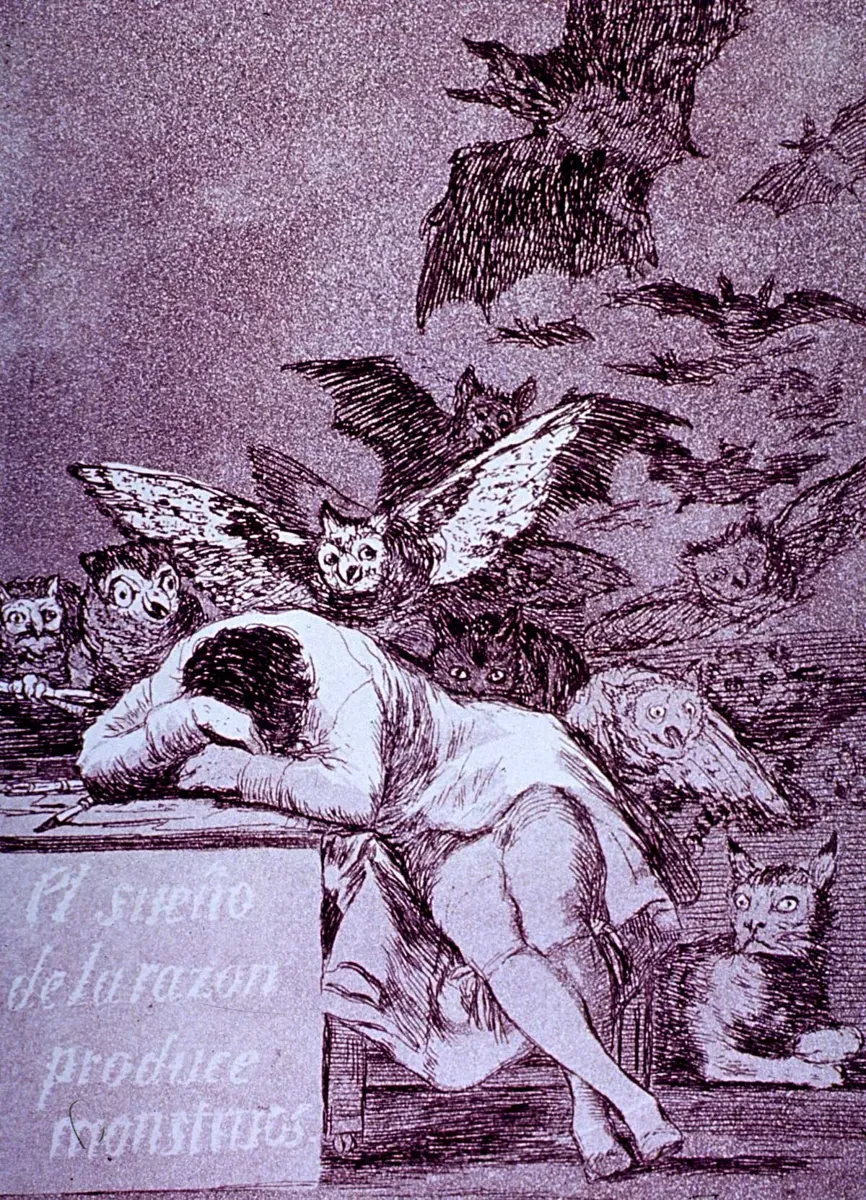
Francisco Goya, The Sleep of Reason Produces Monsters (Los Caprichos, plate 43), 1799. Prints in many collections. Image: Wikimedia Commons, public domain.
Francisco Goya, The Sleep of Reason Produces Monsters, Los Caprichos plate 43, 1799. The sleeper’s dreams fill the air with creatures of the night. Surrealists saw in it the unconscious let loose.
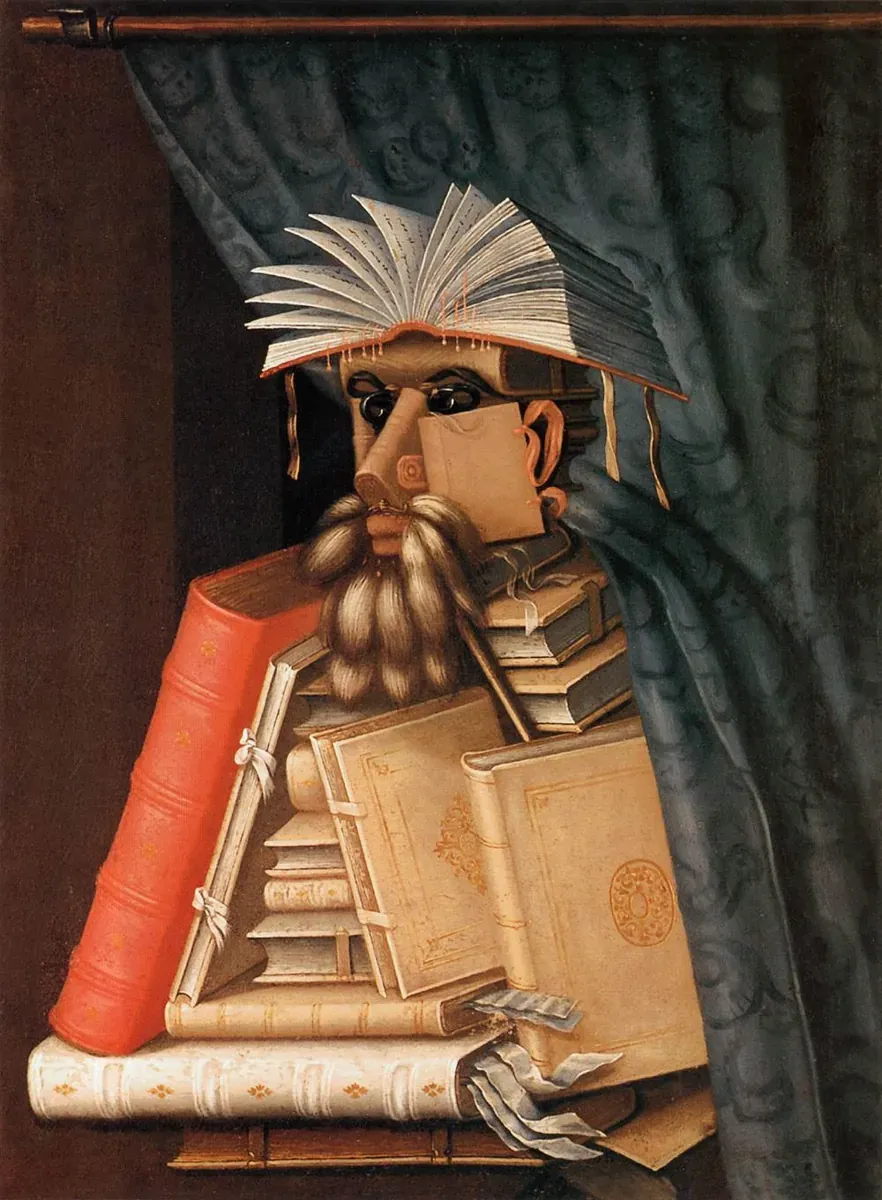
Giuseppe Arcimboldo, The Librarian, about 1566. Skokloster Castle, Sweden. Image: Wikimedia Commons, public domain.
Giuseppe Arcimboldo, The Librarian, about 1566. At Skokloster Castle in Sweden. A man made of books. Dalí and others rediscovered Arcimboldo’s composite heads in the 1930s.
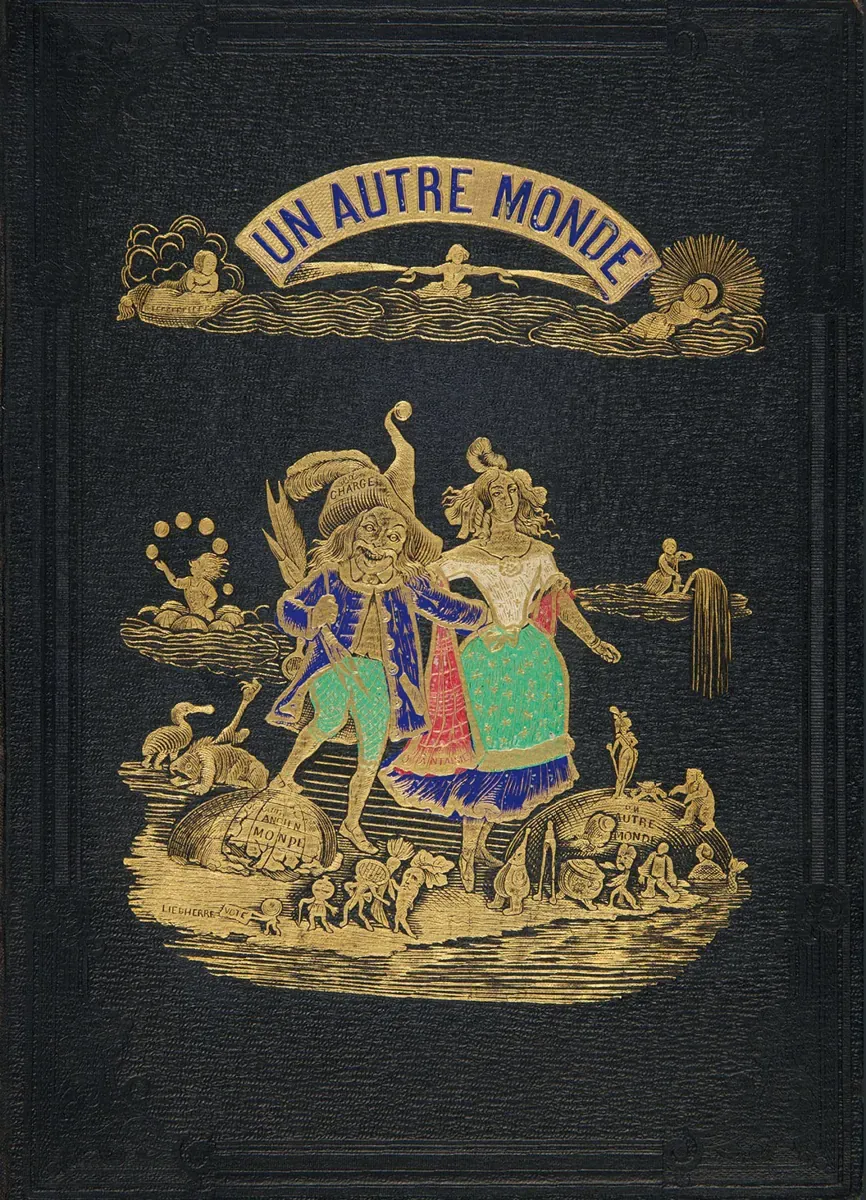
J. J. Grandville, Un autre monde (Another World), illustration, 1844. Book illustration. Image: Wikimedia Commons, public domain.
J. J. Grandville, Un autre monde (Another World), 1844. With a text by Taxile Delord. Grandville’s world of living objects and hybrid creatures was admired by Breton.
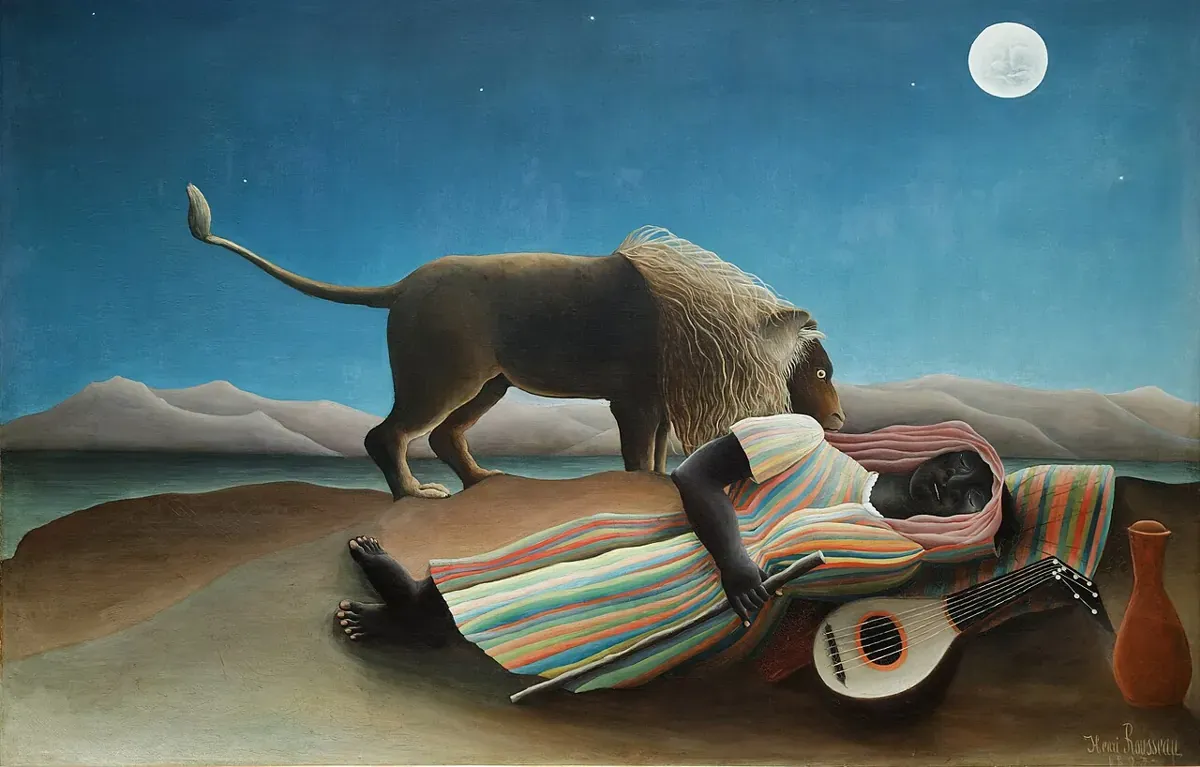
Henri Rousseau, The Sleeping Gypsy, 1897. Museum of Modern Art, New York. Image: Wikimedia Commons, public domain.
Henri Rousseau, The Sleeping Gypsy, 1897. At the Museum of Modern Art. A dream-like calm: the lion does not attack. Rediscovered in the 1920s, it was praised by the poet Jean Cocteau and loved by the Surrealists.
Surrealism grew out of Dada, took dream images from Symbolism and older visionaries of Romanticism and Mannerism, and fed into Abstract Expressionism through automatic drawing.
Try this
Play an exquisite corpse with a friend. Fold a paper into three. One draws a head, folds it over, the next draws a body, the last draws legs. Unfold it. What creature did you summon together?
What next
Before this: Dada.
After this: Abstract Expressionism.
See every movement in order on the art movements timeline, or learn to look step by step in the free Art History for Beginners course.
If you want to carry this into tarot and practice, these pages connect to it: The Moon, dreams and the unconscious; The Magician, the artist as alchemist and magician; Carrington, Varo and the occult; and Seeing images in random shapes, a Surrealist game too.
Sources
- André Breton, Manifesto of Surrealism (Manifeste du surréalisme) (1924).
- André Breton, Arcane 17 (1945).
- Cecilia Alemani (curator), La Biennale di Venezia, The Milk of Dreams: Biennale Arte 2022 (2022).
- Susan Aberth and Tere Arcq, Fulgur Press, The Tarot of Leonora Carrington (2020).
- Nadia Choucha, Surrealism and the Occult (1991).
- E. H. Gombrich, The Story of Art (1950).
- Wikimedia Commons, The Eye Like a Strange Balloon Mounts toward Infinity (a precursor of Surrealism) (hero image record). Open the record
- Whitney Chadwick, Women Artists and the Surrealist Movement (1985).

Questions
What did the Surrealists want?
To free the mind from logic and habit, and to reach what André Breton called a higher reality where dream and waking life meet. They used automatic writing, chance games and dreams to get there.
Were the Surrealists interested in tarot?
Yes. Breton named his 1945 book Arcane 17 after the Star card, the group designed its own card game in Marseille in 1941, and Leonora Carrington painted her own Major Arcana.
Where can I see works of Surrealism in person?
Good places to start are Paris (the Centre Pompidou), Mexico City (the Museo de Arte Moderno), New York (MoMA), Brussels (the Magritte Museum), and Venice (the Peggy Guggenheim Collection). Museums change their displays, so check the collection page before you travel.
Who are the main Surrealist artists?
Max Ernst, Salvador Dalí, René Magritte, Joan Miró, Yves Tanguy, André Masson, Leonora Carrington, Remedios Varo, Dorothea Tanning, Leonor Fini and Meret Oppenheim.
What is automatism in Surrealism?
Automatism is drawing, writing or painting quickly without conscious control, to let the unconscious appear. Breton defined Surrealism itself as "psychic automatism in its pure state" in the 1924 manifesto.
Get the free Mini-Grimoire
A short printable starter guide to tarot and everyday witchcraft, plus my newsletter. Unsubscribe any time.
Opens Substack in a new tab to confirm. More about the newsletter · Privacy