


How to read the labels Historical what the old sources say. Later tradition what later writers added. Modern modern practice and my own notes.
Baroque is the dramatic, emotional style of European art from about 1600 to the 1720s. It began in Rome, where Caravaggio and Gian Lorenzo Bernini worked for the Catholic Church, and spread to Spain, Flanders and beyond. Baroque paintings use strong light and shadow, movement and theatrical moments to pull the viewer into the scene.
Baroque art wants to move you. It wants you to feel a martyr’s agony, a mystic’s ecstasy, a king’s power.
The name probably comes from the Portuguese barroco, an irregular pearl, and, like “Gothic”, it began as an insult.
Key dates
| When | What happened |
|---|---|
| 1563 | The Council of Trent asks for clear, moving religious images. |
| About 1599 to 1600 | Caravaggio paints the Calling of Saint Matthew. |
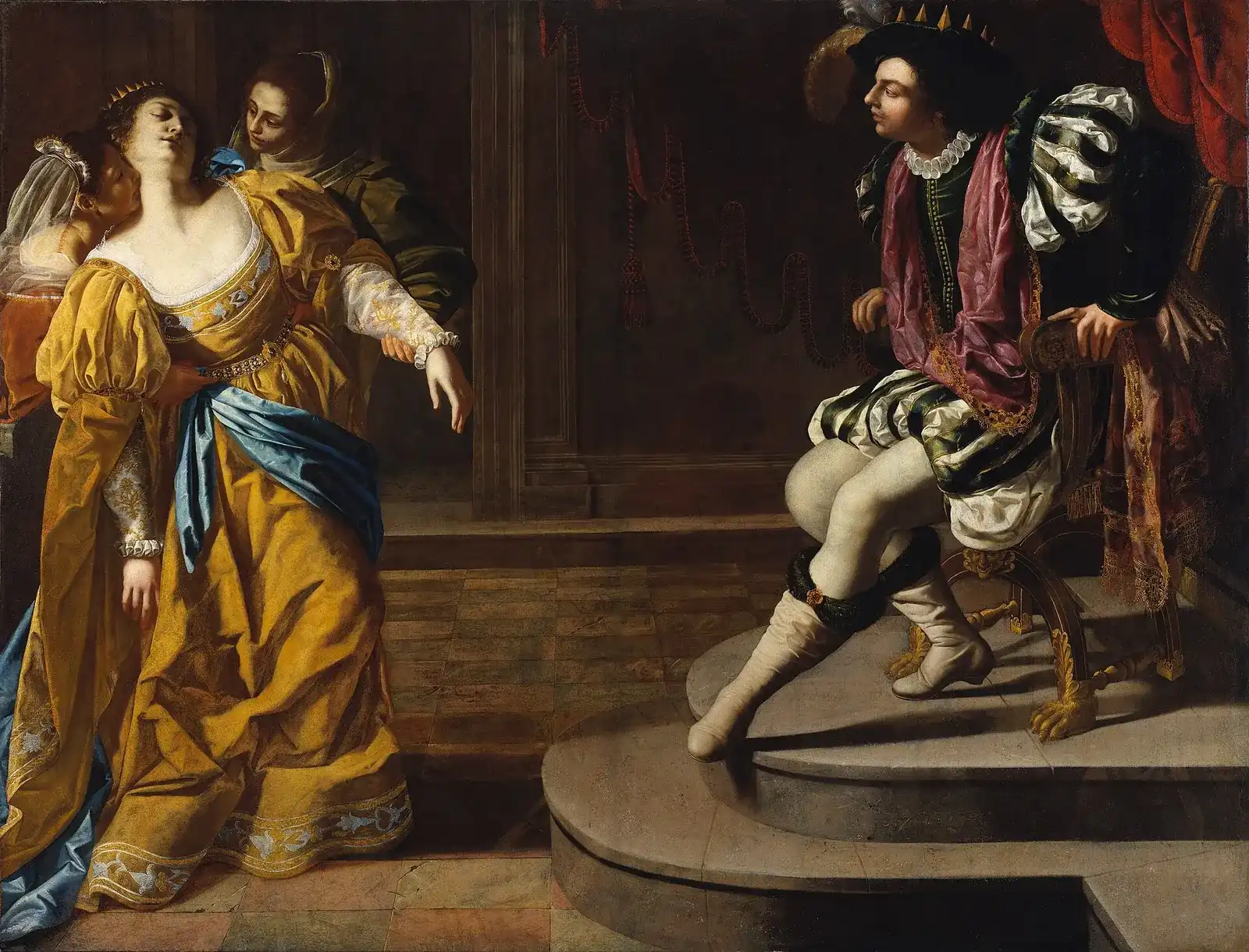
| About 1628 to 1635 | Artemisia Gentileschi paints Esther before Ahasuerus. |
| 1647 to 1652 | Bernini makes the Ecstasy of Saint Teresa. |
| 1656 | Velázquez paints Las Meninas. |
What is Baroque?
Baroque is the art of the 17th century that aims to move the viewer, through drama, light, rich colour and a sense of being inside the event.
Throughout this page I mark three layers. Historical What the works and records show. Later tradition The legends about the artists. Modern How we read them now.
Historical Images on trial. After Martin Luther’s protest in 1517, some Protestant reformers smashed or whitewashed church images as idolatry. The Catholic Church answered at the Council of Trent. In December 1563 it defended sacred images: they should teach, remind and stir devotion, without anything indecent.
Soon after, Daniele da Volterra was hired to paint draperies over some nudes in Michelangelo’s Last Judgment, and Romans called him “the breeches-maker”. Baroque religious art follows Trent’s program and goes beyond it in emotional power.
Historical Caravaggio’s beam of light. Michelangelo Merisi da Caravaggio (1571 to 1610) painted saints with the faces, dirty feet and rough clothes of ordinary Romans, lit by a single harsh light.
In The Calling of Saint Matthew (1599 to 1600), in San Luigi dei Francesi, a beam falls across tax collectors at a table as Christ points at Matthew, and the light seems to enter from the chapel’s real window.
Caravaggio killed a man in a brawl in 1606, fled Rome and died in 1610, but his followers, the Caravaggisti, carried his style across Europe.
Artemisia Gentileschi. 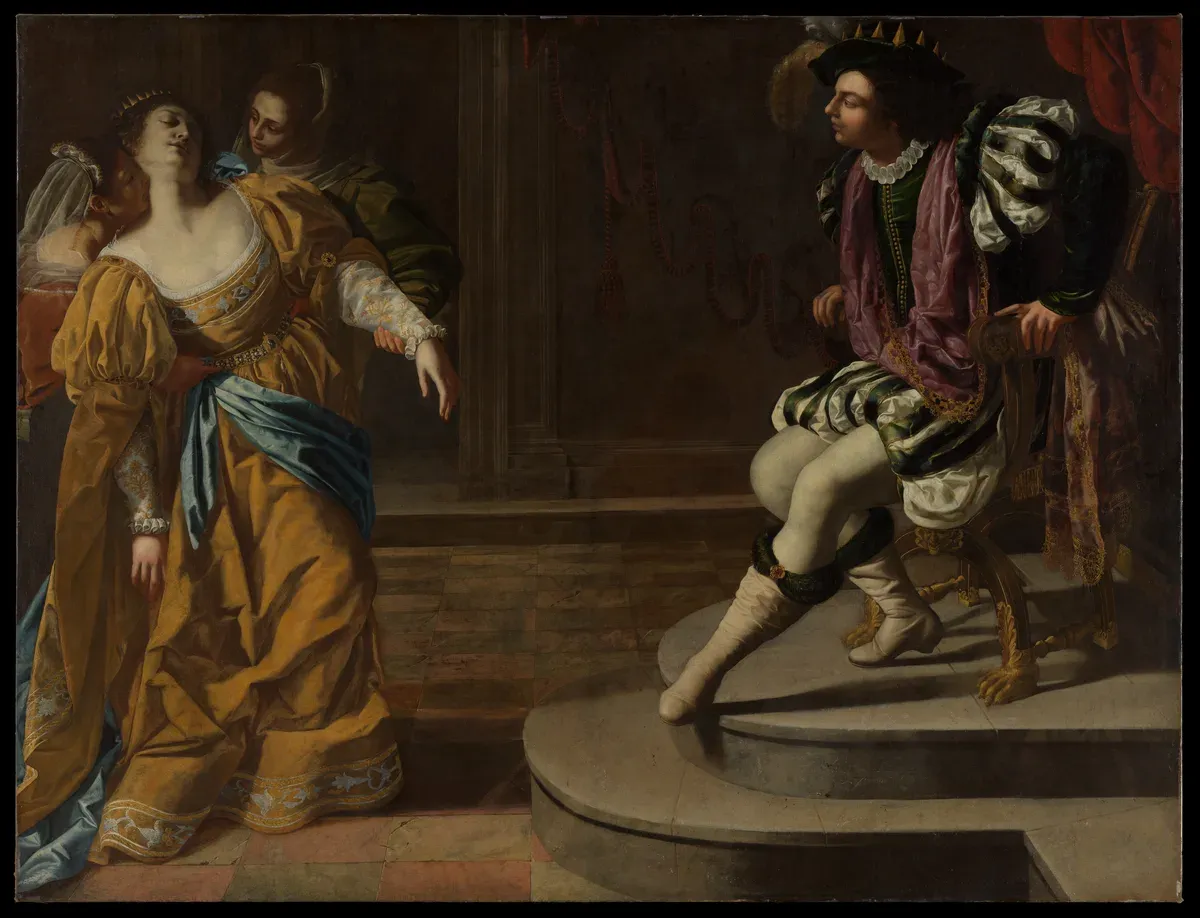
Artemisia Gentileschi, Esther before Ahasuerus, 1620s. The Metropolitan Museum of Art (69.281). Image: Open Access, public domain (CC0).
Historical Artemisia Gentileschi (1593 to after 1654) was trained by her father Orazio. In 1611 she was raped by the painter Agostino Tassi, and the records of the 1612 trial survive.
She went on to a long career in Florence, Rome, Venice, Naples and London, and in 1616 she became one of the first women admitted to Florence’s Accademia delle Arti del Disegno. She painted strong women from the Bible and history.
Here Queen Esther faints as she risks her life to save her people. Scholars warn against reading her work only as revenge; her subjects also reflect what patrons wanted and what she did best.
Historical Bernini’s theater. Gian Lorenzo Bernini (1598 to 1680) shaped Baroque Rome, from the colonnade of Saint Peter’s Square to its fountains. His Ecstasy of Saint Teresa (1647 to 1652), in Santa Maria della Vittoria, carves the vision the Spanish mystic described: an angel pierced her heart with a golden arrow, and the pain and sweetness were both overwhelming.
Hidden windows flood the group with light, and marble members of the Cornaro family watch from side balconies like an audience in a theater.
Velázquez and Juan de Pareja. 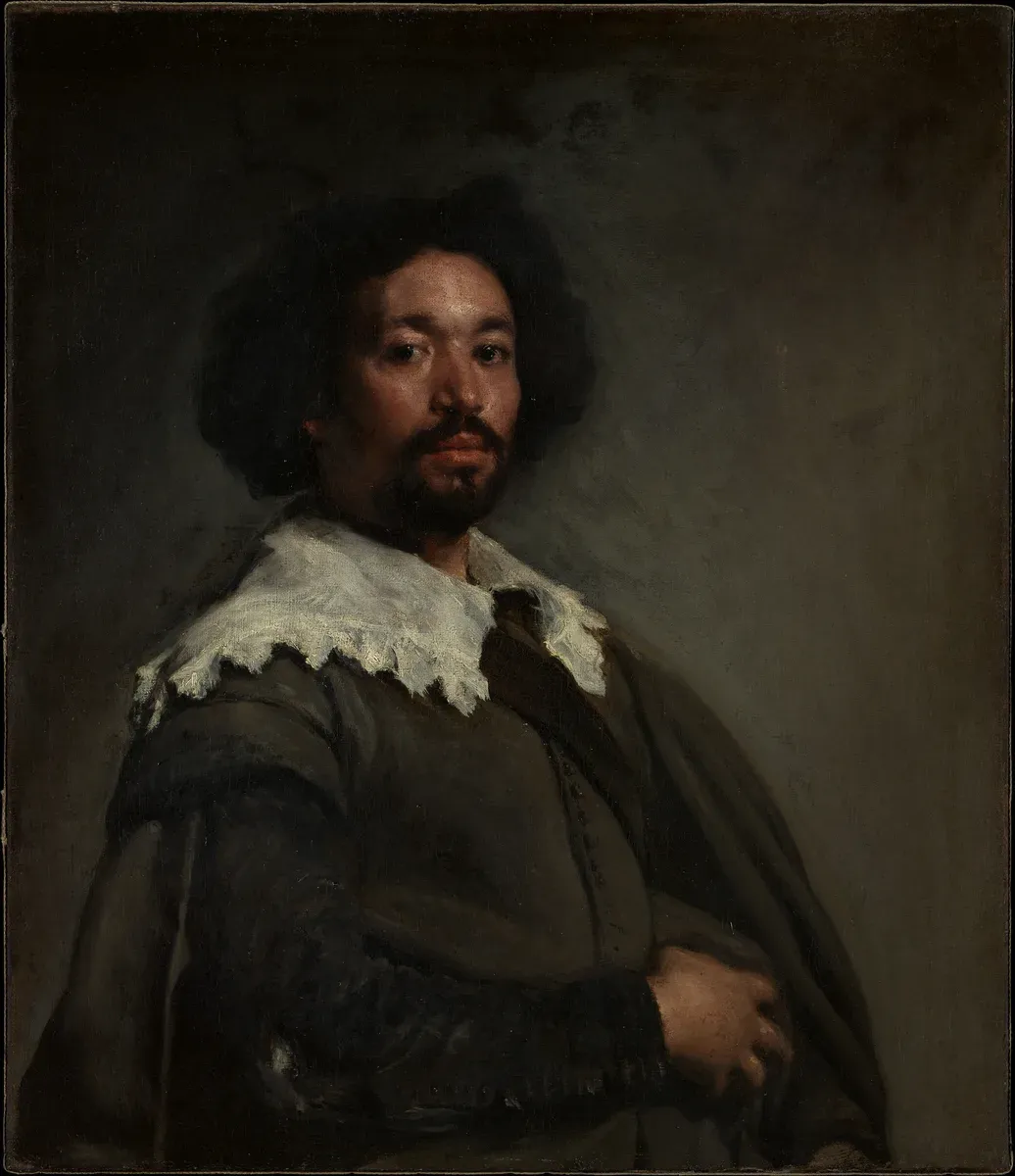
Velázquez, Juan de Pareja (about 1608 to 1670), 1650. The Metropolitan Museum of Art (1971.86). Image: Open Access, public domain (CC0).
Historical Diego Velázquez (1599 to 1660) was court painter to Philip IV of Spain. In Rome in 1650 he painted Juan de Pareja, the man of African descent who was enslaved in his household and worked in his studio.
Velázquez shows him alone, centered and dignified, with a direct gaze. That same year he signed a document freeing Pareja, effective four years later. Pareja became a painter in his own right, and in 2023 the Met held an exhibition of his life and work.
Historical The Baroque in the Americas. In Spanish and Portuguese colonies, churches filled with gilded wood and painted saints, often made by Indigenous and mixed-race artists.
The Cusco school in Peru painted archangels dressed as elegant gentlemen holding muskets. In New Spain, casta paintings labeled families by racial category, a visual record of a colonial system that ranked people by descent.
Key artists
| Artist | Lived | Why they matter |
|---|---|---|
| Caravaggio | 1571 to 1610 | The painter of hard light and real, dirty feet. |
| Artemisia Gentileschi | 1593 to about 1656 | The first woman admitted to the Florentine Academy of Design, a painter of strong heroines. |
| Gian Lorenzo Bernini | 1598 to 1680 | Sculptor and architect who turned churches into theaters. |
| Peter Paul Rubens | 1577 to 1640 | The Flemish painter of energy and color. |
| Diego Velázquez | 1599 to 1660 | The Spanish court painter of Las Meninas and Juan de Pareja. |
How do you recognise Baroque?
Look for drama: strong light against deep shadow, diagonal movement, figures caught at the decisive moment. Painting, sculpture and architecture combine to overwhelm the viewer. Saints are ecstatic, rulers are splendid and the viewer is pulled into the scene.
Common misconceptions. “Baroque” is not one style. Caravaggio’s dark realism, Rubens’s swirling colour and Velázquez’s cool, airy brushwork are all Baroque, yet very different.
Another is that the Baroque was only Catholic propaganda. The Counter-Reformation shaped much Roman art, but Protestant Holland had its own Baroque in the Dutch Golden Age, and portraits, still lifes and landscapes were made for private buyers everywhere. A third is that Artemisia Gentileschi was the only woman painter. Elisabetta Sirani ran a workshop and a school for women painters in Bologna, and the sculptor Luisa Roldán became sculptor to the Spanish king in 1692.
Esoteric themes
Historical Baroque Rome was also home to the Jesuit scholar Athanasius Kircher (1602 to 1680), who wrote huge illustrated books on Egyptian hieroglyphs, magnetism and music, including Oedipus Aegyptiacus (1652 to 1654). His readings of hieroglyphs were wrong, but his engravings of cosmic diagrams fed the European dream of a lost Egyptian wisdom.
Later tradition That dream returned in the 1780s, when a French writer claimed tarot cards were an Egyptian book. I tell that story in the history of tarot.
Modern Saint Teresa’s vision is still a touchstone for anyone who writes about mystical experience.
Works to see
| Work | Artist | Date | Where to see it |
|---|---|---|---|
| Esther before Ahasuerus | Artemisia Gentileschi | about 1628 to 1635 | The Metropolitan Museum of Art, New York |
| Juan de Pareja | Diego Velázquez | 1650 | The Metropolitan Museum of Art, New York |
| The Calling of Saint Matthew | Caravaggio | 1599 to 1600 | San Luigi dei Francesi, Rome |
| Las Meninas | Diego Velázquez | 1656 | Museo del Prado, Madrid |
Every work in this list is free of nudity, so you can look them up with confidence. Works still in copyright are named but not shown here.
How to look at a Baroque painting
Find the light source first, then follow where it falls. Baroque painters used light like a stage director, picking out a face or a hand and leaving the rest in shadow. Next, find the moment: Baroque art loves the split second of change, a conversion, a revelation, a turn of the head.
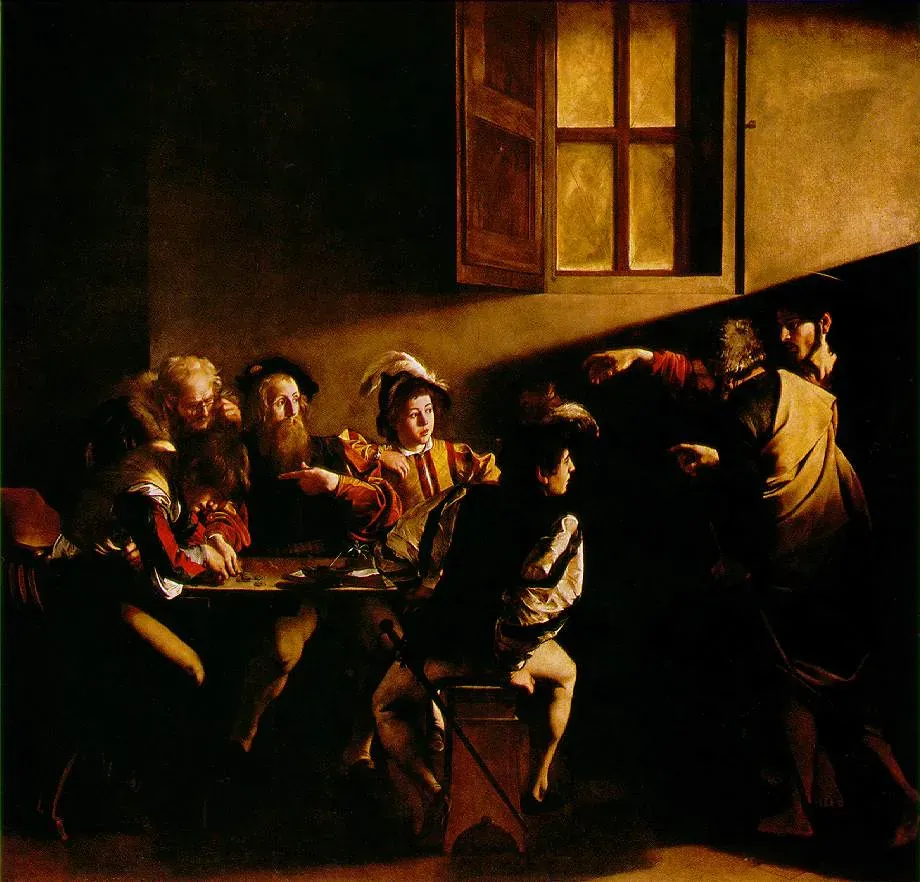
Caravaggio, The Calling of Saint Matthew, 1599 to 1600. San Luigi dei Francesi, Rome. Image: Wikimedia Commons, public domain.
Caravaggio, The Calling of Saint Matthew, 1599 to 1600. Still in the Contarelli Chapel of San Luigi dei Francesi in Rome, where it was made to hang. Follow Christ’s pointing hand, then the beam of light above it, to the men at the table. The tax collector Matthew is about to be changed forever. Scholars still debate which of the men is Matthew.
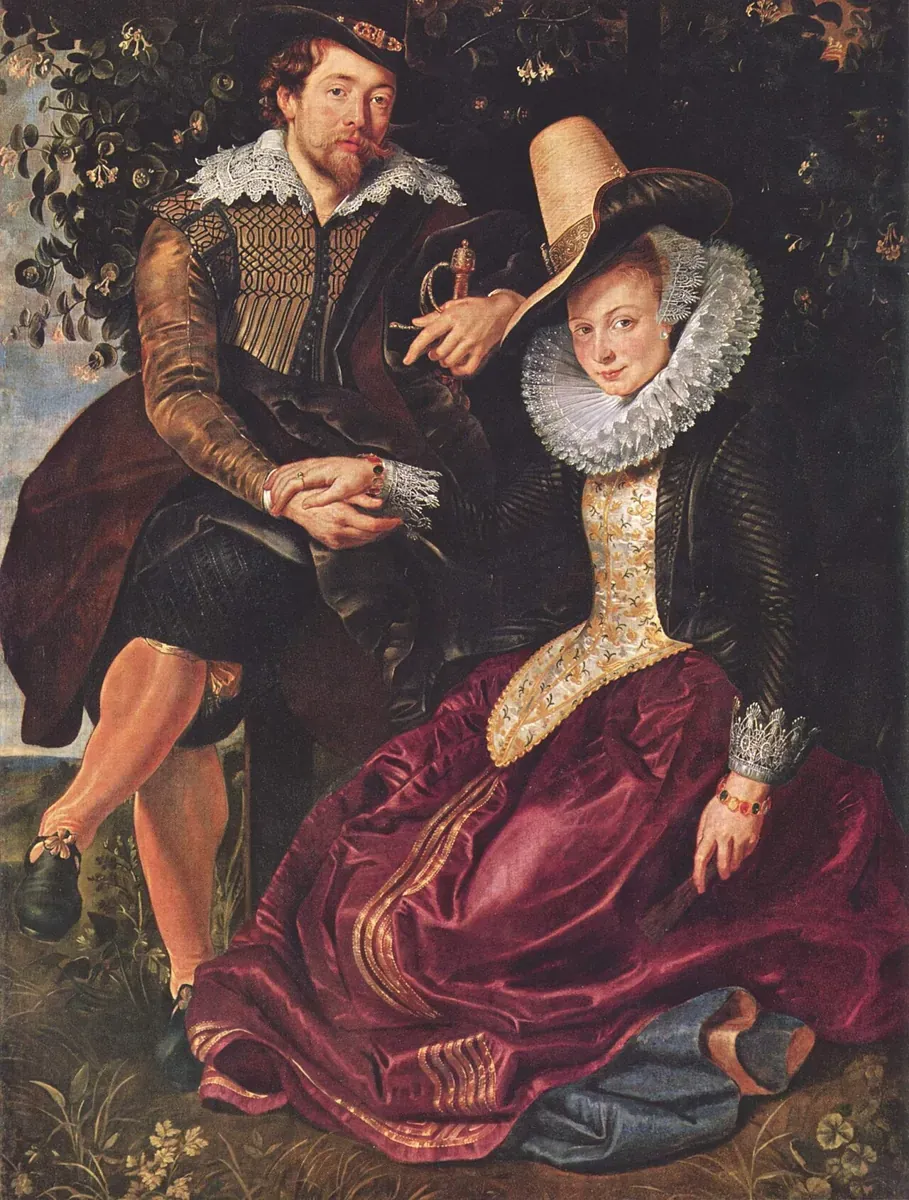
Peter Paul Rubens, The Honeysuckle Bower, about 1609. Alte Pinakothek, Munich. Image: Wikimedia Commons, public domain.
Peter Paul Rubens, The Honeysuckle Bower, about 1609. At the Alte Pinakothek in Munich. Rubens painted himself with his new wife, Isabella Brant, soon after their marriage. Look at their joined right hands, a traditional sign of marriage, and the honeysuckle, a symbol of love and faithfulness.
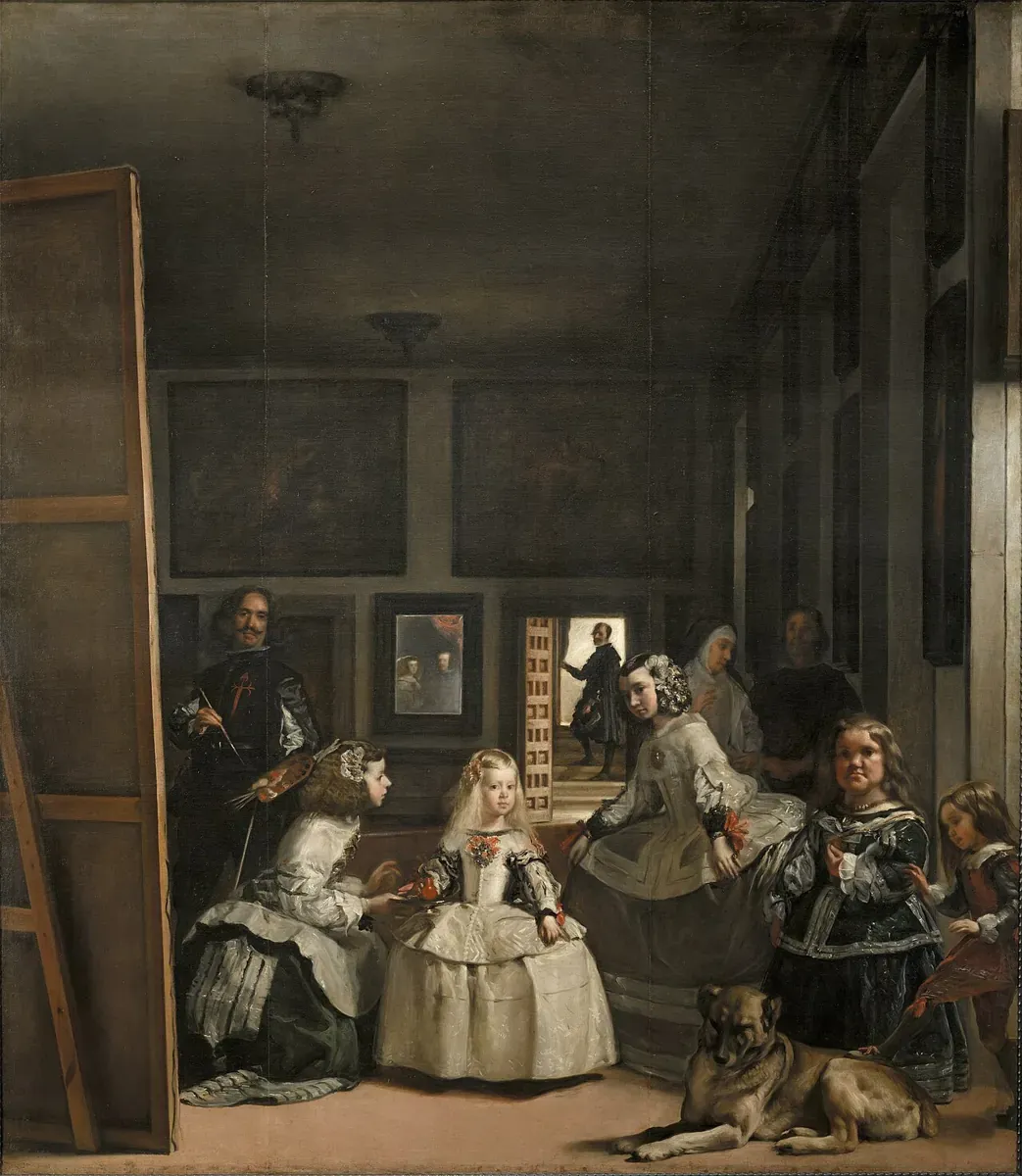
Diego Velázquez, Las Meninas, 1656. Museo del Prado, Madrid. Image: Wikimedia Commons, public domain.
Diego Velázquez, Las Meninas, 1656. At the Prado in Madrid. Start with the princess, Margarita Teresa, then find the painter himself at the left, then the mirror at the back showing the king and queen. Where are they standing? Possibly where you are. Few paintings play so cleverly with who is looking at whom.
Baroque grew out of Mannerism and the High Renaissance, and it softened into Rococo in the 18th century. Its love of darkness and night returns in Romanticism.
Try this
Find a Caravaggio painting in an online collection. Find the brightest point and draw the direction of the light with arrows on a sketch. Which faces are lit, and which hidden? What did the painter want you to see first?
What next
Before this: Mannerism.
After this: Dutch Golden Age.
See every movement in order on the art movements timeline, or learn to look step by step in the free Art History for Beginners course.
If you want to carry this into tarot and practice, these pages connect to it: Queen of Swords, Esther’s courage, clear judgment under pressure; The Tower, the sudden revelation in a beam of light; The age of the witch trials and its images; and How witches were painted in this period.
Sources
- Mary D. Garrard, Artemisia Gentileschi: The Image of the Female Hero in Italian Baroque Art (1989).
- The Metropolitan Museum of Art, Esther before Ahasuerus, 69.281. Open the record
- The Metropolitan Museum of Art, Juan de Pareja, 1971.86. Open the record
- The Metropolitan Museum of Art, Juan de Pareja, Afro-Hispanic Painter (exhibition, 2023). Open the record
- E. H. Gombrich, The Story of Art (1950).
- Wikimedia Commons, Esther before Ahasuerus (hero image record). Open the record
- John Rupert Martin, Baroque (1977).

Questions
Where does the word Baroque come from?
Probably from the Portuguese barroco, an irregular pearl. That origin is likely but not certain. Like Gothic, the name began as criticism, meaning bizarre or overdone.
What is tenebrism?
An extreme form of light and shadow, from the Italian tenebroso, dark. Caravaggio lit figures with one strong beam against deep black shadow.
Where can I see works of Baroque art in person?
Good places to start are Rome, Madrid (the Prado), Naples, Antwerp, Cusco, and the Met. Museums change their displays, so check the collection page before you travel.
What is the difference between Baroque and Renaissance art?
Renaissance art usually aims for balance, calm and clear space. Baroque art aims for drama: diagonal movement, strong contrasts of light and dark and a moment of action.
Who are the most important Baroque artists?
Caravaggio, Artemisia Gentileschi, Gian Lorenzo Bernini, Peter Paul Rubens, Diego Velázquez and Rembrandt are the names most beginners meet first.
Get the free Mini-Grimoire
A short printable starter guide to tarot and everyday witchcraft, plus my newsletter. Unsubscribe any time.
Opens Substack in a new tab to confirm. More about the newsletter · Privacy