


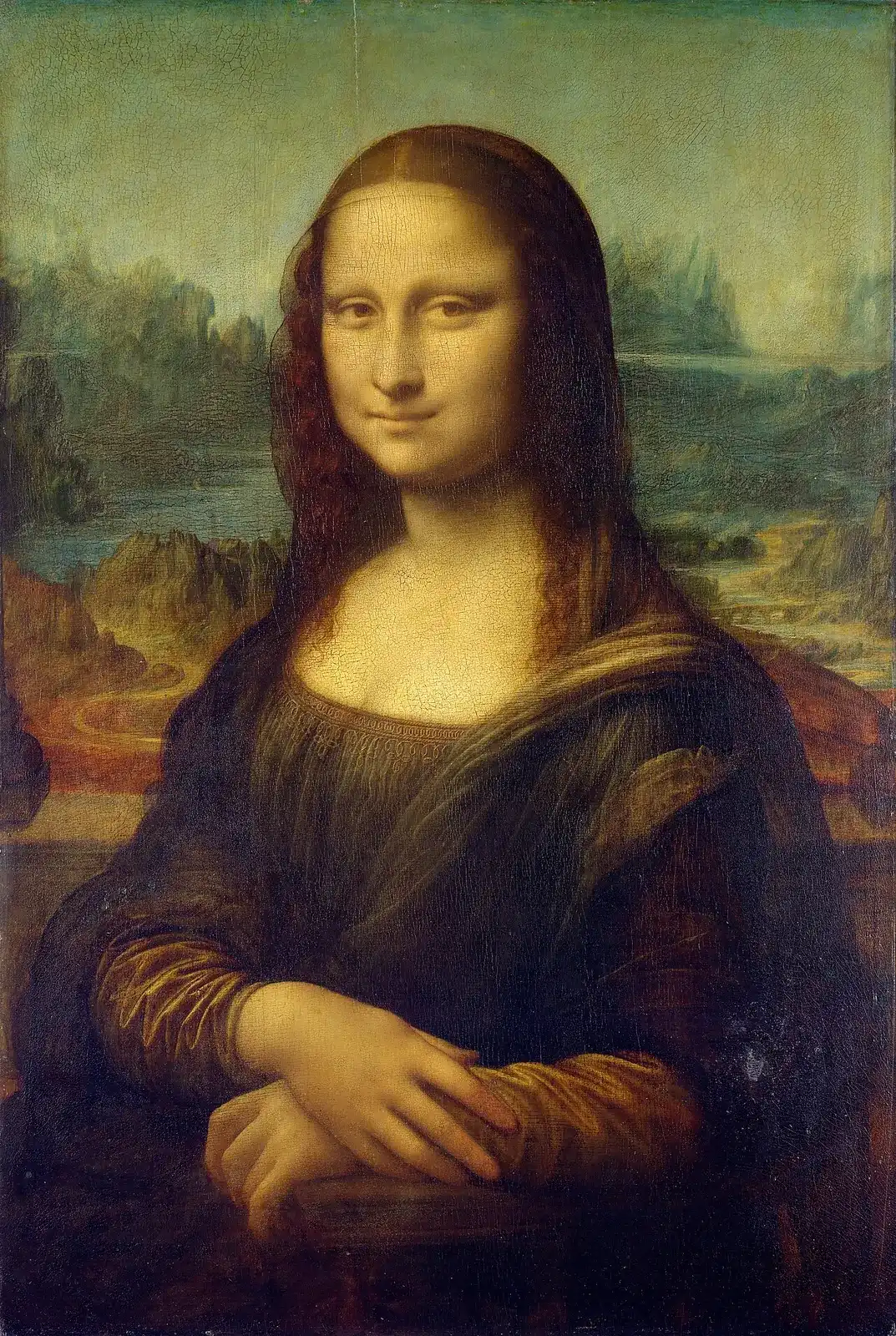
How to read the labels Historical what the old sources say. Later tradition what later writers added. Modern modern practice and my own notes.
The High Renaissance is the short peak of Italian Renaissance art, from about 1490 to the Sack of Rome in 1527, centred on Florence, Rome and Venice. It is the age of Leonardo da Vinci, Michelangelo Buonarroti and Raphael, and in Venice of Giorgione and the young Titian. Its works aim at perfect balance, natural movement and ideal beauty.
For about thirty years a handful of artists seemed to solve every problem their predecessors had set: space, anatomy, light, emotion and harmony. Later centuries treated it as a peak. It is a high point, and also a lot of legend.
Key dates
| When | What happened |
|---|---|
| About 1495 to 1498 | Leonardo paints the Last Supper in Milan. |
| About 1503 | Leonardo begins the Mona Lisa. |
| 1508 to 1512 | Michelangelo paints the Sistine Chapel ceiling. |
| 1509 to 1511 | Raphael paints the School of Athens. |
| 1527 | The Sack of Rome ends the period. |
What is High Renaissance art?
The High Renaissance is the moment when Italian painters and sculptors combined the perspective and anatomy of the 15th century with a new softness, grandeur and harmony.
Throughout this page I mark three layers. Historical What the works and documents show. Later tradition The legends of genius and secret meaning. Modern How we use these images today.
Historical Leonardo: the eye and the smoke. Leonardo da Vinci (1452 to 1519) filled thousands of notebook pages with studies of water, plants, flight and the human body.
His Last Supper in Milan, painted in the 1490s on a dry wall, began to flake within his lifetime, yet it remains the model for how to show a group reacting to a single moment: “One of you will betray me.”
The Mona Lisa, begun around 1503 and worked on for years, portrays Lisa Gherardini, wife of the Florentine merchant Francesco del Giocondo. Leonardo used sfumato, soft smoky transitions without outlines, so the corners of her mouth and eyes stay uncertain.
Much of its fame is modern. It was stolen from the Louvre in 1911 and recovered in 1913, and newspapers around the world made it a celebrity.
Historical Michelangelo: the body as a soul. Michelangelo Buonarroti (1475 to 1564) thought of himself first as a sculptor. His marble David, finished in 1504, became a symbol of the Florentine republic; I describe it in words, since it is a nude.
Between 1508 and 1512 he painted the Sistine Chapel ceiling for Pope Julius II, with the Creation of Adam, prophets and sibyls, and later the Last Judgment on the altar wall. Vasari’s Lives of 1550 and 1568 made him the hero of the whole Renaissance story.
Historical Raphael: harmony. Raphael (1483 to 1520) painted the School of Athens in the Vatican, about 1509 to 1511, where Plato and Aristotle walk together under a vast vault among the philosophers of antiquity. Plato points up to the world of ideas and Aristotle holds his hand level to this one.
It is the clearest picture ever made of what the Renaissance wanted: ancient wisdom in a perfect, ordered space. Raphael died in 1520, only 37 years old, and was buried in the Pantheon in Rome, an ancient temple turned into a church.
Historical Venice and color. Venetian painters worked early in oil on canvas, suited to their damp city, and favored color and light over Florentine drawing. Critics framed it as a debate between colore and disegno.
Giovanni Bellini brought warm light to devotional painting, Giorgione painted mysterious landscapes such as The Tempest, whose subject is still debated, and Titian dominated Venetian painting for sixty years.
Key artists
| Artist | Lived | Why they matter |
|---|---|---|
| Leonardo da Vinci | 1452 to 1519 | Painter, engineer and student of nature, master of soft smoky shading. |
| Michelangelo Buonarroti | 1475 to 1564 | Sculptor, painter and architect of the Sistine ceiling and Saint Peter’s dome. |
| Raphael | 1483 to 1520 | The painter of harmony, balance and serene Madonnas. |
| Giorgione | about 1477 to 1510 | The Venetian painter of mysterious, poetic landscapes. |
| Titian | about 1488 to 1576 | The Venetian master of color. |
How do you recognise High Renaissance art?
Look for balance: triangle compositions, calm faces and perfectly organised space. Leonardo’s sfumato softens edges like smoke. Bodies are heroic and idealised. In Venice, color and light matter more than drawing, and landscapes become moods.
Common misconceptions. One is that the High Renaissance was a long period. Its classic phase lasted only about thirty years; Leonardo died in 1519, Raphael in 1520, and Mannerism was well under way by the 1520s.
Another is that there were no women artists. Properzia de’ Rossi of Bologna, who died in 1530, carved marble reliefs for the church of San Petronio and is the only woman Giorgio Vasari gave her own biography in the first edition of his Lives of the Artists. A third is that these artists worked alone. All the great names ran workshops with assistants, and many works are partly by their hands.
Esoteric themes
Historical Raphael’s School of Athens and the Sistine sibyls show how much the period honored ancient pagan wisdom alongside Christianity. The Sibyls, prophetesses of the ancient world, were believed to have foretold Christ.
Later tradition The novel The Da Vinci Code (2003) spread the idea that Leonardo hid secrets about a society called the Priory of Sion. The novel is fiction, and the Priory documents were a hoax created in the 1950s and 1960s.
Modern People still love Leonardo as a symbol of curiosity. That is a good use of him, and needs no secret code.
Works to see
| Work | Artist | Date | Where to see it |
|---|---|---|---|
| Mona Lisa | Leonardo da Vinci | about 1503 to 1519 | Musée du Louvre, Paris |
| The School of Athens | Raphael | 1509 to 1511 | Vatican Palace, Rome |
| The Tempest | Giorgione | about 1505 | Gallerie dell’Accademia, Venice |
| Doge Andrea Gritti | Titian | about 1546 to 1550 | National Gallery of Art, Washington |
Every work in this list is free of nudity, so you can look them up with confidence. Works still in copyright are named but not shown here.
How to look at a High Renaissance portrait
Look at the pose first. High Renaissance portraits often turn the body one way and the head another, which makes the sitter seem alive. Then look at the edges of faces and hands: instead of hard outlines, there are soft transitions, the sfumato Leonardo made famous. Finally, look at the eyes, which often meet yours.
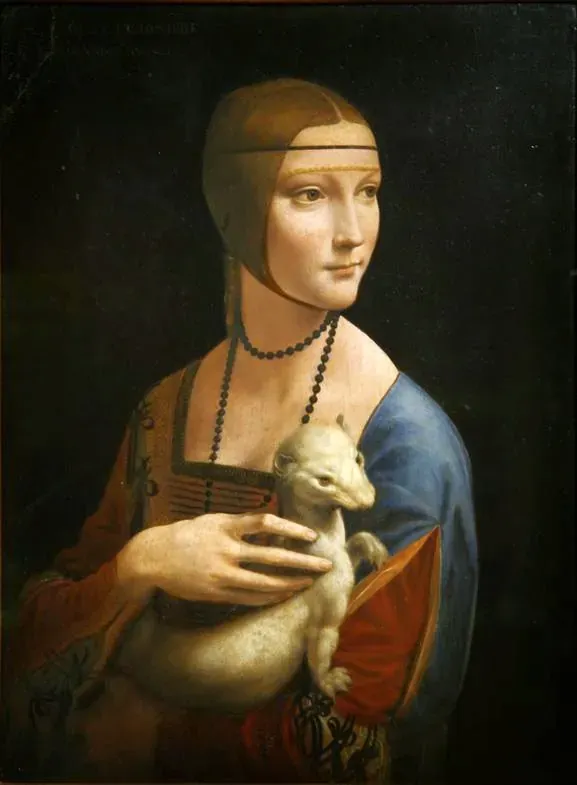
Leonardo da Vinci, Lady with an Ermine, about 1489 to 1491. Czartoryski Museum, Kraków. Image: Wikimedia Commons, public domain.
Leonardo da Vinci, Lady with an Ermine, about 1489 to 1491. At the Czartoryski Museum in Kraków. The sitter is usually identified as Cecilia Gallerani, a young woman at the Milan court. Look at how she and the animal turn together toward something outside the picture. The ermine is a symbol of purity and a pun on her name, from the Greek galê.
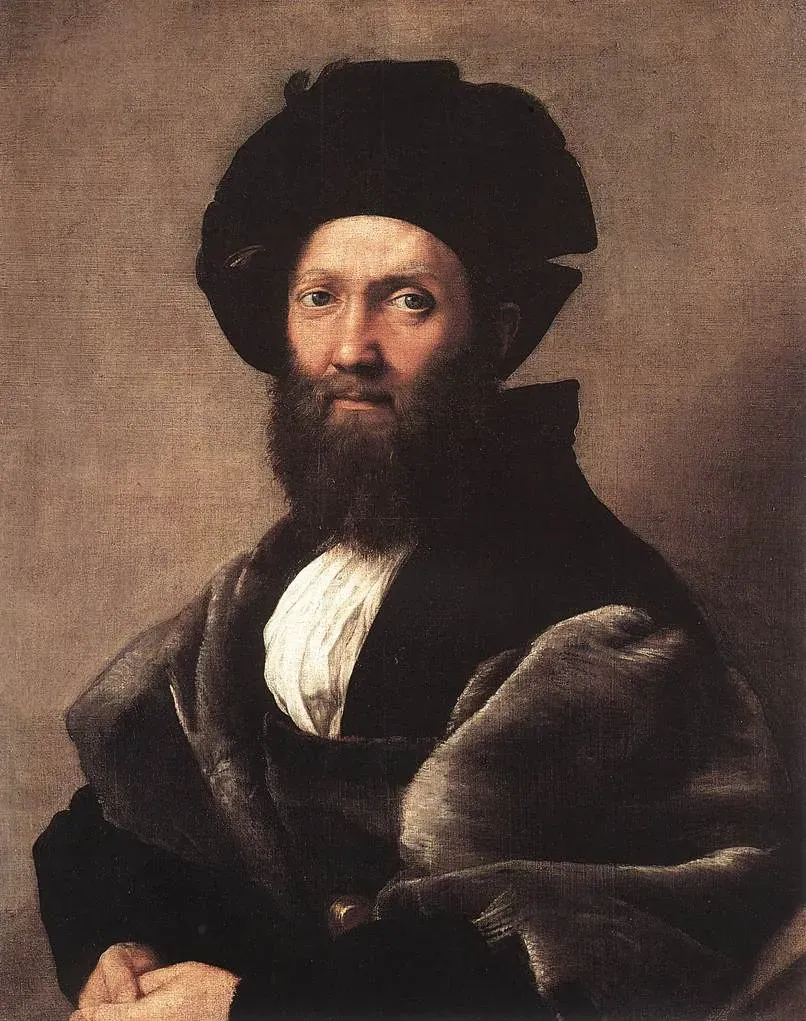
Raphael, Portrait of Baldassare Castiglione, about 1514 to 1515. Musée du Louvre, Paris. Image: Wikimedia Commons, public domain.
Raphael, Baldassare Castiglione, about 1514 to 1515. At the Louvre. Castiglione wrote The Book of the Courtier, a guide to graceful behaviour. Raphael paints him in a narrow range of greys, blacks and creams, and the calm blue eyes do all the talking.
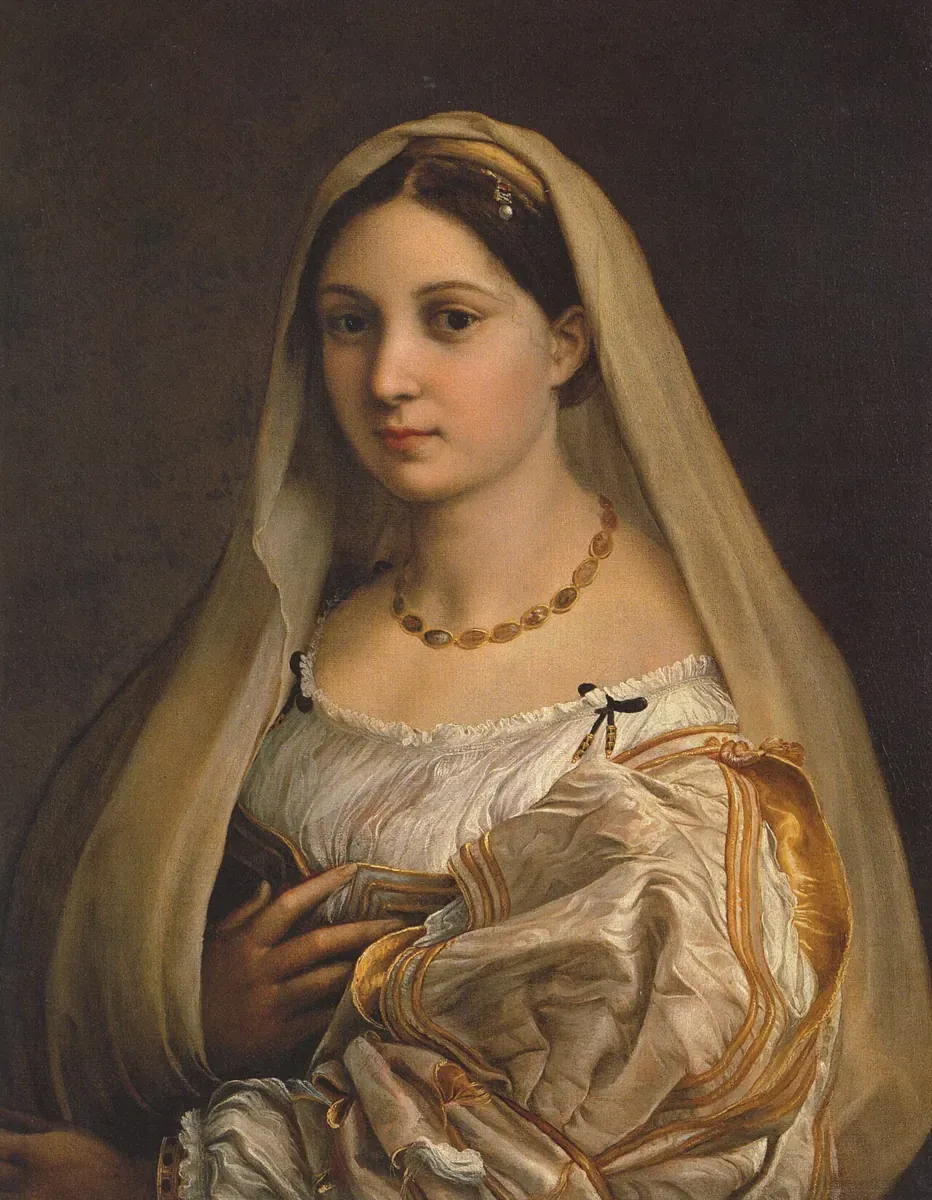
Raphael, La Velata (Woman with a Veil), about 1512 to 1515. Palazzo Pitti, Florence. Image: Wikimedia Commons, public domain.
Raphael, La Velata, about 1512 to 1515. At the Palazzo Pitti in Florence. Look at the sleeve: a storm of white and gold silk, painted with quick, confident strokes. The sitter’s identity is uncertain.
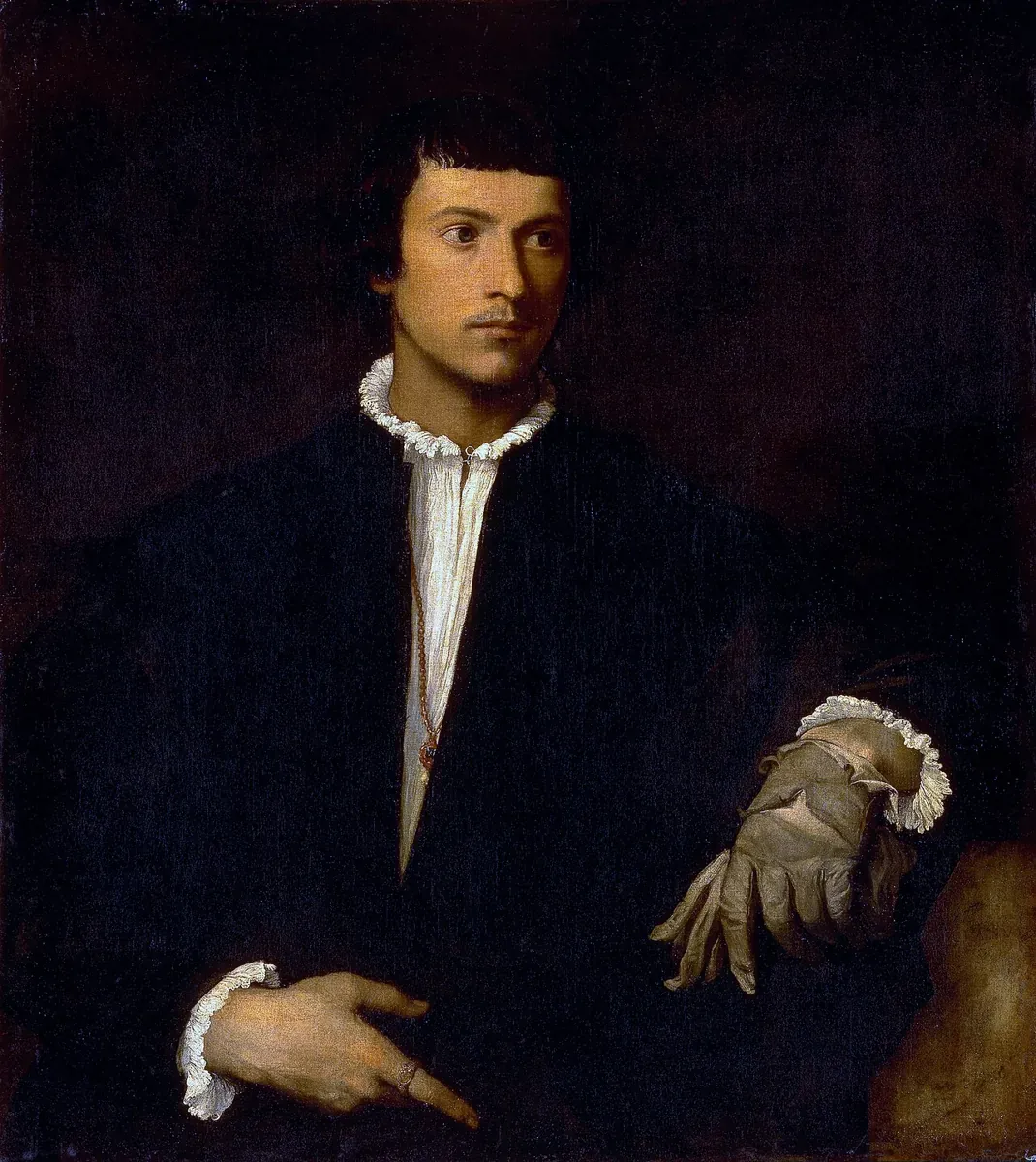
Titian, Man with a Glove, about 1520. Musée du Louvre, Paris. Image: Wikimedia Commons, public domain.
Titian, Man with a Glove, about 1520. At the Louvre. The Venetian answer to Florence: no hard line anywhere, just deep colour and light that seems to come from inside the paint.
The High Renaissance grew from the Early Renaissance, was answered in the north by the Northern Renaissance, and was followed by Mannerism and the Baroque. Its ideal of harmony was revived by Neoclassicism.
Try this
Find an image of Leonardo’s Last Supper online. Starting at the left, describe each apostle’s gesture: hands raised, pointing, recoiling. Notice how Leonardo grouped them in threes. Where is the calmest place in the picture?
What next
Before this: Early Renaissance.
After this: Northern Renaissance.
Also worth reading alongside it: Mannerism.
See every movement in order on the art movements timeline, or learn to look step by step in the free Art History for Beginners course.
If you want to carry this into tarot and practice, these pages connect to it: The Hermit, Leonardo’s patient study of nature, the lamp of the searcher; Temperance, balance and blending, the ideal of the period; The philosophers and astrologers behind the art; and Pico della Mirandola and Christian Kabbalah.
Sources
- Giorgio Vasari, trans. Gaston du C. de Vere, Lives of the Most Eminent Painters, Sculptors and Architects (1912).
- Martin Kemp, Leonardo da Vinci: The Marvellous Works of Nature and Man (1981).
- E. H. Gombrich, The Story of Art (1950).
- Musée du Louvre, Mona Lisa. Open the record
- Wikimedia Commons, Mona Lisa (hero image record). Open the record
- Giorgio Vasari, The Lives of the Artists (translated by Julia Conaway Bondanella and Peter Bondanella) (1998).

Questions
What is sfumato?
An Italian word meaning smoky. Leonardo blended tones so softly that there are no hard outlines, especially at the corners of the mouth and eyes, which is one reason the Mona Lisa's expression seems to change.
Did Leonardo hide secret codes in his paintings?
No evidence says so. The idea was spread by the novel The Da Vinci Code (2003), and the Priory of Sion documents it draws on were a hoax created in the 1950s and 1960s.
Where can I see works of High Renaissance art in person?
Good places to start are the Louvre, the Vatican Museums, Florence, Milan, Venice, and the National Gallery in London. Museums change their displays, so check the collection page before you travel.
When was the High Renaissance?
Usually from about 1490 to 1527, the year imperial troops sacked Rome. Venice kept a High Renaissance style for longer, through Titian's career.
Who are the three masters of the High Renaissance?
Leonardo da Vinci, Michelangelo and Raphael. Titian and Giorgione are often added for Venice, and Donato Bramante for architecture.
Get the free Mini-Grimoire
A short printable starter guide to tarot and everyday witchcraft, plus my newsletter. Unsubscribe any time.
Opens Substack in a new tab to confirm. More about the newsletter · Privacy