


How to read the labels Historical what the old sources say. Later tradition what later writers added. Modern modern practice and my own notes.
Romanesque art is the art of western Europe from about 1000 to 1200, made mostly for churches and monasteries along pilgrimage routes in France, Spain, Italy, Germany and England. It is known for massive round-arched churches, carved stone portals such as Vézelay and Autun in Burgundy, bold wall paintings and richly painted manuscripts. The name was coined in the early 19th century because its arches recalled Roman building.
Around the year 1000, Europe’s population, economy and religious devotion all grew. Pilgrims walked hundreds of kilometres to visit the relics of saints, and new churches rose along their roads, a world where saints and monsters share the same stone.
Key dates
| When | What happened |
|---|---|
| About 1000 | A wave of church building spreads across Europe. |
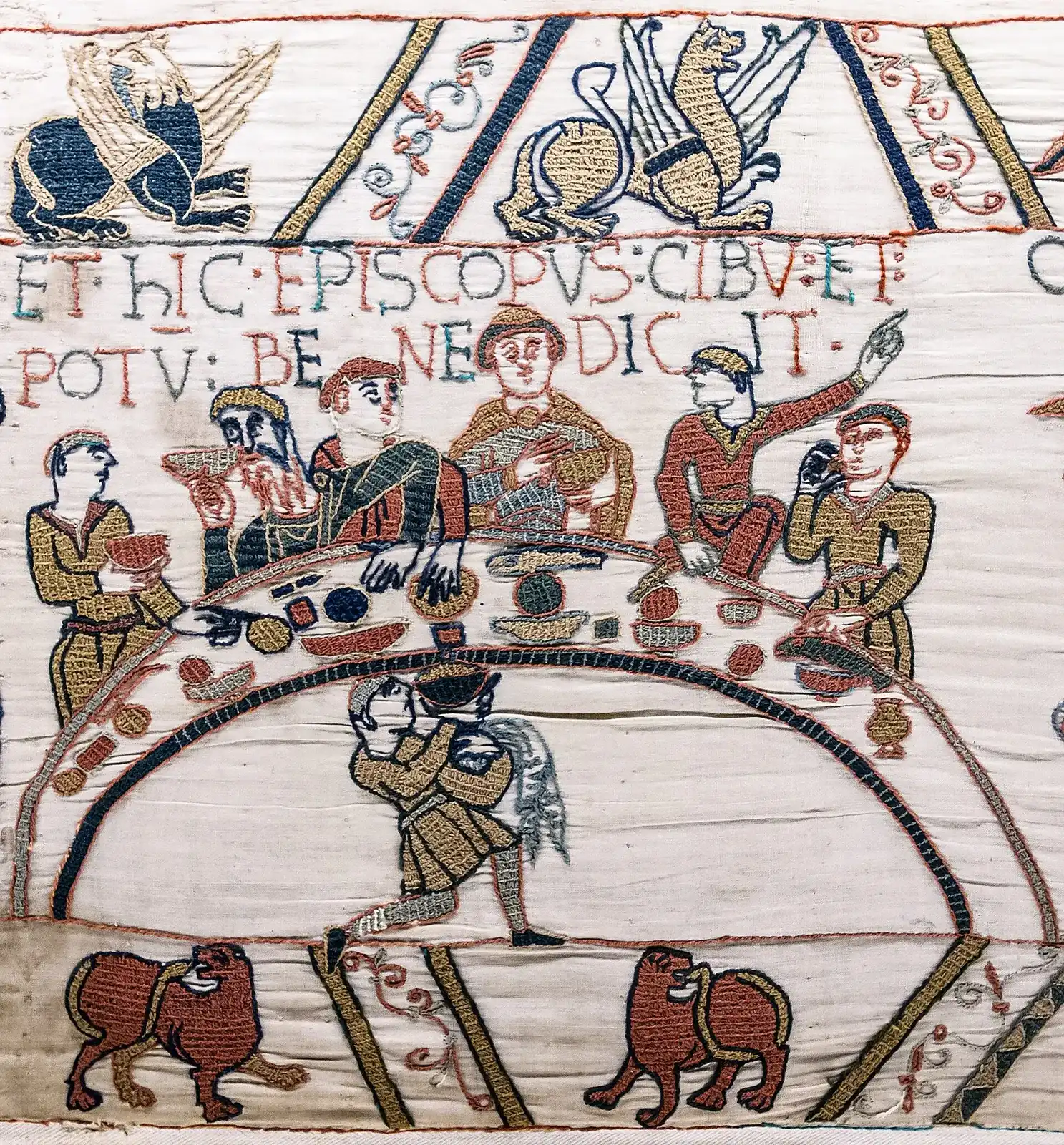
| 1070s | The Bayeux Tapestry is embroidered. |
| 1088 | Work begins on the vast third abbey church at Cluny. |
| About 1120 to 1135 | Gislebertus carves the Last Judgment at Autun. |
| About 1123 | The apse of Sant Climent de Taüll in Catalonia is painted. |
| About 1150 to 1200 | Gothic replaces Romanesque in northern France. |
What is Romanesque art?
Romanesque art is the solid, sculptural church art of Europe’s 11th and 12th centuries, before Gothic, built for monks, pilgrims and relics.
Throughout this page I mark three layers. Historical What buildings, objects and texts of the time show. Later tradition What later centuries read into them. Modern How people use these images today.
Historical Pilgrims and relics. The great pilgrim roads led to Rome, Jerusalem and Santiago de Compostela in Spain. Relics, the bones, clothing or belongings of holy people, were believed to bring healing and blessing.
At the abbey of Sainte-Foy in Conques, in southern France, a gold and jeweled reliquary statue of the child martyr Saint Foy sits enthroned. Its core dates to the late ninth or tenth century, and it held the saint’s skull. Art, relic and devotion were one object.
Historical The church as a picture book. Romanesque portals put a carved tympanum, a half-moon panel, above the door.
At Vézelay, about 1120 to 1132, Christ sends his apostles to preach to all the peoples of the earth, including fantastic races from medieval travel lore: people with huge ears, dog-headed men and tiny people climbing onto horses with ladders. At Autun, the sculptor Gislebertus carved a Last Judgment with long, thin, terrifying demons weighing souls.
Inside, the tops of columns, called capitals, were carved with Bible scenes, lions, griffins and knotted beasts.
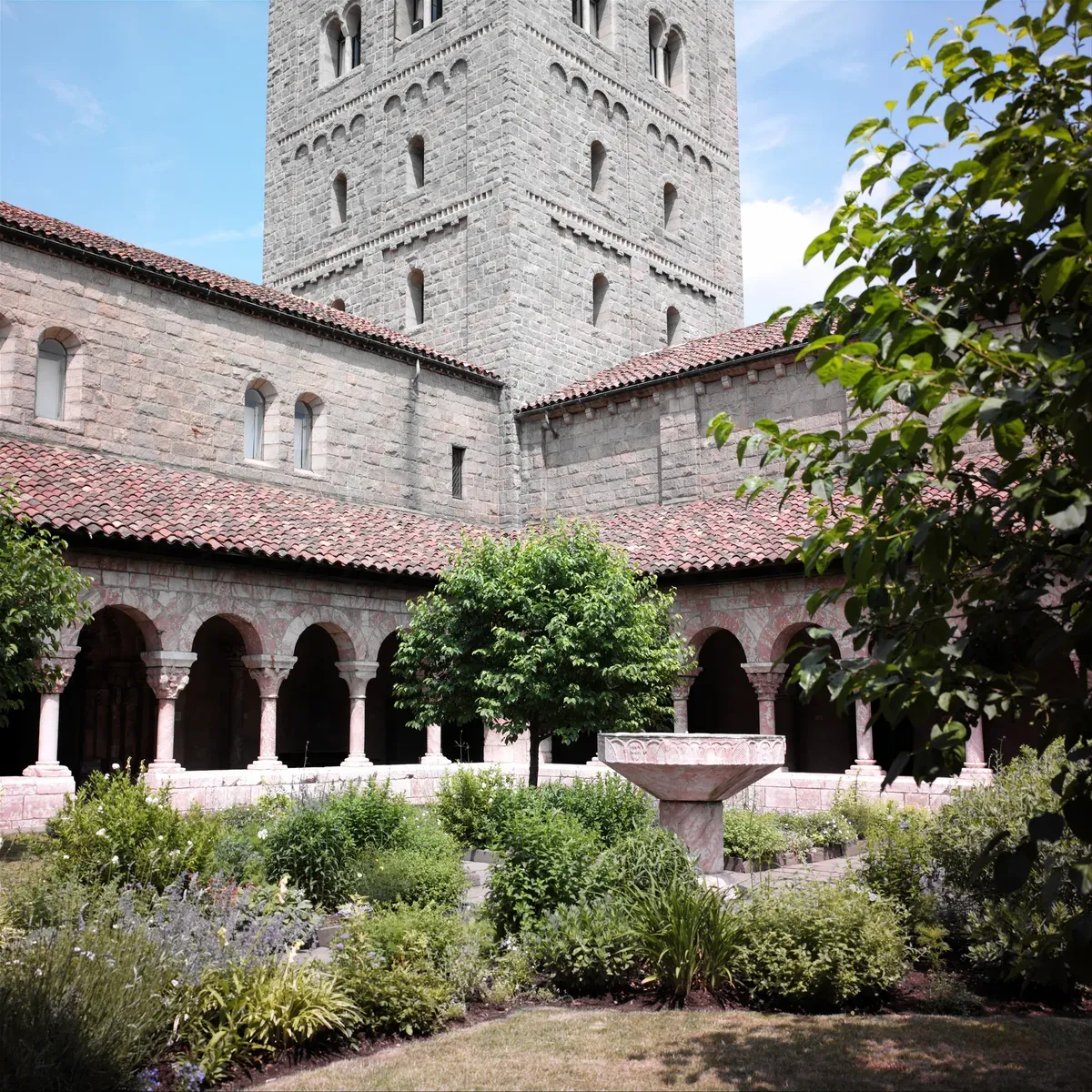
Cuxa Cloister, about 1130 to 1140. The Metropolitan Museum of Art (25.120.398 to .954). Image: Open Access, public domain (CC0).
The Met Cloisters rebuilt parts of the cloister of Saint-Michel-de-Cuxa, in the French Pyrenees, from about 1130 to 1140. Walk around it, even online, and look at each capital: lions with one head and two bodies, monkeys, monsters swallowing people.
Historical Not everyone approved. Around 1125, Bernard of Clairvaux, a leading monk of the strict Cistercian order, complained in a letter about the “ridiculous monstrosities” of cloister capitals, which distracted monks from reading. His complaint is wonderful evidence of how much people enjoyed them.
Painted churches. 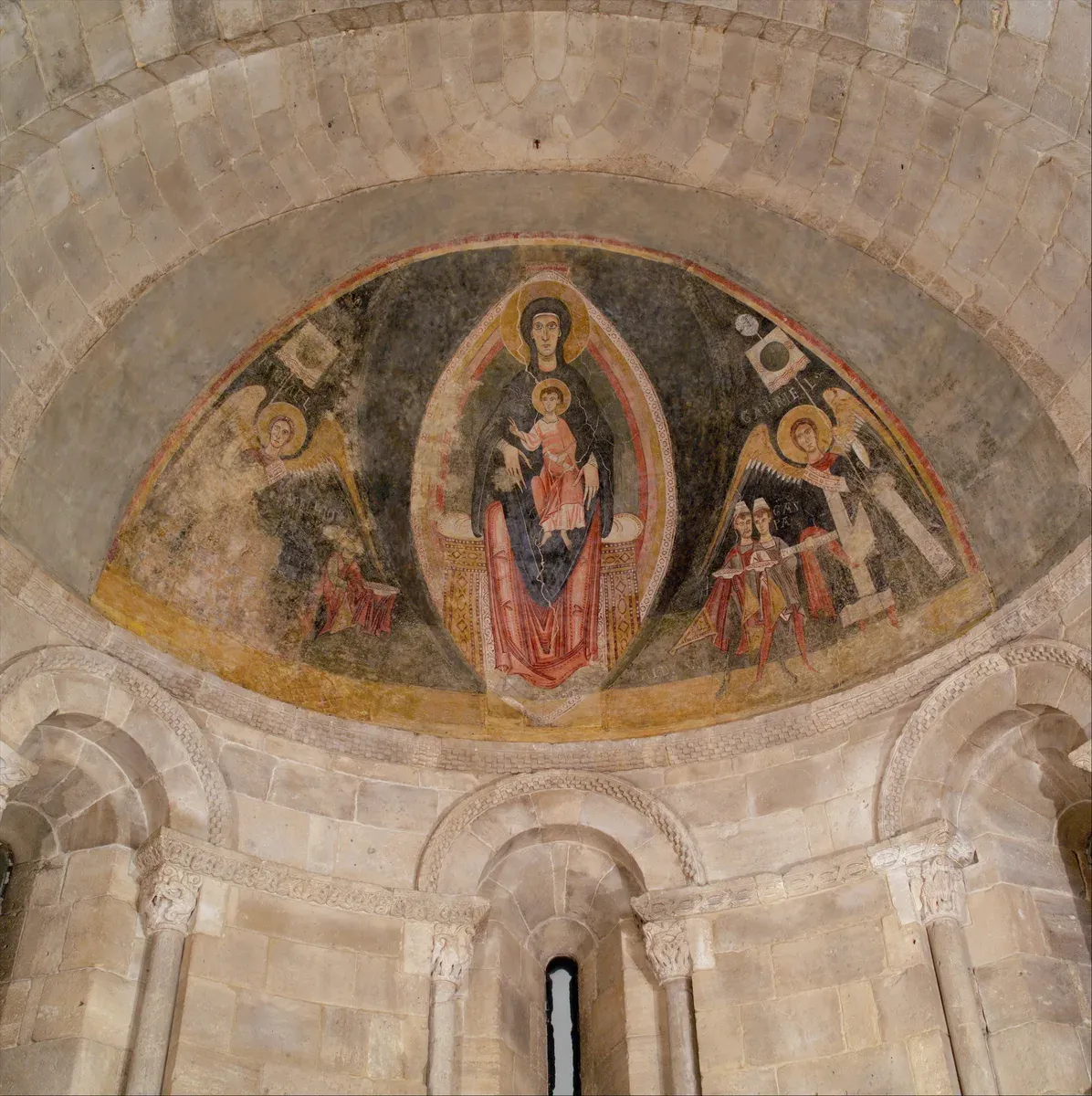
Master of Pedret, The Virgin and Child in Majesty and the Adoration of the Magi, about 1100. The Metropolitan Museum of Art (50.180a-l). Image: Open Access, public domain (CC0).
Historical Romanesque churches were painted from floor to vault. This apse from a church in Catalonia, painted about 1100 by an artist known as the Master of Pedret, shows the Virgin and Child enthroned in an almond-shaped glory, with the Magi bringing gifts.
The bold outlines and flat bands of color were meant to read clearly in dim light, across a whole church.
The Throne of Wisdom. 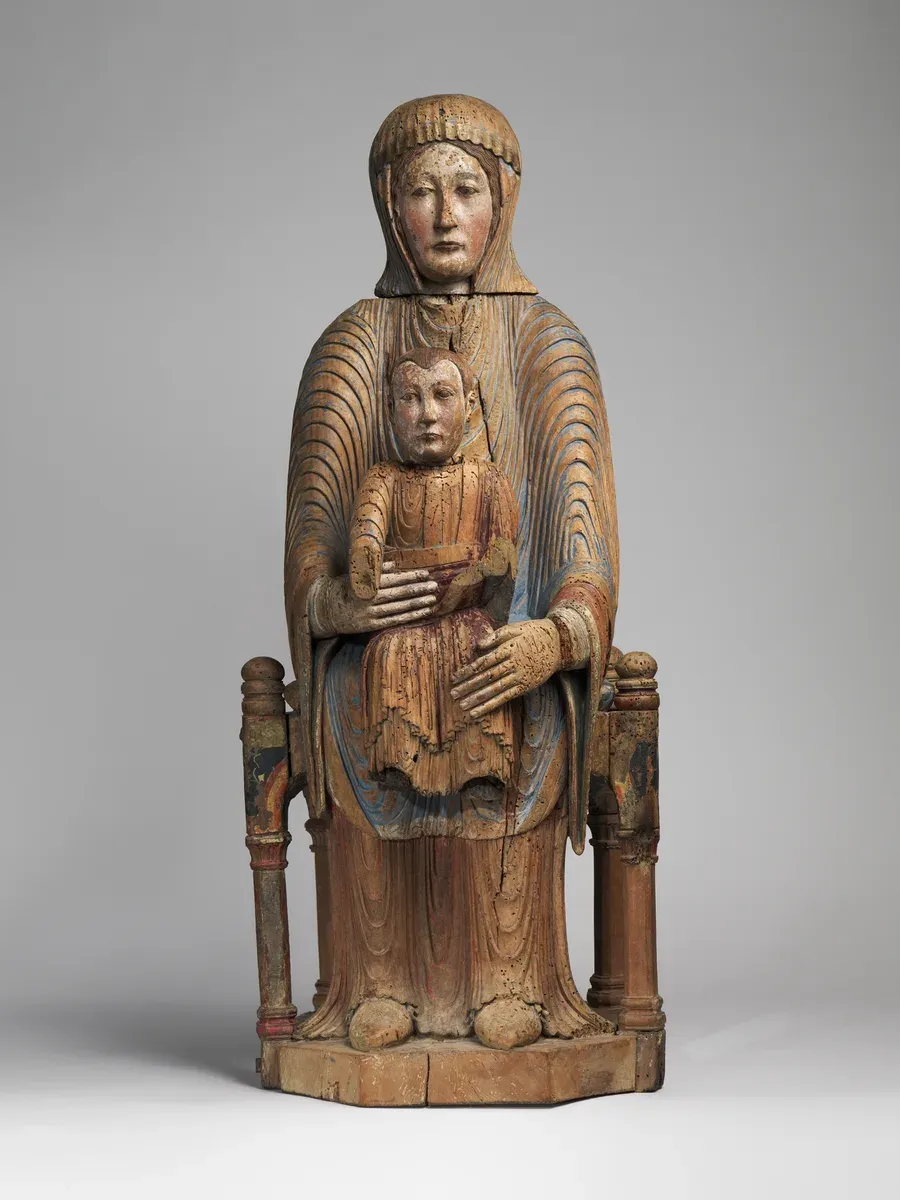
Virgin and Child in Majesty, about 1175 to 1200. The Metropolitan Museum of Art (16.32.194a, b). Image: Open Access, public domain (CC0).
Historical Wooden statues like this one at the Met, from about 1175 to 1200, are called the Sedes Sapientiae, the Throne of Wisdom. Mary sits upright and frontal, and Christ, who embodies divine wisdom, sits on her lap as if she were his throne. Such statues were carried in processions and sometimes held relics.
Historical Telling stories in thread. The so-called Bayeux Tapestry, really an embroidery about 70 meters long made in the decades after 1066, tells the Norman conquest of England like a strip cartoon, with a comet, Halley’s, blazing in the sky as an omen.
Key artists
| Artist | Lived | Why they matter |
|---|---|---|
| Gislebertus | active about 1120 to 1135 | The sculptor who signed the Last Judgment over the door at Autun. |
| Wiligelmo | active about 1100 | The sculptor of the Genesis reliefs on Modena cathedral. |
| Master of Taüll | active about 1123 | The painter of the great Christ in Majesty from Sant Climent. |
| Hildegard of Bingen | 1098 to 1179 | Abbess and visionary whose books of visions were illustrated in her lifetime. |
How do you recognise Romanesque art?
Look for thick walls, round arches and small windows. Doorways are carved with Last Judgments and monsters. Figures are elongated, with patterned folds and large hands. Wall paintings use strong outlines and flat color. Reliquaries and wooden Virgins sit on thrones, facing straight ahead.
Common misconceptions. One is that the period’s people called it Romanesque. The term was invented by antiquarians around 1818 to 1820, including Charles de Gerville in Normandy.
Another is that churches were grey stone inside. Many were painted from floor to vault in strong colour, as surviving walls at Saint-Savin-sur-Gartempe in France and Sant Climent de Taüll, now in Barcelona, still show. A third is that women made nothing. Hildegard of Bingen’s visions were illustrated at her convent of Rupertsberg in the Scivias manuscript of the 12th century, and a nun named Guda signed a self-portrait in a 12th-century German manuscript.
Esoteric themes
Historical Romanesque demons are some of the most vivid in European art. They were teaching images: warnings of judgment, and reminders that evil could be defeated. They are evidence of fear and faith, not portraits of spirits. My Demons course explores where those ideas came from.
Later tradition Nineteenth-century writers sometimes read carved symbols as secret pagan or esoteric codes left by master builders. There is little evidence for that. Many “mysteries” of the cathedrals are modern stories.
Modern Many people love these monsters today for their humor and strangeness. I do too, and I like to remember that medieval viewers laughed at them as well.
Works to see
| Work | Artist | Date | Where to see it |
|---|---|---|---|
| Bayeux Tapestry | Anglo-Saxon embroiderers | about 1070s | Bayeux Museum, Normandy |
| Virgin and Child in Majesty | French, Auvergne | about 1175 to 1200 | The Metropolitan Museum of Art, New York |
| Christ in Majesty from Sant Climent de Taüll | Master of Taüll | about 1123 | Museu Nacional d’Art de Catalunya, Barcelona |
| Last Judgment tympanum | Gislebertus | about 1130 | Autun Cathedral, France |
Every work in this list is free of nudity, so you can look them up with confidence. Works still in copyright are named but not shown here.
How to look at a Romanesque carving
Find the biggest figure first, usually Christ, then work outward to the smaller ones, whose size shows their importance. Notice how bodies bend to fit the frame of an arch or capital, and look for monsters and fables on the edges.
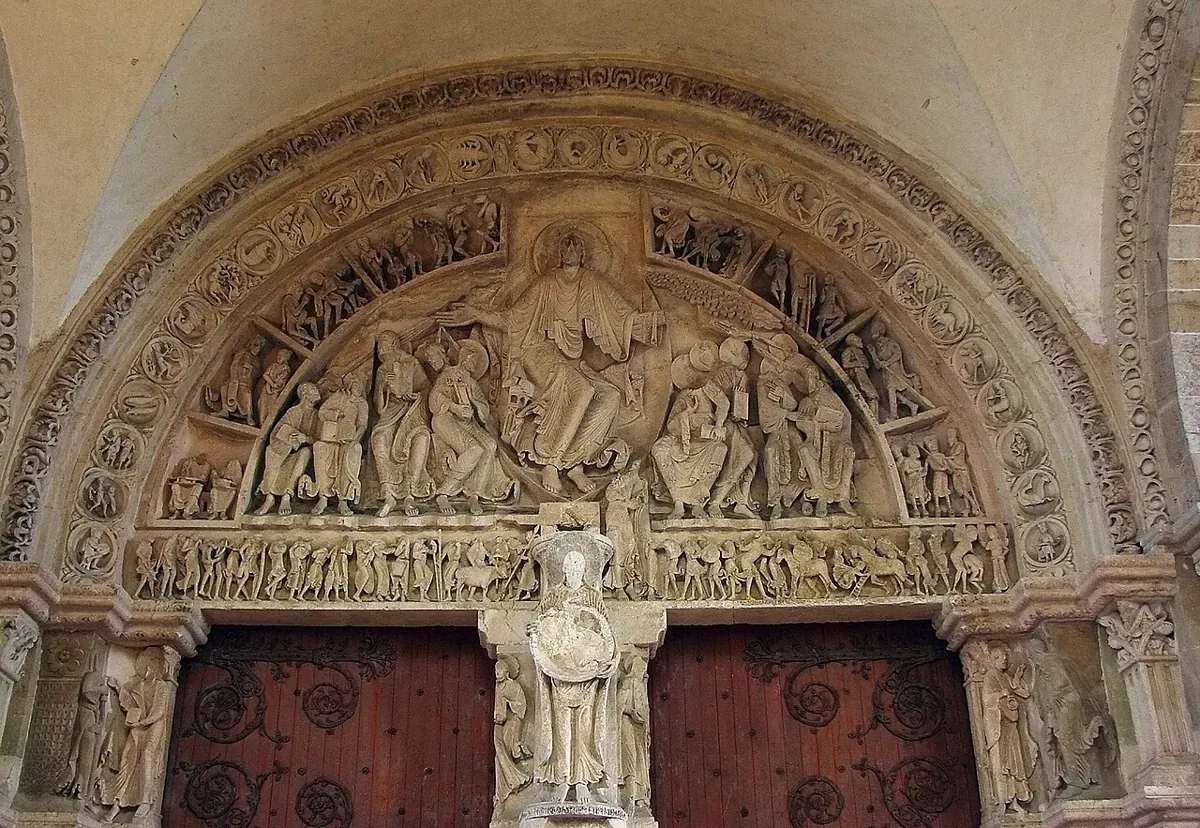
Unknown Romanesque sculptors, Central tympanum of the narthex, Vézelay Abbey, about 1120 to 1132. Vézelay Abbey. Image: Wikimedia Commons, public domain.
Central tympanum of the narthex, Vézelay Abbey, about 1120 to 1132. In Burgundy, France, on the pilgrimage route to Santiago de Compostela. Christ sends rays from his hands to the apostles, giving them their mission. Around him, small scenes show the distant peoples of the world, some of them imagined with dog heads or huge ears, as medieval texts described them.
Romanesque art grew from early medieval art and Byzantine art, shared its painted books with the tradition of illuminated manuscripts, and developed into Gothic from the 1140s.
Try this
Find a good photo of a Romanesque portal, such as Vézelay or Autun. Start at the top and work down. Describe what is in each zone: Christ, angels, the saved, the damned, the monsters. Who is largest? Where does your eye land first? Then imagine it painted in bright color.
What next
Before this: Illuminated manuscripts.
After this: Gothic.
Also worth reading alongside it: Early medieval art.
See every movement in order on the art movements timeline, or learn to look step by step in the free Art History for Beginners course.
If you want to carry this into tarot and practice, these pages connect to it: Judgement, the Last Judgment carved over church doors; The Devil, the grinning demons of Romanesque capitals; The demons and monsters carved on Romanesque churches; and Reading a church as a picture book.
Sources
- Meyer Schapiro (selected papers), Romanesque Art (1977).
- Bernard of Clairvaux, Apologia ad Guillelmum (Apology to Abbot William) (1125).
- The Metropolitan Museum of Art, The Virgin and Child in Majesty and the Adoration of the Magi, 50.180a-l. Open the record
- The Metropolitan Museum of Art, Cuxa Cloister, 25.120.398 to .954. Open the record
- The Metropolitan Museum of Art, Virgin and Child in Majesty, 16.32.194a, b. Open the record
- E. H. Gombrich, The Story of Art (1950).
- Wikimedia Commons, Bayeux Tapestry, the feast with Bishop Odo (hero image record). Open the record
- Meyer Schapiro, Romanesque Art: Selected Papers (1977).

Questions
Why is it called Romanesque?
The name was coined in the nineteenth century for the Roman-like round arches and heavy walls of churches built in Western Europe from about 1000 to 1150. The builders did not use the word.
Why are there monsters on medieval churches?
Capitals and portals mixed Bible stories with fantastic creatures from travel lore and fable. Even then not everyone approved: around 1125 Bernard of Clairvaux complained that such "ridiculous monstrosities" distracted monks from reading.
Where can I see works of Romanesque art in person?
Good places to start are the Met Cloisters in New York, the National Art Museum of Catalonia in Barcelona, and the churches themselves. Museums change their displays, so check the collection page before you travel.
What is the difference between Romanesque and Gothic?
Romanesque churches have round arches, thick walls and small windows. Gothic churches, from the 1140s, have pointed arches, ribbed vaults and flying buttresses that allow huge stained glass windows.
Where can I see Romanesque art?
Vézelay, Autun, Moissac and Conques in France, Santiago de Compostela in Spain, the Museu Nacional d'Art de Catalunya in Barcelona for wall paintings, and the Met Cloisters in New York.
Get the free Mini-Grimoire
A short printable starter guide to tarot and everyday witchcraft, plus my newsletter. Unsubscribe any time.
Opens Substack in a new tab to confirm. More about the newsletter · Privacy