


How to read the labels Historical what the old sources say. Later tradition what later writers added. Modern modern practice and my own notes.
Illuminated manuscripts are handwritten books decorated with gold or silver and painted pictures, made in Europe from late antiquity until printing replaced them in the late 15th and 16th centuries. The most famous include the Book of Kells, made around 800, and the Très Riches Heures of the Duke of Berry, painted by the Limbourg brothers from about 1412. Before panel painting spread, they were where most medieval painting happened.
The word comes from the Latin for “to light up”: laid with real gold, the page seems to glow when you turn it. For a thousand years these books carried prayers, science, stories and spells, and they are still the best way I know to see the medieval mind up close.
Key dates
| When | What happened |
|---|---|
| About 715 to 720 | The Lindisfarne Gospels are made in Northumbria. |
| About 800 | The Book of Kells is made, probably at Iona and Kells. |
| 975 | The nun Ende signs herself as a painter in the Girona Beatus. |
| 1256 | The Arabic magical handbook later called the Picatrix is translated for the court of Alfonso X of Castile. |
| About 1324 to 1328 | Jean Pucelle paints the Hours of Jeanne d’Évreux. |
| About 1411 to 1416 | The Limbourg brothers paint the Très Riches Heures. |
| About 1455 | The Gutenberg Bible is printed; hand illumination slowly gives way to print. |
What is illuminated manuscripts?
An illuminated manuscript is a hand-copied book whose pages are lit up with gold, colour and pictures, from decorated initials and borders to full-page paintings.
Throughout this page I mark three layers. Historical What buildings, objects and texts of the time show. Later tradition What later centuries read into them. Modern How people use these images today.
Historical Skin, ink and stone. A manuscript page is parchment, the scraped and stretched skin of a calf, sheep or goat. The finest calfskin is called vellum. Scribes ruled lines with a stylus, wrote with quill pens and iron gall ink, and left spaces for the painters.
The colors were ground from minerals, plants and insects: vermilion red, green verdigris, yellow orpiment and, most costly of all, ultramarine blue made from lapis lazuli mined in Afghanistan. Gold was laid as thin leaf over a raised cushion of gesso and then burnished until it shone.
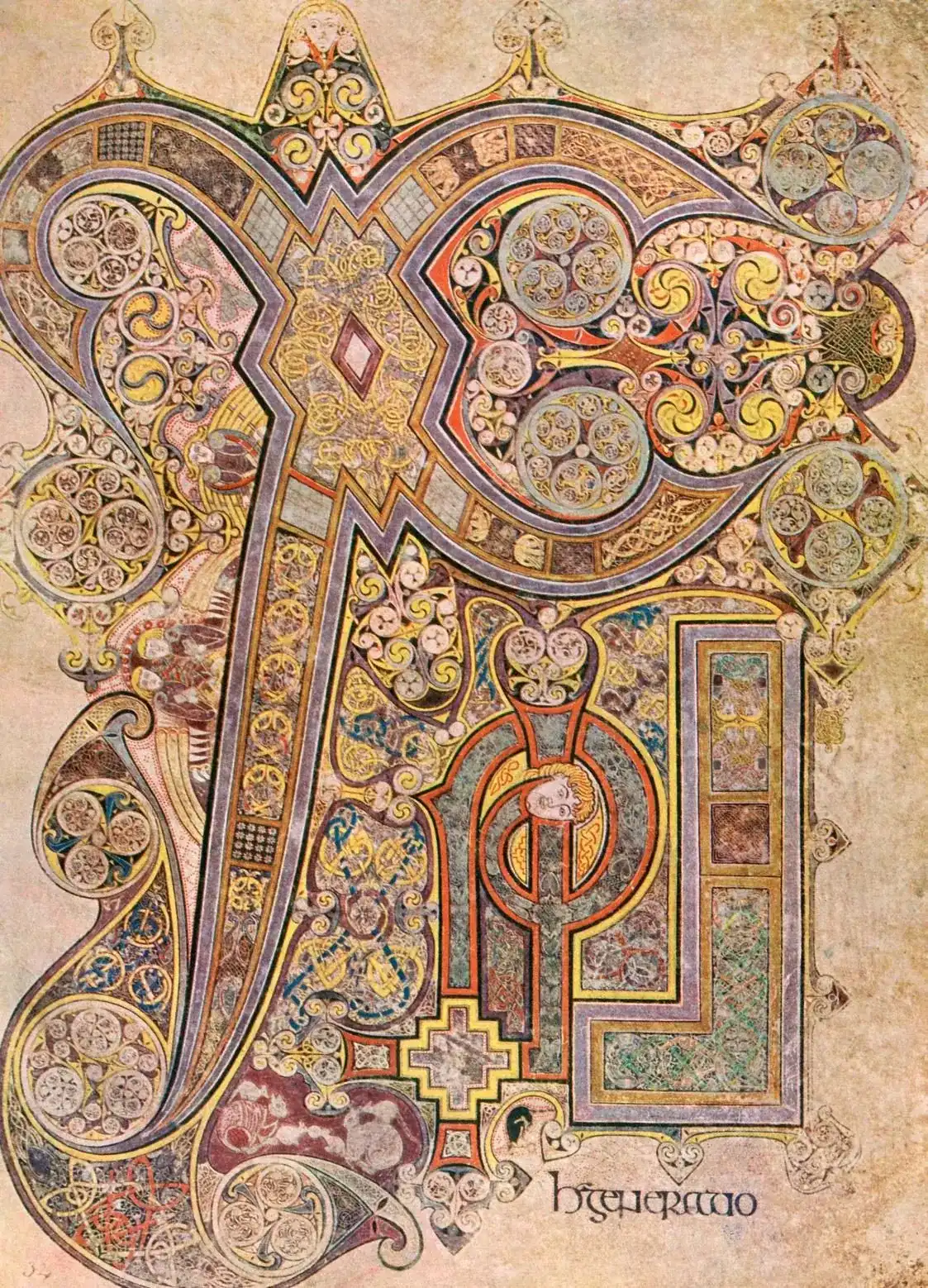
Historical From monastery to market. In the early Middle Ages most books were made in monasteries, in a writing room called the scriptorium. Around 800 the monks who made the Book of Kells covered its Chi Rho page, the first letters of Christ’s name in Greek, with spirals, knots, cats, mice and angels.
From the thirteenth century professional workshops in towns like Paris took over. Painters, scribes and binders worked on the same street, and wealthy lay people ordered their own books.
Historical Books of hours. The bestseller of the late Middle Ages was the book of hours, a prayer book for lay people with a calendar at the front. Its calendar pages showed the labors of each month and the zodiac sign.
The most famous is the Très Riches Heures of the Duke of Berry, painted by the Limbourg brothers from about 1411 until their deaths in 1416. In the Met Cloisters you can see two smaller jewels: the tiny Hours of Jeanne d’Évreux by Jean Pucelle and the Belles Heures, the Limbourgs’ earlier book for the same duke.
Historical Women at the desk. Women made books too. A nun named Ende signed herself as a painter in the Girona Beatus of 975.
A German nun called Guda painted herself in an initial letter in the twelfth century, and a laywoman named Claricia painted herself swinging from the tail of a letter Q in a psalter of about 1200, now in the Walters Art Museum in Baltimore.
Hildegard of Bingen’s visions were painted under her supervision in the Rupertsberg Scivias, lost in 1945 and known today from a hand-painted copy.
Key artists
| Artist | Lived | Why they matter |
|---|---|---|
| The makers of the Book of Kells | about 800 | Unknown monks who turned Gospel pages into knots, spirals and animals. |
| Hildegard of Bingen | 1098 to 1179 | Abbess and visionary whose visions were painted under her direction. |
| Claricia | about 1200 | A laywoman who painted herself swinging from the letter Q. |
| Jean Pucelle | about 1300 to 1334 | Paris illuminator of tiny, lively prayer books. |
| The Limbourg brothers | active about 1400 to 1416 | Paul, Herman and Johan, painters of the Très Riches Heures. |
How do you recognise illuminated manuscripts?
Look for gold that shines when the page moves, big decorated first letters, and borders full of vines, animals and little jokes. Early Insular books are covered in knots and spirals; later Gothic books have slender figures, ivy leaves and tiny scenes framed like windows. Text and picture always share the page.
Common misconceptions. One is that monks made all of them. From the 13th century most were made in cities by professional scribes and painters, men and women, working for wealthy buyers. Christine de Pizan praised a Paris illuminator named Anastaise in 1405 as the best of her day at borders and backgrounds.
Another is that manuscripts were all religious. There are herbals, bestiaries, romances, law books, medical treatises and books of astrology and magic. A third is that “illuminated” means “illustrated”. Strictly, it means decorated with gold or silver that catches the light.
Esoteric themes
Historical Manuscripts carried magic as well as prayer. Calendars linked months to the zodiac, and some books, including the Très Riches Heures, include a zodiac figure showing which sign rules each part of the body, a guide for doctors deciding when to let blood.
Latin translations of Arabic magical texts such as the Picatrix, made in 1256, and later handbooks of ritual magic like the Key of Solomon survive only in manuscript. Charms against fever or for safe childbirth were often added in the margins by later owners.
Later tradition The Voynich manuscript, now at Yale’s Beinecke Library, has been radiocarbon dated to the early fifteenth century. Its unknown script and strange plants have inspired a century of theories, from secret alchemy to elaborate hoax. None has been proven.
Modern Many witches today keep a hand-lettered book of shadows, and illuminated pages are a big influence on how those books look. If you want to try it, see the book of shadows guide.
Works to see
| Work | Artist | Date | Where to see it |
|---|---|---|---|
| The Book of Kells | Insular scribes and artists | about 800 | Trinity College Library, Dublin |
| The Lindisfarne Gospels | Traditionally Eadfrith of Lindisfarne | about 715 to 720 | British Library, London |
| The Hours of Jeanne d’Évreux | Jean Pucelle | about 1324 to 1328 | The Met Cloisters, New York |
| The Belles Heures of Jean de France, Duc de Berry | The Limbourg brothers | 1405 to 1409 | The Met Cloisters, New York |
| Très Riches Heures du Duc de Berry | The Limbourg brothers and later painters | about 1411 to 1416, finished about 1485 | Musée Condé, Chantilly |
Every work in this list is free of nudity, so you can look them up with confidence. Works still in copyright are named but not shown here.
How to look at an illuminated manuscript page
Look at the page as a whole first: text, border, picture and initial work together. Then come close and look for the gold. Burnished gold leaf shines like metal, while shell gold, ground and mixed into paint, glows more softly. Finally, search the margins, where you may find animals, jokes, monsters and tiny portraits.
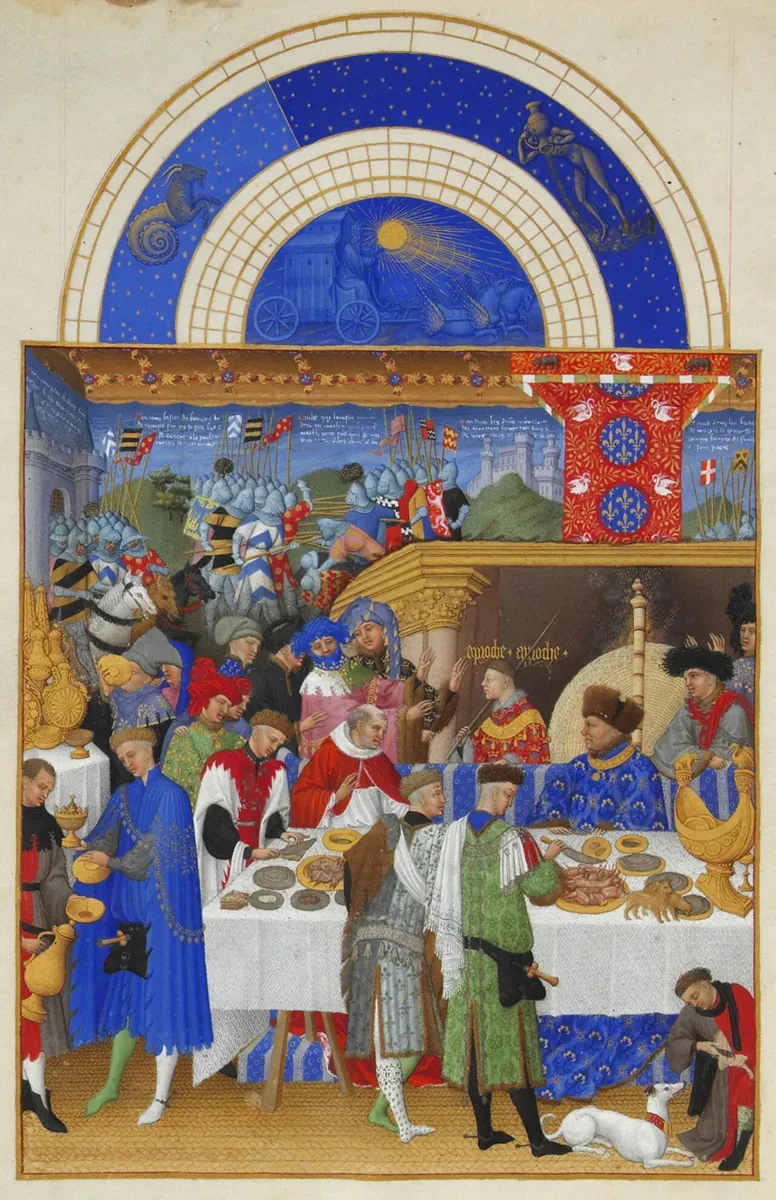
Limbourg brothers, Très Riches Heures, January, about 1412 to 1416. Musée Condé, Chantilly. Image: Wikimedia Commons, public domain.
Limbourg brothers, Très Riches Heures, January, about 1412 to 1416. At the Musée Condé in Chantilly. The Duke of Berry sits at a New Year feast, wearing blue, with a fire screen like a halo behind him. Above is a calendar arc with the zodiac signs Capricorn and Aquarius. A court official says “Approche, approche”, come closer, words written above the scene.
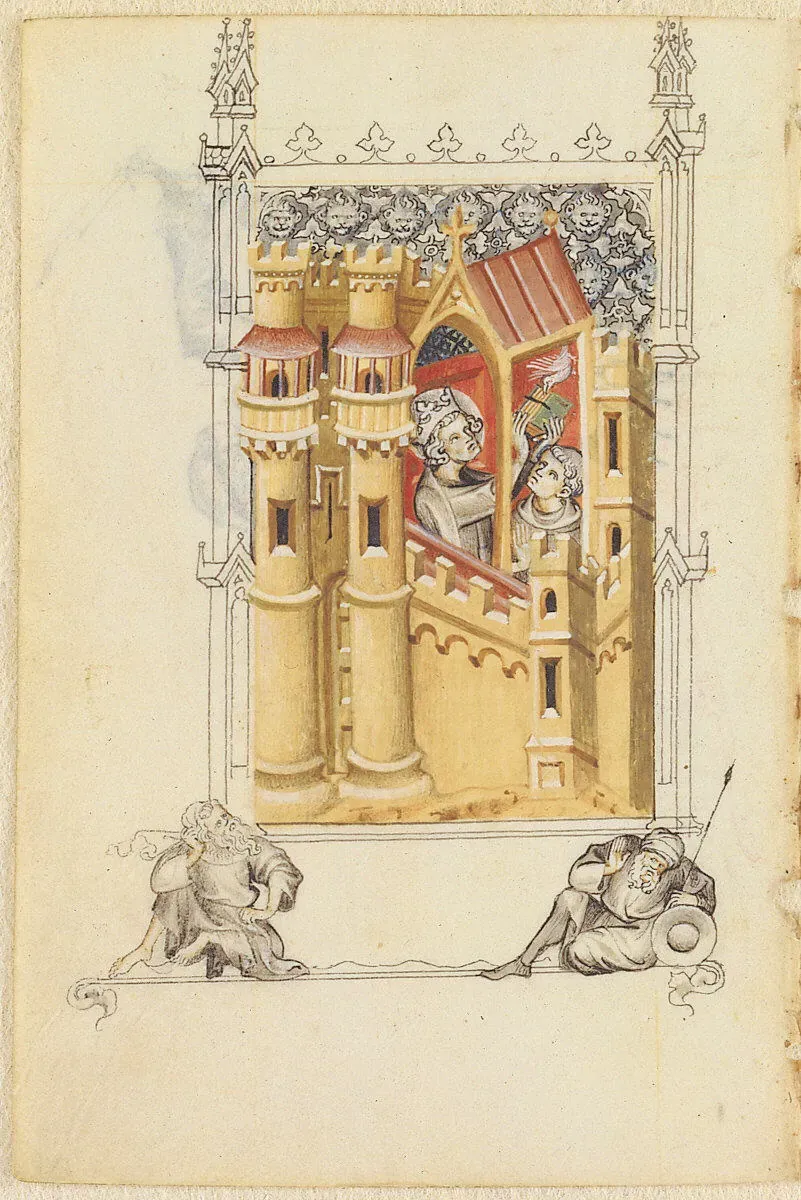
Jean Pucelle, Hours of Jeanne d’Evreux, about 1324 to 1328. The Met Cloisters, New York. Image: Wikimedia Commons, public domain.
Jean Pucelle, Hours of Jeanne d’Evreux, about 1324 to 1328. At the Met Cloisters in New York. The whole book is only about 9 by 6 centimetres. Pucelle painted it in grisaille, shades of grey, with touches of colour, for the queen of France. Look at the margins for tiny musicians, animals and games.
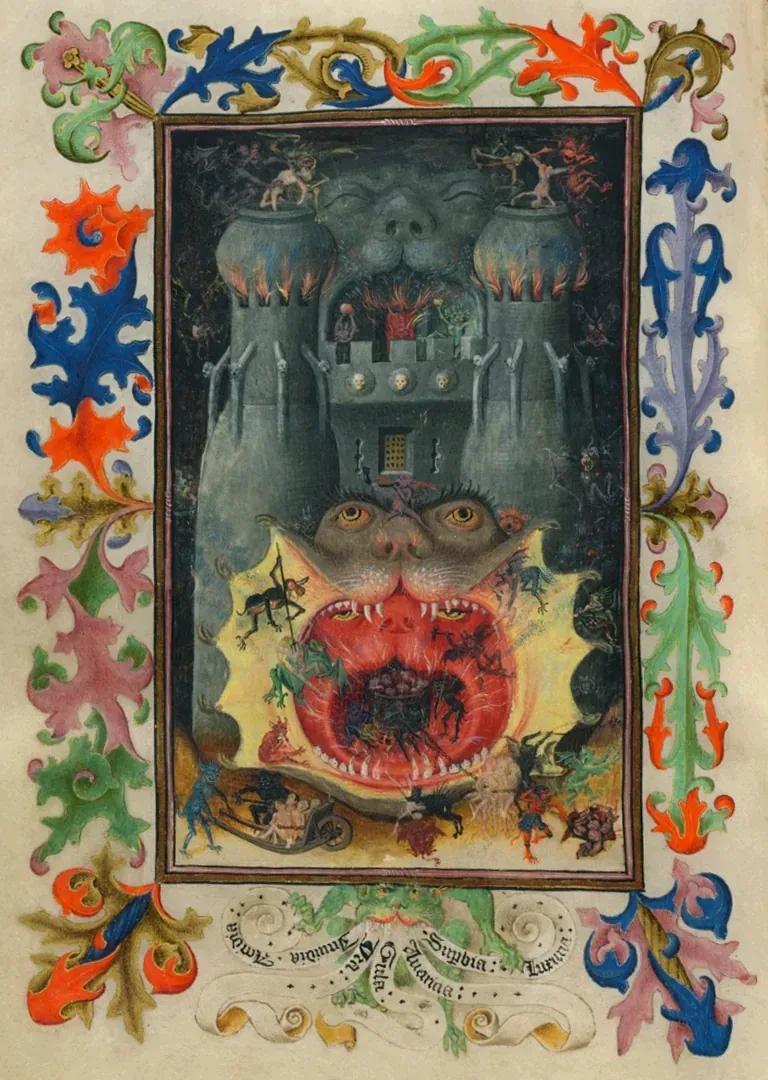
Master of Catherine of Cleves, Hours of Catherine of Cleves, Hellmouth, about 1440. Morgan Library and Museum, New York. Image: Wikimedia Commons, public domain.
Master of Catherine of Cleves, Hellmouth, about 1440. At the Morgan Library in New York. Hell is shown as a castle with a monster’s mouth, full of tormented souls. The border of flowers and leaves around it is calmly beautiful, a contrast that is typical of Dutch illumination.
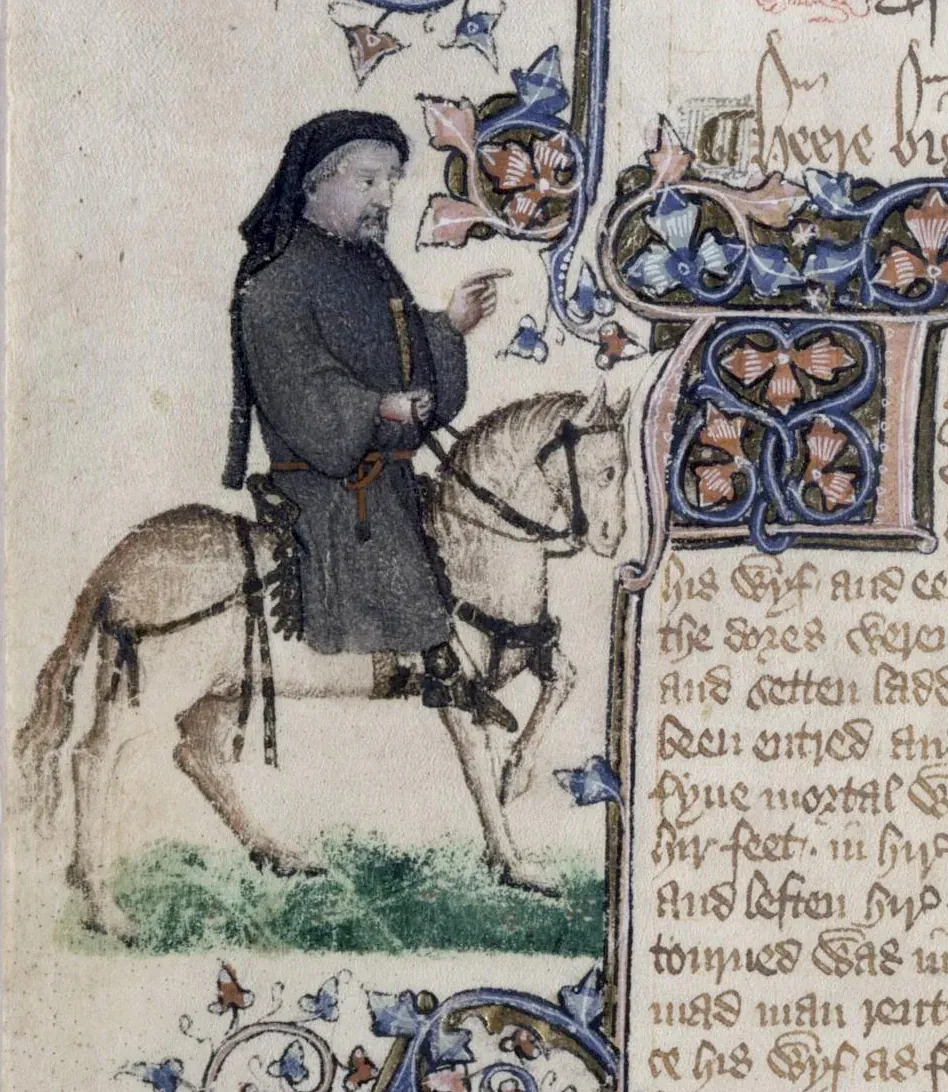
Unknown English scribe and illuminators, Ellesmere Chaucer, about 1400 to 1410. Huntington Library, San Marino. Image: Wikimedia Commons, public domain.
Ellesmere Chaucer, about 1400 to 1410. At the Huntington Library in California. One of the earliest copies of The Canterbury Tales, with each pilgrim painted beside their tale. This is Chaucer himself. Notice how the picture and text share the page.
Manuscript painting begins with early medieval gospel books, flowers in Gothic and International Gothic Paris, and ends in the Northern Renaissance, when printing took over. Its borders and lettering inspired William Morris and the Arts and Crafts movement.
Try this
Open a digitised book of hours in an online library such as the British Library, Gallica or e-codices and find the calendar page for the month you were born.
Note the labor of the month, the zodiac sign and one tiny detail in the border that you would never notice in a reproduction. Then write three lines about how this page would have felt in the hands of its first owner.
What next
Before this: Early medieval art.
After this: Romanesque.
Also worth reading alongside it: International Gothic.
See every movement in order on the art movements timeline, or learn to look step by step in the free Art History for Beginners course.
If you want to carry this into tarot and practice, these pages connect to it: The Hierophant, sacred learning kept and copied by hand; The Magician, the scribe’s tools laid out on the table, word made visible; Medieval symbols in books and stone; and The magic books that survive in manuscript.
Sources
- Christopher de Hamel, Meetings with Remarkable Manuscripts (2016).
- Christopher de Hamel, A History of Illuminated Manuscripts (1994). 2nd edition.
- Michelle P. Brown, Understanding Illuminated Manuscripts: A Guide to Technical Terms (2018). Revised edition.
- The Metropolitan Museum of Art, The Belles Heures of Jean de France, duc de Berry. Open the record
- Beinecke Rare Book and Manuscript Library, Yale University, Voynich Manuscript (Beinecke MS 408). Open the record
- Wikimedia Commons, The Chi Rho page, Book of Kells, folio 34r (hero image record). Open the record
- Christopher de Hamel, Meetings with Remarkable Manuscripts (2016).

Questions
What does illuminated mean in a manuscript?
It means decorated with gold or silver and color, so the page seems to light up. The word comes from the Latin illuminare, to light up.
What is a book of hours?
A prayer book for lay people, with a calendar and prayers for the hours of the day. It was the most popular book of the late Middle Ages, and many were richly illuminated.
Where can I see works of Illuminated manuscripts in person?
Good places to start are Dublin (Trinity College), London (British Library), New York (The Met Cloisters, the Morgan), Chantilly (Musée Condé), and free online libraries. Museums change their displays, so check the collection page before you travel.
How were illuminated manuscripts made?
Scribes wrote on parchment or vellum made from animal skin, using quills and ink. Painters then laid gold leaf on a sticky base, burnished it, and added colours made from minerals, plants and insects, bound with egg white or gum.
Can I see illuminated manuscripts online?
Yes. The British Library, the Bibliothèque nationale de France, the Morgan Library and many others have digitised whole manuscripts, which you can page through free of charge.
Get the free Mini-Grimoire
A short printable starter guide to tarot and everyday witchcraft, plus my newsletter. Unsubscribe any time.
Opens Substack in a new tab to confirm. More about the newsletter · Privacy